Plumber in Dacono, CO — one call, any hour
Home / Areas / Northern Colorado / Dacono
Dacono is the smallest of the three Carbon Valley towns and has the most varied housing of them — older single-storey houses, manufactured homes, and newer building on the edges. That mix matters, because plumbing conventions differ between those types more than most people expect.
A small town of mixed housing
A manufactured home routes supply lines under the floor within the chassis rather than through interior walls, which changes both freeze exposure and how a repair is accessed. Skirting condition becomes a winter plumbing issue. Fixture and fitting sizes can differ too, so the right parts are not always the ones on a standard van.
Saying which kind of building you are calling about is therefore genuinely useful rather than a formality. It changes what has likely failed, what parts are needed, and occasionally who is best placed to do the work.
Manufactured or stick-built? Say which when you call — the conventions differ.
Ask what applies to your home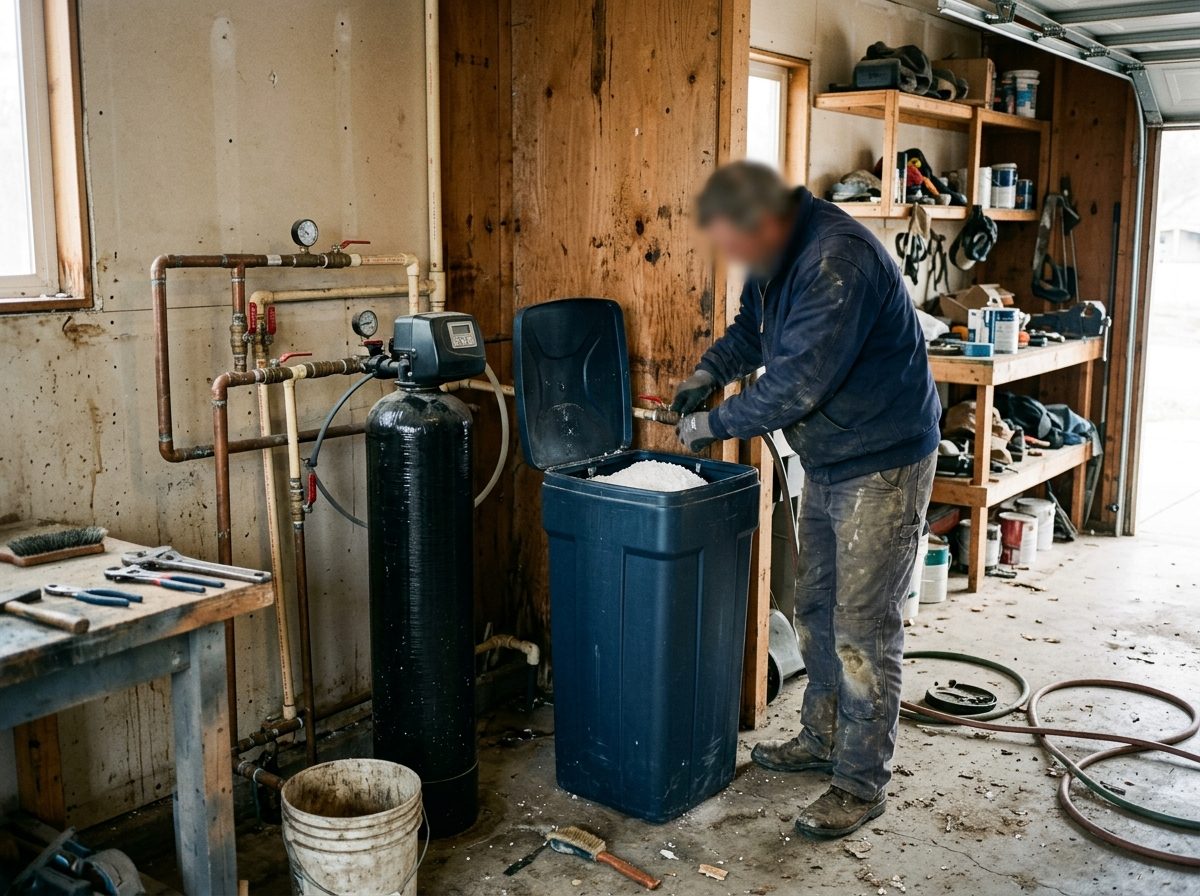
Drains and what actually blocks them
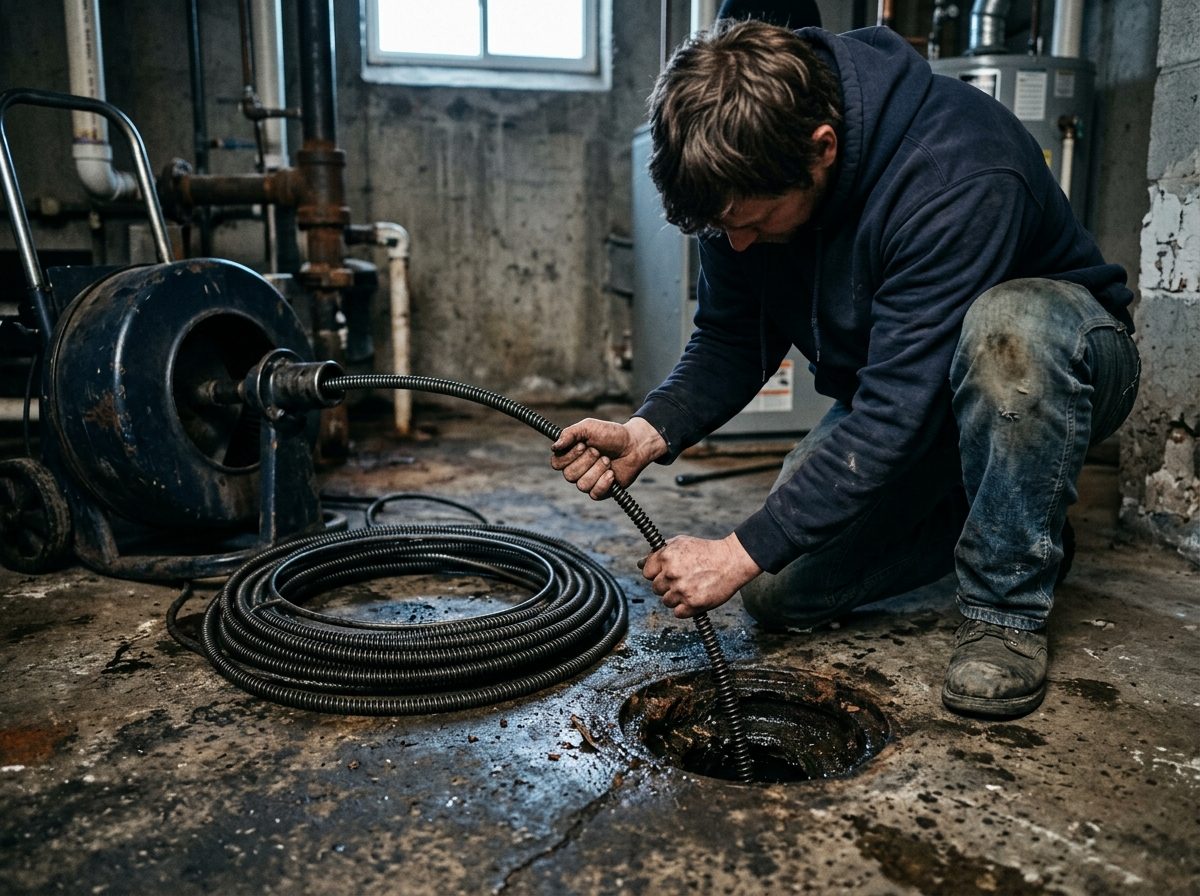
Most drain calls resolve into two categories, and distinguishing them on the phone saves time. One fixture draining slowly is usually local: a trap, a branch line, or a venting problem if there is gurgling with it. Several fixtures slowing together, or the lowest drain in the building taking water back, means the main line is involved.
Recurring blockages in the same place are a different matter again. Those usually mean grease and scale built up on the pipe wall rather than a single object in the way — cabling makes a channel through it and restores flow, but the layer stays and it returns within months. Jetting scours the wall back toward its original diameter and holds far longer.
Mineral load and appliance life
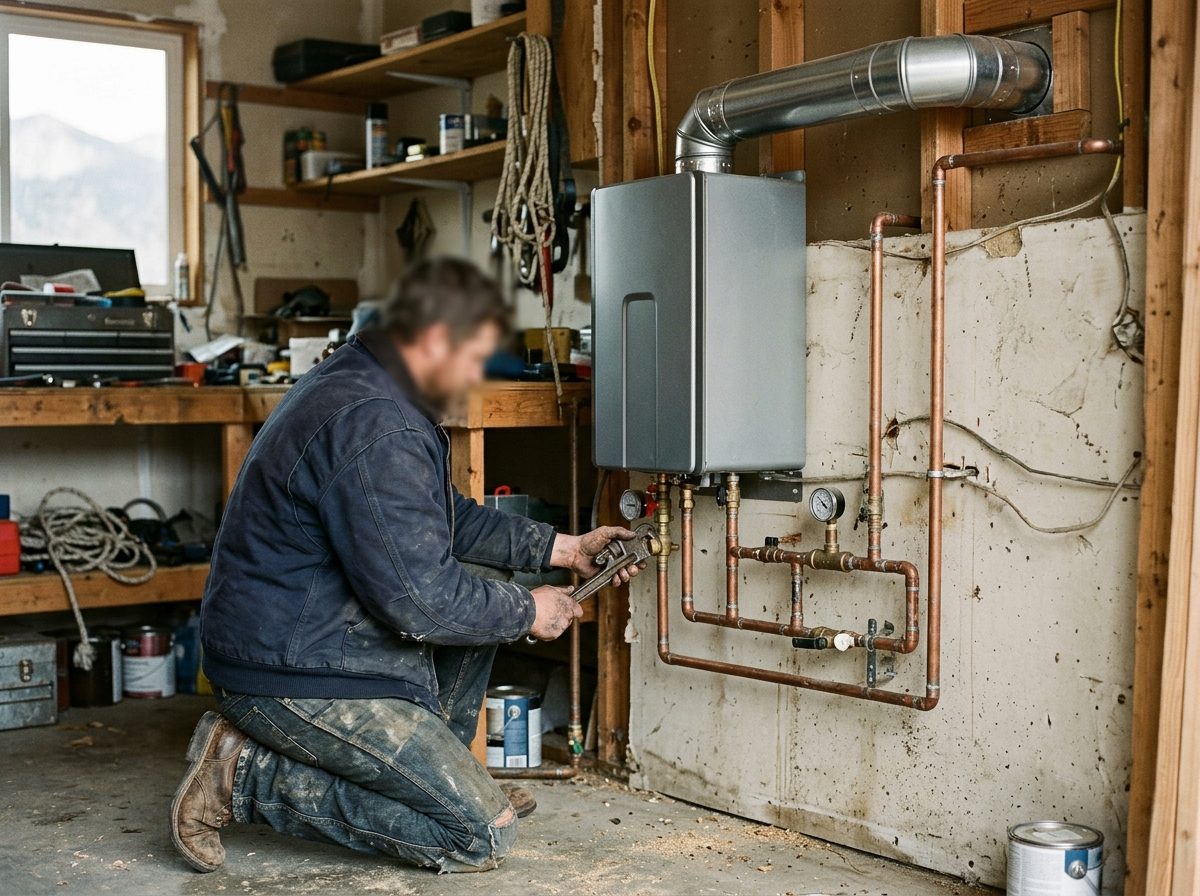
Water in this corridor is hard, and the water heater takes most of the damage. Sediment settles across the tank floor, the burner heats through scale rather than steel, run times lengthen and recovery slows. On electric models the elements scale directly and burn out early.
Draining the sediment annually is the highest-return maintenance job in the house, and in a rental it is worth putting on a schedule rather than leaving to chance. The sacrificial anode rod deserves a look at the same time — a consumable designed to corrode instead of the tank, and frequently spent well before anyone checks.
Heater in a rental? Put the flush on a schedule rather than waiting for a complaint.
Ask about heater servicingOpen ground in a cold snap
There is little shelter here, so wind removes heat from exposed pipe much faster than the air temperature suggests, and frost runs deeper than on sheltered Front Range streets. Manufactured homes are particularly exposed, because the supply runs sit in the underfloor space where wind can reach them if skirting is damaged or missing.
Before winter, check skirting, disconnect hoses, get irrigation cleared with compressed air rather than merely drained, and confirm any heat tape actually works — it fails silently through age, rodent damage or having been unplugged during other work.
Skirting damaged before winter? That is a plumbing problem out here, not just a cosmetic one.
Ask about freeze protectionThe connections behind your appliances
A large share of sudden indoor water damage does not come from pipe in the walls. It comes from the short flexible connections behind appliances — the braided hoses to a washing machine, the supply line to a toilet or basin, the feed to a dishwasher or a fridge. They sit under full mains pressure permanently, they have a service life, and they are almost never replaced on purpose.
The washing machine pair is the worst of them, because the failure mode is a burst rather than a weep and there is nothing to slow it down. A hose that lets go while the house is empty discharges continuously at mains pressure, and the difference between a mopped floor and a ruined one is how long nobody was home. Replacing them on a schedule rather than waiting is the cheapest insurance in the building, and stainless braided hoses in place of rubber ones are worth the small difference.
Two additions make the whole category safer. Isolation valves that actually close at each appliance, so a failure is one machine out of service rather than the whole house. And a look, once, behind each appliance for the things that predict failure: a hose kinked tightly against a wall, a connection weeping enough to have left a stain, a line that is visibly older than the machine it feeds. None of that requires tools, and all of it is easier to act on before the fact than after.
Two things worth locating
The main shutoff and the drain cleanout. Knowing where both are turns an emergency into a manageable job, and in a rental it is worth telling the tenant as well.
Nearby communities
Dacono sits with Firestone and Frederick in the Carbon Valley, close to Fort Lupton and the Weld County farm towns.
Dacono, Colorado
Dacono plumbing questions answered
In several ways. Supply lines usually run under the floor within the chassis rather than through interior walls, which changes freeze exposure and access. Skirting condition becomes a winter plumbing issue, and fixture sizes can differ from stick-built standards. Say up front which you have so the right parts come with the visit.
That is usually local — a trap, a branch line, or a venting issue if you also hear gurgling. It does not indicate a main-line problem. Clearing the branch normally resolves it; if it recurs quickly the question becomes whether the pipe wall has built up or the fixture is inadequately vented.
Because the cause is a layer of grease and scale on the pipe wall rather than one object. Cabling punches a channel through and restores flow but leaves the layer behind. Jetting cleans the wall back toward the original bore, which is why it holds much longer on a line with a history.
Something is jamming the impeller rather than the motor being dead. Most units have a hex socket underneath so it can be freed by hand with the power off at the switch. If it trips its reset repeatedly afterwards, or leaks from the body rather than a connection, replacement is sensible. Never reach into the chamber.
Scale is the usual reason in hard water. Sediment collects across the tank floor, insulates the burner from the water and forces longer run times; on electric units it coats the elements directly. An annual drain pushes the life back toward what the manufacturer intended.
Clear the main drain rather than waiting for a blockage, replace washer hoses older than a few years, renew tired toilet internals, and check the heater. That short list removes most of the calls that arrive at awkward hours, and doing it in an empty property is the cheapest time.
Same-day is normal and a couple of hours is common for urgent problems, with Longmont and the corridor towns close. During a regional cold snap the whole area is busy at once, so expect an honest window plus instructions on what to shut off while you wait.
On a manufactured home, yes. The supply lines run in the underfloor space, and skirting is what keeps wind out of it. Damaged or missing sections let cold air circulate directly around pipe that has no other protection, which is why skirting repair is genuinely freeze prevention rather than tidiness.
Sooner than most people do — and on a schedule rather than at the first sign of trouble, because the usual failure is a burst with no warning at all. Braided stainless lines instead of rubber, isolation valves that actually close, and a look behind the machine for kinks or old stains cover the common causes. It is the cheapest protection in the house.
It needs its drain arranged so waste water cannot siphon back into it — either a high loop or an air gap, depending on how it is installed. That detail is frequently missed when a machine is swapped by whoever delivered it, and the symptom is dirty water appearing in the bottom of an otherwise working dishwasher.
Carbon Valley, any hour
Dacono, Firestone, Frederick and Fort Lupton.
(833) 621-2904 — answered 24/7, statewide.