Plumber in Frederick, CO — 24/7 help by phone
Home / Areas / Northern Colorado / Frederick
Frederick began as a coal town and has grown a large modern ring around a small old centre. Both halves are worth understanding, because the older streets bring material problems and the newer ones bring component problems, and the same phone number covers both.
A mining town with a modern ring
In the original town, houses are old enough that supply pipe may have narrowed internally, drain lines may have roughened, and the sewer connection is likely to be of the same era as the street. Layered over that is a century of piecemeal repair, so what is actually installed frequently differs from what anyone assumes.
In the newer subdivisions, none of that applies. What fails there are the components fitted during construction — regulators, expansion tanks, angle stops, supply lines and heaters — and they fail in cohorts because they were installed in cohorts.
Original town or newer subdivision? Saying which changes the whole diagnosis.
Ask what applies to your house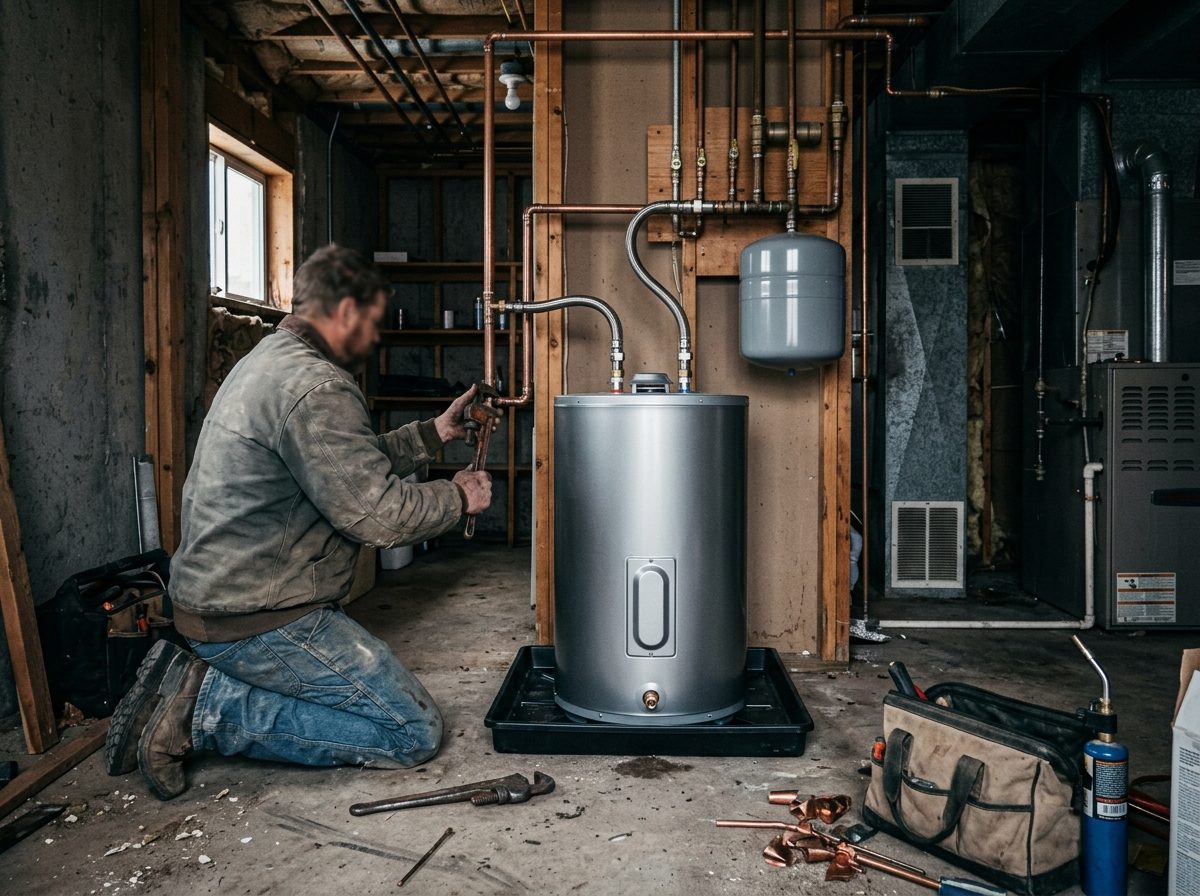
Hidden leaks and the meter test
Hidden leaks turn up in both halves of town — at old fittings behind plaster in the centre, and at angle stops, flexible supply lines and heater connections in the newer housing. The symptoms are indirect: a bill that climbed without a change in use, the sound of water with everything off, a musty smell in a closed space, or a damp patch on a concrete floor.
You can narrow it before anyone arrives. Rule out toilets first with a few drops of food colouring in the tank — a failed flapper passes water silently and accounts for a surprising share of mystery bills. Then run the meter test: shut every fixture, note the meter and the low-flow indicator, and read it again an hour later. Movement means water is leaving the system, and closing the main shutoff and repeating tells you whether the loss is inside the building or in the buried service line.
Bill up with nothing visible? Run the meter test, then call with the result.
Ask about finding a leak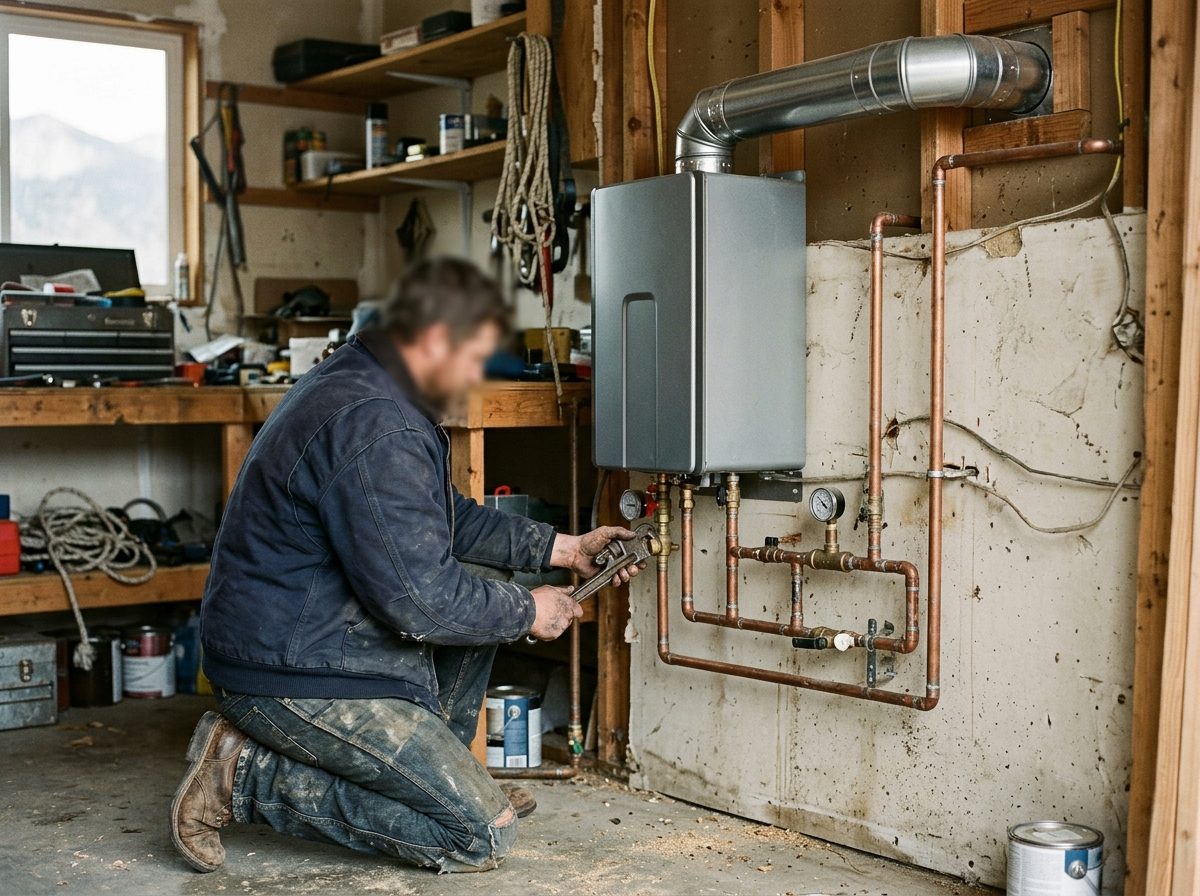
Scale and what it costs
Water in this corridor is decidedly hard, and the water heater takes most of the damage. Sediment settles across the tank floor, the burner heats through scale rather than steel, and recovery slows until a household that never ran out of hot water starts running out. Electric elements scale directly and burn out early.
Draining the sediment annually is the highest-return maintenance available, and checking the sacrificial anode rod at the same time is worth doing — it is a consumable designed to corrode instead of the tank, and in water like this it is often spent long before anyone thinks to look.
Wind exposure in winter
Open ground and constant wind mean exposed pipe loses heat much faster than the air temperature suggests, and frost runs deeper than in a sheltered older city. The vulnerable places are consistent: hose bibs with hoses attached, garage walls, crawlspaces with vents left open from summer, and lines in outside walls on the windward side.
Disconnect hoses before the first freeze, get irrigation cleared with compressed air rather than merely drained, and close summer crawlspace vents. If a fixture stops flowing on a cold night, get the exposure dealt with even after flow returns, because ice can crack a pipe without releasing water until the thaw.
Line stopped flowing? Close the main shutoff before anything gets thawed.
Ask about a frozen pipePipes that bang, and what the noise means
A bang in the pipework when a tap closes or an appliance shuts off is water hammer — a pressure wave created when moving water is stopped abruptly and has nowhere to go. It is easy to treat as a quirk of an older house, but it is a mechanical event, and each one puts a shock load through every joint, valve and connection in the system.
Two things make it worse, and both are worth checking rather than guessing at. High static pressure raises the force of every wave, so a house that bangs is often a house running at a pressure that is shortening the life of everything in it anyway. And quick-closing valves — the solenoids in washing machines and dishwashers — stop the flow far faster than a hand-operated tap, which is why the noise so often coincides with an appliance cycling rather than with someone using a sink.
The remedies follow from the cause. Measuring the pressure and fitting a reducing valve where it is high addresses the whole system at once, which is the most useful single step. Arrestors fitted near the offending appliances absorb the wave locally. And pipe that is inadequately secured amplifies what it would otherwise transmit quietly, so clipping loose runs properly is part of the job rather than an afterthought. What is worth avoiding is living with it for years on the assumption it is cosmetic — the noise is the system telling you about a load it is absorbing.
The cheapest test in the house
Food colouring in a toilet tank, twenty minutes, no flushing. Colour in the bowl means a failed flapper passing water silently — and it explains a great many unexplained bills.
Nearby communities
Frederick sits alongside Firestone and Dacono in the Carbon Valley, between Longmont and the Weld County farm towns.
Frederick, Colorado
Frederick plumbing questions answered
Run the meter test. Shut off every water-using thing, note the meter reading and the position of the low-flow indicator, then read it again an hour later with nothing touched. Movement means water is leaving the system. Close the main shutoff and repeat: continued movement points at the buried service line.
Check toilets first. A failed flapper passes water continuously into the bowl and makes no sound at all — put food colouring in the tank, wait twenty minutes without flushing, and look for colour in the bowl. After that, check irrigation valves, the heater relief pipe and outdoor spigots.
Usually supply pipe narrowed by decades of internal corrosion, which affects the upper floor first because it is furthest from the supply. Testing pressure at an outdoor hose bib separates house from supply. If incoming pressure is normal, replacing the affected runs is the fix, and it can be staged.
Scale is the usual explanation in hard water. Sediment collects in the bottom of the tank, insulates the burner from the water and forces longer run times, and on electric units it coats the elements. An annual drain pushes the life back toward what the manufacturer expected.
A sacrificial metal rod inside the heater that corrodes in place of the tank lining. In mineral-heavy water it can be consumed within a few years, and once it is gone the tank starts corroding instead. Replacing a spent rod is cheap; replacing a tank that rusted through because nobody checked is not.
Same-day is normal and a couple of hours is common for urgent problems, with Longmont and the Front Range corridor close by. During a regional cold snap every plumber is busy simultaneously, so expect an honest window plus instructions on what to shut off in the meantime.
For most households the money comes back in heater and appliance life rather than anything you notice at the tap. Test first so hardness is a real number, then size the equipment to the household. Also confirm there is a practical place for the loop and a drain for the regeneration cycle.
Yes. The lateral is the one major system a standard home inspection does not inspect internally, and in original-town housing it is likely to be old and possibly root-affected. Finding a problem before closing turns it into a negotiating point rather than a bill afterwards.
It is worth addressing rather than living with. The bang is a pressure wave from the machine’s valve closing abruptly, and each one loads every joint and fitting in the house. Check the static pressure first, since high pressure makes every wave harder; then arrestors near the appliance and properly clipped pipe deal with what remains.
It shortens the life of every valve, fill mechanism and flexible connection in the building, and it is a common cause of failures that seem random — a toilet fill valve that keeps going, supply lines that weep, appliance valves that fail early. Measuring it takes a cheap gauge on an outdoor tap, and a reducing valve is a small job that protects everything downstream.
Carbon Valley, day or night
Frederick, Firestone, Dacono, Longmont and Erie.
(833) 621-2904 — answered 24/7, statewide.