Plumber in Erie, CO — 24/7 by phone
Home / Areas / Boulder County / Erie
Erie has grown from a small town into a large one within a single generation, and its plumbing profile follows exactly from that. Very little old pipe. Very many houses of similar age. Hard water working on all of them, and open ground with wind that makes freezing a bigger factor than the thermometer suggests.
A town built mostly in one generation
Whole subdivisions went in within a year or two, fitted with the same water heaters, pressure regulators, expansion tanks and fixture supply lines by the same crews. Those components have service lives much shorter than the house, so failures cluster rather than arriving at random.
Because there is little repair history on a house of this age, the original parts are usually still in place — which makes the build year a reliable guide to what is next in line. It is the most useful single fact to give whoever answers the phone.
Neighbours replacing heaters? On a street built in one year, that is a useful early warning.
Ask about a heater check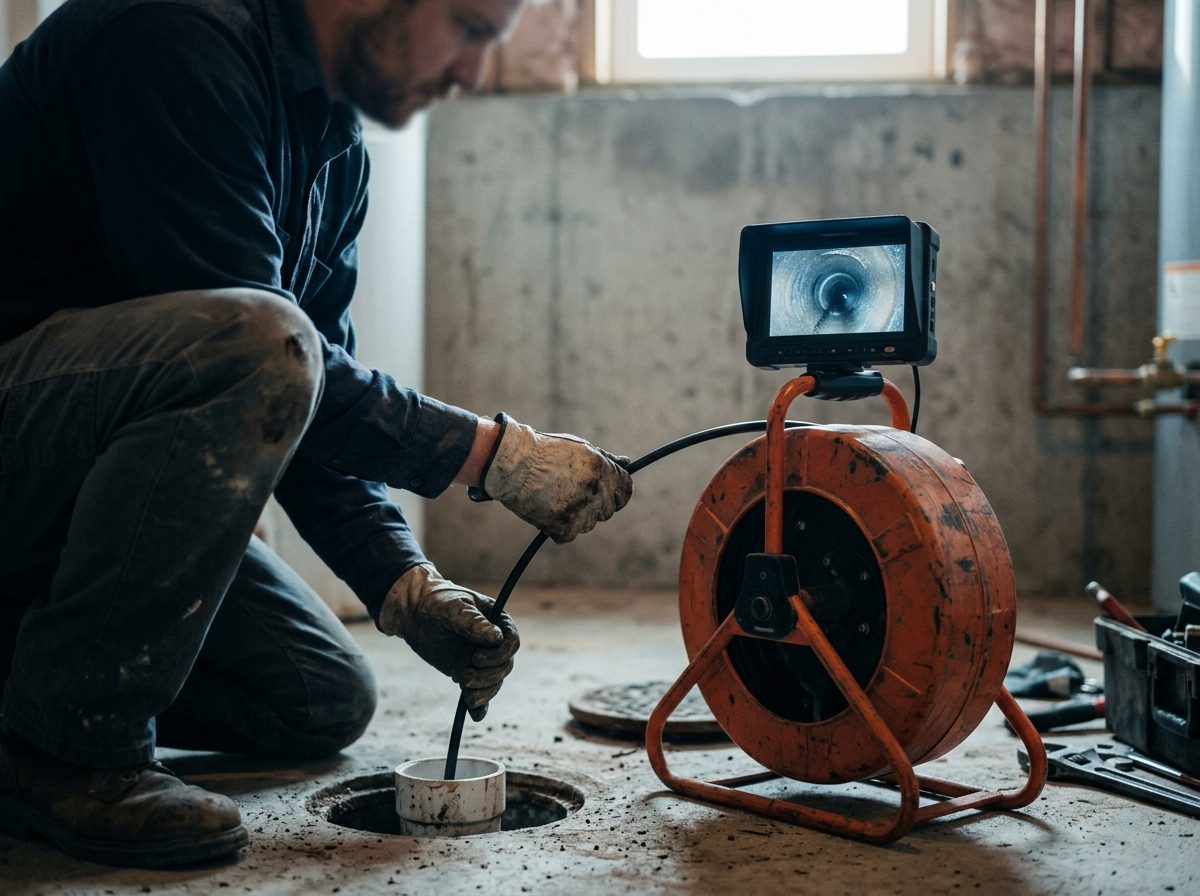
Hard water and heater life
Water in this corridor carries a substantial mineral load. Scale settles in the bottom of the water heater and insulates the burner from the water above it, so run times lengthen and the tank ages faster than the label promises; on electric units it coats the elements directly. Aerators clog, shower heads block, fill valves stiffen and weep, and appliances wear.
Flushing the heater annually is the cheapest life extension available. If you want treatment, test the water first so hardness is a number and you know whether iron is present, then size the equipment to the household rather than to the largest unit on the shelf.
Pressure and the parts it kills
High static pressure is the most under-diagnosed problem in housing of this age. A regulator that has drifted passes street pressure straight through to fixtures that were never designed for it, and the damage arrives as a scatter of small failures: toilets that run, taps that drip, a washing machine hose that lets go, a heater relief valve that discharges periodically.
An inexpensive gauge on an outdoor spigot settles it in a minute. If the reading is high, replacing the regulator is far cheaper than replacing fixtures one at a time, and it protects everything downstream of it.
Small failures piling up? Measure pressure before replacing fixtures one by one.
Ask about high pressureOne more component worth knowing about is the expansion tank fitted alongside most modern water heaters. It absorbs the pressure rise created when water heats and expands in a closed system, and when its internal bladder fails that pressure has nowhere to go. A relief valve discharging periodically, or fittings that have started to weep, often trace back to that inexpensive part rather than to the heater itself.
Open ground, wind and freezing
There is little shelter here, and wind strips heat from exposed pipe much faster than still air at the same temperature. Frost also runs deeper than on sheltered streets in older cities, which matters for irrigation and buried lines.
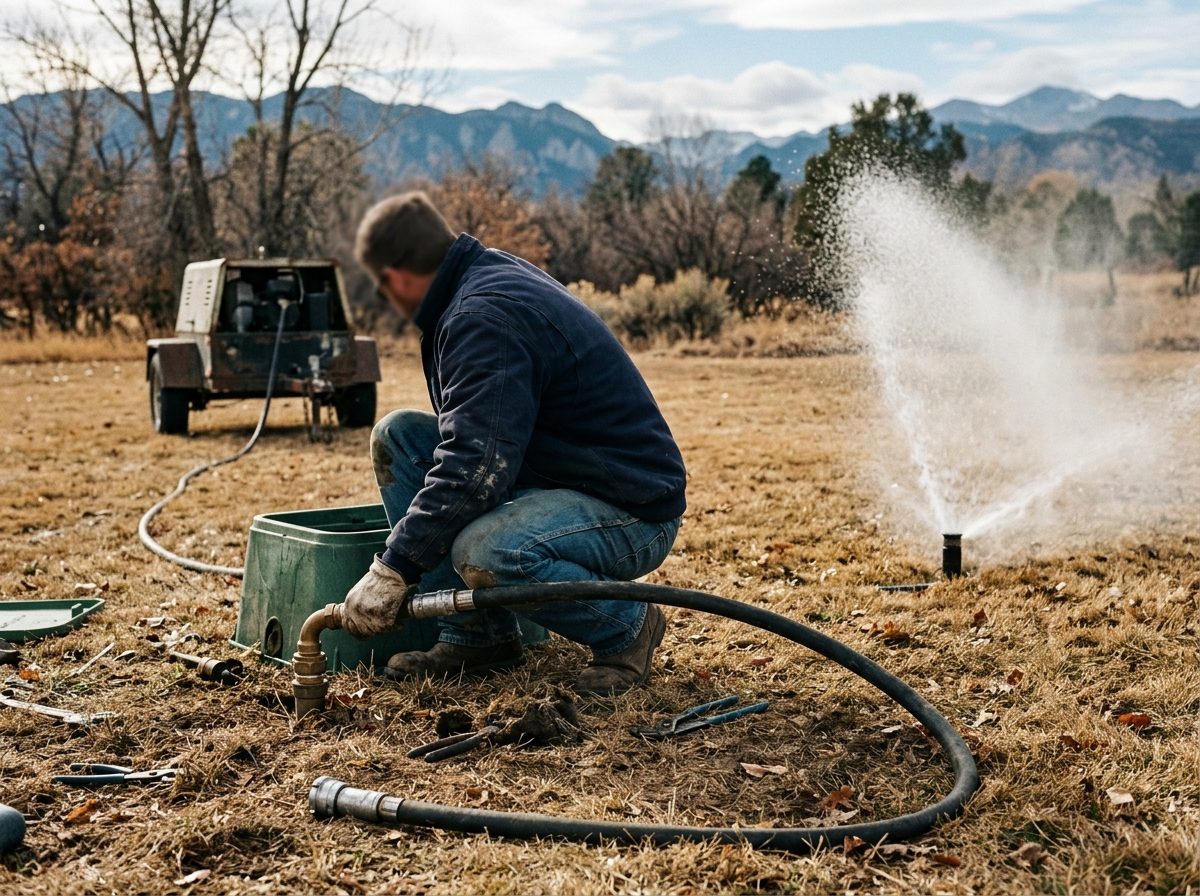
Irrigation is the seasonal certainty: a system not blown out with compressed air before the first hard freeze holds water at its low points and at the backflow device, and that is where the spring surprise appears. Disconnect hoses too, and open cabinet doors under sinks on exterior walls during the coldest nights so household heat reaches the pipe.
Sprinklers still charged? Compressed air clears what draining cannot reach.
Ask about winterisingOne town across two counties
Erie is unusual in that the town spans a county line, and for plumbing that is not a trivia point. Which county an address falls in can decide which building department reviews the work, who inspects it, and what the process looks like for anything that needs a permit — a water heater replacement, a gas line for a range or a heater, a sewer repair, a repipe. Two houses a few streets apart can sit under different jurisdictions.
The practical consequence is that the first question on permitted work is not what needs doing but where the property sits. It affects lead time more than cost: knowing the answer before scheduling avoids a visit that cannot be completed because the paperwork went to the wrong desk. It is worth an owner confirming their own jurisdiction once and writing it down with the other property details, because it does not change and it comes up every time.
Water service is worth confirming in the same breath. Growth here has been fast enough that neighbouring developments are not always served by the same provider, and the provider determines static pressure at the meter, what backflow protection is required on irrigation, and who to call when the problem is on the street side of the meter rather than the house side. None of that is complicated once known; all of it wastes time when assumed.
Autumn short list
Irrigation blown out, hoses disconnected, sump pump tested with a bucket of water, static pressure measured, heater flushed. One afternoon, and it removes most of what otherwise arrives as a January emergency.
Nearby communities
Erie straddles the Boulder and Weld county line, with Lafayette, Louisville, Longmont and Firestone all close by.
Erie, Colorado
Erie plumbing questions answered
For most households the return shows up in water heater and appliance life rather than anything obvious at the tap. Test first so hardness is a real number and you know whether iron is present, then size the equipment to the household. Check there is a practical place for the loop and a drain for the regeneration cycle.
Screw an inexpensive gauge onto an outdoor spigot. Readings above the normal working range shorten the life of every valve, hose, fixture and appliance in the building. The early symptoms are running toilets, dripping taps and a heater relief valve that discharges. If it reads high, the regulator is the part to address.
Before the first hard freeze, which can arrive in October. Draining is not enough on most systems because low points and the backflow device hold water gravity cannot move — compressed air is what clears them. Booking early in the season also avoids the week when everyone remembers simultaneously.
It can be, provided it is sized for winter rather than average conditions. Output is a temperature rise across a flow rate, and January inlet water is far colder than September inlet water. Gas supply, venting and combustion air belong in the same conversation, and hard water makes periodic descaling part of ownership.
Same-day is normal and a couple of hours is common for urgent problems, given how well served this corridor is. Addresses on the Weld County side add a little drive time, and during a regional cold snap every plumber is busy simultaneously — expect an honest window and advice for the wait.
Because they were all installed at the same time. Houses built in one year get the same appliances from the same supplier fitted by the same crews, so they age and fail together. Treat it as a prompt to check yours: age, rust at the fittings, damp underneath, and how fast hot water runs out.
Check whether there is a pit. Many houses were built with a pit and no pump, reflecting a judgement about that lot in that year. In a finished basement, a pump and check valve are inexpensive against replacing flooring, and the moment they prove their value is a fast melt or a summer downpour.
Address the exposure rather than the pipe: insulate the run, seal the air leaks letting cold air reach it, and disconnect hoses from bibs on that wall. Where rerouting into heated space is impractical, heat tape correctly installed and actually plugged in is the fallback. Wind exposure is why these lines freeze before the temperature alone would suggest.
Generally yes — it is a gas or electrical appliance connected to the water system, and replacement is usually permitted and inspected work. Which department handles it depends on the jurisdiction your address falls in, which in Erie is worth confirming rather than assuming. Ask when booking, because it affects scheduling more than it affects price.
Erie and the 287 corridor
Erie, Lafayette, Louisville, Longmont and Firestone, answered around the clock.
(833) 621-2904 — answered 24/7, statewide.