Plumber in Louisville, CO — 24/7 help by phone
Home / Areas / Boulder County / Louisville
Louisville is effectively two towns sharing a name: a small old mining-era centre with genuinely old housing, and a much larger body of subdivisions built from the 1980s onward. The plumbing calls divide almost perfectly along that line, and the age of the house is the first useful thing to establish.
Two towns in one
In old town, the materials are the story — galvanised steel supply lines narrowed by internal corrosion, cast-iron drain sections holding waste at their low points, clay sewer laterals with roots at the joints. Layered over that is a century of remodelling, so what is behind the plaster is frequently a surprise even to the current owner.
In the newer neighbourhoods the pipe is fine and the components are the story. Water heaters, pressure regulators, expansion tanks and fixture supply lines were installed street by street in the same year, and they fail in the same way at roughly the same time.
Old town or newer subdivision? Saying the build year narrows the likely cause immediately.
Ask what to check first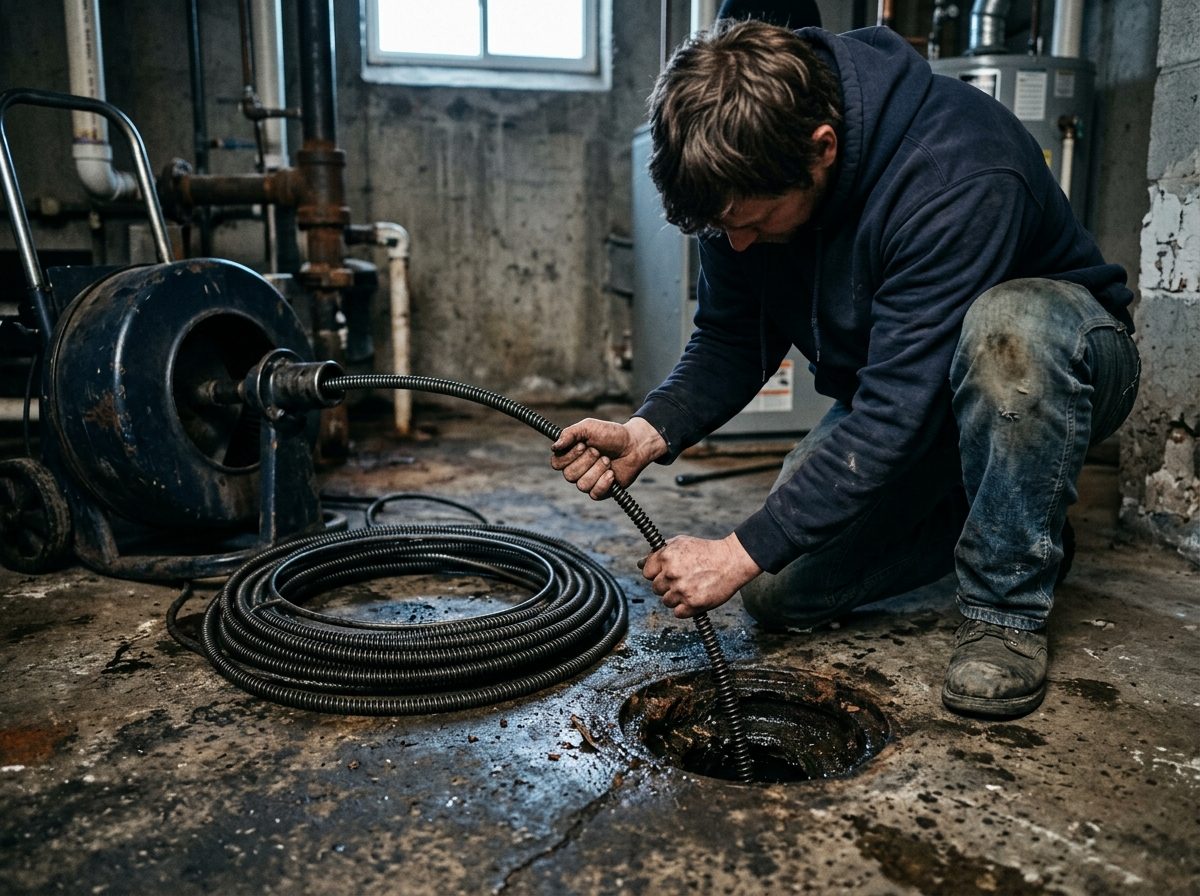
Hidden leaks and the meter test
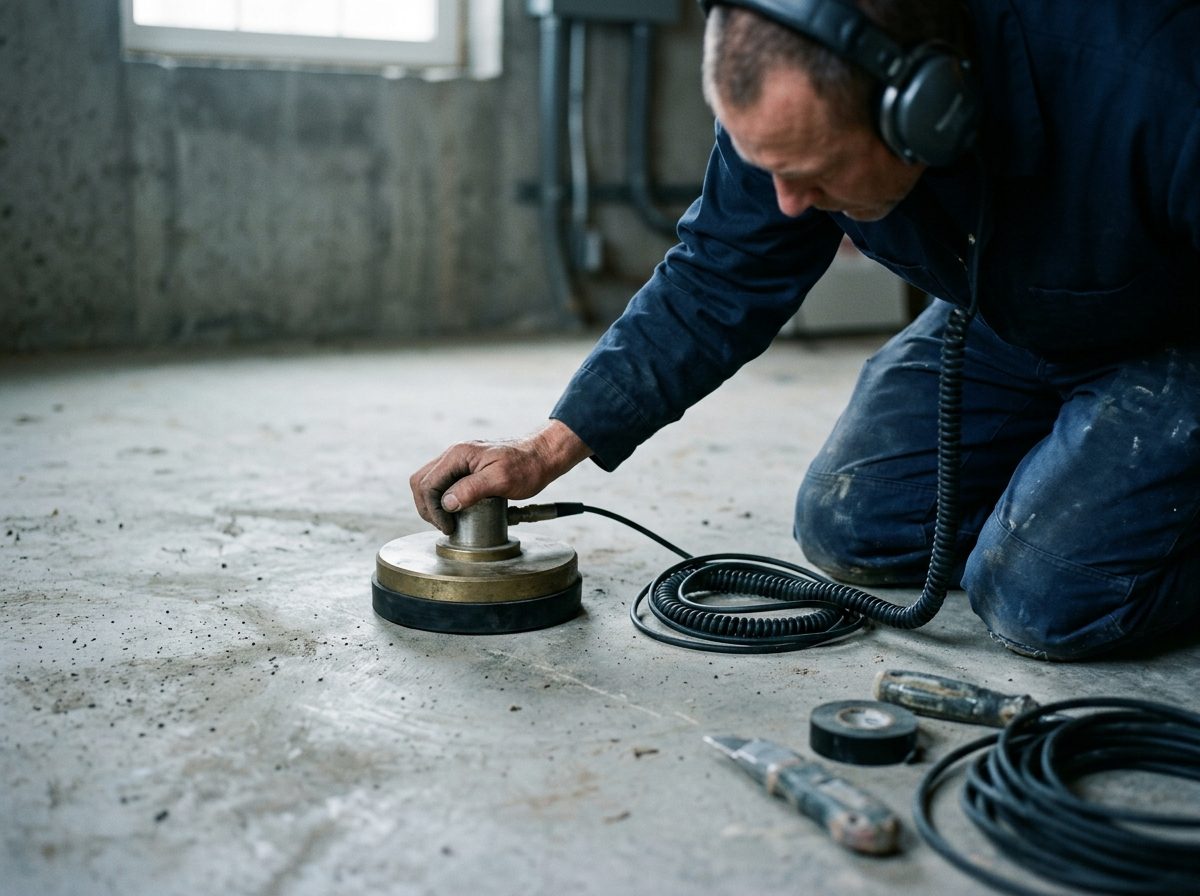
Hidden leaks are common in both halves of town — at old fittings behind plaster in the centre, and at angle stops, supply lines and heater connections in the newer housing. The symptoms are indirect: a bill that climbed without a change in habits, the sound of water with everything off, a musty smell in a closed space, or a warm patch on a concrete floor.
You can narrow it before anyone arrives. Rule out toilets first with food colouring in the tank — a failed flapper passes water silently and explains a surprising share of mystery bills. Then run the meter test: shut every fixture, note the meter and the low-flow indicator, read again an hour later. Movement means water is leaving the system, and closing the main shutoff and repeating tells you whether the loss is inside the house or in the buried service line.
Heaters, pressure and cohorts
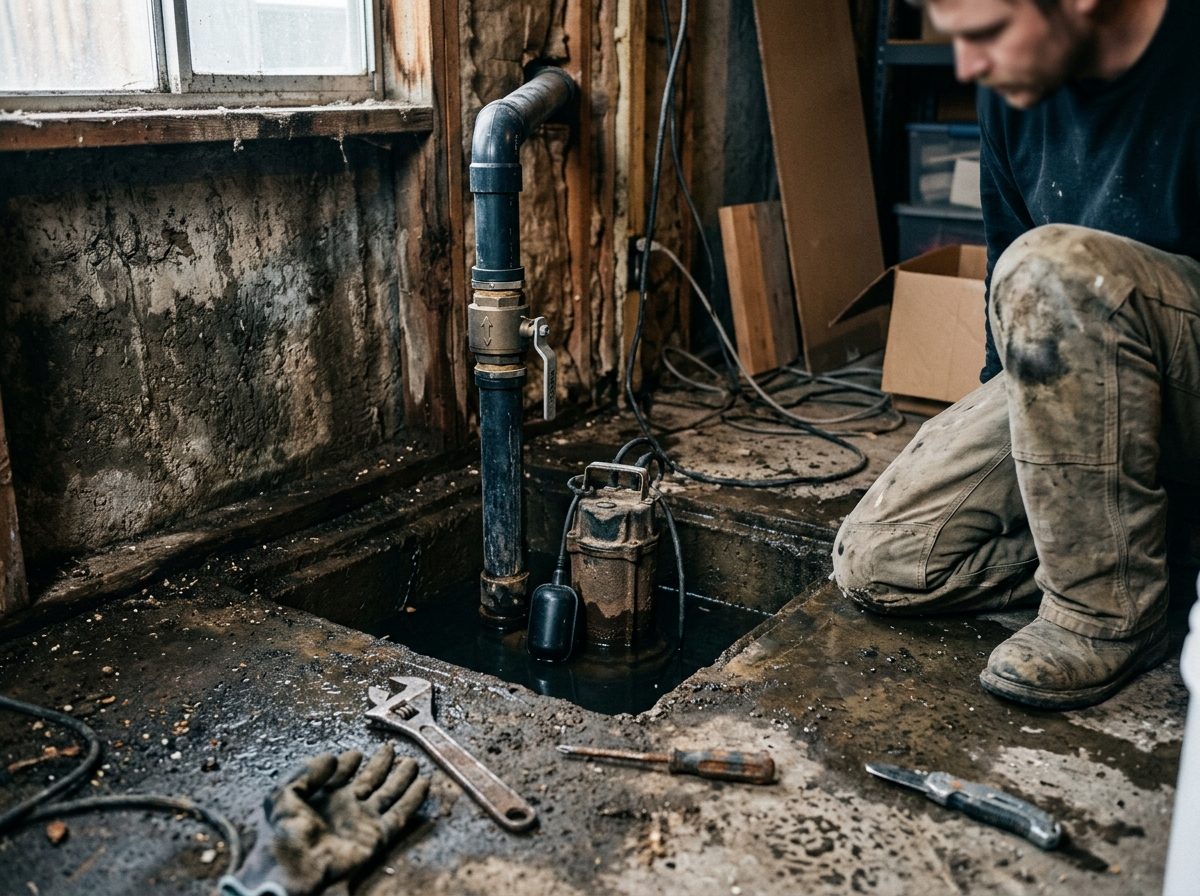
Scale is moderate here rather than severe, but water heaters still collect sediment, and sediment insulates the burner from the water it is meant to heat. Flushing annually is the cheapest life extension available, and it is the maintenance most often skipped because the heater is behind the basement storage.
Pressure is worth a separate check. A drifted regulator passes street pressure through to fixtures never designed for it, and the result is a scatter of small failures that individually look like worn parts: running toilets, dripping taps, a washer hose that lets go, a relief valve that discharges. A gauge on an outdoor spigot answers it in a minute.
Bill up, nothing visible? Run the meter test first, then call with the result.
Ask about finding a leakWind off the foothills
This part of the county catches strong downslope winds, and wind strips heat from exposed pipe far faster than still air at the same temperature. The vulnerable places are the familiar ones: hose bibs with hoses attached, garage walls, crawlspaces vented in summer and never closed, and lines run through additions insulated to a lower standard than the main house.
Disconnect hoses before the first freeze and open cabinet doors under sinks on exterior walls on the coldest nights. And if a fixture stops flowing during a cold night, get the exposure fixed even after flow returns — ice can crack a pipe or a fitting without releasing water until the thaw, sometimes hours later and often inside a wall.
Line stopped flowing? Close the main shutoff before anything gets thawed.
Ask about a frozen pipeWorth five minutes
Find the main shutoff and confirm the handle turns. A valve that will not close is the difference between a repair and a flood, and replacing one is a small scheduled job.
Gas lines and appliance work
Gas work comes up here more often than people expect, because the housing stock is at the age where appliances are being replaced rather than repaired, and because kitchen and outdoor projects frequently add load that the existing pipe was never sized for. Adding a range, a second heater, a fire pit or a garage heater is not simply a matter of running a line to it — the question is whether the existing pipe can carry the total demand to the furthest appliance with adequate pressure.
That calculation is the part most often skipped, and the symptom of getting it wrong is subtle: appliances that work individually but misbehave when several run at once, a burner that cannot hold a flame under load, or a heater that short-cycles. None of those look like a gas sizing problem from the outside, which is why the sizing is worth doing properly at the point the load is added rather than diagnosing later.
The rest is straightforward but not optional. Gas work is permitted and inspected work, a sediment trap belongs at each appliance, flexible connectors have a service life and are not meant to be reused after being disturbed, and any smell of gas is a matter for leaving the building and calling from outside rather than investigating. If an old line is being extended, it is also a sensible moment to have the existing run pressure-tested rather than assuming it is sound because nothing has gone wrong yet.
Nearby communities
Louisville sits in the middle of the 287 corridor, with Lafayette, Superior-adjacent streets, Broomfield and Boulder all minutes away.
Louisville, Colorado
Louisville plumbing questions answered
Run the meter test. Shut off every water-using thing, note the meter reading and the position of the low-flow indicator, then read it again an hour later with nothing touched. Movement means water is leaving the system. Close the main shutoff and repeat: if it still moves, the loss is in the buried service line rather than inside the building.
Most likely galvanised steel supply pipe narrowed by internal corrosion, which affects the upper floor first because it is furthest from the supply. Testing pressure at an outdoor hose bib separates house from supply. If incoming pressure is normal, repiping the affected runs is the durable fix, and it can be staged rather than done all at once.
That pattern usually points at pressure rather than coincidence. High static pressure stresses every valve and seal in the house continuously, so toilets run, taps drip, hoses fail and relief valves discharge within the same period. Measure it with a gauge on an outdoor spigot before replacing fixtures one by one.
Same-day is normal and a couple of hours is common for urgent problems, since the 287 corridor is well served. During a regional cold snap every plumber is on split lines simultaneously, so you may get a next-morning window plus instructions on what to shut off in the meantime.
Yes. The lateral is the one major system a standard home inspection does not look inside, and in old town it is likely to be clay with roots at the joints. The camera tells you whether you are facing annual cleaning, a spot repair or a replacement, which is the information a price should be based on.
It still helps. Sediment accumulates in every tank over time and insulates the burner from the water, which lengthens run times and shortens life. An annual flush takes little effort and is the highest-return maintenance available on the appliance most likely to cause water damage when it fails.
Additions are frequently insulated to a lower standard than the original house, and plumbing run through them is often in an exterior wall or over an unheated crawlspace. Wind makes it worse. The fix is insulation and air sealing at the run, and where that is not practical, correctly installed heat tape that is actually plugged in.
Close the main shutoff, then switch off power to the affected area at the breaker if light fittings or sockets are involved. Put containers under it and pull anything valuable out of the way. Then call. Photographs before cleanup help if there is any chance of an insurance claim.
Sometimes, and the answer depends on arithmetic rather than opinion: the existing pipe has to carry the total load to the furthest appliance at adequate pressure. That has to be calculated, not assumed, and the work is permitted and inspected. Where the existing run is old, having it pressure-tested at the same time is cheap insurance.
Boulder County, day or night
Louisville, Lafayette, Broomfield, Erie and Boulder, answered around the clock.
(833) 621-2904 — answered 24/7, statewide.