Plumber in Mead, CO — one call, any hour
Home / Areas / Northern Colorado / Mead
Mead has grown from a small settlement into a town of new subdivisions while keeping working acreage right up against its edges. Two quite different plumbing situations therefore sit side by side, and the first thing worth establishing is which side of that line you are on.
Subdivision and acreage side by side
Inside the newer developments you are on town service with modern pipe, and nothing has aged out. Half a mile away a property may be on a private well with a pressure tank, a septic field, outbuildings and a hydrant or two. Those two addresses have almost nothing in common except the phone number.
The distinction changes who should attend as well as what is likely wrong. On a well, the pump and casing wiring are well-system work while everything past the pressure tank is ordinary plumbing, and getting that right first time avoids a wasted visit.
Town water or private well? Say which — it decides which trade is sent.
Ask what applies to you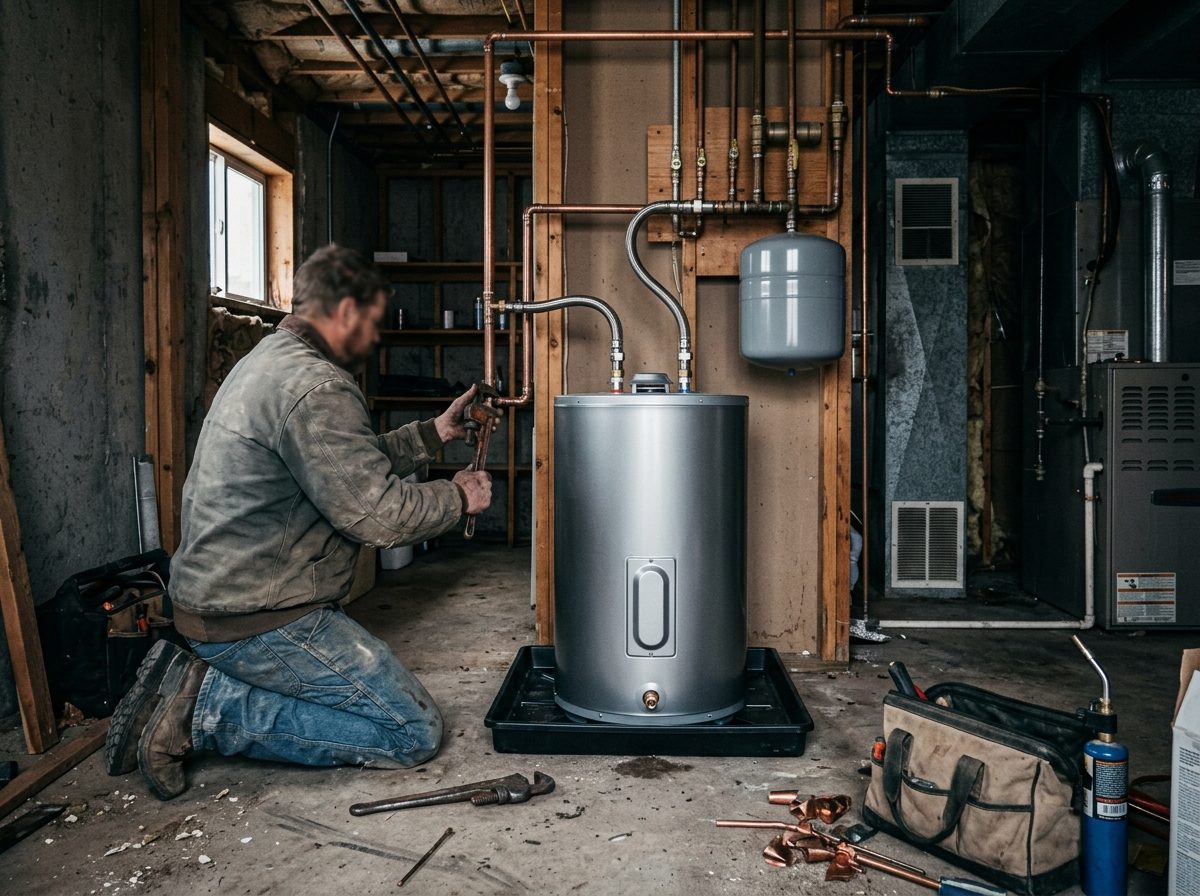
What actually fails in newer housing
With modern pipe, decay is not the issue. The failures are the small components fitted during construction: angle stops, flexible supply lines, toilet fill valves, washing machine hoses, expansion tanks and pressure regulators. Each has a service life measured in years rather than decades, and each lets go without warning.
Static pressure is the multiplier behind most of it. A regulator that has drifted passes street pressure through to fixtures never designed for it, and the damage arrives as a scatter of small failures that look like bad luck. An inexpensive gauge on an outdoor spigot settles the question in a minute, and correcting pressure protects everything behind it.
One more thing worth knowing about newer housing here: there is usually no repair history to work from. The original components are still in place, so the build year is a reliable guide to what is next in line — which makes it the single most useful fact to give whoever answers the phone.
Hard water on both sides of town
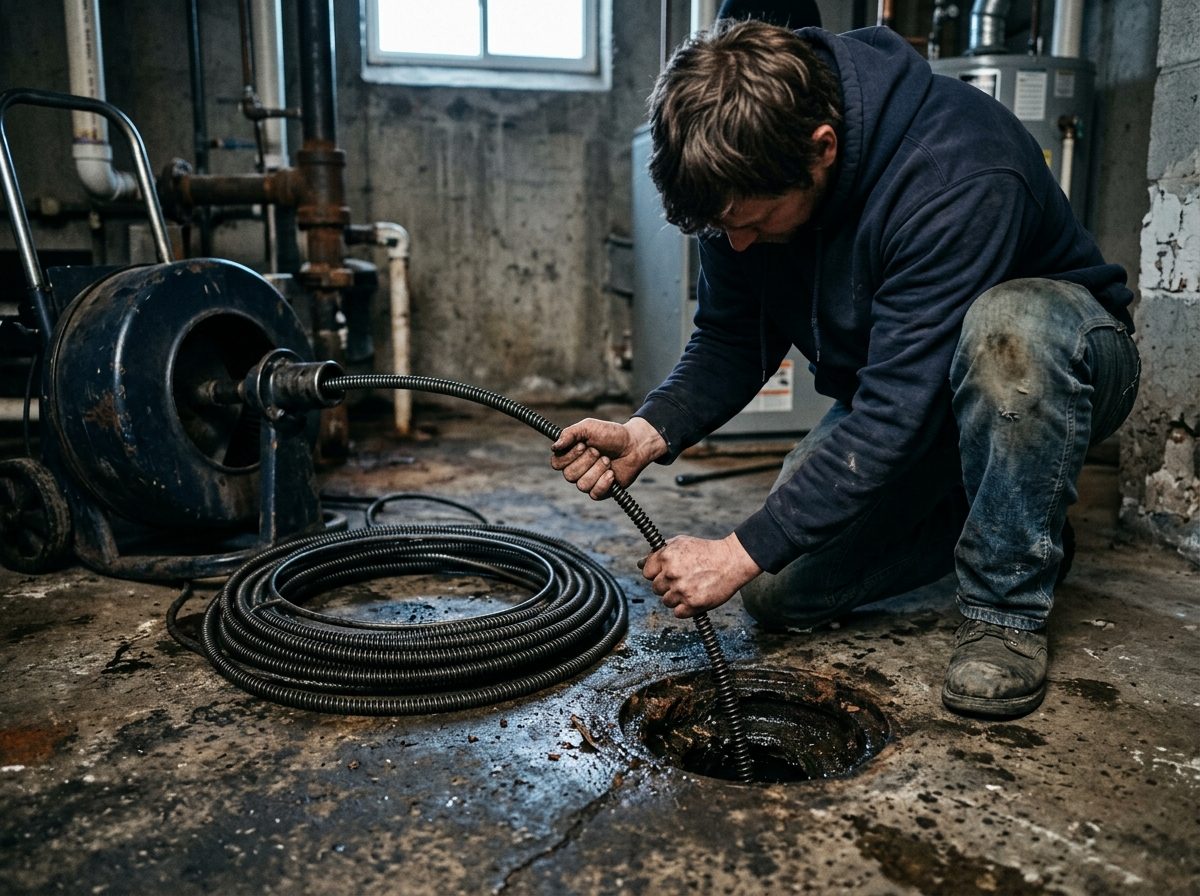
Mineral content is high whichever source you are on, and the heater absorbs most of the cost. Sediment settles across the tank floor and insulates the burner from the water; on electric units the elements scale directly and fail early. Aerators block, shower heads clog and fill valves stiffen.
Draining the tank annually is the cheapest life extension available. On a well, test the water as well, because composition varies property to property and hardness, iron and other results call for different equipment. Testing before buying is what stops a household owning the wrong system.
Fixtures scaling up quickly? Test the water before buying any treatment.
Ask about hard waterWind exposure and winter
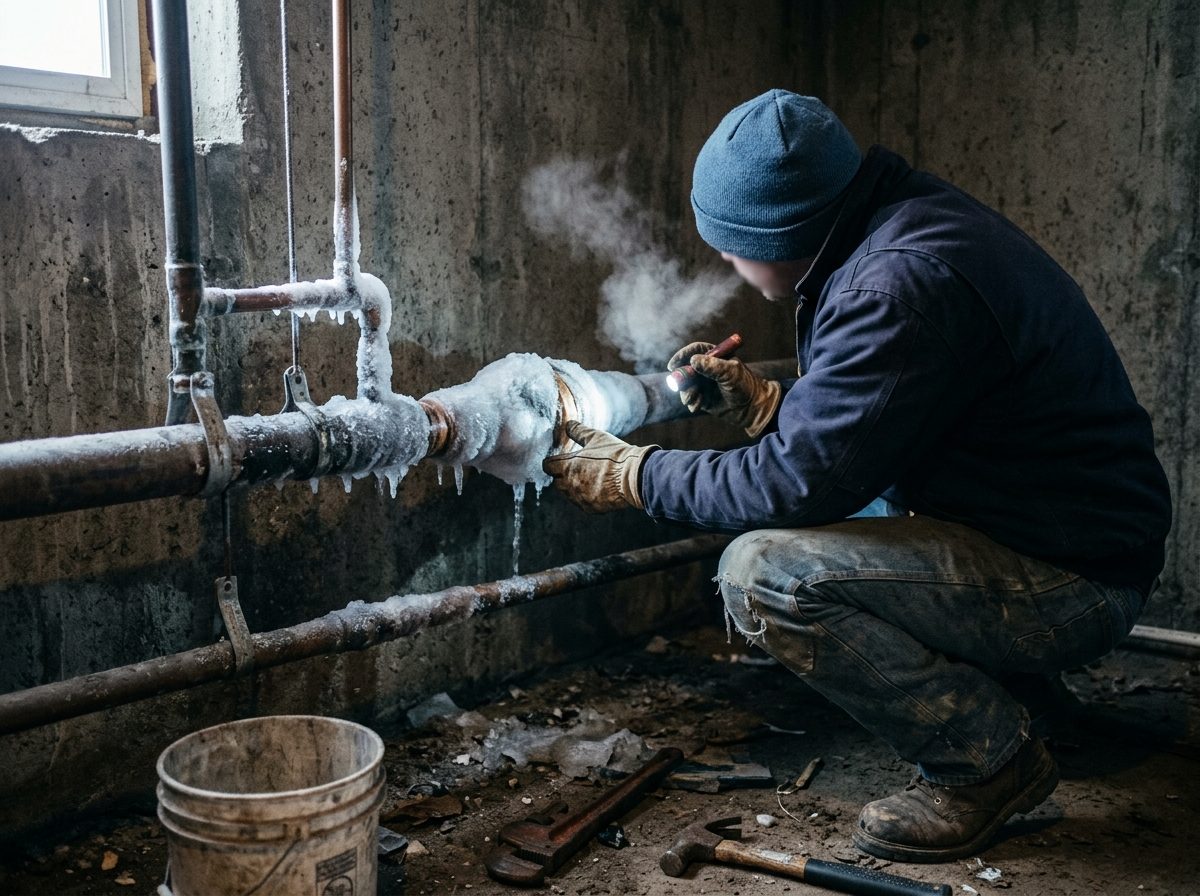
This is open ground with little shelter, so wind strips heat from exposed pipe far faster than the air temperature suggests, and frost runs deeper than on sheltered Front Range streets. On acreage, well houses and outbuildings freeze first because they are heated least.
Before winter: disconnect hoses, clear irrigation with compressed air rather than merely draining it, close crawlspace vents opened in summer, and test hydrants — one that weeps has usually stopped draining, which means the standpipe holds water and splits underground in the first hard freeze.
Outbuilding water not needed this winter? Isolating and draining its line removes the risk.
Ask about winterisingAir admittance valves and where they fail
Where a fixture sits too far from a conventional vent stack — an island sink, a basement bathroom added later, a fixture in a remodelled layout — the drain may be vented by an air admittance valve instead: a one-way mechanical device that lets air into the drain when water flows and closes to keep sewer gas out. They are legitimate and widely used, and they are also a moving part in a system that otherwise has none.
When one fails it does so in one of two directions. Stuck closed, the fixture cannot get air and drains slowly with a gurgle, exactly as if it had no vent at all. Stuck open, it stops keeping gas back and produces an intermittent sewer smell near the fixture, often noticeable only when something else in the house is draining. Both are commonly misread — the first as a blockage, the second as a dirty drain — and neither is fixed by the thing people usually try.
The useful part is that they are cheap and easy to replace when they can be reached, and the whole diagnosis often comes down to knowing one exists. Which is why it is worth finding out: they live under sinks, in cabinets, in access panels, and sometimes behind a panel nobody has opened since the work was done. A valve that has been buried in a sealed wall or a closed cabinet with no access is itself a fault worth putting right, because it will need replacing eventually and the cost then is entirely in reaching it.
Two checks either side of the line
In a subdivision: measure static pressure and note the heater's age. On acreage: test the hydrants and check what the pressure gauge reads. Different lists, same afternoon.
Nearby communities
Mead sits between Longmont, Berthoud and the Carbon Valley towns in southern Weld County.
Mead, Colorado
Mead plumbing questions answered
Because the components fitted during construction have much shorter service lives than the building. Angle stops, flexible supply lines, fill valves, washer hoses and expansion tanks wear out on a scale of years, and high static pressure shortens all of them further.
Screw an inexpensive gauge onto an outdoor spigot. Readings above the normal working range put every valve and seal under continuous stress, and the early signs are running toilets, dripping taps and a heater relief valve that discharges. If it reads high, the regulator is the part to address.
It depends where the fault is. From the pressure tank into the house is ordinary plumbing. The pump, drop pipe and wiring down the casing are well-system work needing specific equipment. Saying what the gauge reads and whether the pump runs settles which trade should attend.
That is short-cycling, usually caused by a pressure tank that has lost its air charge. The tank holds a cushion so the pump runs once every few minutes rather than constantly. Left alone it wears the pump out quickly, so it is worth addressing sooner rather than later.
For most households the return shows up as longer heater and appliance life rather than anything obvious at the tap. Test first — particularly on a well, where iron may be present and needs different equipment — then size to the household and confirm there is a drain for regeneration.
Before the first hard freeze, which can arrive in October. Draining is not enough on most systems because low points and the backflow device hold water gravity cannot move. On open ground the wind makes an early blowout more important rather than less.
Three to five years for most households, sooner where the tank is small or the household large. Every drain slowing at once rather than one fixture is the signal that the tank rather than the plumbing needs attention, along with unusually green growth over the field.
Same-day is normal for urgent problems in and around town, with Longmont and Loveland both close. Outlying acreage depends more on who is already working that direction. You will get an honest window plus instructions on what to shut off while you wait.
Probably not. A fixture vented by an air admittance valve behaves exactly like that when the valve fails — stuck closed it gurgles and drains slowly, stuck open it lets smell through. They are inexpensive to replace once found, which is the main difficulty: check under the sink and in any access panel before assuming a blockage.
It is an accepted solution where running a conventional vent is impractical, and it works — but it is a moving part with a service life, where a vent stack has neither. That is the trade-off. If one is fitted, the thing that matters is that it stays reachable, since replacing it is trivial with access and expensive without.
Southern Weld County, any hour
Mead, Longmont, Berthoud, Firestone and Johnstown.
(833) 621-2904 — answered 24/7, statewide.