Plumber in Berthoud, CO — 24/7 by phone
Home / Areas / Northern Colorado / Berthoud
Berthoud has an old centre with genuinely old housing and rings of newer building around it, and the two produce almost unrelated plumbing calls. The age of your particular house is the first thing worth establishing, because it decides whether the conversation is about materials or about components.
An old centre with new rings
Near the middle, houses date back far enough that the original supply and drain materials are still in service in places: steel pipe that has narrowed internally, drain lines that have roughened, and sewer connections laid when the street was. Around that, subdivisions from the last few decades where nothing has aged out and the failures are pressure regulators, heaters and fittings.
The mix means a plumber's first questions are about the building rather than the symptom. When you call, the build decade and whether anything has been remodelled are worth more than a detailed description of the drip.
Not sure which era applies? The build decade changes the whole picture.
Ask what applies to your house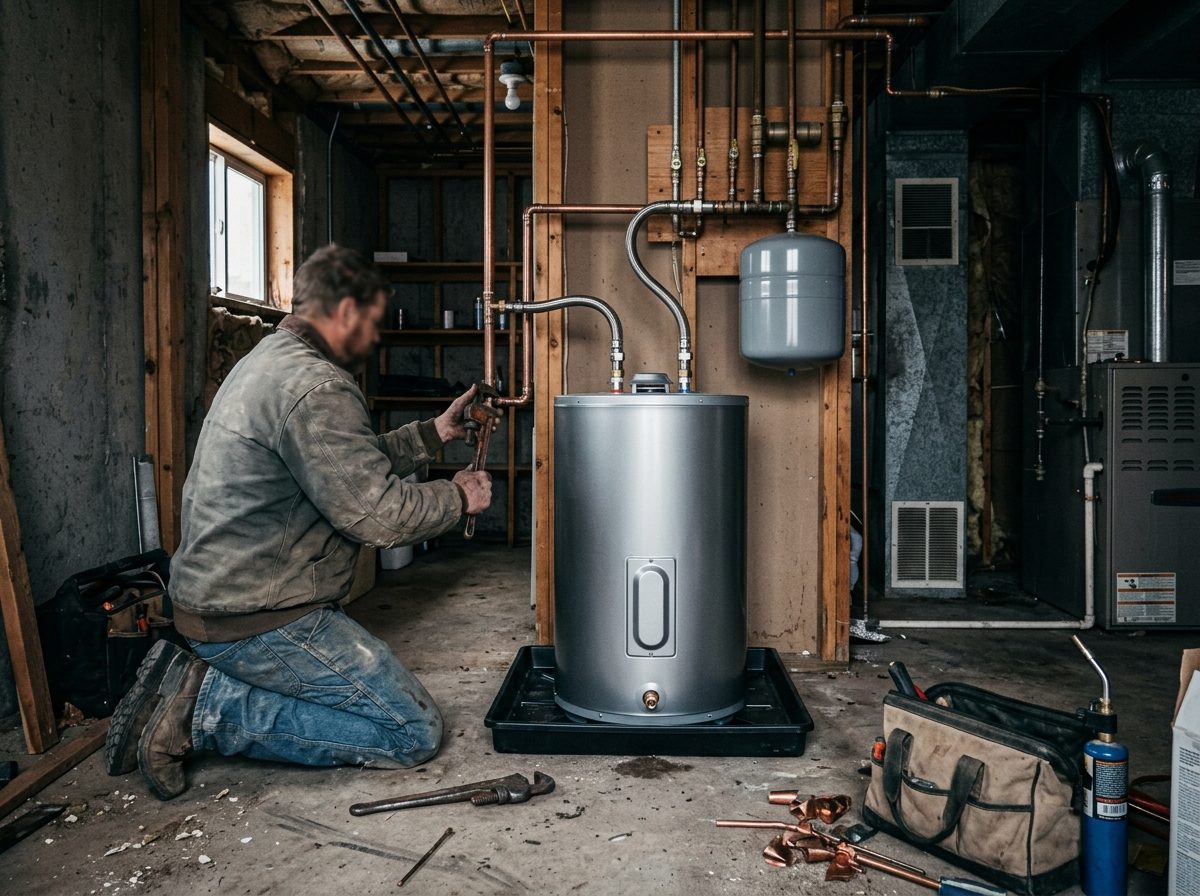
What the older streets throw up
Three patterns recur. Flow that collapses when two fixtures run, which points at supply pipe narrowed by internal corrosion rather than at the town supply — testing pressure at an outdoor tap separates the two. Drains that clear briefly and slow again over months, which points at build-up on the pipe wall rather than a single blockage. And roots at sewer joints where mature trees line the street.
None of those are emergencies until they are, and the sensible approach on an older house is sequencing rather than doing everything. A camera down the lateral, a pressure reading and the heater's age usually make the order obvious, and repiping can be staged by floor or by run rather than committed to all at once.
Hard water and heater life
Water here carries a substantial mineral load, and the heater absorbs most of the cost. Sediment settles across the tank floor so the burner works through scale rather than steel, run times lengthen and recovery slows. On electric models the elements scale directly and fail early.
Draining the tank annually is the cheapest life extension available. The sacrificial anode rod is worth checking at the same time — it is a consumable designed to corrode instead of the tank lining, and in water like this it is often spent years before anyone looks.
Heater slower than it was? Sediment and a spent anode rod are the usual pair.
Ask about heater maintenanceWhere town gives way to acreage
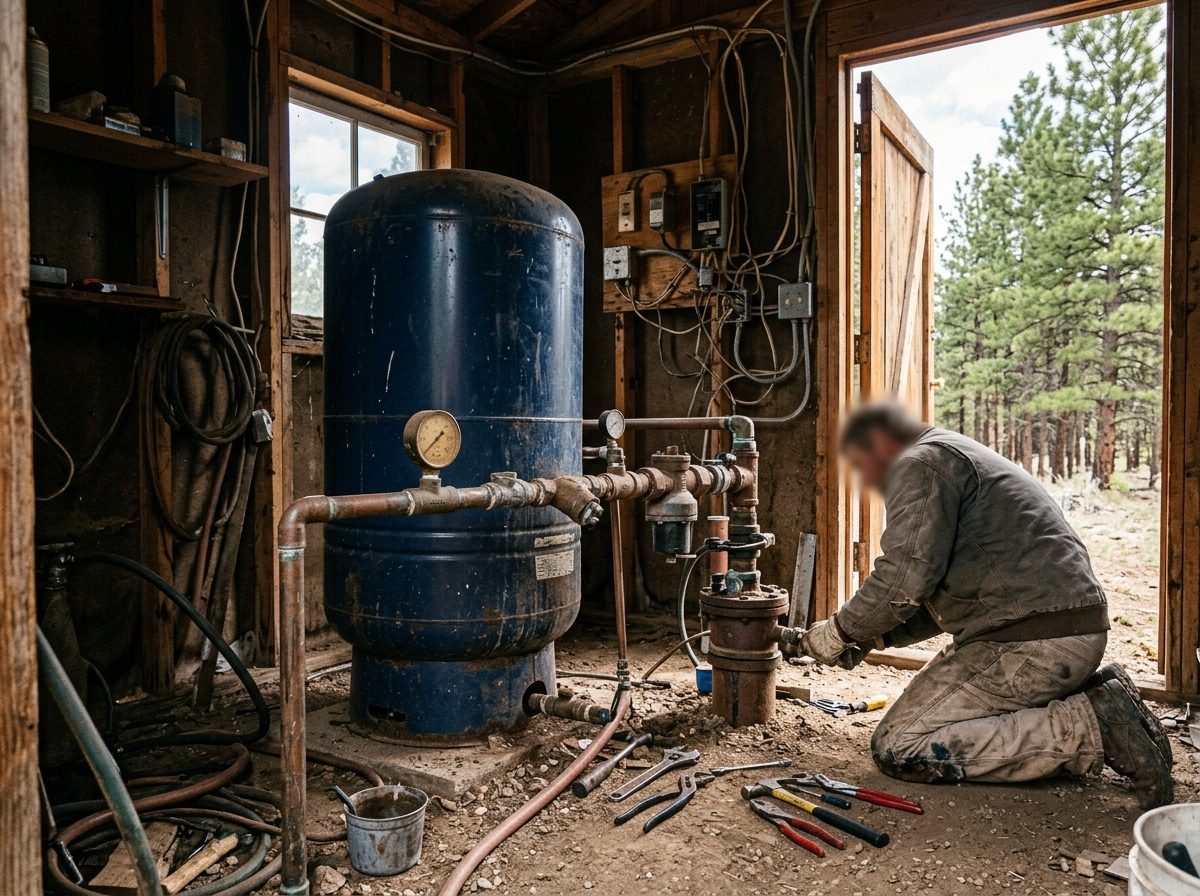
A short distance out, properties come off town services onto wells and septic. That changes the failure list entirely: pressure tanks losing their charge and cycling the pump, pressure switches, pumps at the end of their life, and septic tanks overdue for pumping.
Because those all present as poor pressure or nothing at the tap, three answers narrow it fast on the phone — what the gauge reads, whether the pump can be heard running, and whether the breaker has tripped. It also decides which trade should attend, since the pump and casing wiring are well work while everything past the tank is ordinary plumbing.
On a well outside town? Say what the pressure gauge reads.
Ask about a well systemThermal expansion in a closed system
When a house has a backflow preventer or a pressure reducing valve on its incoming supply — normal on newer connections and increasingly common on older ones after work — the plumbing becomes a closed system. Water can come in but it cannot go back out toward the main. That matters because heated water expands, and in a closed system the expansion has nowhere to go except into pressure.
The symptoms are easy to attribute to something else. A temperature and pressure relief valve on the water heater that discharges periodically, usually shortly after a heating cycle. Taps that thump or a brief surge when first opened. Toilet fill valves and supply connections failing more often than seems reasonable. In each case the component is not faulty; it is being subjected to pressure spikes it was never meant to see.
The remedy is a thermal expansion tank, sized for the heater and charged to match the system pressure — and the charge is the part that gets forgotten. An expansion tank whose air side has lost its pressure is a piece of pipe with a dead bladder in it, doing nothing, and it fails silently like everything else in this category. Where a relief valve is discharging repeatedly, the important thing is to treat it as a symptom rather than a nuisance: it is telling you the pressure is going somewhere it should not, and capping or replacing it addresses the messenger.
Worth five minutes
Find the main shutoff and confirm the handle turns. In an older house a valve that has not moved in decades sometimes will not close, and replacing one is a small scheduled job.
Nearby communities
Berthoud sits between Loveland and Longmont, with Johnstown, Mead and the county farmland close by.
Berthoud, Colorado
Berthoud plumbing questions answered
That usually means supply pipe narrowed by decades of internal corrosion rather than a problem with the town supply. Testing pressure at an outdoor hose bib separates the two: if what arrives is normal and interior flow is not, the pipe is the constraint. Replacing the affected runs is the durable fix.
No. It can be staged by floor, by run, or by starting with the horizontal mains and the fixtures you use most. What sets the order is where flow is worst and where the pipe is easiest to reach. A contractor who insists a whole-house job is the only option is worth a second opinion.
Recurring blockages in the same place usually mean grease and scale on the pipe wall rather than one object. Cabling makes a channel through it and restores flow, but the layer stays, so it returns within months. Jetting scours the wall back toward the original bore and holds far longer.
For most households the return shows up in heater and appliance life rather than anything obvious at the tap. Test the water first so hardness is a real number and you know whether iron is present, then size the equipment to the household rather than to the largest unit available.
A sacrificial rod inside the water heater that corrodes in place of the tank lining. In mineral-heavy water it can be used up within a few years, after which the tank itself starts corroding. Replacing a spent rod is inexpensive and it is the most overlooked way to extend a heater’s life here.
Same-day is normal in town and a couple of hours is common for urgent problems, with Loveland and Longmont both close. Addresses out toward the county roads add drive time, and during a regional cold snap the whole corridor is busy at once.
It depends where the fault is. From the pressure tank into the house is ordinary plumbing. The pump, drop pipe and casing wiring are well-system work needing specific equipment. Saying what the gauge reads and whether the pump runs usually settles which trade should be sent.
Yes. The lateral is the one major system a standard home inspection does not look inside, and on a street with mature trees root intrusion at clay joints is common. Finding a belly, an offset joint or roots before closing turns it into a negotiating point rather than a bill.
More often the system is closed and has nowhere to put the expansion when water heats. A pressure reducing valve or backflow device on the incoming supply does that, and the relief valve is doing its job by releasing the excess. The fix is a correctly sized and correctly charged expansion tank — not replacing the valve, and certainly not plugging it.
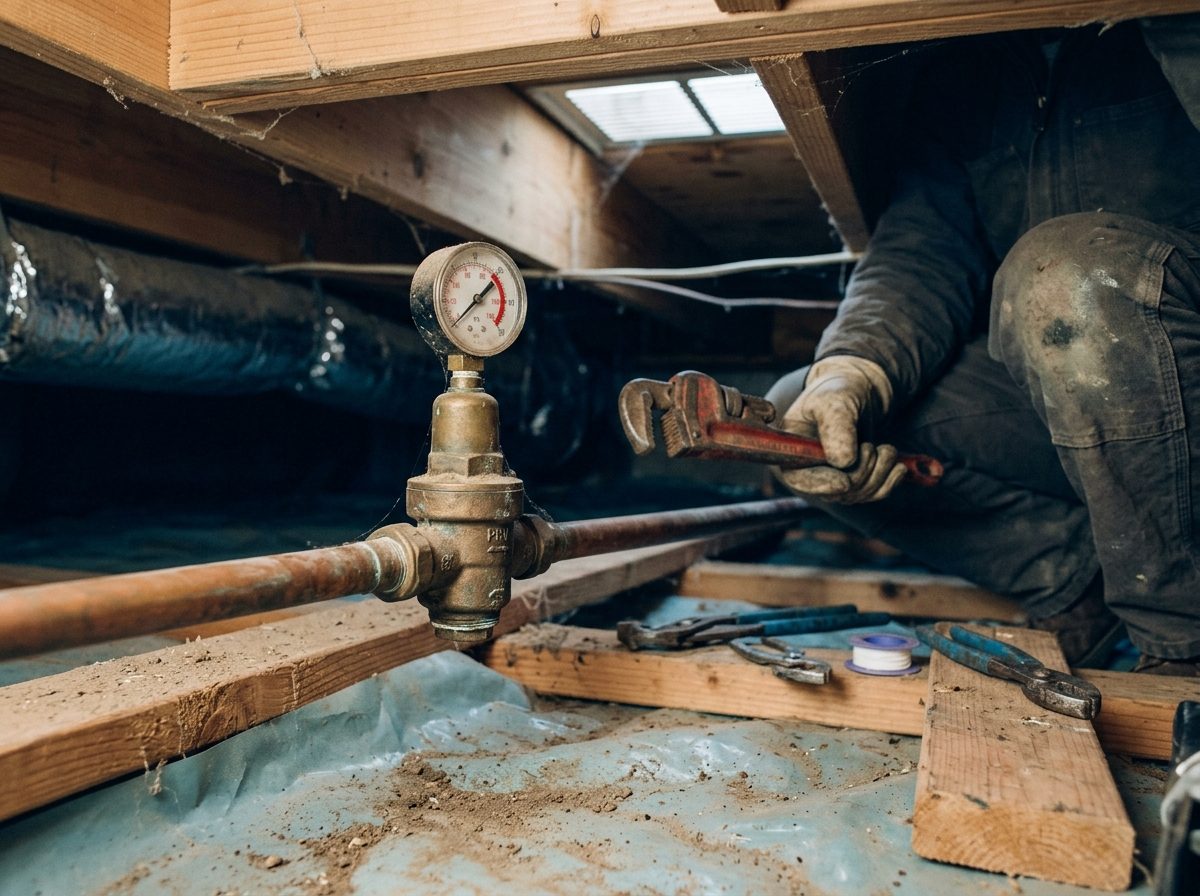
It is worth measuring once, with an inexpensive gauge on an outdoor tap. Pressure that is too high shortens the life of every valve, fill mechanism and flexible connection in the building, and it is a common cause of failures that look random. If it reads high, a pressure reducing valve is a small job that quietly protects everything downstream.
Between Loveland and Longmont
Berthoud, Johnstown, Mead, Milliken and the surrounding country.
(833) 621-2904 — answered 24/7, statewide.