Plumber in Milliken, CO — 24/7 help by phone
Home / Areas / Northern Colorado / Milliken
Milliken is a Weld County farm town that has taken on a substantial ring of newer housing. The result is a mix: modest older houses in the centre, newer subdivisions around them, and working agricultural property just beyond. Water chemistry is the one thing all three share.
A farm town that grew
In the older streets, plumbing questions are about materials — supply pipe that has narrowed internally, drain lines that have roughened, sewer connections of the same era as the road. In the newer subdivisions they are about components: heaters, regulators, expansion tanks and supply lines, all installed in cohorts and therefore failing in cohorts.
Beyond the town edge the picture changes again, to properties with outbuildings, hydrants and often a private well. Saying which of the three you are calling from is the fastest way to a useful answer.
In town, subdivision or on land? Saying which changes the diagnosis entirely.
Ask what applies to you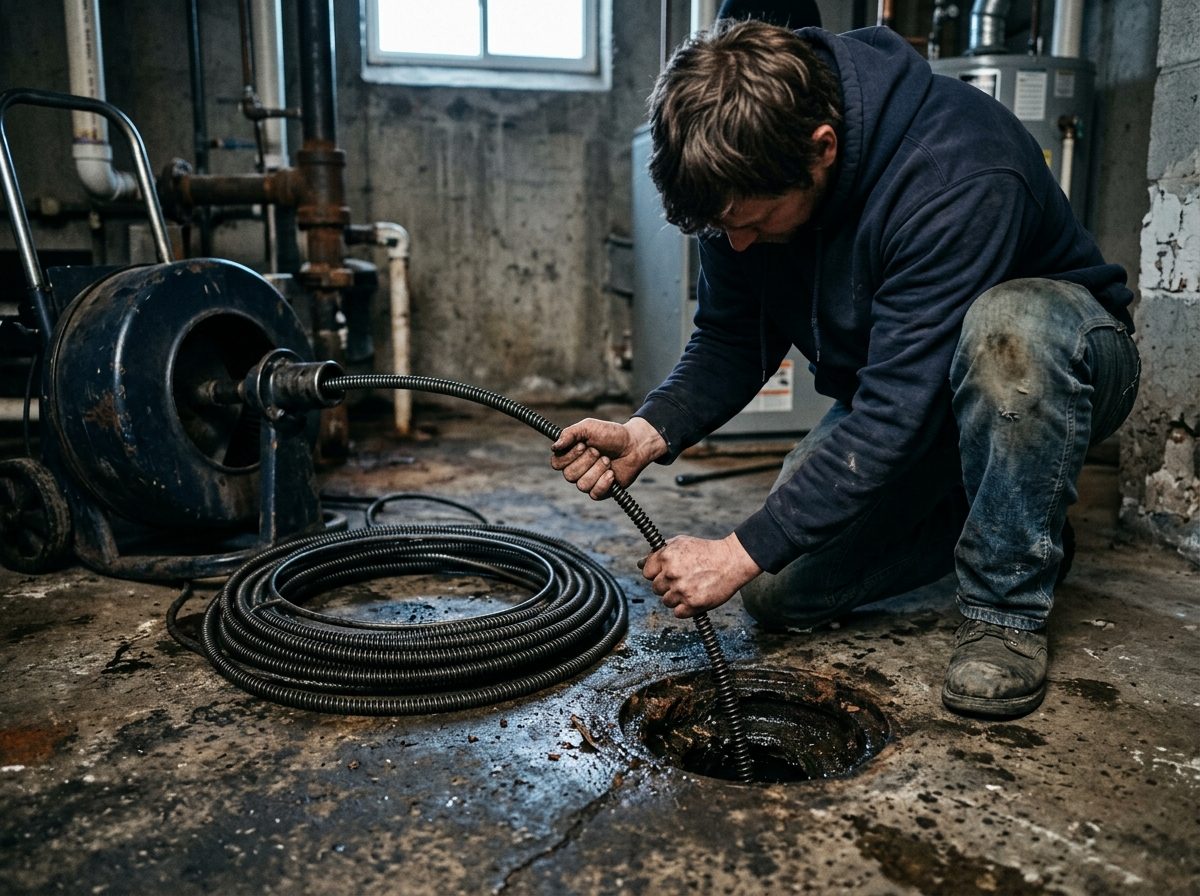
The hardest-working problem here
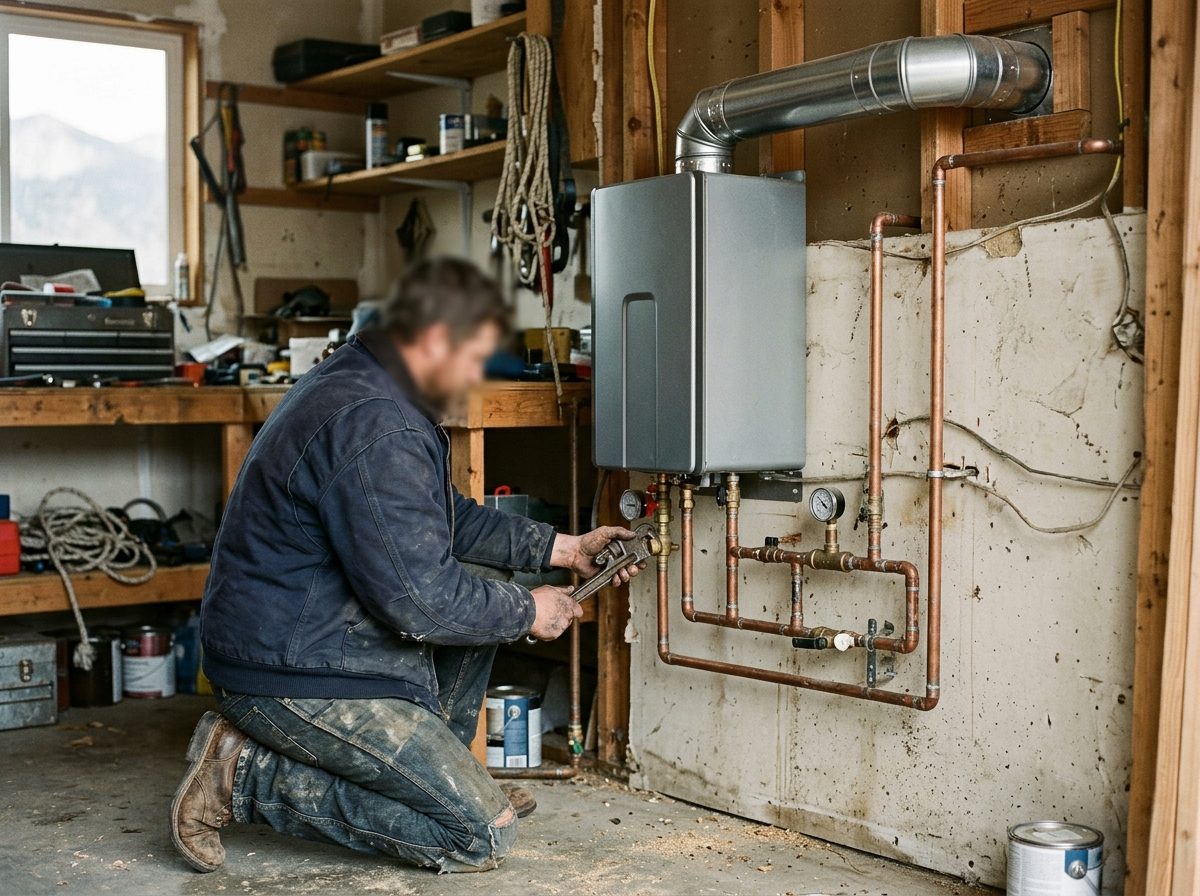
Water in this part of Weld County is decidedly hard, and it works on everything continuously. Sediment settles in the water heater so the burner heats through scale rather than steel, and recovery slows until a household that never ran out of hot water starts running out. Electric elements scale directly and burn out early. Aerators block, shower heads clog, fill valves stiffen and start to weep, and dishwashers and washing machines wear faster than they should.
Two responses matter more than buying equipment. Drain the heater annually — it is the cheapest life extension available. And check the sacrificial anode rod at the same time, because it is a consumable designed to corrode instead of the tank, and in water like this it is frequently spent long before anyone looks at it.
Drains, mains and telling them apart
One slow fixture is usually local: a trap, a branch line, or a venting issue if there is gurgling alongside it. Several fixtures slowing together, or the lowest drain in the building taking water back, means the main line is involved — and that calls for a different response.
With a main-line symptom the first move is to stop using water entirely, because everything you run has to go somewhere and that somewhere is your floor. Clearing restores flow; an inspection afterwards is what tells you whether the cause was a passing blockage or the pipe itself. On older streets with mature trees, roots at a joint are the usual explanation.
Lowest drain backing up? Stop all water use in the house, then call.
Ask about a backupOutdoor water and winter
Lots here are generous and outdoor water is a bigger part of the picture than in a compact suburb — extensive irrigation, multiple hose bibs, and on the larger properties hydrants and stock tanks. Autumn is therefore the busiest predictable season.
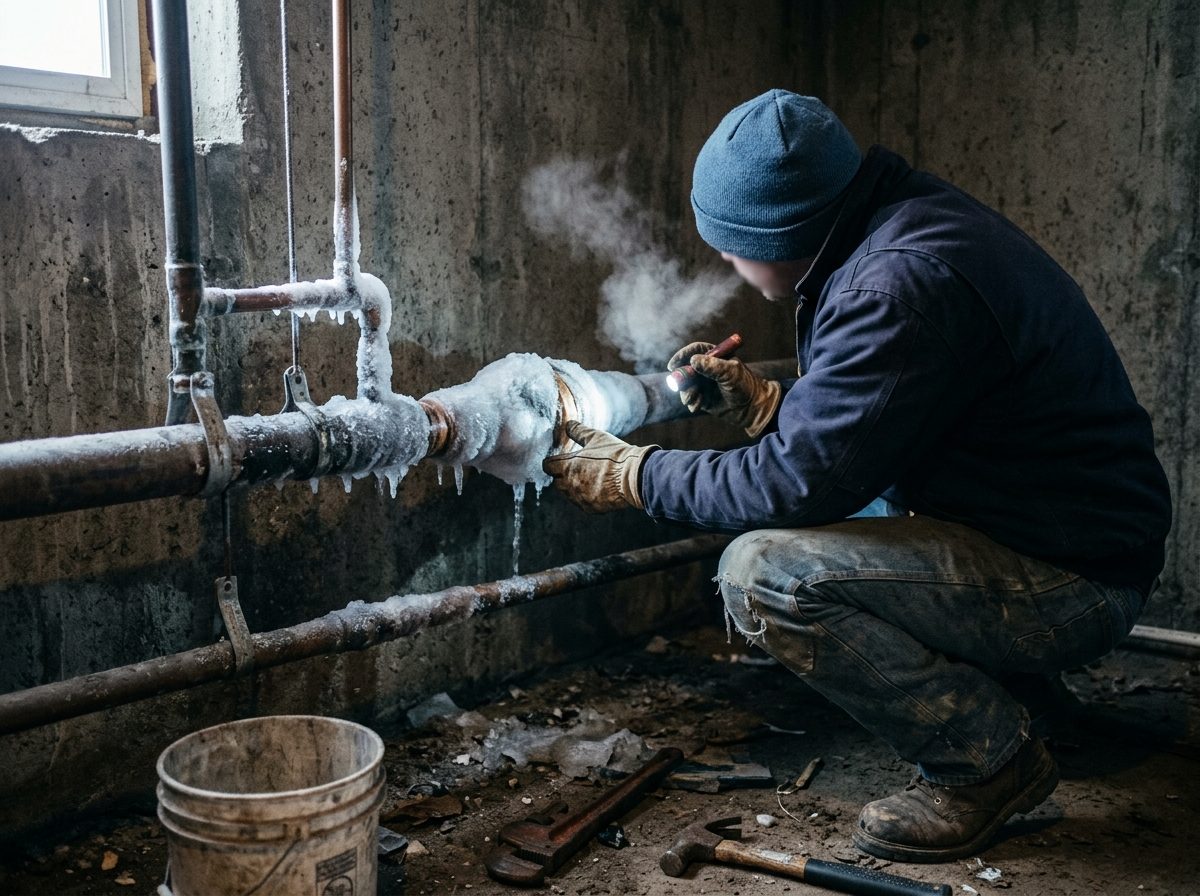
Irrigation not cleared with compressed air before the first hard freeze holds water at its low points and at the backflow device. Hoses left connected hold water against the bib and defeat its frost protection. And hydrants that weep have usually stopped draining, which means the standpipe holds water and splits underground in the first hard freeze.
Sprinklers still charged? Compressed air clears what draining cannot reach.
Ask about winterisingWhat a kitchen drain actually takes
Kitchen drains block more than any other in a house, and the reason is consistent: fats and oils go down warm as a liquid and cool into a solid coating on the pipe wall. Each meal adds a little. The bore closes from the inside over months, and then something ordinary — a large pot of water, a run of dishes — finally overwhelms what is left of it.
Which explains the pattern people describe, of a drain that was fine and then blocked suddenly. It was not fine; it was narrowing. And it explains why clearing it buys a few months rather than solving it, because rodding removes the obstruction without removing the coating that produced it. A kitchen drain being cleared every six months is a drain that needs a different approach rather than a more frequent one.
The habits that actually change it are unglamorous and they work. Fats, oils and grease go in the bin rather than down the sink, including the grease poured off a pan and the residue wiped from it. Plates get scraped rather than rinsed. A garbage disposal, if fitted, gets used sparingly — it grinds solids small enough to go down and not small enough to stay in suspension, so they settle further along and become the point at which everything else collects. And where a line has already been coated for years, jetting scours the wall rather than punching through the middle, which is the difference between a line that is clear and one that is merely passing water.
Before the first hard freeze
Irrigation cleared, every hose disconnected, hydrants tested, heater flushed. Anything that drips or sticks now is a candidate to split in the first cold snap.
Nearby communities
Milliken sits in southern Weld County between Johnstown, Platteville and Greeley.
Milliken, Colorado
Milliken plumbing questions answered
Sediment. In hard water a layer builds across the tank floor, insulating the burner from the water and slowing recovery, so the same tank delivers less usable hot water. An annual drain restores much of it. If the tank is also rusting at the fittings or damp underneath, plan a replacement instead.
It is a sacrificial rod inside the heater that corrodes in place of the tank lining. In mineral-heavy water it can be consumed within a few years, and once gone the tank starts corroding instead. Checking and replacing it is inexpensive, and it is the most overlooked way to extend a heater’s life.
For most households on hard supply the return comes as longer heater and appliance life rather than anything obvious at the tap. Test first so hardness is a real number and you know whether iron is present, then size the equipment to the household and confirm there is a drain for regeneration.
That points at the main sewer lateral rather than a branch, because the floor drain is the lowest opening in the system. Stop running water into the house, then get the line cleared and inspected. On older streets with mature trees, roots at a pipe joint are the most common cause.
That is usually local — a trap, a branch, or a venting problem if there is gurgling with it. It does not point at the main line. Clearing the branch normally resolves it, and if it recurs quickly the question becomes build-up on the pipe wall or inadequate venting.
Before the first hard freeze, which can arrive in October. Draining is not sufficient on most systems, because low points and the backflow device hold water that gravity cannot move. On a large lot with long runs, booking early in the season is worth doing.
Yes, especially before winter. A frost-free hydrant is designed to drain its standpipe below the frost line whenever it closes, and one that weeps often no longer drains. Water left in that pipe through a hard freeze splits it underground, and the repair becomes digging.
Same-day is normal in town for urgent problems, with Greeley and the corridor towns close. On outlying properties it depends more on who is already working that direction, and a booked visit is often faster in practice than waiting for an emergency opening.
Because clearing it removes the blockage without removing the grease coating on the pipe wall that caused it, so the line narrows again from the same point. Keeping fats and oils out of the sink is what changes the pattern; jetting rather than rodding is what deals with a line that has already been coated for years.
It shifts the problem rather than removing it — solids ground small enough to flush away often settle further along the line, becoming the point where grease and everything else collects. Used sparingly it is fine; used as the primary route for food waste it shortens the interval between blockages, and on a septic system it roughly doubles how fast the tank fills.
Southern Weld County, any hour
Milliken, Johnstown, Platteville, La Salle and Greeley.
(833) 621-2904 — answered 24/7, statewide.