Plumber in La Salle, CO — one call, any hour
Home / Areas / Northern Colorado / La Salle
La Salle is a small town in farm country, and plumbing here is as much about the property as the house. Water reaches barns, shops, stock tanks and hydrants as well as kitchens, and the distances involved change what goes wrong and how it should be scheduled.
Small town, farm country
In town, the housing is modest and the plumbing straightforward: drains, heaters, fixtures, and supply pipe whose age varies street by street. Outside town, the picture changes entirely. A working property may have several hundred feet of buried line, multiple structures with water, and equipment that has been in service for decades.
The most useful thing to establish on a call is therefore the scope: how many buildings have water, whether anything is fed by a well, and whether livestock depend on any of it. That last point matters for urgency in a way it never does in a suburb.
Livestock depending on the water? Say so when you call — it changes the priority order.
Ask about an urgent farm call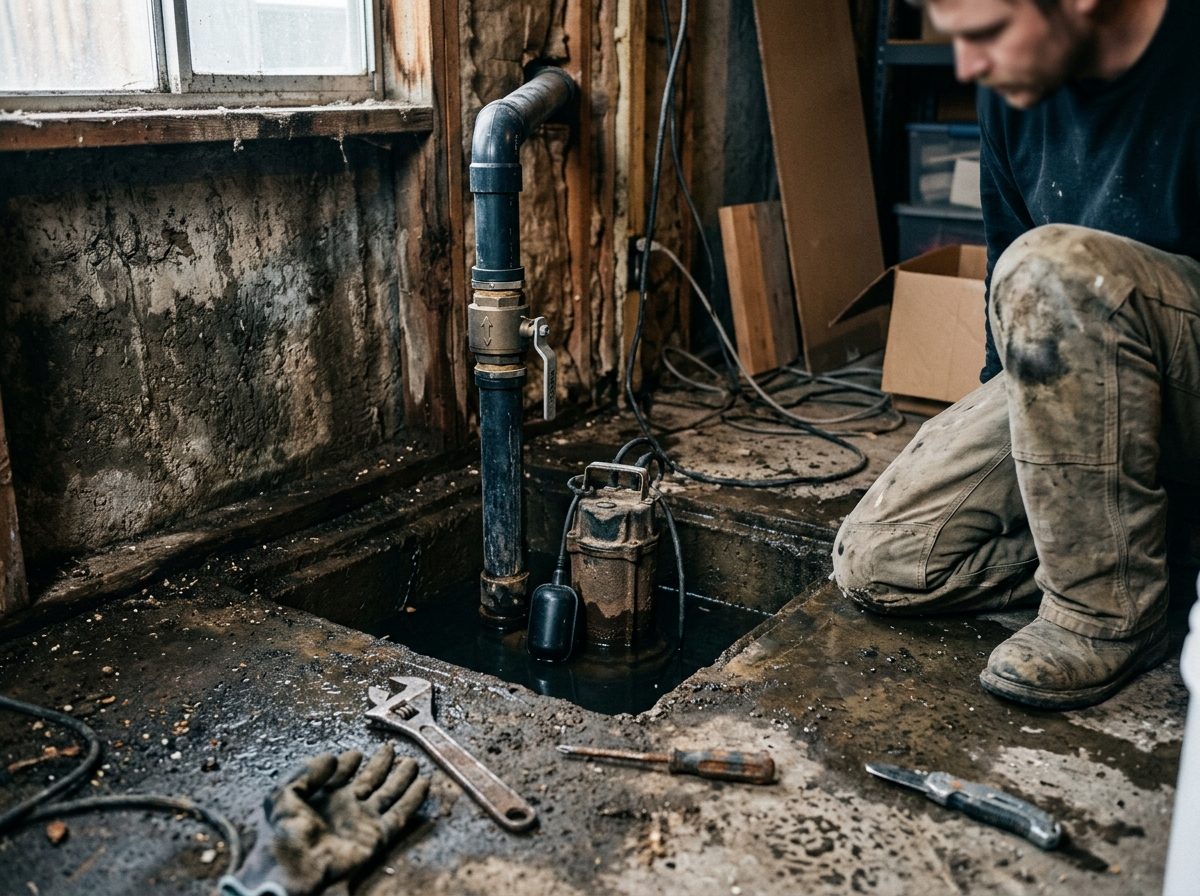
Hydrants, stock water and long runs
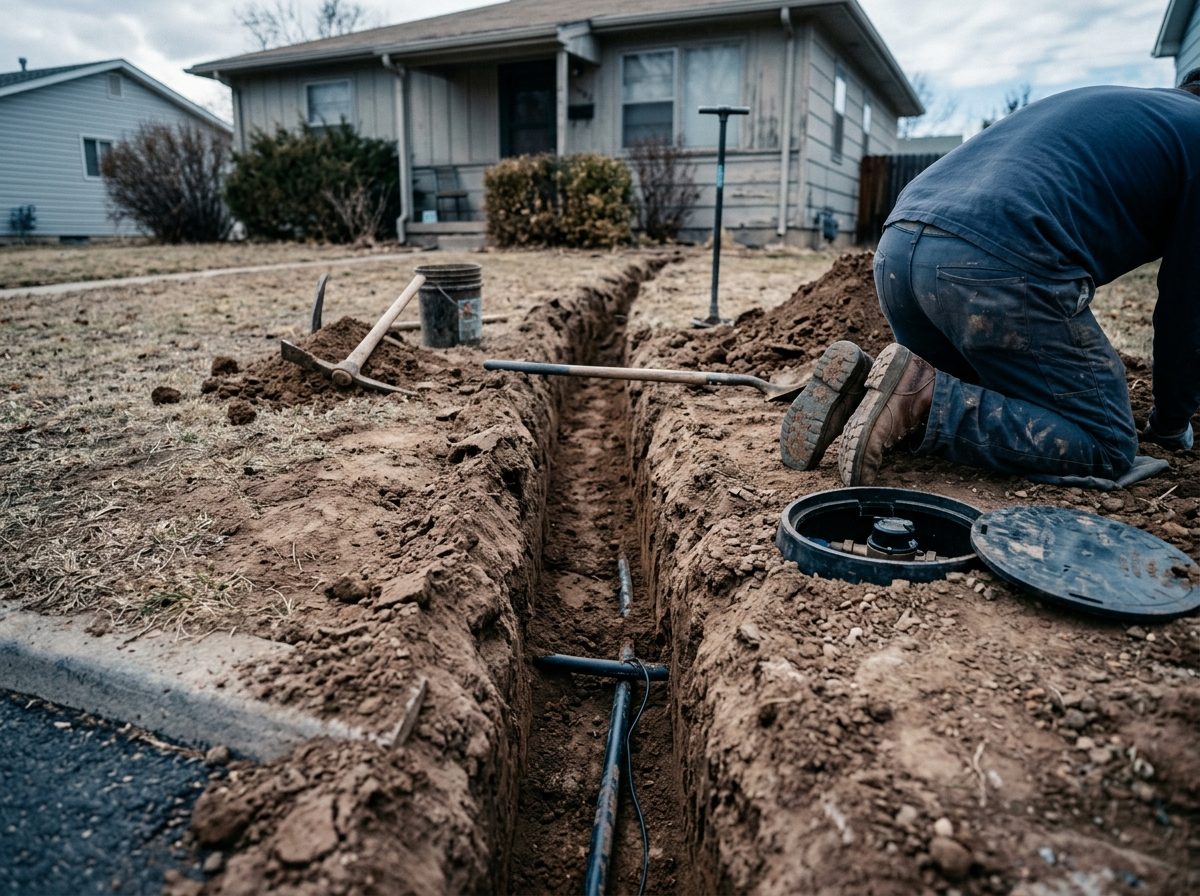
Frost-free yard hydrants are the characteristic plumbing item of a property like this, and their failure mode is specific. The hydrant is designed to drain its standpipe below the frost line each time it closes; when the plunger or seal fails, it either weeps continuously or holds water in the pipe. Water left standing there through a hard freeze splits the standpipe underground, and the repair becomes excavation in frozen ground.
Stock tanks bring float valves that stick and overflow, and long buried runs to outbuildings bring leaks that can go unnoticed for weeks because nothing visible changes. A sudden jump in water use with no obvious cause is worth taking seriously on a property with that much line in the ground.
Wells and what fails first
On a well, the failure list is short and predictable. The pressure tank loses its air charge, so the pump starts and stops every few seconds instead of running properly — which destroys pumps quickly. The pressure switch stops making contact. The pump itself reaches the end of its working life. And occasionally the breaker has simply tripped.
Because all of those look identical from inside the house, three answers narrow it before anyone drives out: what the gauge reads, whether the pump can be heard running, and whether the breaker has tripped. Water quality is worth a mention too — testing tells you whether hardness, iron or something else is the issue, and out here nobody else is testing it for you.
Nothing at the tap? Gauge reading, pump noise, breaker — those three narrow it fast.
Ask about a well systemWhy one visit should cover four jobs
Distance is the defining economic fact of rural plumbing. A plumber who drives out will want to justify the trip, and you will get better value by presenting a list rather than a single item: the hydrant that weeps, the heater that is due, the running toilet, the slow drain in the utility room.
That approach also helps in an emergency, because someone who has been to the property before knows the layout, the shutoffs and what is buried where. Where a neighbour needs work too, two jobs on one road is an easier trip to schedule than one — and both parties usually wait less.
Several jobs waiting? List them and book one visit rather than four.
Ask about a single visitTwo kinds of well pump, and why it matters
Private wells are served by one of two arrangements, and knowing which you have changes both what can go wrong and what a repair involves. A jet pump sits above ground, usually in a pump house or a basement, and draws water up by suction. A submersible sits at the bottom of the well and pushes water up. Both are common around here, often on neighbouring properties, and they fail differently.
A jet pump is accessible, which makes it cheaper to work on, but suction has limits — it cannot lift water beyond a certain depth, and it loses its prime if air gets into the line. Losing prime is the characteristic jet pump fault: the motor runs normally and no water arrives, which sounds like a catastrophic failure and is often a simple one. A submersible cannot lose prime and generally lasts longer, but reaching it means pulling the pump and the drop pipe out of the well, which is why the labour on a submersible repair is what it is.
For a homeowner the practical value is in what you can report. Knowing which type you have, whether the motor can be heard running, and what the pressure gauge reads narrows the fault substantially before anyone arrives. A pump running with no water and no pressure suggests one set of causes; no sound at all suggests another entirely, often electrical rather than mechanical. Those are different visits, and the distinction is usually audible from the surface.
Before the first hard freeze
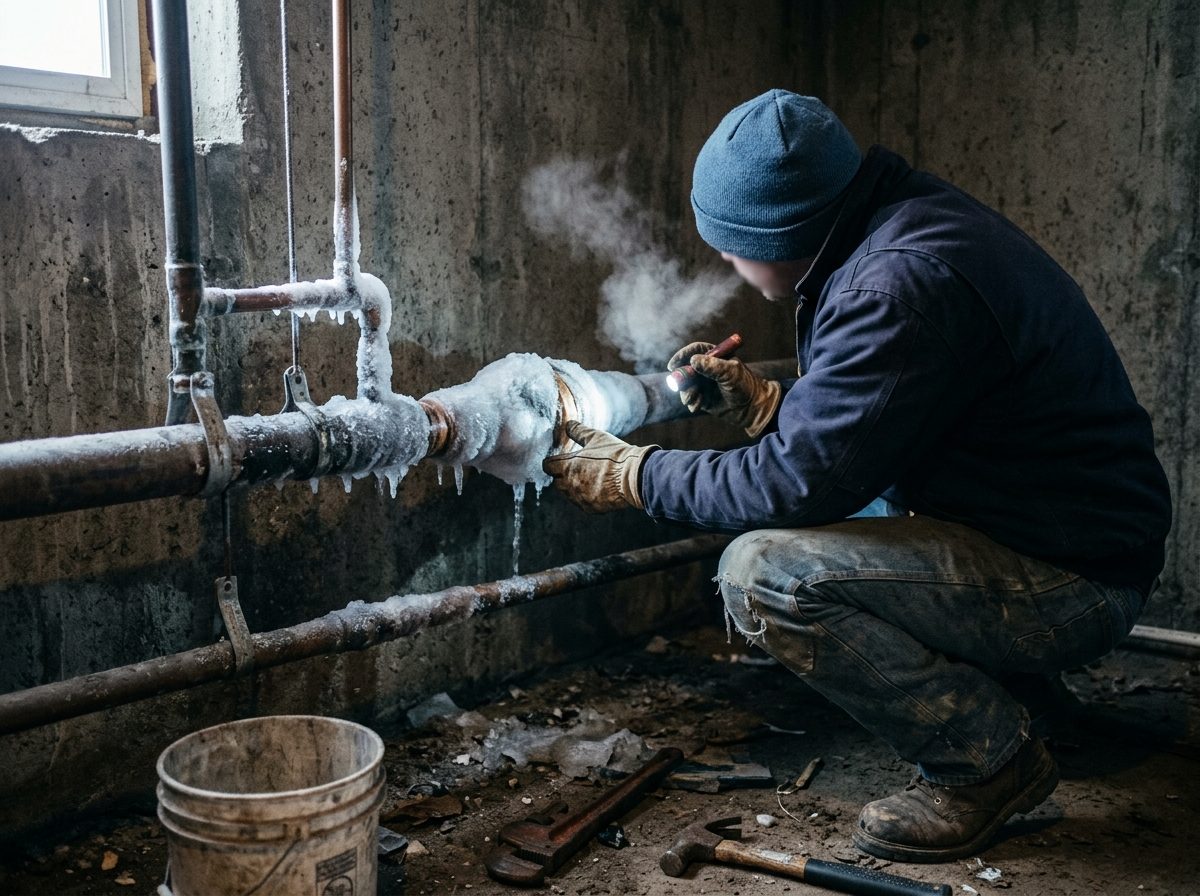
Walk every hydrant, hose bib, stock tank and pump house once. Anything that drips, sticks or drains slowly now is a candidate to split underground later — and it all fits into one scheduled visit.
Nearby communities
La Salle sits south of Greeley in Weld County farmland, with Evans, Gilcrest, Platteville and Kersey nearby.
La Salle, Colorado
La Salle plumbing questions answered
It is a poor candidate for waiting. The hydrant is meant to drain its standpipe below the frost line whenever it closes, and one that leaks often no longer drains properly. Water sitting in that pipe through a hard freeze splits it underground, which converts a modest repair into digging in frozen ground.
On a property with long buried runs, an underground leak is a real possibility, and it can continue for weeks without any visible sign. Isolate sections if you have valves to do it with, and check for ground that stays damp or unusually green. A meter reading with everything shut off will confirm whether water is leaving the system.
That is short-cycling, and the usual cause is a pressure tank that has lost its air charge. The tank is supposed to hold a cushion so the pump runs once every few minutes. Left alone, short-cycling wears a pump out fast, so it is worth fixing promptly rather than tolerating.
Yes, and more so out here than in town, because nobody else is doing it for you. Hardness and iron affect appliances and fixtures; other results affect people. Annual testing is a sensible habit, and it is the only way to know whether treatment equipment is solving a problem you actually have.
It depends who is already working in your direction, and you will get a straight answer rather than a hopeful one. For emergencies, the advice on the phone matters as much as the arrival time, because knowing what to shut off in the first five minutes limits the damage. For everything else, a booked visit is usually sooner in practice.
That is the sensible way to work out here. Give a full list when you call — house, shop, barn, hydrants, tanks — so the right parts and equipment come on the truck. A second trip for a fitting that could have been on the first is the expensive part of rural plumbing.
Three to five years suits most households, sooner where the tank is small or the household is large. The signal that matters is every drain slowing at once rather than one fixture, along with unusually lush growth over the field or a backup after a busy weekend.
Test first, because they do different jobs. Softening addresses the calcium and magnesium that leave scale; filtration deals with sediment, iron, taste or odour depending on the media. Buying equipment before testing is how households end up with the wrong system and the same problem.
On an above-ground jet pump it often means it has lost its prime, which is a far smaller problem than it sounds — air has got into the suction side. On a submersible it more often points at the pump itself or a break in the drop pipe. Knowing which type you have, and what the pressure gauge reads, narrows it a long way over the phone.
Weld County farm country
La Salle, Evans, Gilcrest, Platteville, Kersey and the surrounding farms.
(833) 621-2904 — answered 24/7, statewide.