Plumber in Kersey, CO — 24/7 help by phone
Home / Areas / Northern Colorado / Kersey
Kersey is a small town in heavily irrigated farmland east of Greeley. Plumbing here follows the pattern of the country around it: water reaching several buildings, long buried runs, hydrants, and hard water working on everything it touches.
A small town in irrigated farmland
Inside town the housing is modest and the plumbing straightforward. Immediately outside, properties take on the character of working holdings — a house, a shop, a barn, stock water, and hydrants, fed either from town service or from a private well.
Because contractors covering this area also cover a lot of surrounding country, scheduling matters. Emergency response depends on who is already heading your way; routine work is better booked, and better bundled, than requested piecemeal at short notice.
Several jobs waiting? List them and book one visit rather than four.
Ask about a single visit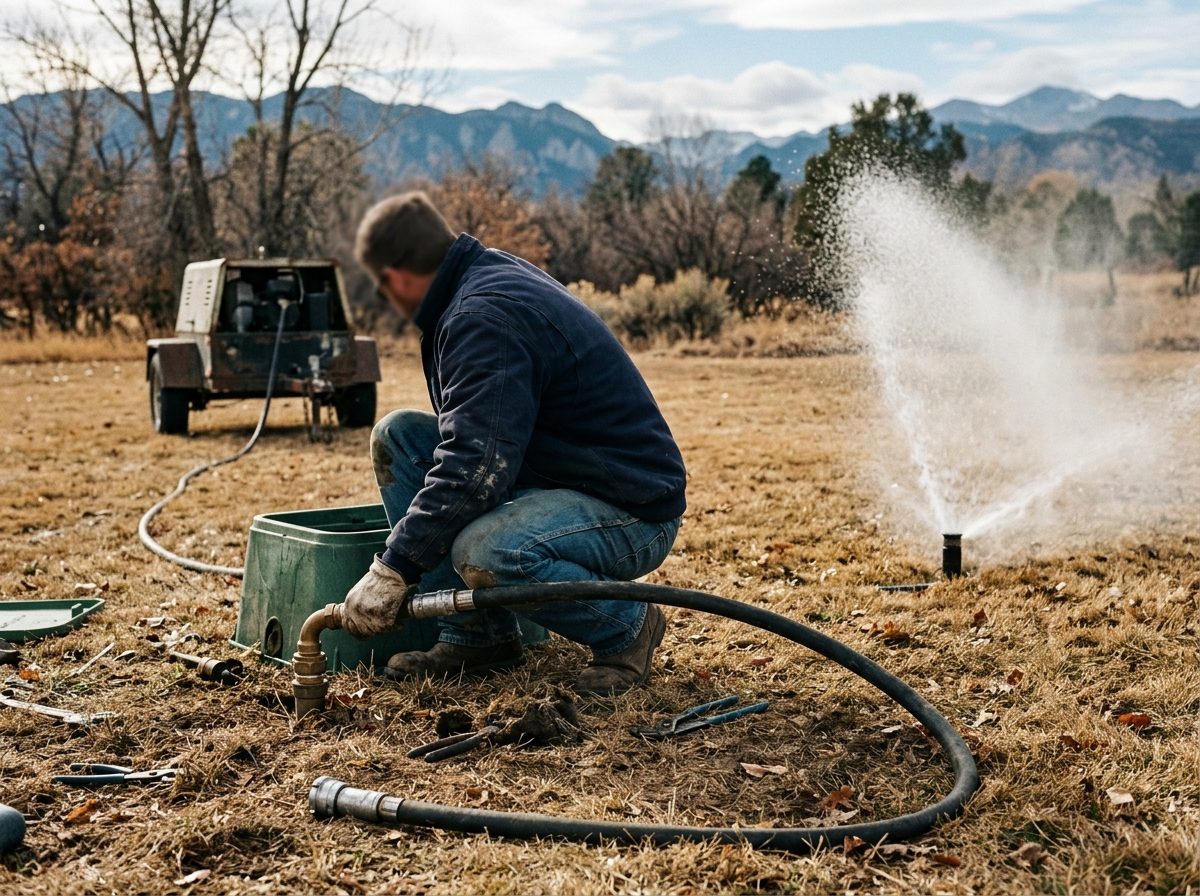
Scope decides the visit
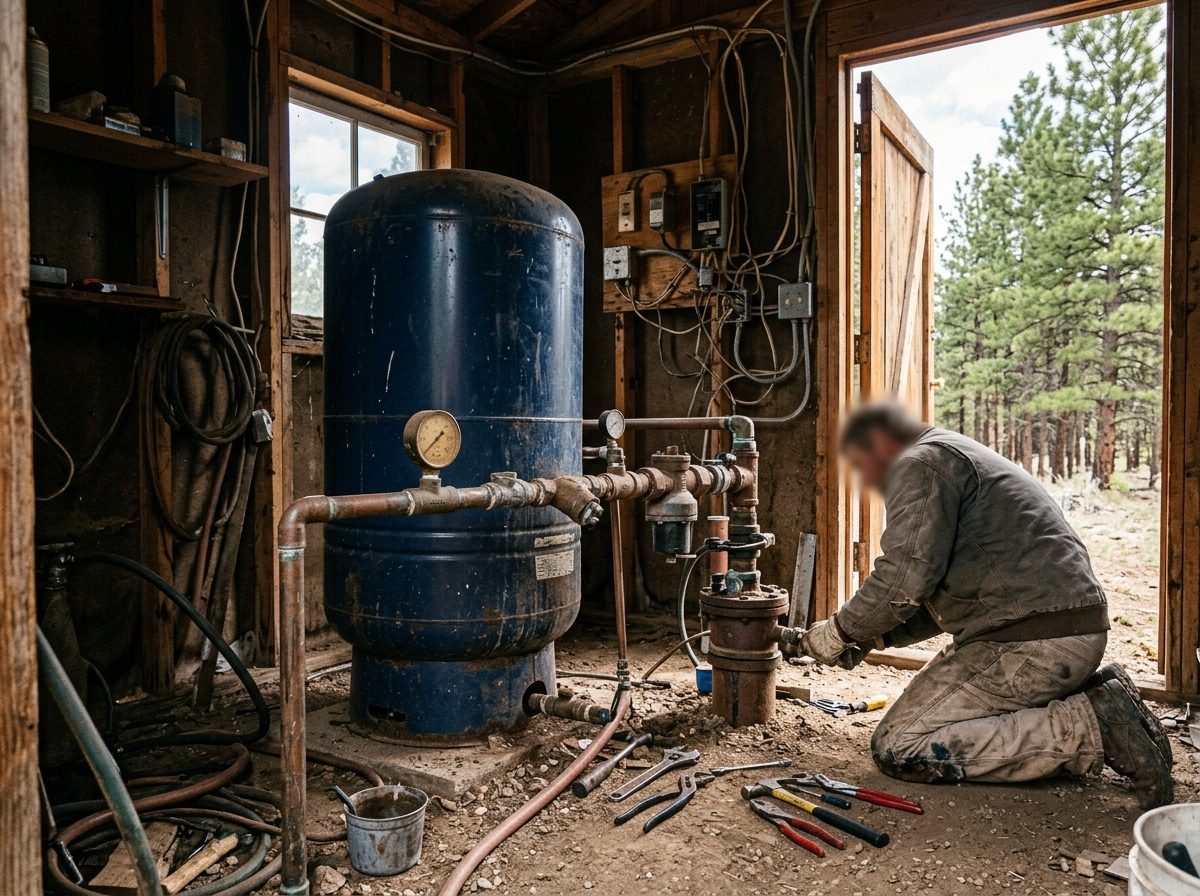
The most useful information on a call from a property like this is scope rather than symptom: how many buildings take water, what the source is, and how far the furthest fixture sits from the pump or the meter. Those three answers determine what parts and equipment come on the truck.
They also determine how a leak is found. On a holding with several hundred feet of buried line, the practical first step is confirming that water is leaving the system at all — with everything shut off, movement at the gauge or meter over an hour proves it — and then isolating sections one at a time to narrow which run is losing water before anyone digs.
Irrigated country adds one more consideration. Where a property has both domestic water and an irrigation supply, anything connecting the two needs proper backflow protection — the risk being that contaminated water is drawn back into the drinking supply. It is worth confirming what is fitted rather than assuming, particularly on a system that has been altered over the years.
Hard water and appliance life
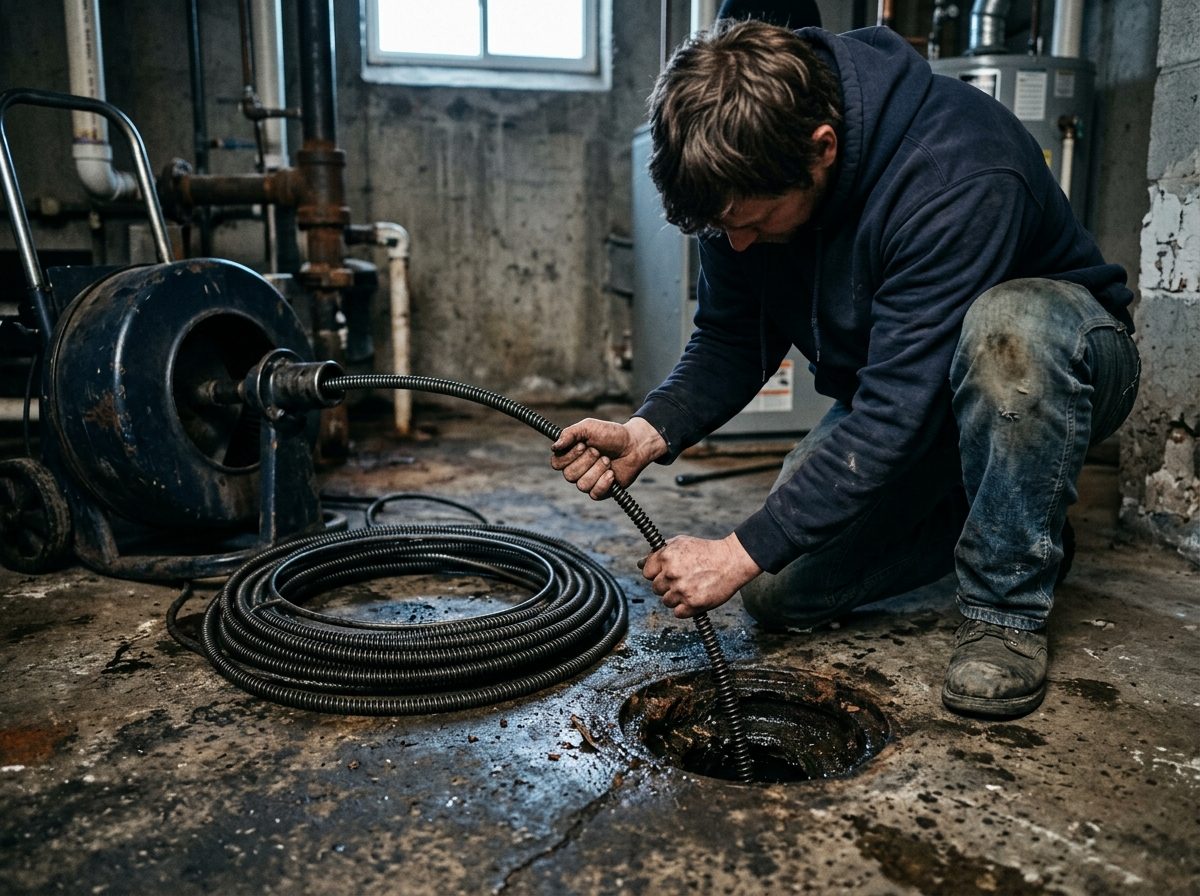
Water in this part of Weld County is decidedly hard, whichever source you are on, and the water heater absorbs most of the damage. Sediment settles across the tank floor so the burner heats through scale rather than steel, run times lengthen, and recovery slows. Electric elements scale directly and burn out early.
Draining the sediment annually is the cheapest life extension available. The sacrificial anode rod is worth checking at the same time — a consumable designed to corrode instead of the tank lining, and frequently spent long before anyone looks. On a well, test the water too, because composition varies property to property.
Heater slower than it was? Sediment and a spent anode rod are the usual pair.
Ask about heater maintenanceAutumn is the important season
In irrigated country there is a great deal of outdoor water, and autumn is when it all needs attention. Irrigation not cleared with compressed air before the first hard freeze holds water at its low points and at the backflow device. Hoses left connected hold water against the bib and defeat its frost protection.
Hydrants matter most. A frost-free hydrant drains its standpipe below the frost line whenever it closes, and one that weeps has usually stopped draining — which means the standpipe holds water and splits underground in the first hard freeze. Test every one, every autumn.
Hydrant weeping or stiff? Deal with it before the freeze, not after it splits.
Ask about a yard hydrantWhere two different metals meet
When two dissimilar metals are joined in a plumbing system and water is present, the connection becomes a small electrochemical cell and one of the metals corrodes preferentially. Copper joined directly to galvanised steel is the classic example, and in a house that has been partially repiped over the decades those transitions exist wherever one era’s work met the next.
The failures are predictable in location and hard to see. They happen at the joint rather than along the pipe, they build up on the inside before they leak, and they are very often buried in a wall or a ceiling because that is where one material stopped and the other started. The first sign is frequently a stain rather than a drip, and by then the joint has been deteriorating for years.
The remedy at the point of any work is a proper transition — a dielectric union or an appropriate brass fitting that separates the two metals rather than putting them in direct contact. That is standard practice now and it is cheap; the problem is the joints already in the walls, made before anyone thought about it. Where a house has mixed materials, the useful thing is to know roughly where the transitions are, so that a stain appearing nearby is read correctly rather than chased as a mystery. It is also a good argument for taking out old transitions whenever a wall is open for another reason, since the marginal cost then is close to nothing.
Autumn walk-round
Every hydrant, hose bib, stock tank float and the pump house, plus the irrigation blowout. One scheduled visit, and it removes most of what otherwise becomes a January emergency.
Nearby communities
Kersey sits east of Greeley in irrigated Weld County farmland, with Gill, Galeton and La Salle nearby.
Kersey, Colorado
East Weld County questions answered
Confirm there is one first: with everything shut off, watch the gauge or meter for an hour, and movement means water is leaving the system. If there are isolation valves between buildings, closing them one at a time narrows which run is losing water and saves a great deal of excavation.
It is a poor candidate for waiting. The hydrant drains its standpipe below the frost line each time it closes, and one that leaks often no longer drains. Water left standing in that pipe through a hard freeze splits it underground, turning a modest repair into digging in frozen ground.
It depends where the fault is. From the pressure tank into the house is ordinary plumbing. The pump, drop pipe and wiring down the casing are well-system work needing specific equipment. Saying what the gauge reads and whether the pump runs settles which trade should come out.
Scale is the usual explanation in hard water. Sediment collects across the tank floor, insulates the burner from the water and forces longer run times; on electric units it coats the elements. An annual drain pushes the life back toward the manufacturer’s expectation.
Yes. Out here nobody else is testing it, and composition varies property to property in a way municipal supply does not. Hardness and iron affect appliances and fixtures; other results affect the people drinking it. Test before buying any treatment equipment.
Before the first hard freeze, which can arrive in October. Draining is not enough on most systems, because low points and the backflow device hold water gravity cannot move. On a property with long runs and multiple zones, booking early in the season is worth doing.
That is the sensible approach out here. Give a full list when you call — house, shop, barn, hydrants, tanks — so the right parts arrive with the truck. A second trip for one fitting is the expensive part of rural plumbing.
Three to five years for most households, sooner where the tank is small or the household large. Every drain slowing at once rather than one fixture is the classic signal, along with unusually lush growth over the field or a backup after a busy weekend.
The pipe is not the issue; the joints between them are. Dissimilar metals in direct contact corrode at the connection, and those joints are usually buried in walls where the first sign is a stain rather than a drip. Proper dielectric transitions prevent it, and removing old ones whenever a wall is open for other work is worth doing while access is free.
Usually that the hot side has deteriorated faster, which is normal — heat accelerates both corrosion and scale. In a house with galvanised pipe the hot runs close up first, so pressure at hot taps falls off while cold stays acceptable. Measuring static pressure at an outdoor tap tells you whether the restriction is inside the house or upstream of it.
East Weld County, any hour
Kersey, Gill, Galeton, La Salle and the surrounding farms.
(833) 621-2904 — answered 24/7, statewide.