Plumber in Gilcrest, CO — one call, any hour
Home / Areas / Northern Colorado / Gilcrest
Gilcrest is a very small town in heavily irrigated Weld County farmland. The housing is modest, the surrounding properties are working ones, and the two things that shape plumbing here are the mineral content of the water and the fact that most of the water in use is outdoors.
A very small town in irrigated country
In town the plumbing is straightforward: drains, heaters, fixtures, and supply pipe whose age varies house by house. Immediately outside, properties take on the character of working holdings — outbuildings with their own supply, stock water, hydrants, and often a private well.
Because the contractors who cover Gilcrest also cover a good deal of surrounding country, the practical advice is the same as everywhere out here: emergency response depends on who is already heading your way, and routine work is better booked and bundled than requested piecemeal.
Several jobs waiting? List them and book one visit rather than four.
Ask about a single visit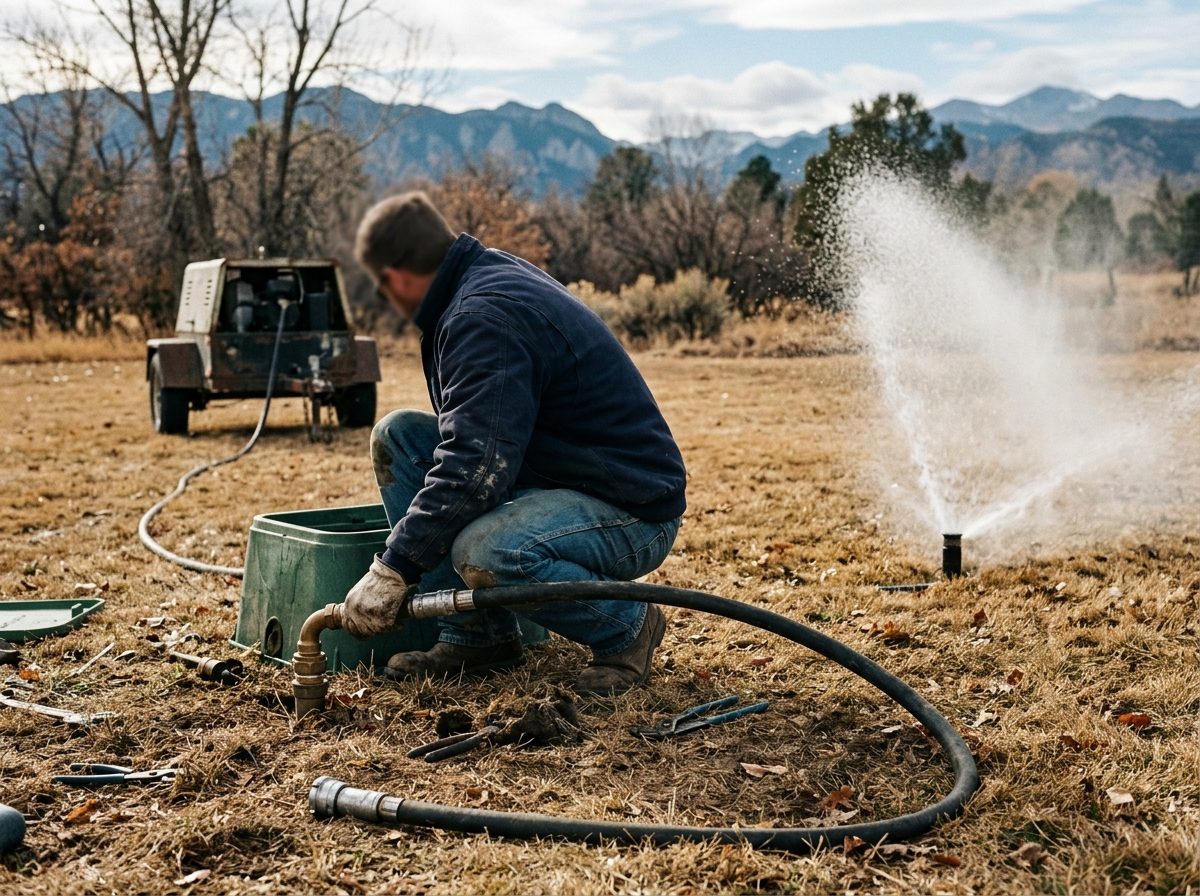
Hard water is the running cost
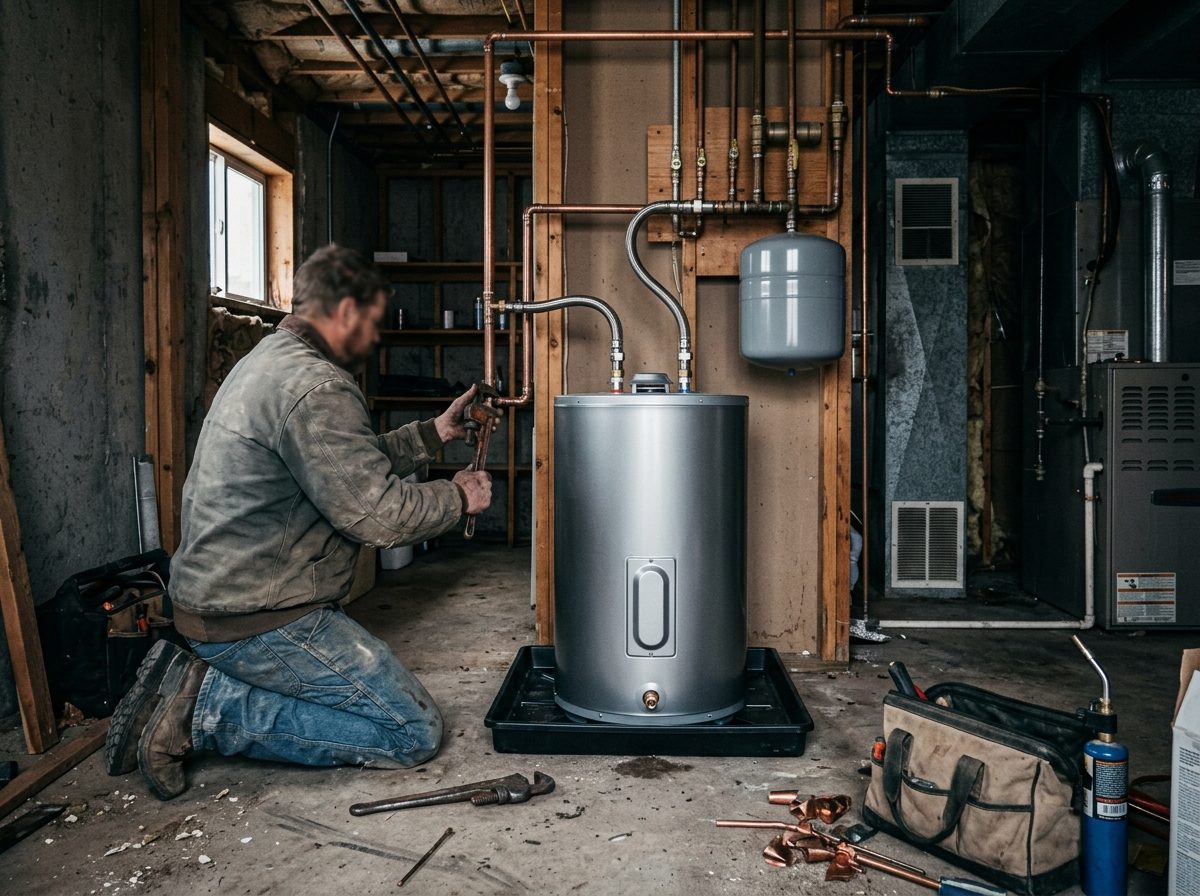
Water in this part of Weld County is decidedly hard, and the heater absorbs most of the damage. Sediment settles across the tank floor so the burner heats through scale rather than steel, run times lengthen, and recovery slows until a household that never ran out of hot water starts running out. On electric models the elements scale directly and burn out early.
Draining the sediment annually is the cheapest life extension available, and the sacrificial anode rod deserves a look at the same time — a consumable designed to corrode instead of the tank lining, and frequently spent long before anyone checks. On a well, test the water too, because composition varies property to property.
Where a property has both domestic water and an irrigation supply, anything connecting the two needs proper backflow protection — the risk being contaminated water drawn back into the drinking supply. On systems that have been altered over the years it is worth confirming what is actually fitted rather than assuming.
Outdoor water and hydrants
In irrigated country most of the water in use is outdoors, and that is where most of the winter failures originate. Irrigation not cleared with compressed air before the first hard freeze holds water at its low points and at the backflow device. Hoses left connected hold water against the bib and defeat its frost protection.
Hydrants matter most of all. A frost-free hydrant drains its standpipe below the frost line whenever it closes, and one that weeps has usually stopped draining — which means the standpipe holds water and splits underground in the first hard freeze. That converts a small repair into digging.
Hydrant weeping or stiff? Deal with it before the freeze, not after it splits.
Ask about a yard hydrantScheduling beats waiting
Distance changes the arithmetic on replacement. A water heater at the end of its life, a pump showing its age, a hydrant that has started to weep — all of those are cheap to handle on a scheduled visit and expensive to handle at short notice.
The same logic applies to bundling. A plumber driving out here will want to justify the trip, so presenting a list gets better value than calling four times. And if a neighbour needs something done, two jobs on one road is a far easier trip to schedule than one.
Something clearly near the end of its life? Replacing it on a schedule costs far less out here.
Ask about planned workGetting the water out of irrigation properly
Winterising an irrigation system is not the same as turning it off. Draining is not reliable because the lines do not have consistent fall, and water left in a lateral, a valve body or a backflow device freezes and splits it — with the damage discovered the following April rather than at the time. The purpose of a blowout is to displace that water with air rather than to trust gravity with it.
Doing it properly is mostly a matter of order and restraint. The supply is isolated and the backflow device is drained through its test ports, because that assembly is the most expensive part of the system and the one most likely to be cracked by a freeze. Zones are then blown one at a time, working through the system rather than trying to do everything at once, with the heads watched so each zone is cleared. Pressure is the part that matters: too much air pressure damages heads, seals and pipe, and blowing a whole system at once means each zone is inadequately cleared while the pressure is high enough to do harm.
Two things are worth noting afterwards. Any zone that behaved oddly during the blowout — a head that did not clear, a valve that did not open — is a repair to book for spring rather than a mystery to rediscover at start-up. And the backflow assembly is usually the item subject to testing requirements on a metered supply, so its condition is worth recording rather than assumed.
Autumn walk-round
Irrigation cleared, hoses disconnected, every hydrant tested, heater flushed. One visit before the first hard freeze, and most of the winter calls never happen.
Nearby communities
Gilcrest sits in southern Weld County between Platteville, La Salle and Milliken.
Gilcrest, Colorado
Southern Weld County questions answered
Scale is the usual explanation in hard water. Sediment collects across the tank floor, insulates the burner from the water and forces longer run times; on electric units it coats the elements directly. An annual drain pushes the life back toward what the manufacturer expected.
A sacrificial metal rod inside the heater that corrodes in place of the tank lining. In mineral-heavy water it can be consumed within a few years, and once gone the tank starts corroding instead. Replacing a spent rod is inexpensive; replacing a tank that rusted through because nobody looked is not.
It is a poor candidate for waiting. The hydrant drains its standpipe below the frost line each time it closes, and one that leaks often no longer drains. Water left in that pipe through a hard freeze splits it underground, turning a modest repair into digging in frozen ground.
Before the first hard freeze, which can arrive in October. Draining is not enough on most systems, because low points and the backflow device hold water that gravity cannot move. On a property with long runs and multiple zones, booking early in the season is worth doing.
For most households the return shows up as longer heater and appliance life rather than anything obvious at the tap. Test first so hardness is a real number and you know whether iron is present, then size the equipment to the household and confirm there is a drain for regeneration.
It depends where the fault is. From the pressure tank into the house is ordinary plumbing. The pump, drop pipe and casing wiring are well-system work needing specific equipment. Saying what the gauge reads and whether the pump runs settles which trade should come out.
It depends who is already working this direction, and you will get a straight answer. For urgent problems the phone advice matters as much as arrival time. For routine work, a booked visit is usually faster in practice than waiting for an emergency opening.
That is the sensible way to work out here. Give a full list when you call — house, shop, barn, hydrants, tanks — so the right parts come on the truck. A second trip for one fitting is the expensive part of rural plumbing.
Draining rarely clears it, because irrigation lines do not have consistent fall and water stays in laterals, valve bodies and the backflow assembly. That trapped water is what splits things over winter, and the damage shows up in April. A properly sequenced blowout, zone by zone at controlled pressure, is what actually empties it.
Before the first hard freeze rather than after the lawn stops needing water — the deadline is set by the weather, not by the grass. Booking it early in autumn is worth doing, because the week everyone remembers at once is the week after the first freeze warning, which is already later than ideal for the backflow assembly.
Southern Weld County, any hour
Gilcrest, Platteville, La Salle, Milliken and the surrounding farms.
(833) 621-2904 — answered 24/7, statewide.