Plumber in Brighton, CO — 24/7 by phone
Home / Areas / Denver Metro / Brighton
Brighton is a farm town that became a commuter town without losing the farmland around it, and its plumbing reflects both halves. There is an old centre with old pipe, newer subdivisions on the edges, and acreage beyond them where wells, septic systems and yard hydrants are part of the conversation.
Old town, new subdivisions, farmland beyond
Near the centre, expect the familiar older-housing list: galvanised steel supply lines that have narrowed internally, cast-iron drain sections, and clay sewer laterals with roots at the joints. Flow that collapses when two fixtures run, discoloured water after a few days away, and drains that slow and clear on a cycle are the usual tells.
The newer subdivisions behave as cohorts, with heaters and pressure regulators reaching the end of their lives together. Out past them, plumbing stops being a house system and becomes a property system — supply runs to barns and shops, stock water, and hydrants that have to drain below the frost line to survive a winter.
Not sure which kind of call this is? Say whether you are in town, in a subdivision or on acreage.
Ask what to check first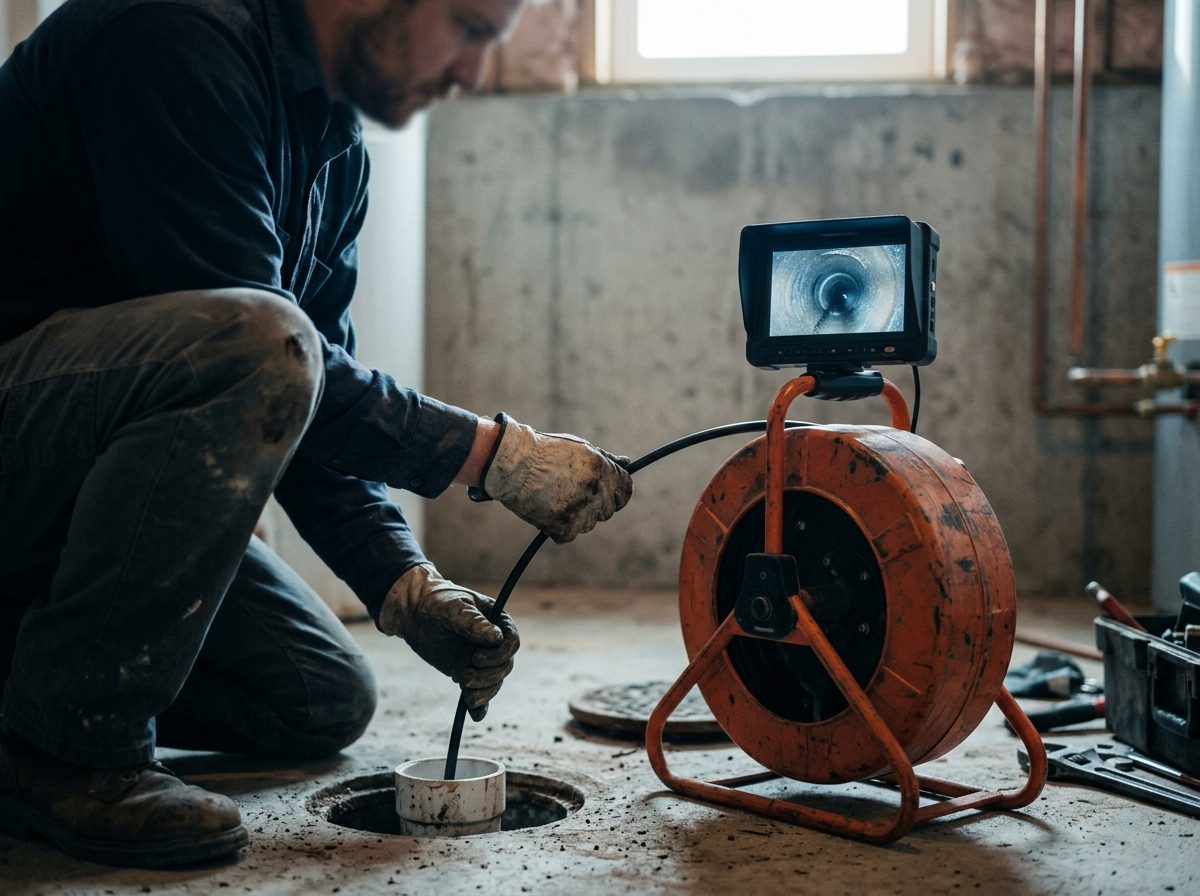
Hard water and heater life
Water here carries a substantial mineral load. Scale settles in the bottom of the water heater, insulates the burner from the water above it and lengthens run times; on electric units it coats the elements directly. Aerators clog, shower heads block, fill valves stiffen, and appliances wear faster than they should.
Flushing the tank annually is the cheapest life extension available and the job most often skipped. If you are considering treatment, test the water first — hardness, iron and sulphur call for different equipment, and on a well the right answer is frequently not the same as the right answer on town supply.
Hydrant weeping or stuck? Deal with it before the freeze, not after it splits underground.
Ask about a yard hydrant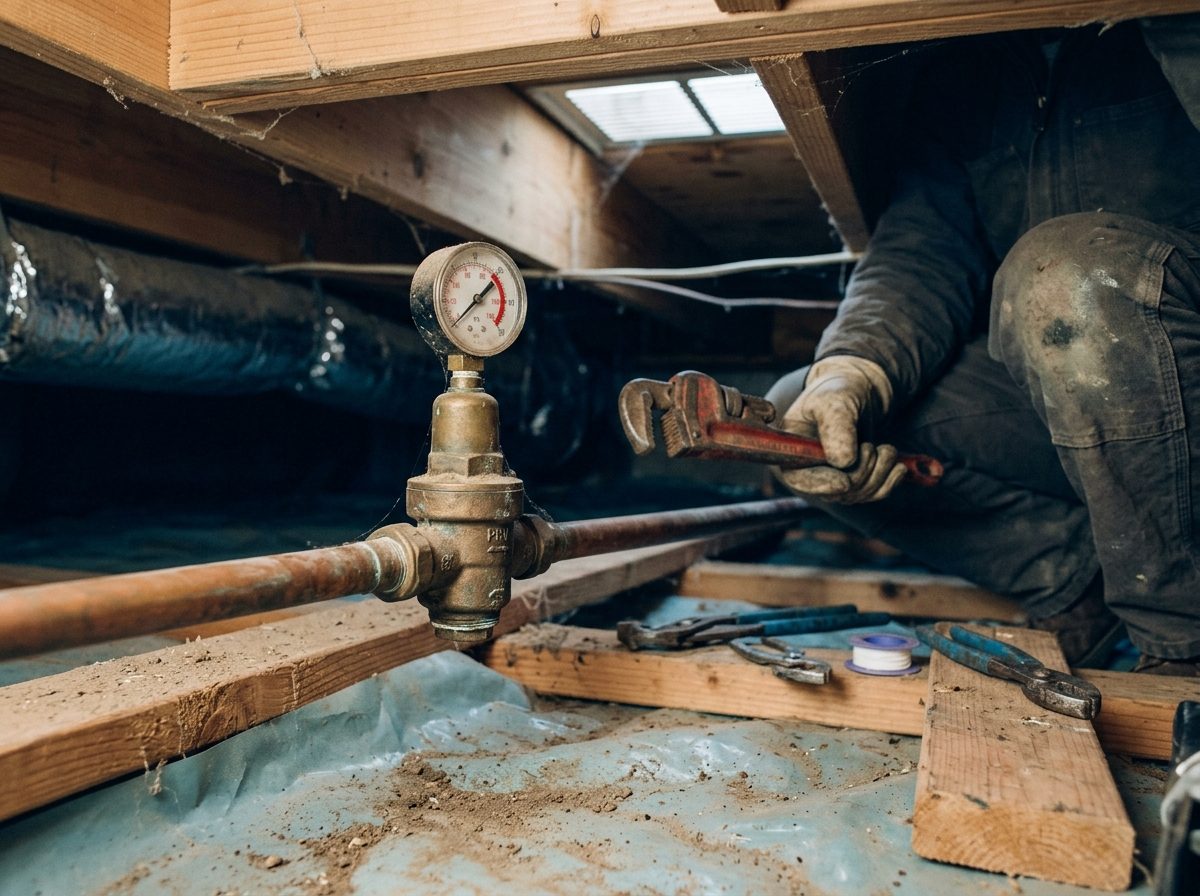
Acreage plumbing is different
On a property with outbuildings, the plumbing problems are about distance and exposure. Long buried runs to barns and shops. Stock tanks with float valves that stick. Frost-free yard hydrants that weep or refuse to shut off. Wells with pressure tanks that lose their charge and send the pump short-cycling, which destroys pumps quickly.
The practical approach out here is to bundle work. A plumber driving out will want to do the hydrant, the leaking bib, the running toilet and the heater check in one trip, so making a list before you call genuinely saves money. And if the property is on a well, saying what the pressure gauge reads and whether the pump runs at all narrows the diagnosis enormously before anyone leaves the yard.
Several jobs on one property? List them before you call — one trip can cover all of it.
Ask about a single visitWind, frost and outbuildings
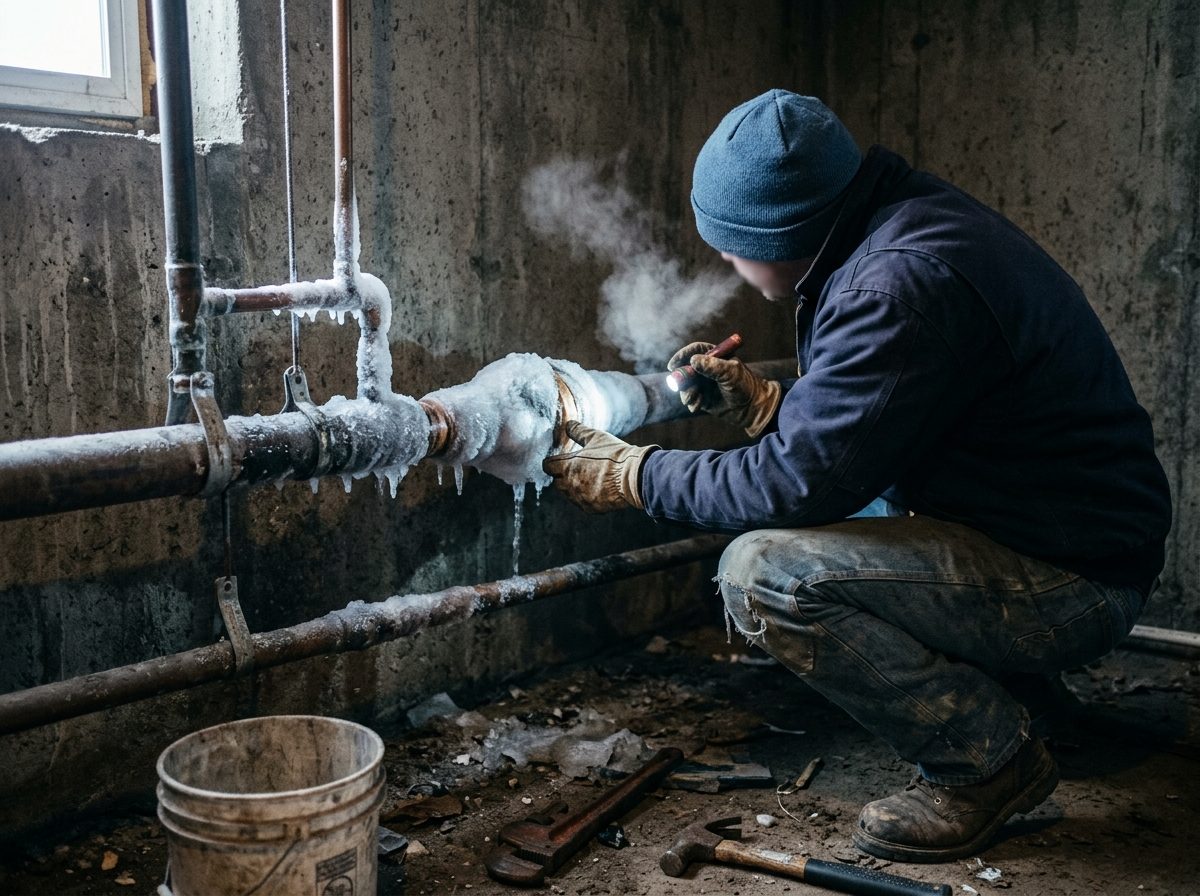
Open ground and wind mean exposed pipe loses heat faster than the thermometer suggests, and frost runs deeper here than on sheltered metro streets. Outbuildings freeze first because they are heated least, and yard hydrants are the classic failure: when the drain at the bottom of the standpipe stops working, the pipe holds water and the first hard freeze splits it below ground where nobody can see it.
Test hydrants in the autumn and deal with any that weep or stick. Disconnect hoses, get irrigation blown out with compressed air, and shut off and drain any branch feeding a building you are not using through winter.
Ditch water and backflow protection
This is irrigated farming country, and a good number of properties have access to ditch water alongside a domestic supply. Two entirely separate water systems on one property is a normal arrangement here, and it creates the one plumbing risk that is genuinely worth being strict about: any point where the two could connect is a point where non-potable water could be drawn back into the drinking supply.
That is what backflow prevention exists to stop, and it is a safety requirement rather than a formality. The circumstances that cause it are ordinary — a drop in mains pressure while an irrigation system is charged is enough to reverse the flow. The device needed depends on the system and on what the water provider requires, and on commercial or larger agricultural connections it is normally subject to periodic testing rather than being fitted once and forgotten.
The rules around ditch and irrigation water in Colorado are genuinely complicated, vary by ditch company and by the rights attached to a specific parcel, and are not something to assume either way. What is safe to say is that any physical connection between such a system and household plumbing needs proper isolation, and that confirming the position locally before altering, extending or reconnecting anything is the sensible order to do things in.
Autumn walk-round
Every hydrant, hose bib, stock tank and pump house, once, before the first hard freeze. Anything that drips, sticks or drains slowly now is a candidate to split in the first cold snap — and all of it fits in one scheduled visit.
Nearby communities
Brighton sits where the north metro meets Adams and Weld county farmland, with neighbours in both directions.
Brighton, Colorado
Brighton plumbing questions answered
It is worth dealing with before winter. A frost-free hydrant drains its standpipe below the frost line every time it closes, and one that leaks often no longer drains. Water left standing in that pipe through a hard freeze splits it underground, which turns a modest repair into excavation in frozen ground.
It depends where the fault is. Everything from the pressure tank into the house is ordinary plumbing work. The pump, drop pipe and wiring down the casing are well-system work and need specific equipment. Describing what the pressure gauge reads and whether the pump runs at all usually settles which trade should come out.
That is usually a waterlogged pressure tank. The tank holds an air charge behind a bladder, and when that fails the pump switches on and off every few seconds instead of once every few minutes. Short-cycling destroys pumps quickly, so it is worth fixing early rather than living with it.
For most households on hard supply the return shows up in heater and appliance life rather than at the tap. Test first, since a well with iron needs different equipment from hard town water, and size the softener to the household. Check there is a sensible place for the loop and a drain for regeneration.
In town, same-day is normal and a couple of hours is common for urgent problems. Out on acreage toward Hudson, Keenesburg and the county roads, response depends on who is already working that direction, and a scheduled visit is often faster in practice than waiting for an emergency slot.
That is the sensible way to do it. Give a full list when you call — house, shop, barn, hydrants, stock tanks — so the right parts come on the truck. A second trip for a fitting that could have been on the first one is the expensive part of rural plumbing.
Typically every three to five years for a normal household, sooner with heavy use or a smaller tank. The symptom that matters is slow drains everywhere at once rather than at a single fixture, along with a lush green stripe over the field or backups after a heavy-use weekend. Those mean stop guessing and get the tank looked at.
Scale is the usual explanation in hard-water country. Sediment collects in the bottom of the tank, insulates the burner from the water and forces longer run times; on electric units it coats the elements. An annual flush pushes the life back toward the manufacturer’s expectation and costs a fraction of an early replacement.
If the two systems are physically separate with no connection at any point, the risk is different from a property where they meet — but connections are easier to create accidentally than people expect, including through a temporary hose arrangement. Where irrigation and domestic water can meet at all, backflow prevention is standard and generally required. Worth confirming with your provider.
Brighton and the farm towns
Brighton, Fort Lupton, Hudson, Keenesburg and the north metro communities nearby.
(833) 621-2904 — answered 24/7, statewide.