Plumber in Thornton, CO — 24/7 help by phone
Home / Areas / Denver Metro / Thornton
Thornton reads as three bands laid north to south. The southern edge nearest Denver is post-war. The middle went up through the 1970s and 80s. The northern end is recent, and much of it is still filling in. Which band you live in predicts most of what is likely to need attention.
Three bands of housing
In the older southern neighbourhoods, sewer laterals and drain lines are the main event, and there is enough mature planting to give roots a way in at clay pipe joints. Galvanised supply pipe still turns up in the oldest streets, narrowing internally until two fixtures cannot run at once.
The 1970s and 80s middle behaves as a cohort: heaters, regulators and expansion tanks installed together fail together. The newer northern subdivisions have no age problem yet — what comes up is specification and installation, particularly regulators left at high settings and irrigation that was never properly winterised.
Not sure which era you are in? The build year narrows the likely causes fast.
Ask what to check firstSewage coming up? Stop all water use in the house, then call.
Ask about a sewer backup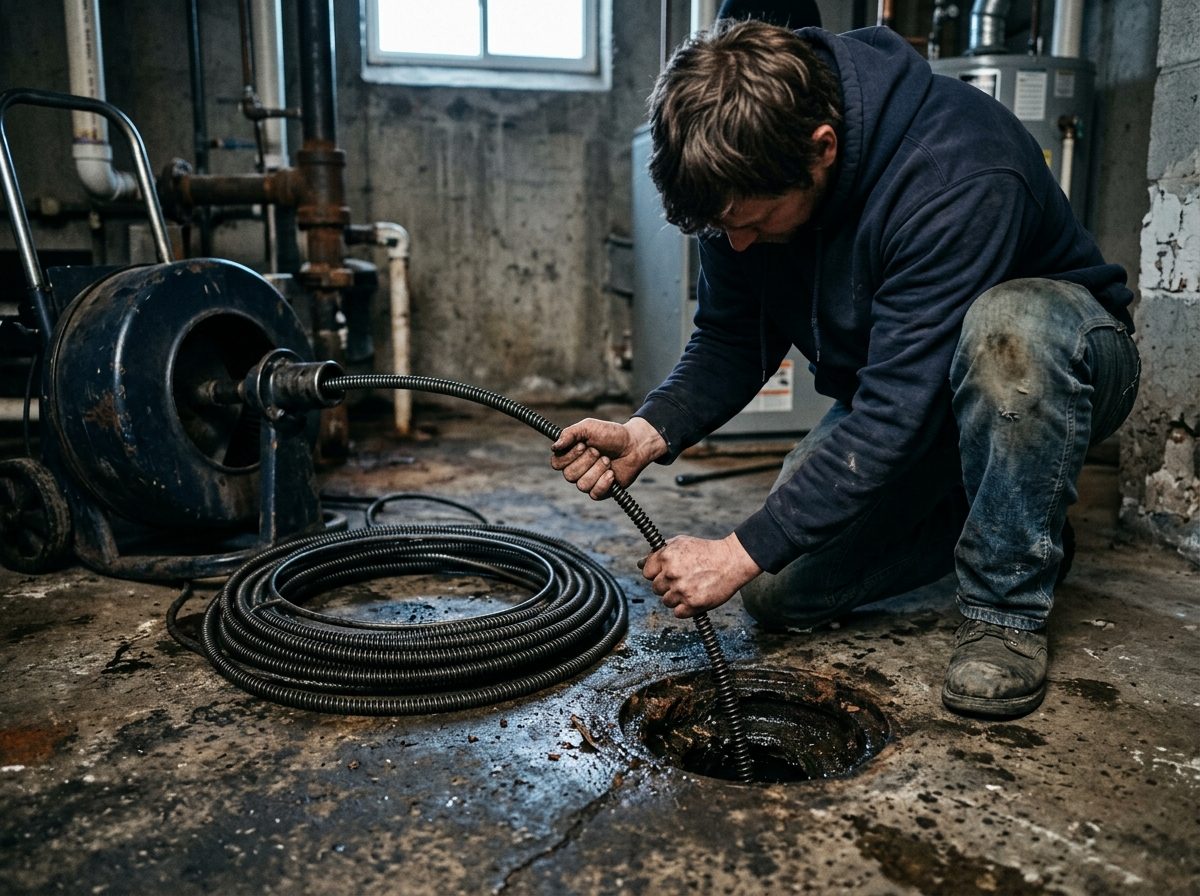
Backups and what they tell you
A blocked main shows itself at the lowest opening in the house, which means a basement floor drain or the lowest toilet rather than the fixture you were using. If that happens, stop putting water into the house — no laundry, no showers, no dishwasher — because everything you run has to go somewhere.
Then get the line cleared and camera inspected. Clearing restores flow; the camera explains why it stopped. That distinction separates a maintenance clean from a spot repair or a replacement, and it is the information any quote should be based on. Repeated backups at the same distance from the house point at alignment rather than at what went down the drain.
Scale, heaters and fixtures
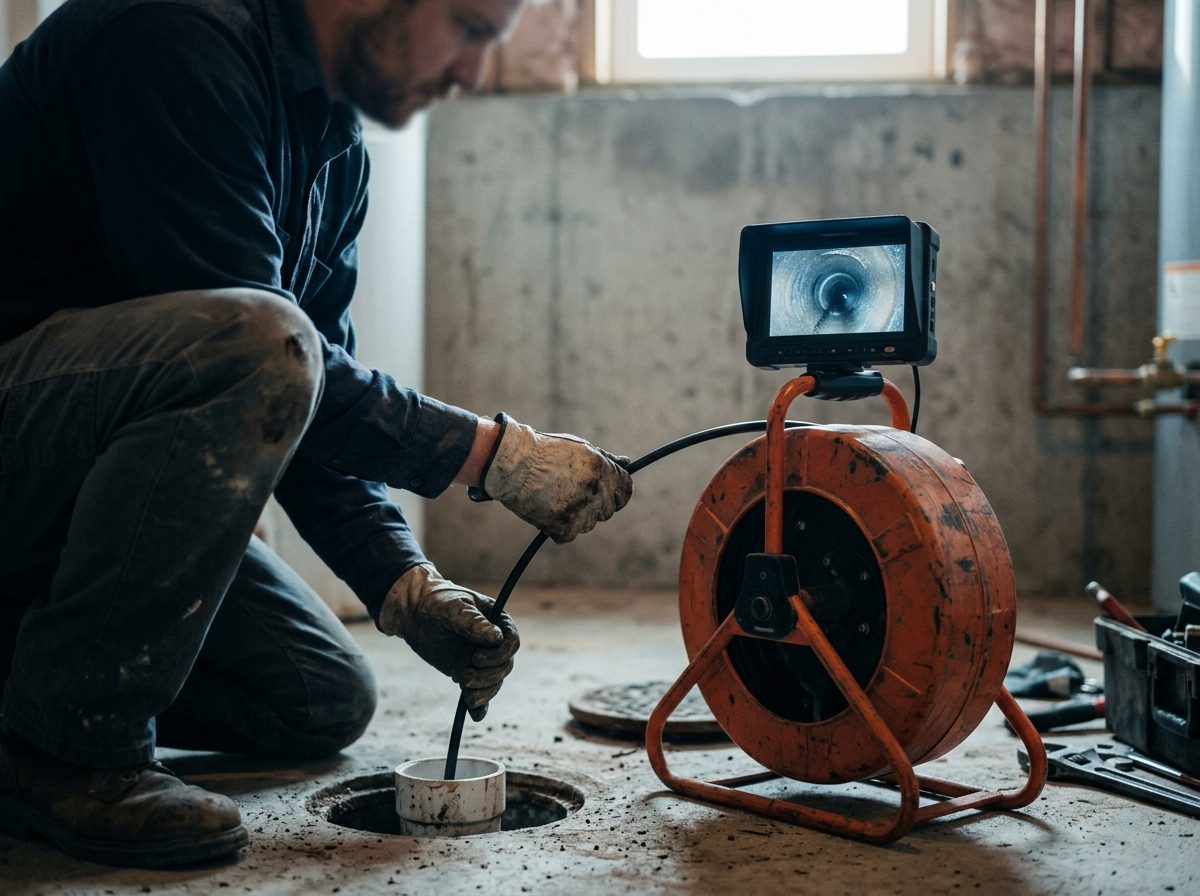
Mineral content here is enough to make scale a maintenance item. It settles in the bottom of a water heater and insulates the burner from the water above it, lengthening run times and shortening the tank's life; on electric heaters it coats the elements. Aerators clog, shower heads block and fill valves stiffen.
Flushing the heater annually is the cheapest life extension available and the job most often skipped. If you are considering treatment, test first so hardness is a number, and size any softener to the household rather than to the biggest unit available.
Heater working harder than it should? A flush is the cheapest maintenance in the house.
Ask about your water heaterWind off the open ground
North Thornton has a lot of open ground around it, and wind strips heat from exposed pipe faster than the thermometer suggests. The vulnerable spots are consistent: hose bibs with hoses attached, garage walls, crawlspaces with vents left open from summer, and lines in outside walls on the windward side.
Disconnect hoses before the first hard freeze, get irrigation blown out with compressed air rather than merely drained, and open cabinet doors under sinks on exterior walls during the coldest nights. If a fixture stops flowing on a cold night, get the exposure dealt with even after flow returns — ice can crack a pipe without releasing water until the thaw.
If sewage is coming up
Stop all water use in the house immediately, keep people and pets away from the affected floor, and call. Do not use drain chemicals on a blocked main — they do not clear a root mass and they make the cleanup hazardous for whoever works on the line.
The water you pay for and never see
A surprising share of unexplained water bills in ordinary suburban housing comes from three components that fail quietly and never leave a mark: a toilet flapper that no longer seats, a fill valve that keeps topping up, and an irrigation valve that does not close fully. None of them produce a puddle, a stain or a sound loud enough to notice, which is precisely why they run for months.
The toilet is the place to start because it is the most common and the easiest to test. Put a few drops of food colouring in the cistern, leave it for twenty minutes without flushing, and look in the bowl. Colour in the bowl means the flapper is passing water continuously. That single test, done on each toilet in the house, resolves a large fraction of mystery bills at no cost at all.
If the toilets are sound, the meter settles the rest. Shut every fixture and appliance, note the reading including the low-flow indicator, and read it again an hour later with nothing used. Movement means water is leaving the system somewhere. If the movement stops when the irrigation system is isolated, the fault is outdoors. If it continues, it is inside or in the buried supply, and that is the point at which it is worth having someone locate it rather than guessing at walls.
Nearby communities
Thornton runs north from the Denver line, with Westminster, Northglenn-adjacent streets, Commerce City and Brighton close by.
Thornton, Colorado
Thornton plumbing questions answered
It points at the main sewer lateral rather than a branch line, because the floor drain is the lowest opening in the system. Stop running water into the house and get the line cleared, then camera inspected. In older Thornton streets with mature trees, roots at a clay pipe joint are the most common cause.
No. Chemical cleaners do not clear a root mass or a collapsed section, and they leave caustic liquid standing in the line that makes the work hazardous for whoever has to open it. Mechanical clearing followed by a camera is the right sequence, and it also tells you why the blockage happened.
Because the pipe itself is the problem rather than what went down it. Repeated blockages at the same distance usually mean a belly where waste collects, an offset joint, or roots at a crack. Clearing buys months; the camera tells you whether the honest answer is annual maintenance, a spot repair or a liner.
For many households the return shows up in heater and appliance life rather than at the tap. Test the water first so hardness is a real number, then size the equipment to the household. Check too that there is a sensible place for the loop and a drain for the regeneration cycle before buying anything.
Same-day is normal and a couple of hours is common for urgent problems. The far northern edge adds a little drive time, and during a metro-wide freeze every plumber is on split lines at once. You will get a realistic window rather than a promise, plus instructions for the wait.
Pour two or three buckets of water into the pit. The float should lift, the pump should start, clear the water and shut off cleanly without cycling. If it hums without pumping, runs on, or does nothing, deal with it before the melt rather than during it. Test in early spring and again before storm season.
Fix the exposure rather than the pipe. Insulate the run, seal the air leaks letting cold air reach it, and close crawlspace vents opened in summer. Where rerouting into heated space is impractical, correctly installed heat tape that is actually plugged in is the fallback — a lot of frozen lines are tape that was unplugged during a remodel.
On anything built before the 1980s, yes. The sewer lateral is the one major system a standard home inspection does not look inside, and it is among the costliest to repair. Finding a belly, an offset joint or root intrusion before closing turns it into a negotiation rather than a surprise bill.
Test the toilets with food colouring in the cistern — a flapper passing water silently is the single most common cause and costs nothing to check. If they are clean, do the meter test: everything off, note the reading, check again an hour later. Movement with nothing running means a leak, and whether it stops when irrigation is isolated tells you roughly where.
North metro, day or night
Thornton, Westminster, Commerce City, Brighton and the communities nearby.
(833) 621-2904 — answered 24/7, statewide.