Plumber in Commerce City, CO — 24/7 by phone
Home / Areas / Denver Metro / Commerce City
Commerce City is two places sharing a name. The older core dates from the middle of the last century and sits alongside working industry; the newer half is subdivision built in the last twenty-odd years on open ground to the north-east. The plumbing calls from each are almost unrelated.
Two very different halves
In the older neighbourhoods, the housing is modest, the lots are compact and the plumbing is original often enough that materials are the story: steel supply pipe with a narrowed bore, drain lines that have roughened internally, and sewer connections that were laid when the street was. Many of these houses are rented, which adds heavy use to age.
In the newer half, pipe age is irrelevant. What comes up is the standard modern list — pressure regulators, expansion tanks, angle stops and heaters, all installed street by street in the same season and therefore ageing in step.
Not sure which half you are in? Say the decade the house was built and the picture changes completely.
Ask what applies to your house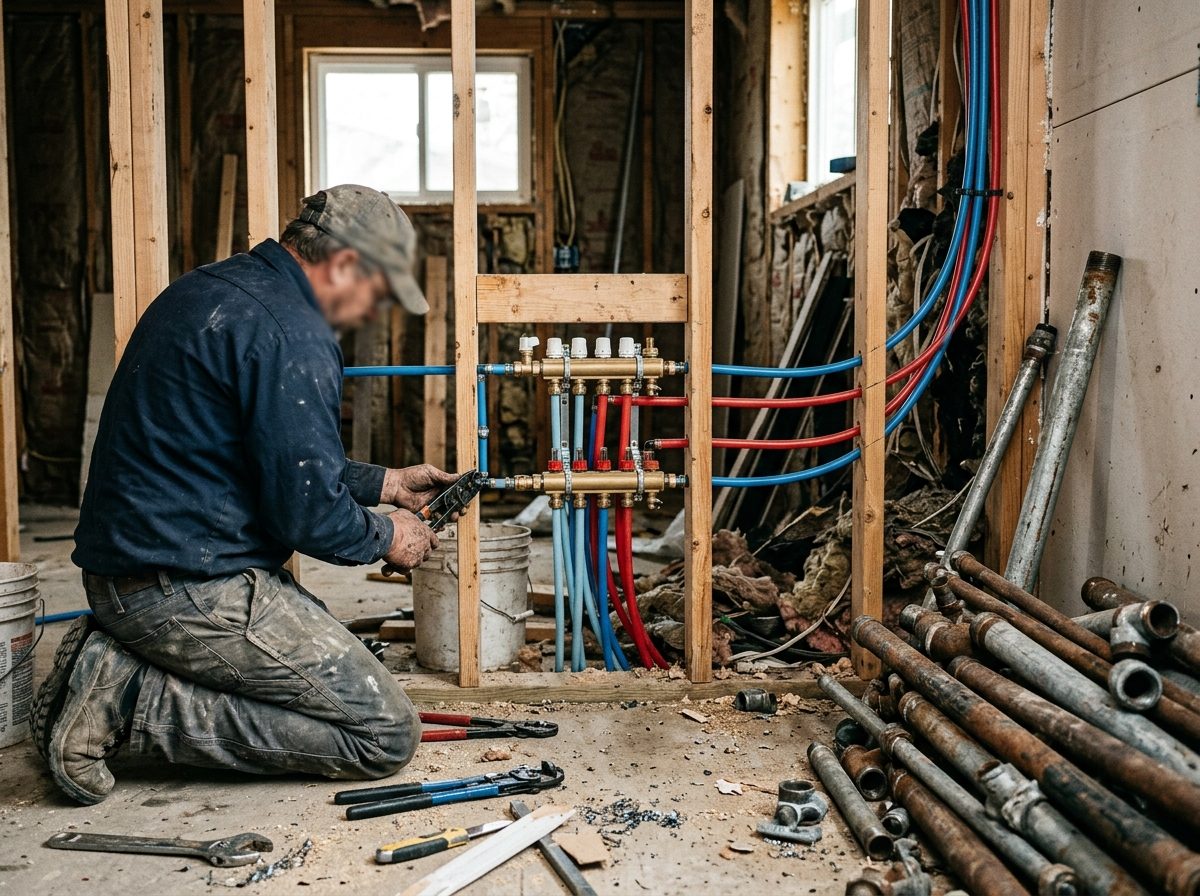
Living next to industry
A residential address next to commercial and industrial property brings a couple of specifics. Small businesses, shops and workshops mixed into the same streets mean plumbing work here is often commercial rather than domestic in character — grease-bearing kitchen lines, floor drains, larger-diameter waste, and equipment connections that a house never has.
Saying which kind of building you are calling about matters, because the trades are not interchangeable. A domestic plumber and someone equipped for a commercial kitchen drain are different callouts, and getting it right the first time avoids a wasted visit and a second bill.
The other practical point is scheduling. Businesses generally cannot stop trading for a repair, so out-of-hours work is often the cheaper option once lost trade is counted, and it is worth asking about when you book rather than assuming daytime is standard.
Backflow protection and cross-connections
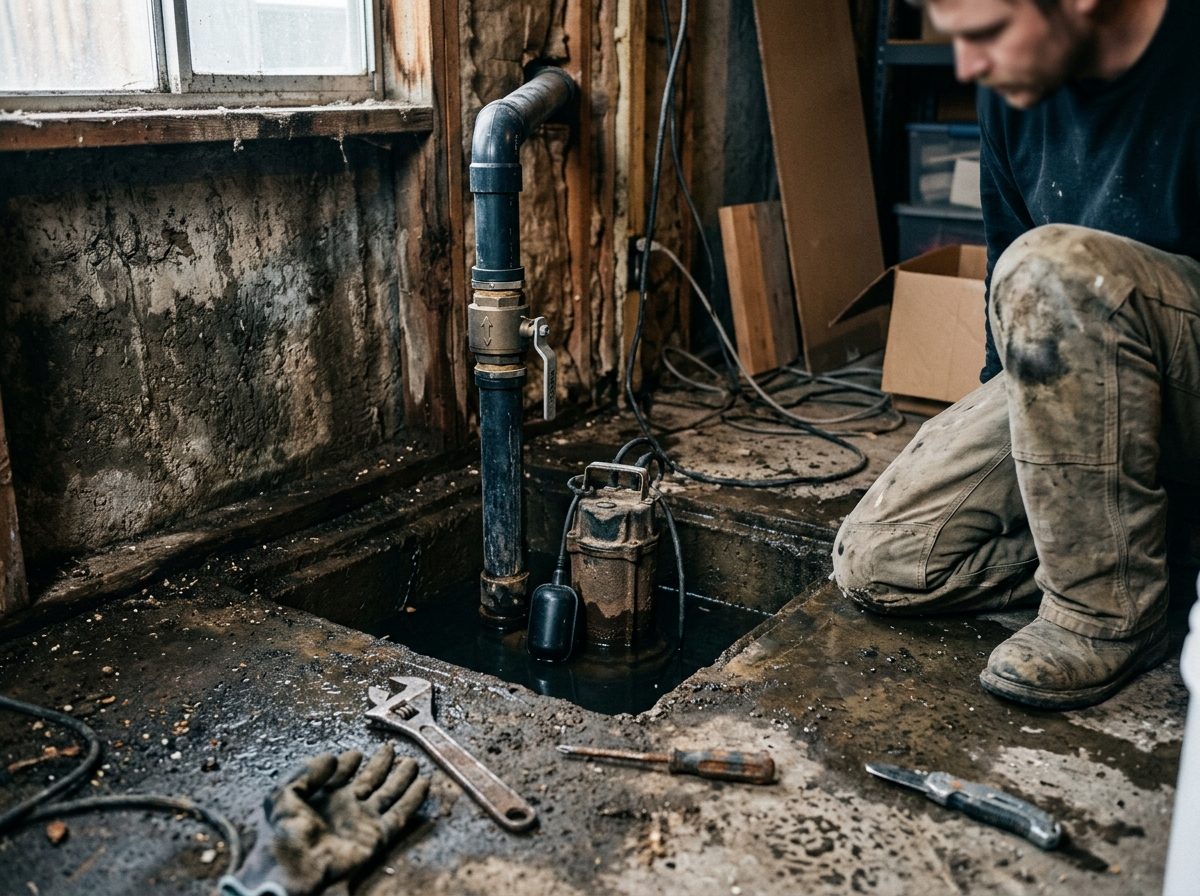
Backflow prevention exists to stop water flowing the wrong way — from an irrigation system, a hose left in a bucket, or a piece of equipment back into the drinking supply. It matters everywhere, and it matters more where residential and commercial uses sit side by side.
In practice the everyday risks are simple and avoidable. An irrigation system tied into domestic water needs the right device on it. A hose bib without a vacuum breaker becomes a cross-connection the moment the end of the hose is submerged. And any equipment plumbed into the water supply — a pressure washer, a mixing tank, a soda machine in a shop — needs to be isolated properly rather than connected in the most convenient way.
Irrigation or equipment tied into your water? Ask what protection it should have before something backs up.
Ask about backflow protectionHeaters and hard water
Water here carries substantial mineral content, and the effect concentrates in the water heater. Sediment settles across the tank floor, the burner works through a layer of scale rather than against clean steel, and run times lengthen; on electric models the elements scale directly and fail early.
Annual sediment removal is the single most useful thing an owner can do, and in a rental it is worth putting on a schedule rather than leaving to chance. Where a heater serves a business, sizing deserves a second look at the same time, because commercial demand patterns are far less forgiving than a household's.
Heater in a rental or a business? Put the flush on a schedule rather than waiting for a complaint.
Ask about heater servicingIf sewage is coming up a floor drain
Stop all water use in the building, keep people away from the affected floor, and call. Chemical drain products do not clear a blocked main and make the eventual work hazardous for whoever opens the line.
Old galvanised pipe, and replacing it in stages
In the older north end, a good many houses were plumbed in galvanised steel, and that pipe fails in a specific and recognisable way. It corrodes from the inside, and the corrosion builds inward rather than leaking outward, so the bore closes gradually over decades. The pipe looks sound from outside right up until it is barely passing water, which is why the symptoms are always about flow rather than about leaks.
The recognisable pattern is pressure that disappears when a second fixture is used — a shower that fails when someone runs a kitchen tap — along with discoloured water on first draw and hot water that is noticeably worse than cold, because the hot lines corrode faster. Owners frequently describe this as low water pressure from the street, and it is worth measuring, because if the static pressure at an outdoor spigot is normal then the restriction is inside the house.
The useful thing to know is that it does not have to be done all at once. A full repipe is the complete answer, but a staged approach is legitimate and often the realistic one: the worst runs first, the hot side before the cold, the sections that are accessible during other work taken while the wall is already open. What is worth avoiding is repeatedly replacing short lengths in isolation, because each new section makes the remaining old pipe the bottleneck and the improvement disappears.
Nearby communities
Commerce City spreads north-east from Denver, with Thornton, Brighton, Henderson and Dupont around it.
Commerce City, Colorado
Commerce City plumbing questions answered
Often yes. Commercial work involves larger waste lines, grease-bearing kitchen drains, floor drains, equipment connections and different code expectations, and it needs equipment a domestic van may not carry. Saying up front whether the address is a house, a rental or a business means the right person and the right kit arrive first time.
It is a device that stops water flowing backwards from a system or piece of equipment into the drinking supply. Irrigation connections generally require one, and hose bibs benefit from a vacuum breaker. If you have any equipment plumbed into the water line, it is worth asking specifically what protection it should have.
Hard water and heavy use together. Sediment accumulates across the tank floor and forces longer burner run times, while a household of several people draws hot water in a pattern that leaves little recovery time. Scheduled annual flushing helps materially, and it is easier to control in a rental than tenant behaviour is.
That points at the main line or at the public sewer surcharging rather than at a fixture. Where a building has drains below street level, a backwater valve is the usual protective measure, and it must stay accessible for inspection. Before fitting one, the line itself should be inspected so you are not sealing in an existing fault.
Same-day is normal across the city and a few hours is common for urgent problems. Business addresses sometimes get a scheduled out-of-hours slot instead, which usually works out cheaper once lost trading time is counted. You will be given a realistic window either way.
Grease is almost always the cause, and cabling only makes a temporary channel through it. Jetting cleans the pipe wall properly, and a grease interceptor that is actually serviced on schedule is what stops the cycle recurring. Repeated emergency clearing costs more over a year than a maintenance interval does.
For most households the return comes as longer heater and appliance life rather than anything noticeable at the tap. Test the water first so hardness is a real number, and size equipment to the building. In a commercial setting the calculation is usually clearer, because scale affects equipment that is expensive to replace.
It is worth assessing rather than worrying about. Internal corrosion narrows the bore over decades, which shows up as poor flow when two fixtures run and discoloured water after the property has stood empty. Replacing the affected runs restores flow, and it can be done in stages beginning with the worst.
No, and staging it is often the practical choice — worst runs first, hot side before cold, and accessible sections taken while a wall is already open for other work. What does not work well is replacing isolated short lengths, since the remaining old pipe simply becomes the new restriction and the pressure improvement you paid for does not appear.
North-east metro, any hour
Commerce City, Thornton, Brighton, Henderson and Dupont.
(833) 621-2904 — answered 24/7, statewide.