Plumber in Eastlake, CO — one call, any hour
Home / Areas / Denver Metro / Eastlake
Eastlake is a small old settlement absorbed into the north metro, with housing that predates most of what surrounds it. That age difference is the useful thing to know: the plumbing questions here are about materials rather than components.
A small old settlement in the north metro
The older housing carries the standard inheritance of a long-settled place: supply pipe narrowed by decades of internal corrosion, drain lines that have roughened and hold waste at their low points, and sewer laterals of the same era as the streets.
Because these houses have been repaired piecemeal over many decades, what is actually installed frequently differs from what anyone assumes. A first visit often involves establishing that, which is why an order of work is more useful than a single headline number.
Old house, several issues? Ask for an order of work rather than one big number.
Ask for a plan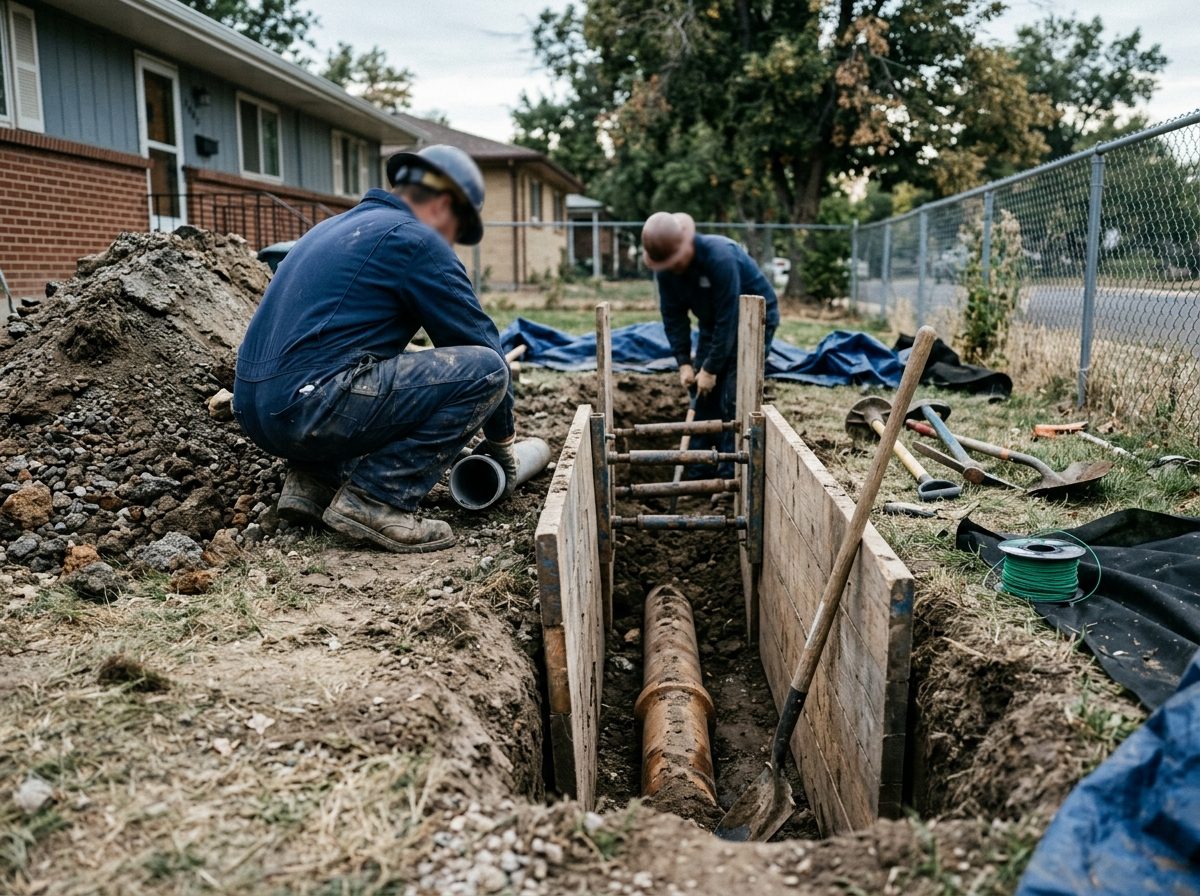
Laterals under old streets
Mature trees and old laterals are a reliable combination for root intrusion at pipe joints. The first symptom is normally the lowest opening in the building — a basement floor drain or the lowest toilet — rather than the fixture you were using.
If that happens, stop using water entirely, because everything you run has to go somewhere. Clearing restores flow; an inspection afterwards tells you whether the cause was a passing blockage or the pipe itself, and repeated blockages at the same distance point at alignment rather than at what went down the drain.
Lowest drain backing up? Stop all water use in the house, then call.
Ask about a backup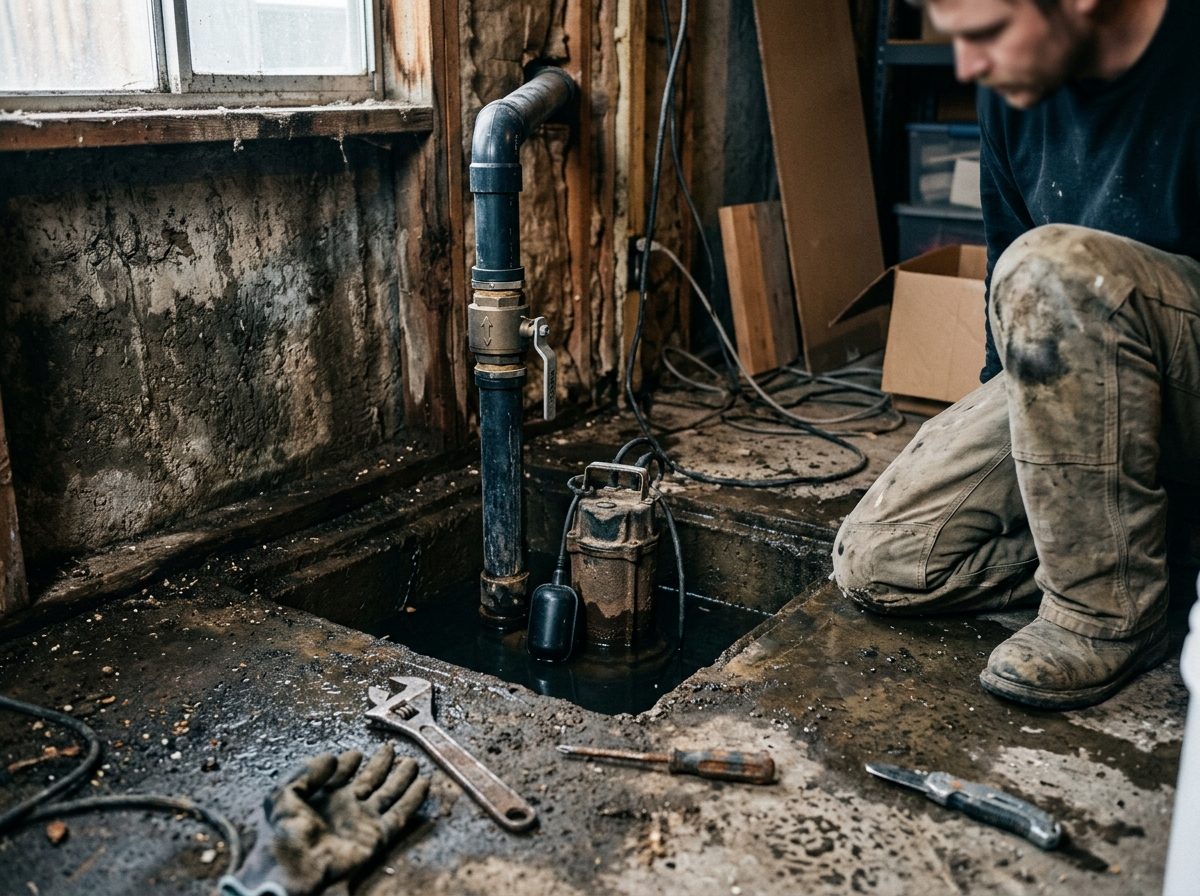
Heaters, scale and pressure
Water here carries enough mineral content that scale is a maintenance item. Sediment settles in the bottom of the heater and insulates the burner from the water above it, so run times lengthen and the tank ages faster than its label suggests. Flushing annually is the cheapest life extension available.
Pressure is the quieter variable. A regulator that has drifted lets street pressure through to fixtures never designed for it, and the symptoms look like bad luck rather than one cause: running toilets, dripping taps, a washer hose that lets go, a relief valve that discharges. A gauge on an outdoor spigot answers it in a minute.
Drains are the other recurring item in housing of this age. Repeated blockages in the same place usually mean grease and scale built up on the pipe wall rather than one object in the way — cabling makes a channel through it and restores flow, but the layer stays and it returns within months. Jetting scours the wall back toward its original diameter and holds far longer.
Where the cold gets in
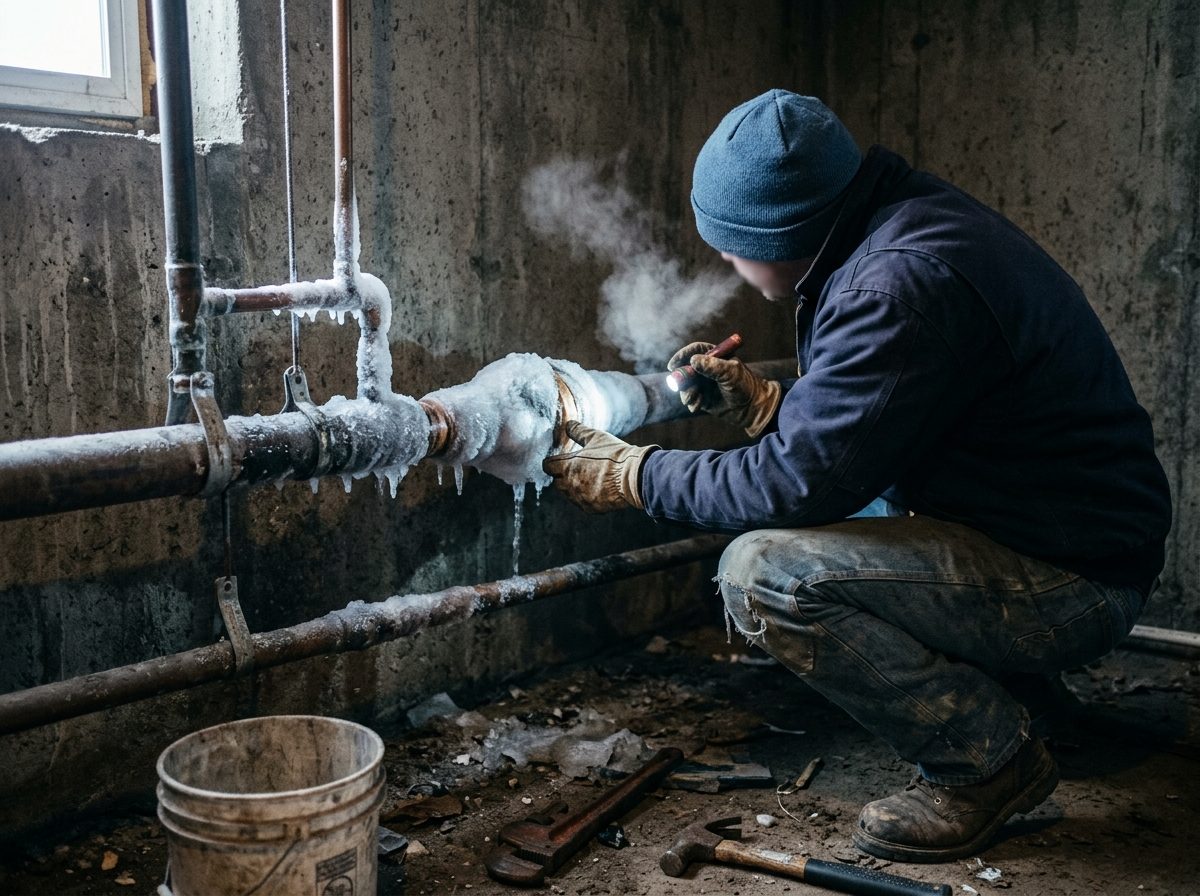
Old houses freeze in places that are no longer heated the way they once were: enclosed porches, additions over crawlspaces, and walls reinsulated everywhere except where the plumbing runs. A cold snap with wind finds them reliably.
Disconnect hoses before the first freeze, and find the main shutoff and confirm it turns — in a house of this age a valve that has not moved in decades sometimes will not close, and discovering that during a burst pipe is the worst possible timing.
Shutoff seized? Replacing it is a small scheduled job — do it before you need it.
Ask about a shutoff valveA high water table near the lakes
This settlement sits close to open water, and the seasonal water table shows up in the plumbing as moisture rather than as a fault. Basements and crawlspaces that are dry through a cold winter can take water in spring, and the water frequently has nothing to do with a pipe. Telling the two apart is the first piece of useful diagnosis, because a ground water problem and a plumbing leak call for completely different work.
Timing and behaviour separate them. Ground water arrives with runoff or after sustained rain, spreads across a broad area of floor rather than pooling under one point, and is clear. A supply leak runs at a steady rate regardless of the month and traces back to a fitting. A drain leak smells and appears only when something upstream is being used. Anyone can narrow it down by noting the month it starts and whether running a tap changes anything.
Where the answer is ground water, the work is drainage. That means a pit of sensible size, a pump that can actually be lifted out and serviced, a discharge line that takes water far enough from the building not to circle back, and a check valve so the pit does not refill itself each time the pump stops. These pumps sit idle for months and then run for weeks, which is the hardest duty there is, so a test before runoff matters more than the specification on the box.
Two quick checks
Measure static pressure with a gauge on an outdoor spigot, and confirm the main shutoff turns. One tells you whether your fixtures are being quietly destroyed; the other decides how bad a burst gets.
Nearby communities
Eastlake sits in the north metro near Thornton, with Dupont, Commerce City and Brighton nearby.
Eastlake, Colorado
North metro questions answered
That points at the main sewer lateral rather than a branch line, because the floor drain is the lowest opening in the system. Stop running water into the house, then get the line cleared and inspected. On older streets with mature trees, roots at a pipe joint are the most common cause.
Because the pipe itself is the problem rather than a passing blockage. Repeated blockages at the same distance usually mean a belly where waste collects, an offset joint, or roots at a crack. Clearing buys months; a camera run shows what is actually there.
Usually supply pipe narrowed by decades of internal corrosion rather than a problem with the supply. Testing pressure at an outdoor hose bib separates the two: if what arrives is normal and interior flow is not, the pipe is the constraint. Replacing the affected runs is the fix.
Measure it with an inexpensive gauge on an outdoor spigot. Readings above the normal working range shorten the life of every valve, hose, fixture and appliance, and the early symptoms are running toilets, dripping taps and a heater relief valve discharging. If high, look at the regulator.
Sediment is the usual reason. Scale collects across the tank floor, insulates the burner from the water and forces longer run times; on electric units it coats the elements. An annual drain pushes the life back toward the manufacturer’s expectation.
Do not force it — a valve that snaps leaves you worse off than one that sticks. Replacing it is a small scheduled job, and in most cases the water can be shut off at the meter or street while the work is done. In an older house it is a high-value small repair.
Same-day is normal and a couple of hours is common for urgent problems, given how central the address is in the north metro. During a metro-wide cold snap every plumber is busy at once, so expect an honest window and clear instructions for the wait.
Yes. The lateral is the one major system a standard home inspection does not look inside, and in housing this age it is both likely to have a problem and expensive to repair. Finding it before closing turns it into a negotiating point rather than a bill.
Usually not. Seasonal water that arrives with runoff, spreads across the floor rather than pooling at one spot, and disappears by summer is ground water. A plumbing leak does not care what month it is. Note when it starts, whether it is clear, and whether running water in the house changes it — that normally settles the question.
Pour enough clean water into the pit to lift the float and let the pump run a full cycle. Confirm it starts, that water actually leaves the discharge, and that it stops when the float drops. Do it before runoff rather than during it. If the pump protects finished space, a battery backup is worth considering, since outages and storms arrive together.
North metro, any hour
Eastlake, Thornton, Dupont, Commerce City and Brighton.
(833) 621-2904 — answered 24/7, statewide.