Plumber in Aurora, CO — one call, any hour
Home / Areas / Denver Metro / Aurora
Aurora is not an old city with new suburbs attached — it is a series of building booms laid side by side across a very large footprint. West Aurora dates from the post-war decades; the middle of the city went up through the 1970s and 80s; the eastern edge is still being finished. That sequence is the most useful thing to know about plumbing here, because it predicts what breaks and roughly when.
A city built in rings
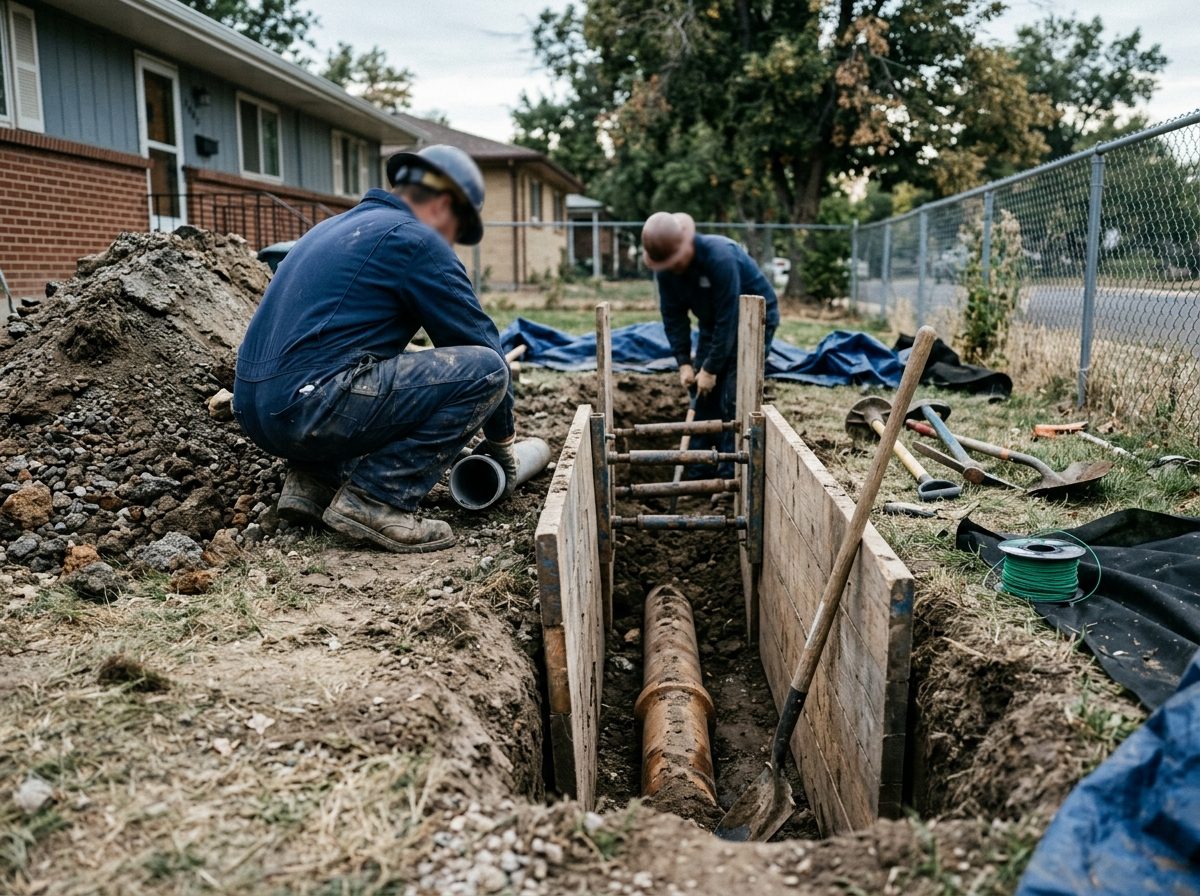
In the older western neighbourhoods, closer to the Denver line, the plumbing questions look like Denver's: original sewer laterals now decades old, cast-iron drain sections, and supply lines that have been partially replaced by successive owners in ways nobody documented. Basements are shallower and the fixtures have usually been swapped at least once.
The 1970s and 80s subdivisions are where the interesting pattern shows up. Whole streets were built in the same year with the same materials by the same crews, which means their plumbing reaches the end of its service life at roughly the same time. When one neighbour replaces a water heater or a pressure regulator, the rest of the street is often a year or two behind. That is not a coincidence and it is worth knowing — it turns a surprise into something you can plan.
On the eastern side, in the newer developments out toward the airport corridor, age is not the issue. What comes up instead is installation detail: regulators left at high settings, sump pits with no pump because the lot drained well the year the house was built, irrigation systems tied in without much thought about winterisation, and tankless units sized on a summer assumption.
Hard water is the local tax
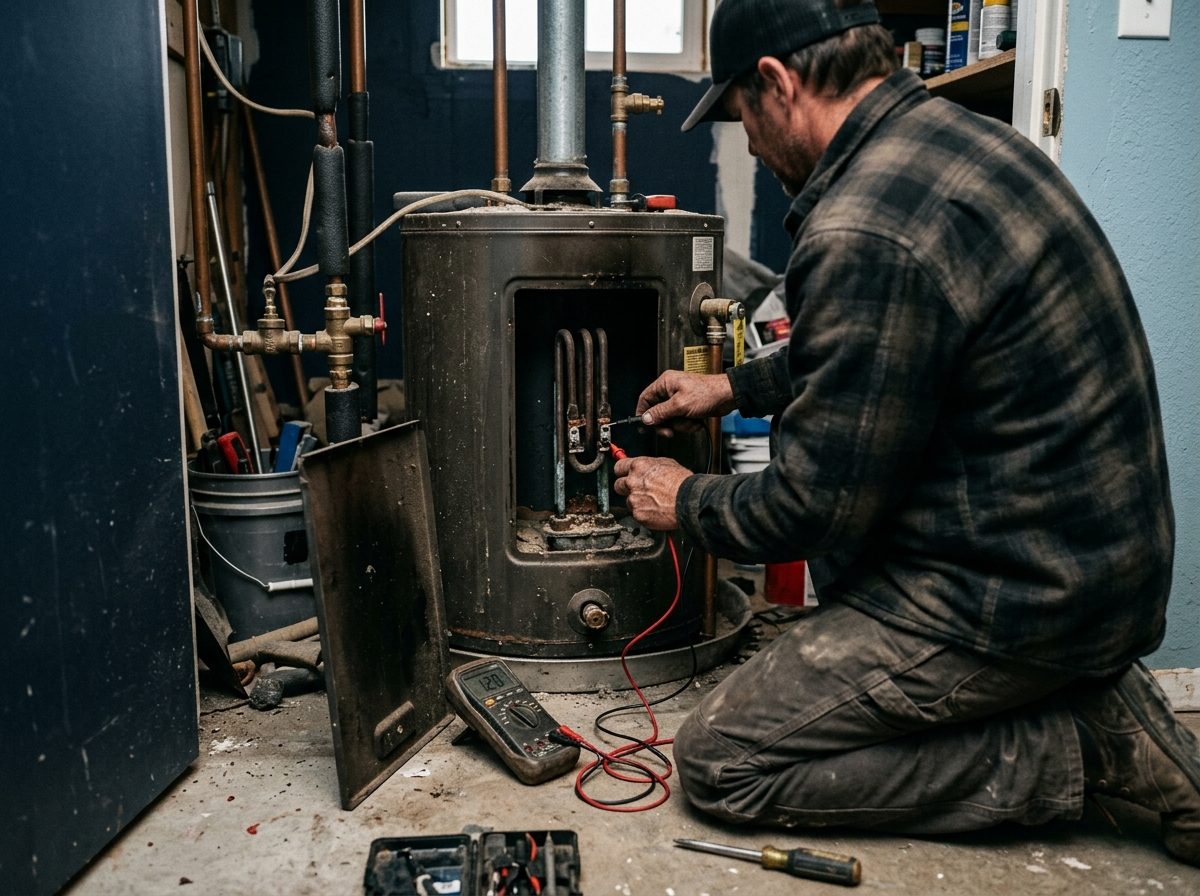
Water hardness is a real and recurring subject in Aurora, and its cost is spread thin enough that most households never attribute it correctly. Scale collects in the bottom of the water heater and insulates the burner or coats the elements, so the unit works harder, runs longer and dies sooner. Aerators clog and flow drops at one tap. Shower heads block. Toilet fill valves stiffen and start running. Dishwashers and washing machines wear.
Two things are worth doing before buying equipment. Flush the water heater annually — it is the single highest-return maintenance job in a hard-water city, and skipping it is why heaters here often fall short of their expected life. And test the water so you know hardness in real numbers before sizing a softener, because oversized treatment equipment wastes both money and salt.
Fixtures failing faster than they should?That is usually scale, and testing comes before buying anything.
Ask about hard waterSame backup every year? A camera run tells you whether it is roots or alignment.
Ask about a repeat backup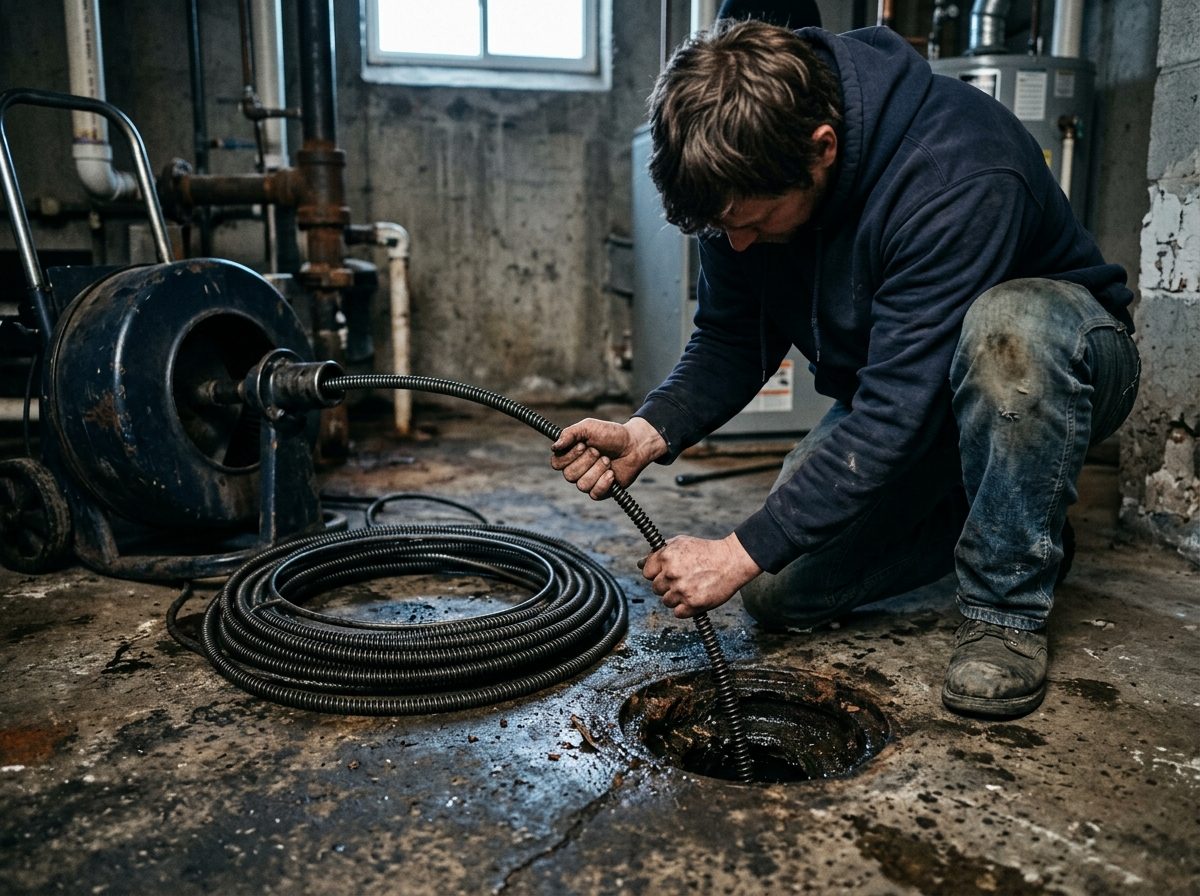
Ground that moves, drains that stop
Much of Aurora sits on expansive clay. When those soils take on water they swell; when they dry they shrink back. Anything buried in or under concrete gets worked through every one of those cycles, which is why sewer laterals here develop bellies and offset joints rather than simply blocking, and why supply lines under a concrete floor fail earlier than the pipe material would suggest.
The practical signals are worth memorising. A sewer line that backs up at the same distance from the house year after year is telling you about alignment, not about what went down the drain. A warm patch on a concrete floor, or the sound of running water with every fixture off, points at a supply line under the slab. And drainage around the house matters more here than most homeowners expect: downspouts discharging next to the foundation and irrigation running against the wall put water exactly where expansive soil does the most damage.
Sprinklers still charged? Blowout season starts before the first hard freeze.
Ask about winterisingWinter in a big-lot subdivision
Aurora's freeze problems are usually outdoor problems. Long irrigation runs, multiple hose bibs, a detached garage, and in the newer eastern subdivisions a lot of exposed ground and wind. Sprinkler systems that were not blown out before the first hard freeze are the most common single cause of a spring surprise, and the damage is often at the backflow device rather than in the buried line.
Inside, the vulnerable spots are predictable: the line to an exterior hose bib, pipes in a garage wall, and anything running through an uninsulated space on a north or west face where the wind hits. Sump pumps deserve a mention too, because in a city with clay soils and heavy summer downpours the pump that has not run since last spring is the one that will not start when the water arrives.
Before the first hard freeze
Get the irrigation blown out, disconnect every hose, and pour a bucket of water into the sump pit to confirm the pump starts. Those three jobs take an afternoon and account for a large share of the calls that come in during the first cold week of the season.
Nearby communities
Aurora shares boundaries with much of the eastern metro, and the same line covers all of it.
Aurora, Colorado
Aurora plumbing questions answered
For most households on hard supply, the return shows up in water heater and appliance life rather than in anything you notice at the tap. Test first so you know your hardness in real numbers, then size the equipment to the household rather than to the biggest unit on the shelf. Also check there is a sensible place to plumb the loop and a drain for the regeneration cycle before committing to anything.
Possibly, but scale is the more common explanation in a hard-water area. Sediment settles in the bottom of the tank, insulates the burner from the water and forces longer run times, and on electric units it coats the elements directly. An annual flush is the cheapest way to push the life back out toward what the manufacturer expected, and it matters more here than in softer-water cities.
Because the problem is the pipe rather than the blockage. Repeated backups at the same distance usually mean a belly where water and solids collect, an offset joint, or root intrusion at a crack — all of which are consistent with expansive soils moving buried pipe over time. Clearing it buys months; a camera run tells you what is actually there and what the real options are.
Not necessarily, but check whether you have a pit. Many Aurora houses were built with a pit and no pump, which is a decision the builder made about that lot in that year. If you have a finished basement, the cost of a pump and a check valve is small against the cost of replacing flooring, and the time it proves its worth is a fast spring melt or a hard summer downpour.
Before the first hard freeze, which on the Front Range can arrive in October. Draining is not enough on most systems because low points and the backflow device hold water; compressed air clears what gravity cannot. Booking it early in the season also costs less waiting time than calling during the week everyone else remembers at once.
Same-day is normal across most of the city, and a couple of hours is common for anything urgent. The eastern edge toward the airport and out past the built-up area adds drive time, and during a metro-wide cold snap everyone is busy simultaneously. You will get a realistic window rather than a promise, plus what to shut off while you wait.
It can be, and it is easy to check with a gauge on an outdoor spigot. Pressure above the normal working range shortens the life of every valve, hose, fixture and appliance in the building, and the early symptoms are running toilets, dripping taps and a heater relief valve that discharges. If it reads high, the pressure regulator is the part to look at rather than the fixtures.
Two possibilities worth separating: water coming in from outside, or a supply line under the concrete. Run the meter test — close every fixture, note the meter and the low-flow indicator, then read it again an hour later. Movement means water is leaving your system, which points at a line rather than at groundwater, and leak detection can locate it without opening the floor first.
Aurora, around the clock
From the Denver line out to the airport corridor, answered 24 hours a day.
(833) 621-2904 — answered 24/7, statewide.