Plumber in Englewood, CO — 24/7 help by phone
Home / Areas / Denver Metro / Englewood
Englewood is an inner-ring city with housing largely from the first half of the twentieth century, and that makes it one of the more predictable plumbing markets in the metro. The materials in the ground and behind the walls are known quantities, and they are all near the end of what anyone designed them for.
An older inner-ring city
The standard combination here is clay sewer laterals, cast-iron drain stacks and galvanised steel supply lines. Each has a recognisable signature. Galvanised pipe corrodes internally and the bore narrows, so flow collapses when two fixtures run and the water comes out discoloured after a few days away. Cast iron roughens and holds waste at its low points, so a drain slows, clears and slows again on a cycle of months. Clay laterals crack and admit roots at the joints.
Successive owners have replaced sections of all three in copper, plastic and occasionally back into steel, and almost none of it is documented. A first visit to a house like this is often as much investigation as repair, which is why a plan with an order of work is worth more than a single headline number.
Several things at the end of their life? Ask for an order of work rather than one big number.
Ask for a plan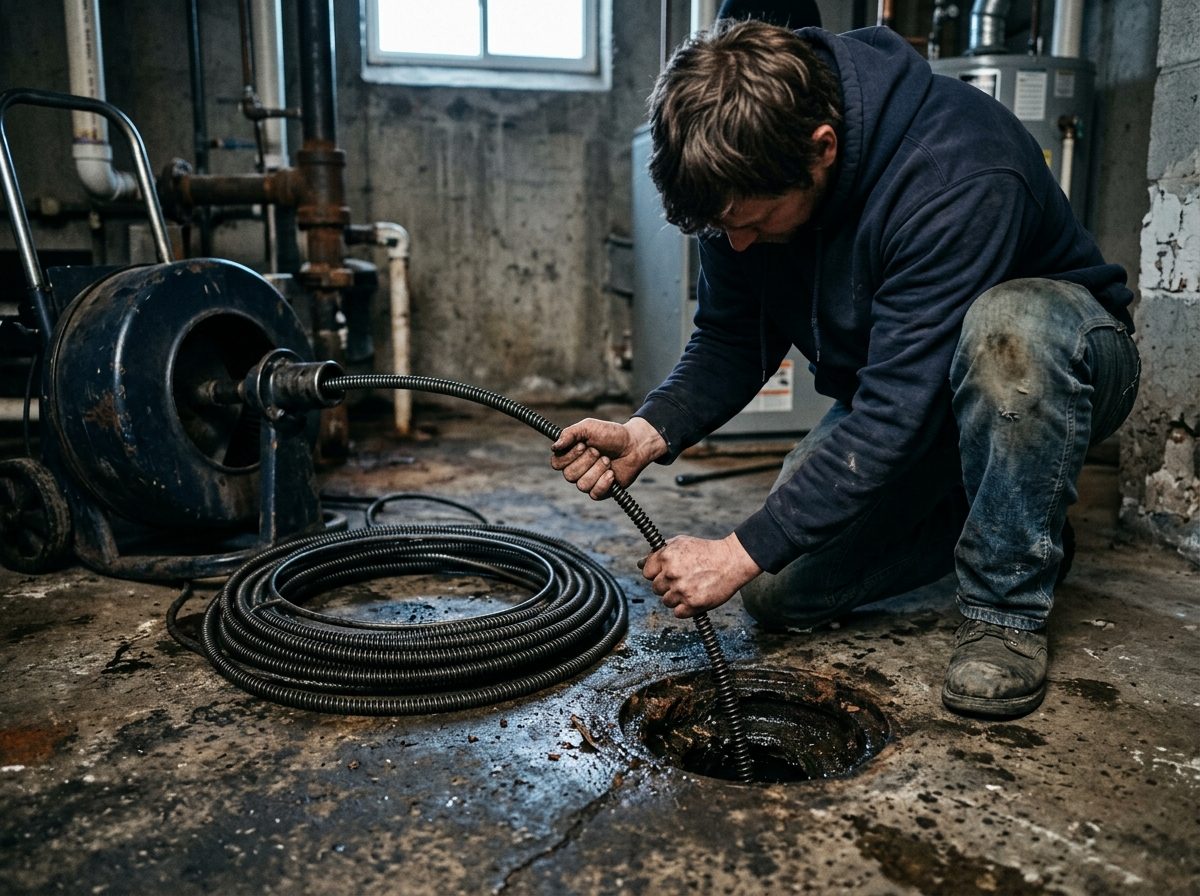
Laterals under mature streets
Mature street trees are the norm here, and a clay lateral gives roots a joint every few feet to find. A blocked main announces itself at the lowest opening in the house — a basement floor drain or the lowest toilet — rather than at the fixture you were using.
When that happens, stop putting water into the house and get the line cleared, then camera inspected. Clearing restores flow; the camera explains why it stopped, and that is the difference between an annual maintenance clean, a spot repair, a trenchless liner and a full replacement. Repeated blockages at the same distance from the house point at alignment rather than at what went down the drain.
Repiping without doing everything at once
On a house where several systems are tired, sequencing matters more than ambition. Three checks usually settle the order: a camera down the lateral, a static pressure reading at an outdoor spigot, and the age and condition of the water heater.
From there, a failing drain stack often jumps the queue, because it is the failure that ruins finishes rather than merely inconveniencing you. Repiping can be staged — the runs feeding the fixtures you use most, one floor, or the horizontal mains in the basement first. A contractor who presents a whole-house job as the only possibility on the first visit is worth a second opinion.
Flow poor upstairs? Test pressure at the hose bib first — it separates house from supply.
Ask about pressure and flowCold snaps in an old house
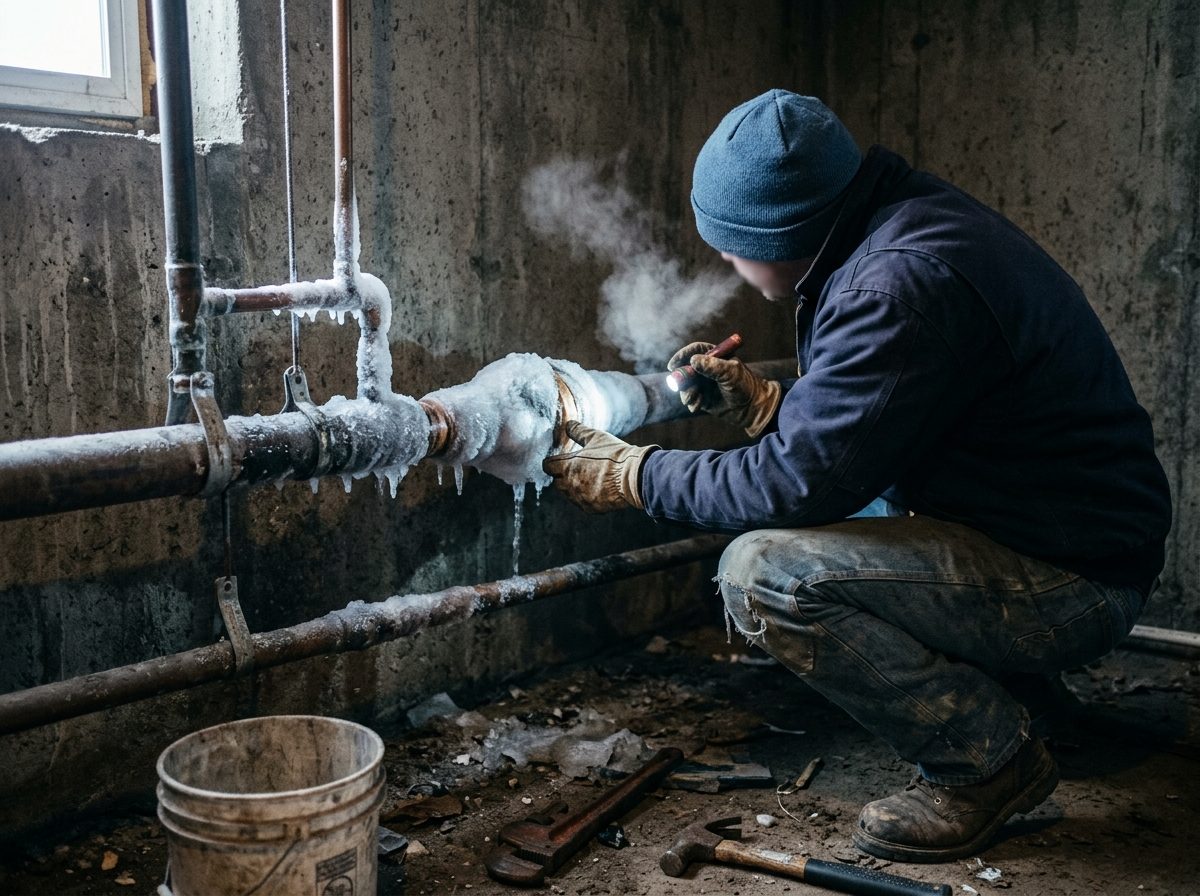
Old houses freeze in places that are no longer heated the way they once were: enclosed porches, additions built over crawlspaces, and walls reinsulated everywhere except where the plumbing runs. A short sharp snap with wind finds them reliably.
Disconnect hoses before the first freeze, since a connected hose holds water against the bib and defeats its frost protection, and open cabinet doors under sinks on exterior walls on the coldest nights. Then find the main shutoff and confirm it turns — in a house of this age a valve that has not moved in decades sometimes will not close, and discovering that during a burst pipe is the worst possible timing.
Shutoff seized? Replacing it is a small scheduled job — worth doing before you need it.
Ask about a shutoff valveDuplexes, rentals and shared plumbing
A large share of the housing here is duplexes, converted houses and small rental buildings, and in all of them the plumbing frequently does not follow the boundaries of occupancy. Two homes may share a single sewer lateral, a single water service, or a single shutoff — often because a house was divided long after it was plumbed, with no intention of making the halves independent.
The consequences are practical rather than theoretical. A blockage in a shared lateral presents in whichever unit sits lowest, which is not necessarily the unit that caused it. A repair on a shared service means both homes are without water for the duration. And a leak in one unit may only be visible in the other, which is how disputes start between people who are both being reasonable.
The answer is unglamorous: find out what is shared before something goes wrong, and write it down. Where there is one shutoff for two homes, both occupiers should know where it is. Where a lateral is shared, both parties benefit from knowing its route and condition, because the cost of a repair on it will be discussed eventually. For a landlord, separating services at the point of any significant work is usually worth the extra cost the first time it prevents a shared outage.
The cheapest test in the house
Put food colouring in a toilet tank and wait twenty minutes without flushing. Colour in the bowl means a failed flapper passing water silently, and it explains a surprising share of unexplained bills for the price of a part.
Nearby communities
Englewood sits in the inner ring south of Denver, with Littleton, Denver and the Arapahoe County suburbs immediately around it.
Englewood, Colorado
Englewood plumbing questions answered
No, and often it should not be. Repiping can be staged by floor, by run, or by starting with the horizontal mains and the fixtures you use most. What sets the order is where flow is worst and where the pipe is easiest to reach. A contractor insisting only a whole-house job is possible on day one is worth a second opinion.
Slow drains upstairs that clear briefly and return, a persistent smell near the stack, damp or staining on the wall around it, and flaking rust at its base in the basement. Failure is gradual until it is not. Because the stack usually runs inside a finished wall, much of the cost is access and finishes rather than pipe.
That points at the main lateral rather than a branch, because the floor drain is the lowest opening in the system. Stop running water into the house, then get the line cleared and camera inspected. In a neighbourhood of clay pipe and mature trees, roots at a joint are the most common cause by a wide margin.
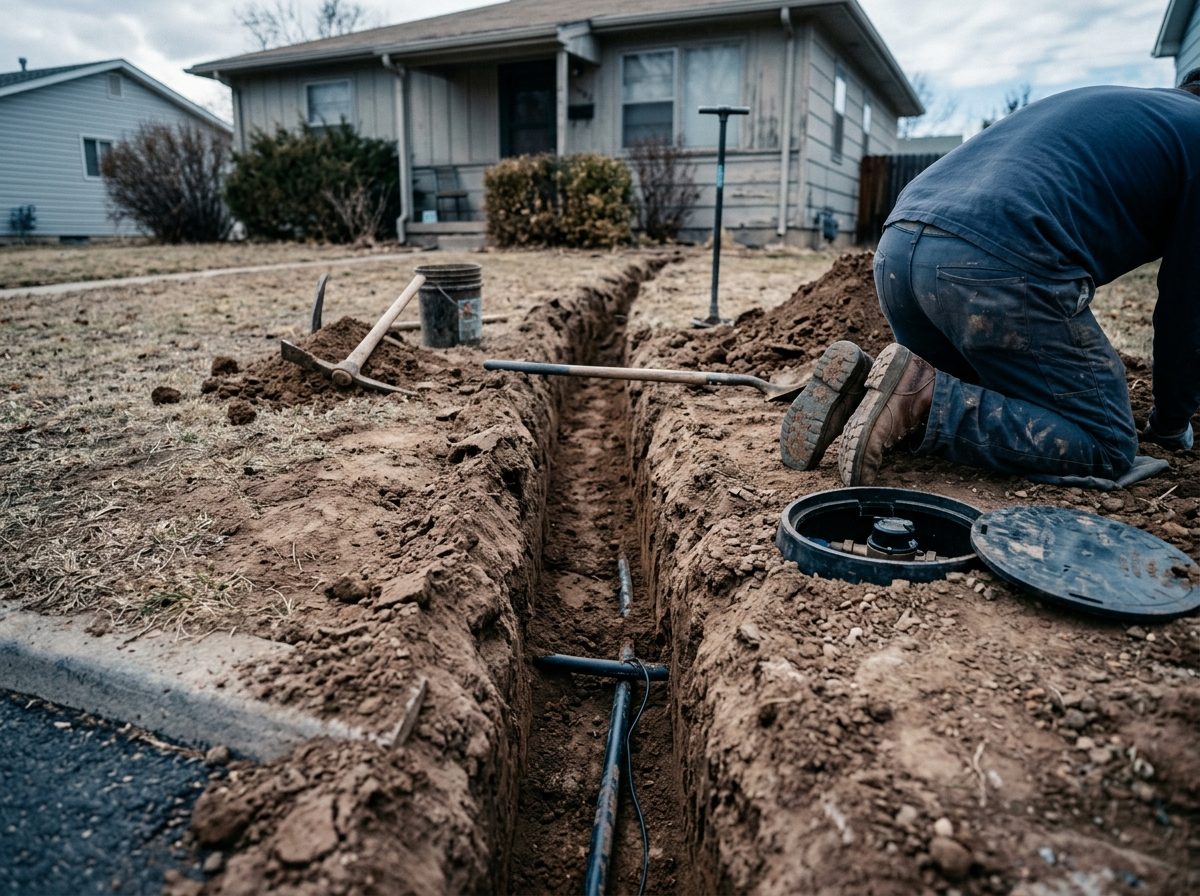
Often not. Trenchless methods pull a new pipe along the old path or line the existing pipe in place, needing access pits rather than an open trench. Suitability depends on condition, depth and bends, which is what the camera establishes. On established streets it is usually worth asking about before agreeing to excavation.
Same-day is normal and a couple of hours is common for anything urgent, since the inner metro has plenty of working plumbers nearby. During a metro-wide cold snap everyone is on split lines at once, so you may get a next-morning window plus instructions on what to shut off in the meantime.
Do not force it — a valve that snaps leaves you worse off than one that sticks. Replacing it is a small scheduled job, and in most cases the water can be shut off at the meter or street while the work is done. In an older house this is one of the highest-value small repairs available.
Recurring blockages in the same place usually mean grease and scale on the pipe wall rather than a single object. Cabling punches through and restores flow but leaves the layer behind. Hydro jetting scours the wall back toward its original diameter, which is why it holds far longer on a line that keeps closing up.
Yes. The lateral is the one major system a standard home inspection does not look inside, and in this housing stock it is also among the most likely to have a problem and the most expensive to fix. Finding a belly, an offset joint or roots before closing turns it into a negotiation instead of a bill.
Englewood, around the clock
Englewood, Littleton, Denver and the inner-ring communities nearby.
(833) 621-2904 — answered 24/7, statewide.