Plumber in Lone Tree, CO — one call, any hour
Home / Areas / Denver Metro / Lone Tree
A large share of Lone Tree housing is attached — townhomes, paired homes and condominiums — and that single fact reshapes plumbing here. Water does not stay inside one property, responsibility is divided between owner and association, and a leak that starts in one unit is frequently discovered by somebody else.
Attached housing changes the problem
In a detached house, a leak damages the person who owns it. In attached housing it travels: down through a ceiling into the unit below, along a shared floor assembly, or through a party wall carrying supply lines for two homes. By the time it is visible, the water has usually crossed a boundary.
That has three consequences worth knowing before it happens. Speed matters more, because more finishes are in the path. Access matters more, because the source may be behind someone else's drywall. And documentation matters more, since two insurers and possibly an association will eventually want to know when it started and what was done.
Water appearing where it should not be? Photograph it before anything is cleaned up.
Ask what to do first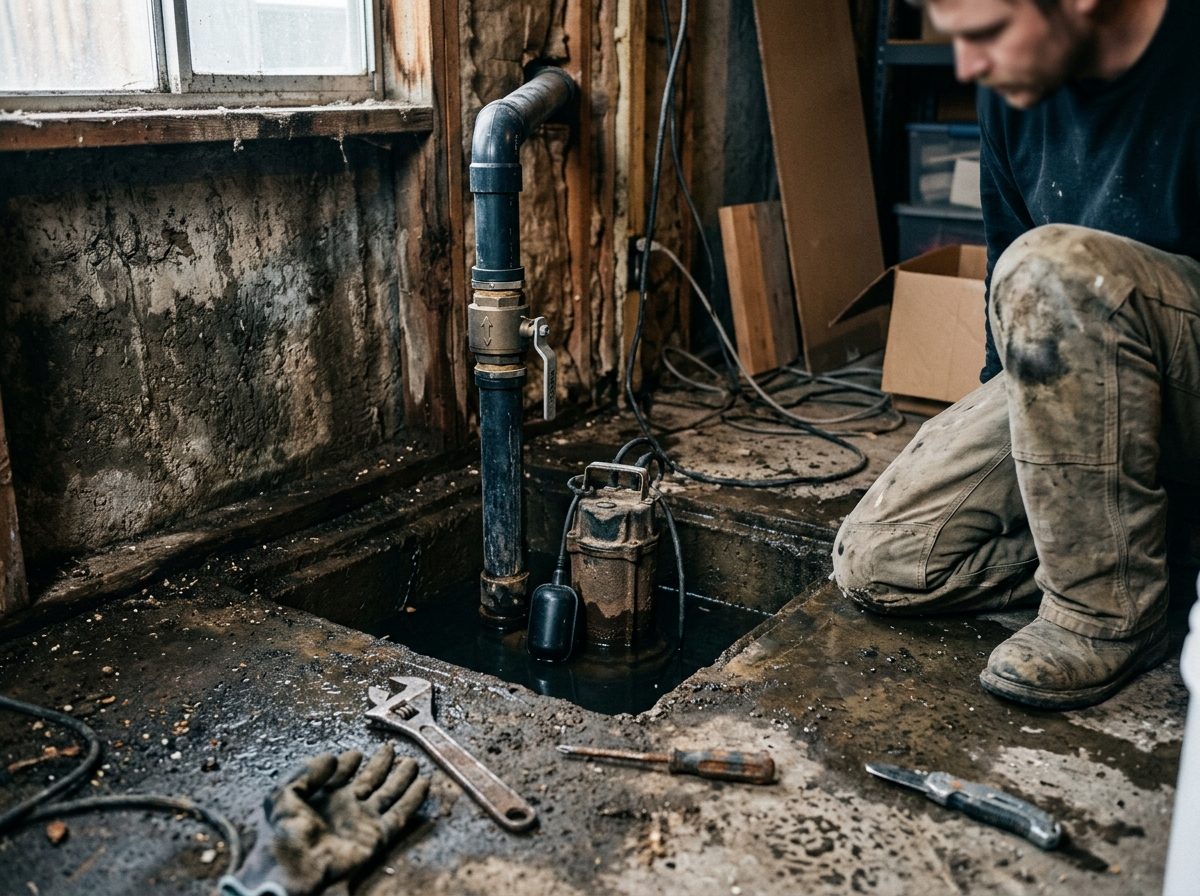
Who owns which pipe
The most common source of delay on an attached-housing call is nobody knowing whose pipe it is. Typically the fixtures, the branch lines inside your unit and your water heater are yours, while stacks, mains and anything serving multiple units belong to the association — but the governing documents decide, and they vary.
Two things are worth doing in advance. Find out where the shutoff for your unit is, since it is often not where a detached-house shutoff would be, and read the section of your association documents that divides responsibility. Doing both on a quiet afternoon is far better than doing them while water is running.
When you call, saying whether you have a unit shutoff and whether you have contacted the association saves real time — it determines whether the first job is stopping water or getting permission to open a wall.
Tankless units and hard water
Tankless heaters are common in newer attached housing because they save floor space, and they are more sensitive to local water than tank models. Mineral scale builds inside a compact heat exchanger, and the symptoms are gradual: longer waits for hot water, temperature that wanders during a shower, and eventually error codes.
Descaling on a schedule is not optional maintenance on these units in this area — it is what keeps them working to specification. Sizing matters too: output is a temperature rise across a flow rate, so a unit chosen without regard to January inlet temperatures will disappoint in the coldest weeks even when it is perfectly healthy.
Tankless wandering hot and cold? Scale in the exchanger is the usual culprit.
Ask about descalingQuiet failures in newer construction
Housing built in the last few decades rarely fails through pipe decay. It fails at the small components fitted during construction: angle stops, flexible supply lines, toilet fill valves, washing machine hoses and expansion tanks. These are inexpensive individually and they cause a disproportionate share of water damage, because they let go without warning.
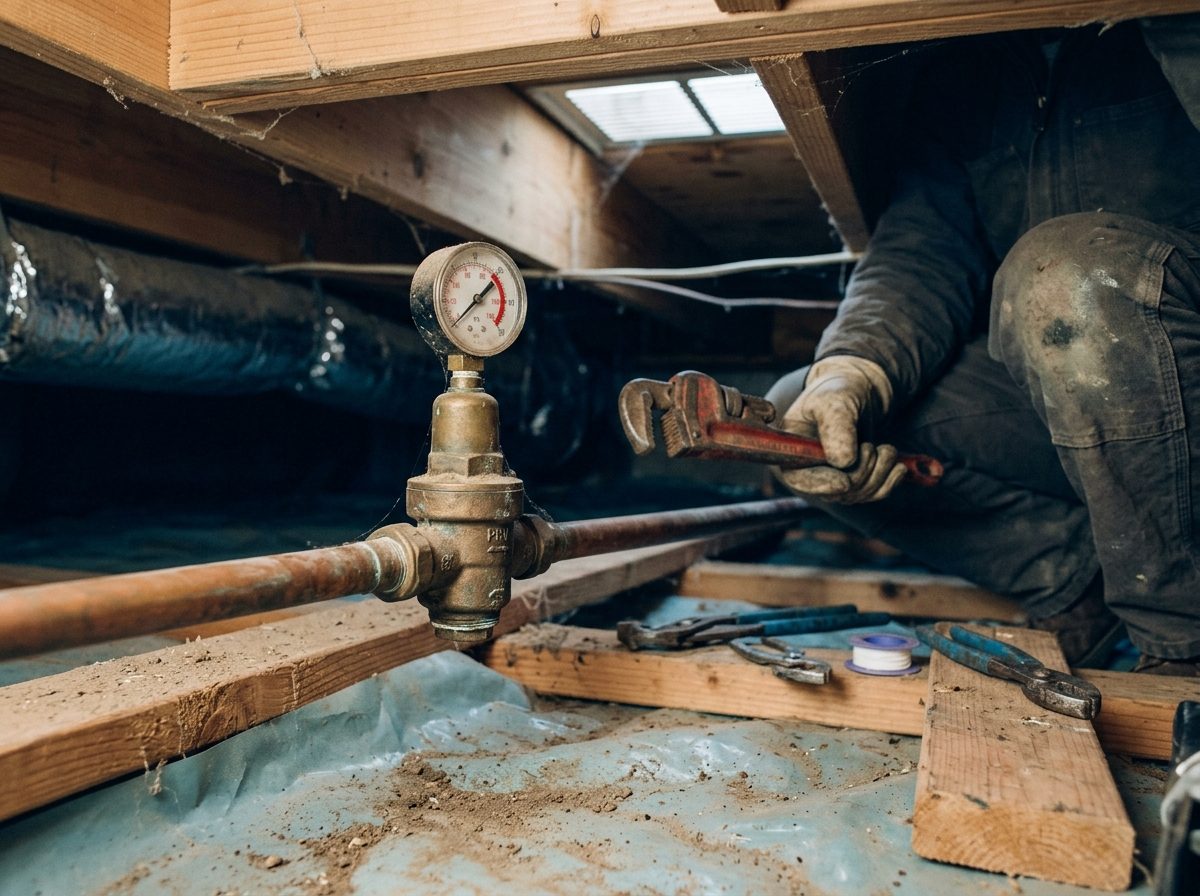
Static pressure is the multiplier. When it sits above the range fixtures were designed for, every seal in the building is under continuous stress and the small parts fail years early. A gauge on an outdoor spigot or a laundry connection settles the question quickly, and correcting pressure protects everything behind it.
Several small parts failed recently? That pattern is usually pressure, not coincidence.
Ask about a pressure checkLeak detection where water travels downward
In attached and stacked housing, a leak is rarely confined to the home it starts in. Water follows structure rather than ownership, so a failure in an upper unit presents as a ceiling stain two floors below, and the property that reports the problem is frequently not the property that has it. That changes the value of early detection completely: the cost of a small leak here is not the repair, it is the number of homes involved before anyone notices.
Which is why automatic detection has moved from a luxury to something many associations now encourage or require. The useful versions do one of two things. A point sensor sits where water would appear first — under a heater, behind a dishwasher, in a laundry pan — and alerts. A flow-based device watches the whole supply and shuts it off when it sees a pattern that does not look like normal use, such as continuous flow at three in the morning. The second type prevents damage rather than reporting it, which in a stacked building is the distinction that matters.
Neither removes the need to know the basics. The shutoff for an individual home is often not where an owner assumes, sometimes in a hallway cupboard or a shared riser closet, and it should be located and turned once while everything is dry. In a building where water crosses boundaries, the fastest thing that can happen after a failure is somebody closing the right valve.
Two things to locate now
Your unit shutoff, and the clause in your association documents that says which pipe is yours. Both are far easier to find before an emergency than during one.
Nearby communities
Lone Tree sits between Littleton, Parker and Castle Rock at the south end of the metro.
Lone Tree, Colorado
Lone Tree plumbing questions answered
Contact the occupant above if you can, since the fastest fix is usually their shutoff, and notify the association. Move belongings out of the path, put containers down, and switch off power to affected fittings at the breaker. Photograph everything before cleanup — with attached housing, two insurers may need that evidence.
It depends on what the pipe serves and what your governing documents say. Branch lines and fixtures inside a unit are usually the owner’s; stacks, mains and anything serving multiple units are usually common. Because the wording varies, the practical answer is to read that clause before you need it and keep a copy handy.
Look near the water heater, in a utility closet, or in a garage on the wall shared with the street side. In some buildings the only shutoff is a common one serving several units, which is exactly why finding out now matters. If you cannot locate one, ask the association where it is and whether you are permitted to operate it.
Annually is a reasonable default in mineral-heavy water, and heavier households may benefit from more frequent service. The signs you have waited too long are longer waits for hot water, temperatures that drift mid-shower, and error codes. Descaling is routine maintenance on these units rather than a repair.
Usually pressure. Above the working range fixtures are designed for, every seal is under constant stress and the cheap parts go years early. Measure static pressure with a gauge before replacing anything else, because otherwise you are replacing symptoms one at a time while the cause continues.
Same-day is normal, and urgent problems are usually within a few hours given how well served the south metro is. What can slow an attached-housing call is access and permission rather than travel, so knowing whether you have your own shutoff and who to contact at the association speeds things up considerably.
In attached housing it is worth considering, particularly if you travel or the unit sits empty periodically. These devices monitor flow and close the water automatically when they see a pattern that looks like a leak. In a building where your water can damage several other homes, the calculation is different from a detached house.
Sometimes, and the constraint is usually space and drainage rather than desire. A softener needs somewhere to sit on the incoming line and a drain for the regeneration cycle, which not every unit has. Where that is not workable, a scale-reduction cartridge on the heater feed and regular descaling are the realistic alternatives.
In stacked or attached housing it usually is, because the damage from a leak is multiplied across neighbouring homes rather than confined to yours. The flow-based type, which closes the supply when it sees continuous unusual flow, prevents damage instead of just reporting it. Some associations now require or subsidise them — worth asking before buying anything.
South metro, any hour
Lone Tree, Parker, Castle Rock and Littleton, answered around the clock.
(833) 621-2904 — answered 24/7, statewide.