Plumber in Larkspur, CO — one call, any hour
Home / Areas / Denver Metro / Larkspur
Larkspur sits high on the Palmer Divide between Castle Rock and Monument, in wooded country where properties run their own water and waste. The Divide makes its own weather, and that plus the elevation shapes most of what happens here.
High on the Palmer Divide
Storms that pass over the corridor drop snow here, wind funnels through, and winter runs longer than the elevation alone suggests. Properties sit on wooded lots down long drives, many with outbuildings taking their own supply.
Most of what a plumber needs to know before setting out concerns the property rather than the fault: where the water comes from, how many buildings draw on it, whether the place is occupied through the winter, and what the final quarter-mile looks like once the county road ends.
Drive unplowed or long? Say so when you call — it decides who can come.
Ask about winter access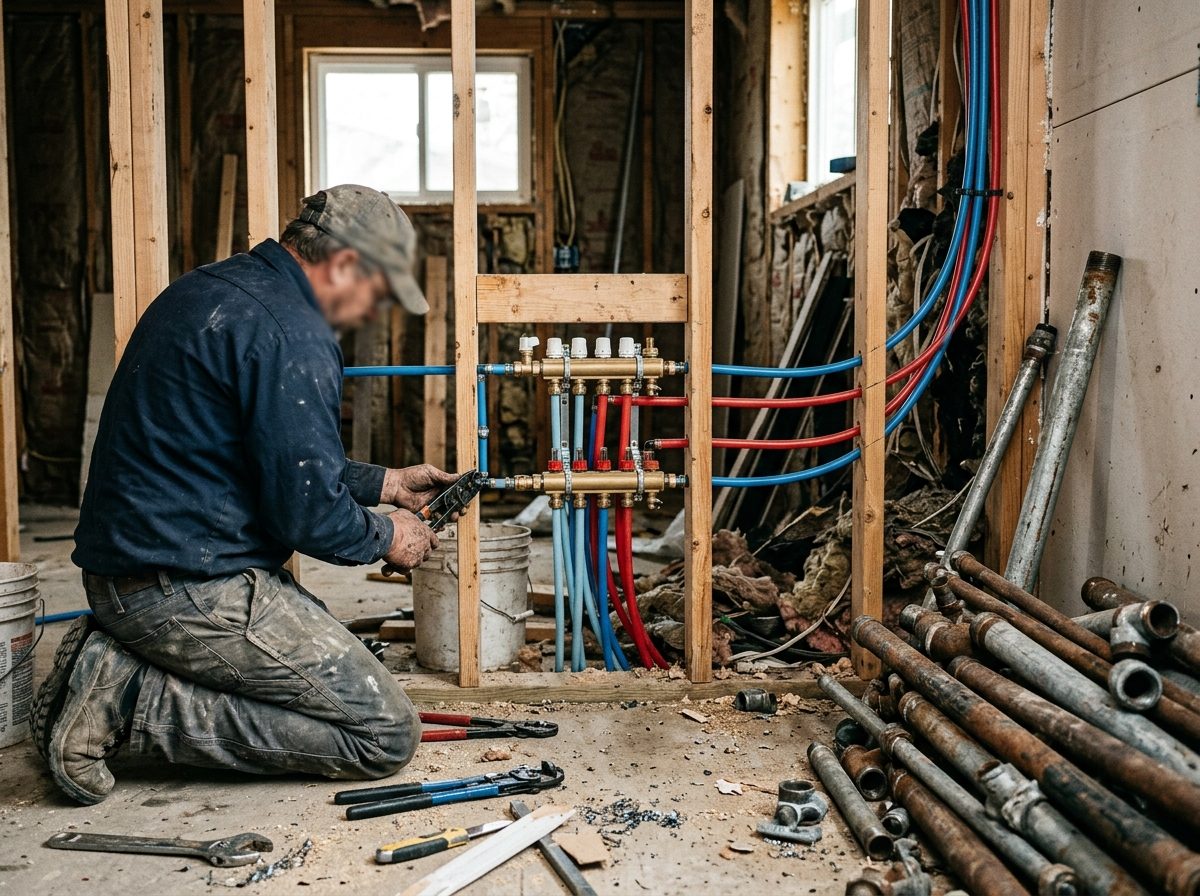
Wells, septic and hydronic heat
Three systems generate most of the calls. Wells come first, and the faults cluster tightly: a pressure tank whose air charge has bled away, leaving the pump hammering on and off; a switch that no longer closes; a pump worn out after fifteen or twenty years of service. Septic is second — tanks on a three-to-five-year cycle, and a drainfield that tells you it is unhappy by backing every drain up together rather than one. Hydronic heat is third, and it is the system owners understand least, because a boiler and a loop of pipe behave nothing like the forced-air furnace most people grew up with.
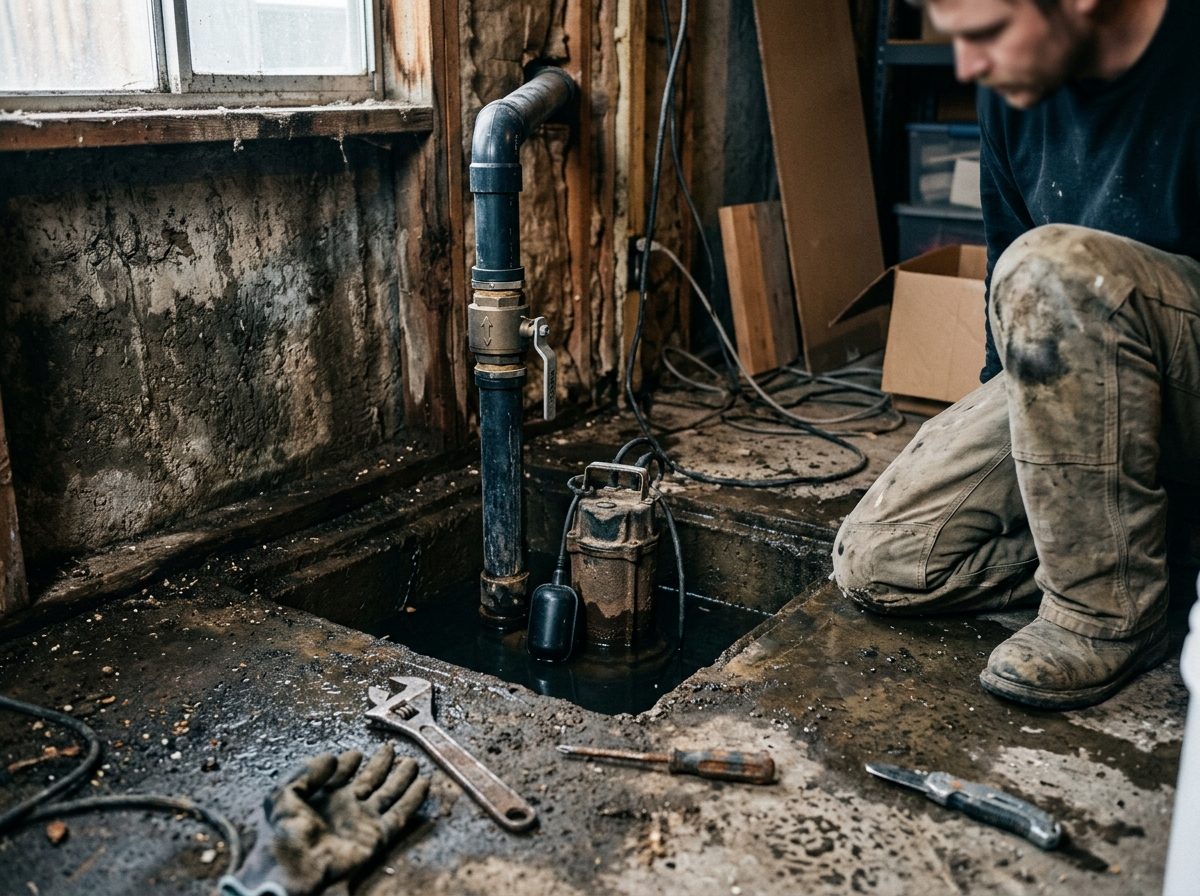
The trade boundary matters before you call: from the pressure tank into the house is ordinary plumbing, while the pump, drop pipe and casing wiring are well-system work.
Nothing at the tap? Gauge reading, pump noise, breaker — those three narrow it fast.
Ask about a well systemWater quality is worth testing rather than assuming. On a private well the composition varies noticeably from one property to the next, and nobody is checking it on your behalf — hardness affects appliances and fixtures, iron stains, and other results matter for the people drinking it. Test before buying any treatment, and size equipment to the household rather than to the largest unit available.
Altitude and the water heater
Combustion appliances produce less than their labels suggest at this elevation because there is less oxygen available, and midwinter inlet water is close to freezing — so the appliance is asked for more heat exactly when it can deliver least.
Specify for a January morning rather than an average day, and treat venting and combustion air as part of the specification rather than installation detail. Tankless units are the most sensitive, since their output is a temperature rise across a flow rate.
Hard water is a factor at the same time. Sediment settles in the tank floor and insulates the burner from the water, which lengthens run times and shortens the unit's life — so an annual drain matters more here, where the heater is already working harder through a long winter.
Snow, wind and access
Heat tape carries much of the freeze protection here, and it fails silently — through age, rodent damage, or having been unplugged during other work. Testing it before the first hard freeze is among the highest-value ten minutes available to an owner.
If a house will be shut up for the season, having the water drawn out of it is the one measure that does not depend on the power staying on. And what governs response here is the last half-mile rather than the mileage: drifted snow across an exposed stretch, ice on a north-facing pitch, or an unplowed drive can stop a van that had no difficulty with the forty miles before it.
Building empty this winter? Draining it properly beats hoping the heat holds.
Ask about winterisingLong service runs across big lots
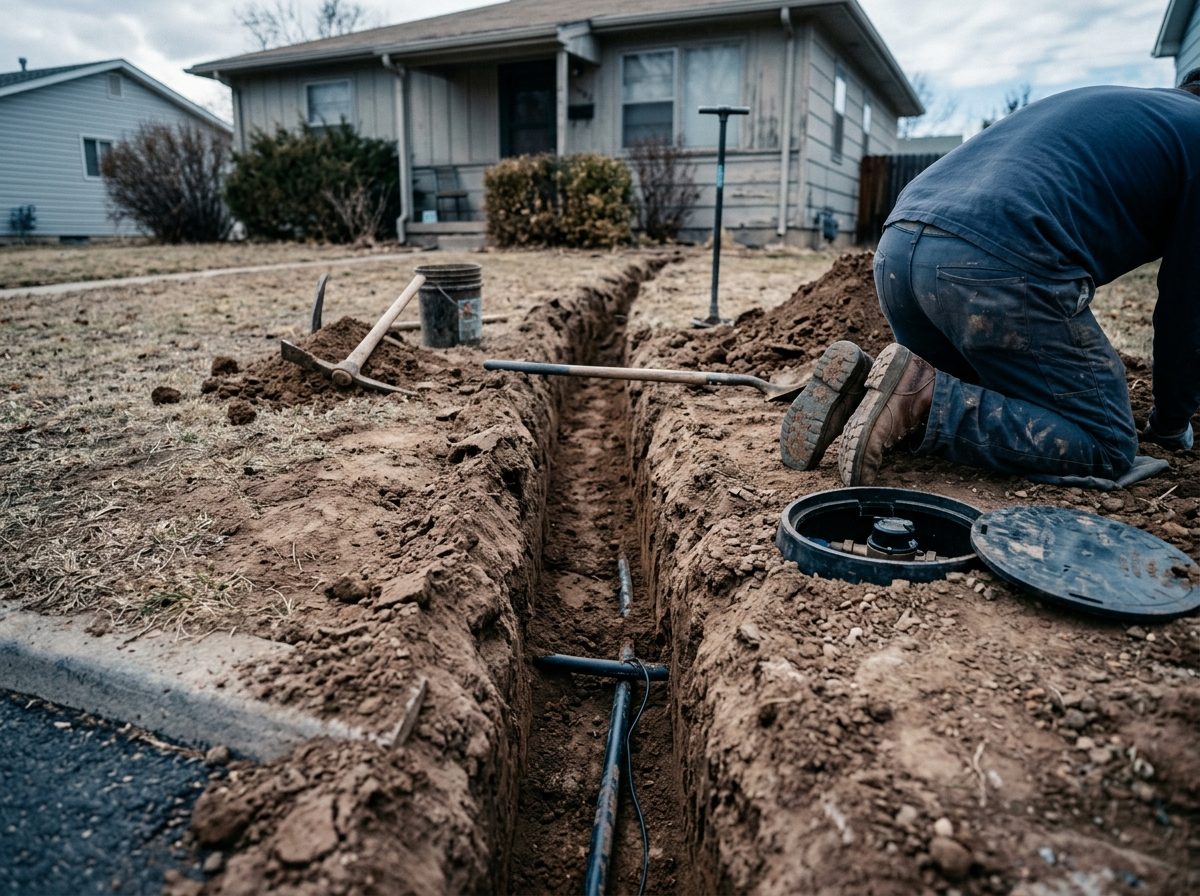
Lots up here run to several acres, and the well head, the pressure tank and the house are frequently not in the same building. That leaves a buried run of a hundred feet or more carrying the entire supply, and it changes the way a leak announces itself.
There is no meter creeping and no wet patch indoors. Instead the pump runs longer and more often than it ought to, or never quite stops, and the first symptom anyone actually notices is an electricity bill or a burnt-out pump. Isolating valves at both ends of that run turn a day of guesswork into about ten minutes of testing. So does knowing where the line genuinely goes — on lots this size the route is rarely the straight line everyone assumes, and that matters enormously before a machine arrives to dig.
When the power goes, the well stops
Wind on the Divide takes lines down, and a well pump is simply an electrical appliance — so a power cut here is also a water cut, and in a hydronically heated house the circulators stop at the same moment. That combination is what turns an outage into a plumbing bill.
Two things are worth settling in advance rather than during. First, know what your pump draws on start-up, which is several times its running figure and is the number undersized generators fail on. Second, have the transfer arrangement worked out and tested by somebody competent, so that nobody ends up improvising with extension leads in the dark. Then keep the short list somewhere findable: main shutoff, lowest tap, breaker panel, and a few gallons of drinking water standing by.
Arriving at a cold house
Shut the main off before any heat goes near a frozen pipe, then check the lowest ceiling and the crawlspace for signs of damp. While it stays frozen a split holds shut; it starts running as it thaws.
Nearby communities
Larkspur sits high on the Palmer Divide between Castle Rock and Monument, with Palmer Lake nearby.
Larkspur, Colorado
Palmer Divide questions answered
It depends where the fault is. From the pressure tank into the house is ordinary plumbing. The pump, drop pipe and casing wiring are well-system work needing specific equipment. Saying what the gauge reads and whether the pump runs settles which trade should be sent.
That is short-cycling, usually caused by a pressure tank that has lost its air charge. The tank holds a cushion so the pump runs once every few minutes rather than constantly. Left alone it wears the pump out quickly, so it is worth fixing promptly.
For gas units, yes. Thinner air means less oxygen for combustion, so manufacturers derate output above certain elevations and may specify different models. Combined with cold January inlet water, that is why a heater which coped in summer falls short in winter.
Three to five years for a full-time household, sooner where the tank is small or usage is heavy. Every drain slowing at once rather than one fixture is the classic signal, along with unusually green growth over the field or a backup after a busy weekend.
The Palmer Divide creates its own weather, and Larkspur sits higher and more exposed. Storms passing over the corridor below drop snow here and wind funnels through. Practically it means longer winters, deeper frost and more exposure than the elevation alone would suggest.
Tape can look intact and be dead. Age, rodent damage and being unplugged during unrelated work are the usual causes, none visible at a glance. Test it before the freeze season and check the whole length of the run, since tape often covers less pipe than assumed.
Sometimes, and it depends on the vehicle and the grade. Some contractors will ask you to meet them lower down. Describing the last stretch honestly means whoever takes the call arrives equipped rather than turning back, which matters most in winter.
That is the pressure relief valve doing its job, which means system pressure is climbing too high — commonly a failed expansion tank, a fill valve not closing, or overheating. Do not cap it. Note whether the gauge climbs as the system heats, because that speeds the diagnosis.
Realistically, with a generator sized for the well pump and the boiler controls rather than for the whole house, arranged before winter rather than during a storm. The alternative, for a property that will be left empty, is draining the system so nothing depends on power at all. What does not work is leaving a full system in an unheated building and hoping the outage is short.
The Palmer Divide
Larkspur, Castle Rock, Monument, Palmer Lake and Franktown.
(833) 621-2904 — answered 24/7, statewide.