Plumber in Sedalia, CO — one call, any hour
Home / Areas / Denver Metro / Sedalia
Sedalia sits west of Castle Rock where Douglas County rises toward the foothills. Properties here are on large lots with private wells and septic, and the plumbing extends well beyond the walls of the house.
Acreage west of Castle Rock
A typical holding has a house, one or two outbuildings with their own supply, and often a hydrant, connected by several hundred feet of buried line. Rising ground toward the foothills means exposure and drive access both matter more than they do on the flats.
The information that shapes a visit is scope: how many structures take water, what the source is, and how far the furthest fixture sits from the pump. Those answers determine what comes on the truck.
Water reaching more than one building? Say how many structures are involved.
Ask about a property visit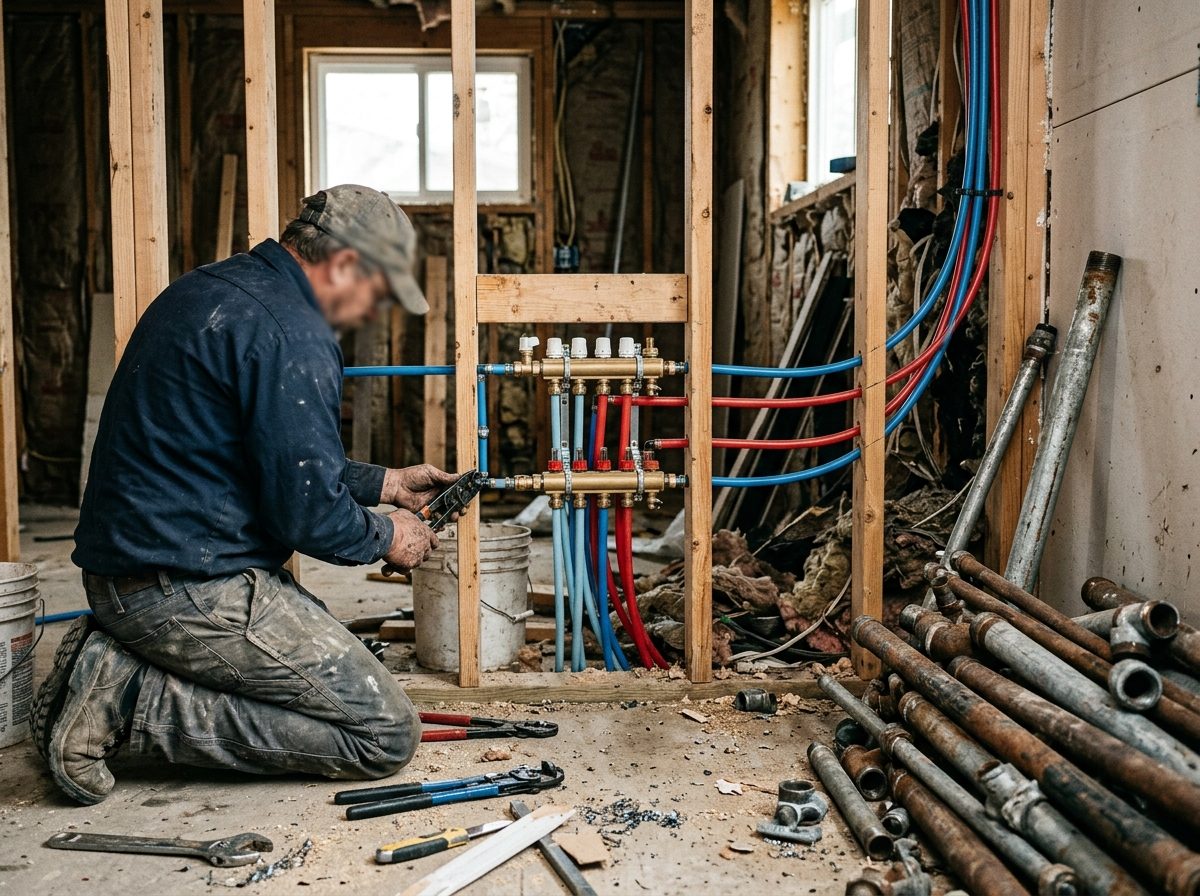
Wells and the whole water cycle
On a well you own the supply from the ground up, and three faults account for most calls: a pressure tank that has lost its air charge and is cycling the pump every few seconds, a pressure switch that has stopped making contact, and a pump at the end of its working life.
All three present as poor pressure or nothing at the tap, so three answers narrow it before anyone drives out: what the gauge reads, whether the pump can be heard running, and whether the breaker has tripped. Septic systems, meanwhile, need pumping every three to five years and signal trouble by slowing every drain at once.
Nothing at the tap? Gauge reading, pump noise, breaker — those three narrow it fast.
Ask about a well system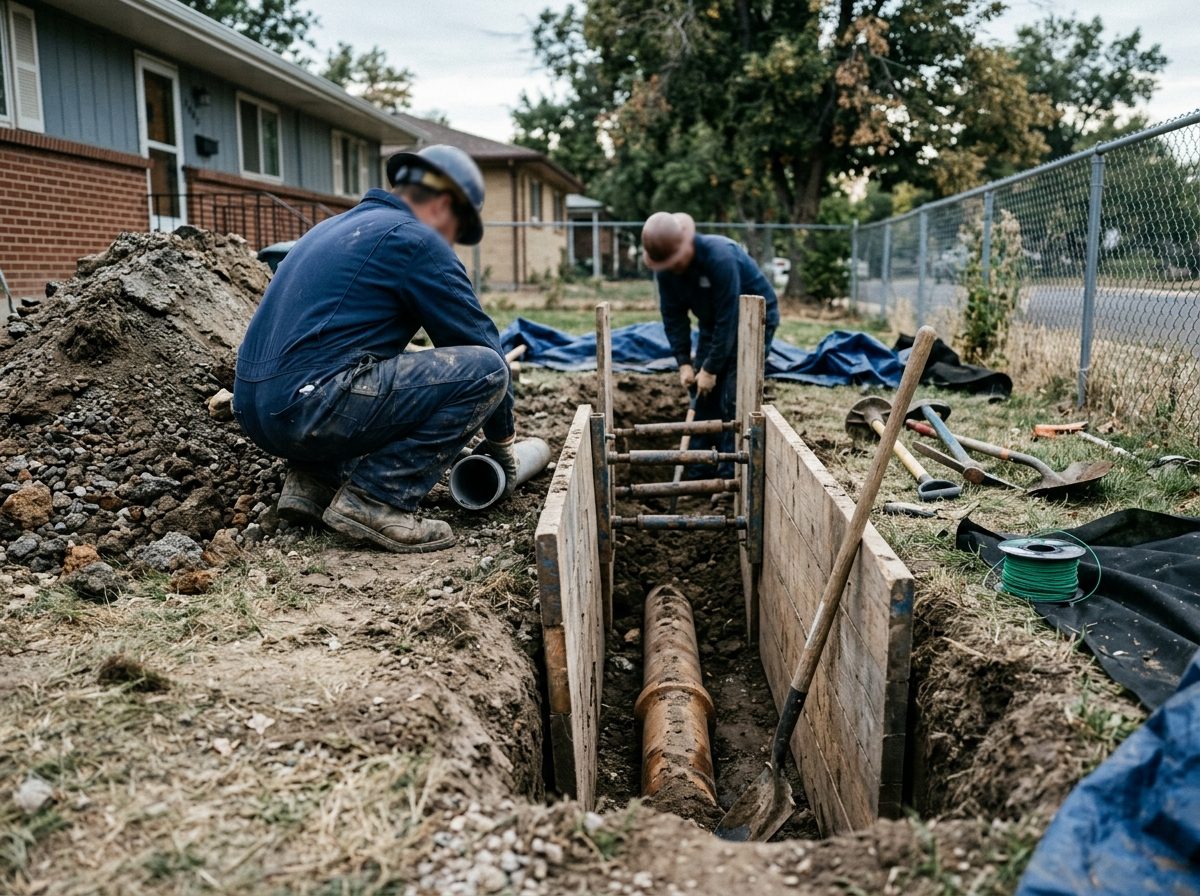
Long runs and slow leaks
On a property with buried line running out to outbuildings, a leak can continue for weeks without anything visible changing. The signs are indirect: pressure that has slowly fallen, ground that stays damp or unusually green, a pump running more often than it used to, or water use that climbed with no change in habits.
Confirming it before the visit is worth doing. With everything shut off, movement at the gauge or the meter over an hour proves water is leaving the system, and where isolation valves exist between structures, closing them one at a time narrows which run is at fault before anyone starts digging.
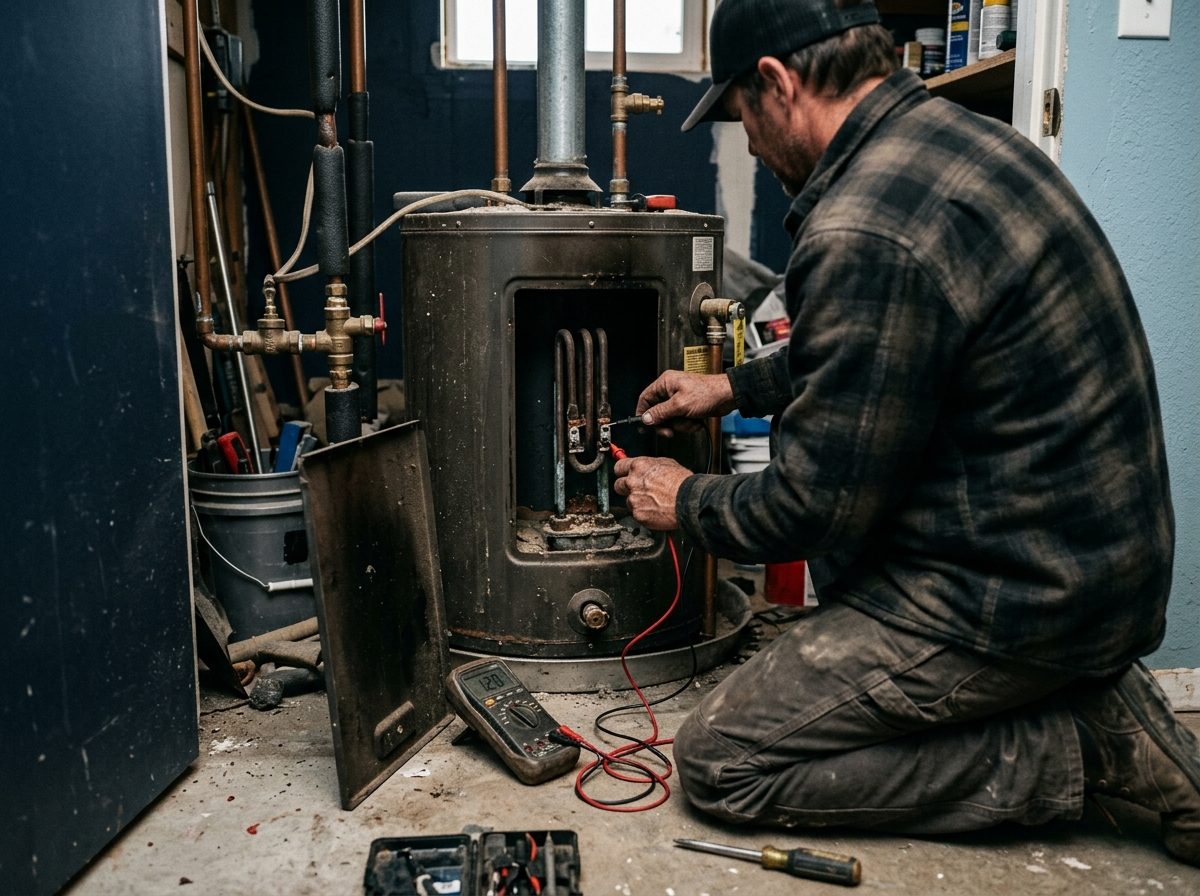
Hard water is worth a mention too. Sediment settles in the water heater so the burner heats through scale rather than steel, run times lengthen and recovery slows; on electric units the elements scale directly and fail early. Draining the tank annually is the cheapest life extension available, and the sacrificial anode rod is worth checking at the same time.
Foothills exposure
Rising ground and wind mean exposed pipe loses heat faster than the air temperature suggests, and winter runs a little longer here than out on the flats. Well houses and outbuildings freeze first because they are heated least.
Where a building is not in use through winter, isolating its branch and draining it removes the risk rather than managing it. Where a line must stay live, insulation and air sealing come first and heat tape second — and tape needs testing each autumn because it fails without any visible sign.
Outbuilding water not needed this winter? Isolating and draining its line removes the risk.
Ask about winterising outbuildingsWhen the power goes out
On a property with its own well, an outage is not an inconvenience with the lights — it is a complete loss of water. The pump needs power, so nothing comes out of any tap. A boiler needs power for its circulator and controls even when it burns propane, so heat stops too. And anything relying on a pump to keep a space dry stops in precisely the weather that produced the outage.
For a short interruption the useful actions are small but worth knowing. Whatever is in the pressure tank is the supply until power returns, so draw it deliberately rather than discovering it is gone. Do not cycle the pump breaker repeatedly in the hope of coaxing it; that achieves nothing and risks the pump’s starting components. Keep interior doors open so any remaining heat moves through the building, and open cabinet doors under sinks on exterior walls so room air reaches the pipe behind them.
For a longer outage, or for a property that will be left unoccupied, the decision is between backup power and draining the system. A generator sized for the well pump and the boiler controls keeps a building functioning, and that is worth planning before the season rather than in the middle of a storm. Draining needs nothing to keep working, which is its whole advantage. What does not work is leaving a full system in an unheated building and hoping the outage is brief.
Two things worth knowing
When the septic tank was last pumped, and where the well breaker is. Between them they cover the two most common reasons a property out here loses the use of its plumbing.
Nearby communities
Sedalia sits west of Castle Rock where Douglas County rises toward the foothills, with Louviers and Larkspur nearby.
Sedalia, Colorado
West Douglas County questions answered
It depends where the fault is. Everything from the pressure tank into the house is ordinary plumbing. The pump, drop pipe and wiring down the casing are well-system work needing specific equipment. Saying what the gauge reads and whether the pump runs settles which trade should come.
That is short-cycling, and the usual cause is a pressure tank that has lost its air charge. The tank holds a cushion behind a bladder so the pump runs once every few minutes rather than constantly. Left alone it destroys pumps quickly, so it is worth fixing promptly.
Confirm there is one first: with everything shut off, watch the gauge or meter for an hour, and movement means water is leaving the system. If there are isolation valves between buildings, closing them one at a time narrows which run is losing water and saves considerable excavation.
That suggests either a leak on the system or a pressure tank losing its air charge. Checking the tank is quick and inexpensive. If the tank is sound, the next step is isolating sections to find where water is going, because a buried leak can run for weeks with no visible sign.
Three to five years for most households, sooner where the tank is small or the household is large. Every drain slowing at once rather than one fixture is the signal that the tank rather than the plumbing needs attention, along with unusually green growth over the field.
For most households the return shows up as longer heater and appliance life rather than anything obvious at the tap. Test first — on a well, iron may be present and needs different equipment — then size to the household and confirm there is a drain for regeneration.
Same-day is realistic for urgent problems, since Castle Rock and the south metro are within reach. Properties further up toward the foothills add drive time and winter access can matter. You will get an honest window plus instructions on what to shut off.
If it is not needed through winter, isolate its branch and drain it — that removes the risk rather than managing it. If it must stay in service, insulate the run and seal air leaks first, then use heat tape as backup, and test the tape each autumn because it fails invisibly.
Almost certainly not. No power means no pump and therefore no supply, which from the tap is indistinguishable from a failed pump. What is left in the pressure tank is what you have until power returns. Avoid switching the breaker on and off repeatedly, and if the outage looks long, turn your attention to keeping the building warm.
If outages here regularly last more than a few hours, yes — and the sizing question is the pump plus the boiler controls, not the whole house. It is worth working that out and installing the transfer arrangement before winter. The alternative, for a property that is left empty, is draining the system, which removes the dependency on power altogether.
West Douglas County
Sedalia, Louviers, Castle Rock, Larkspur and Littleton.
(833) 621-2904 — answered 24/7, statewide.