Plumber in Franktown, CO — one call, any hour
Home / Areas / Denver Metro / Franktown
Franktown is acreage country in eastern Douglas County, where the subdivisions give way to large lots on private wells and septic. Almost everything distinctive about plumbing here follows from that: the household owns the whole water cycle.
Acreage in eastern Douglas County
On a property measured in acres, plumbing extends well beyond the house: several hundred feet of buried line, a shop or barn with its own supply, and often a hydrant or two. Nothing about the components is unusual; the scale is.
The first useful distinction on a call is which symptom you have. Every drain slowing at once points at the septic side. No water at the tap points at the supply side. Those two send different trades with different equipment.
Not sure which side the fault is on? Say whether it is drains or supply — it decides who comes.
Ask what applies to you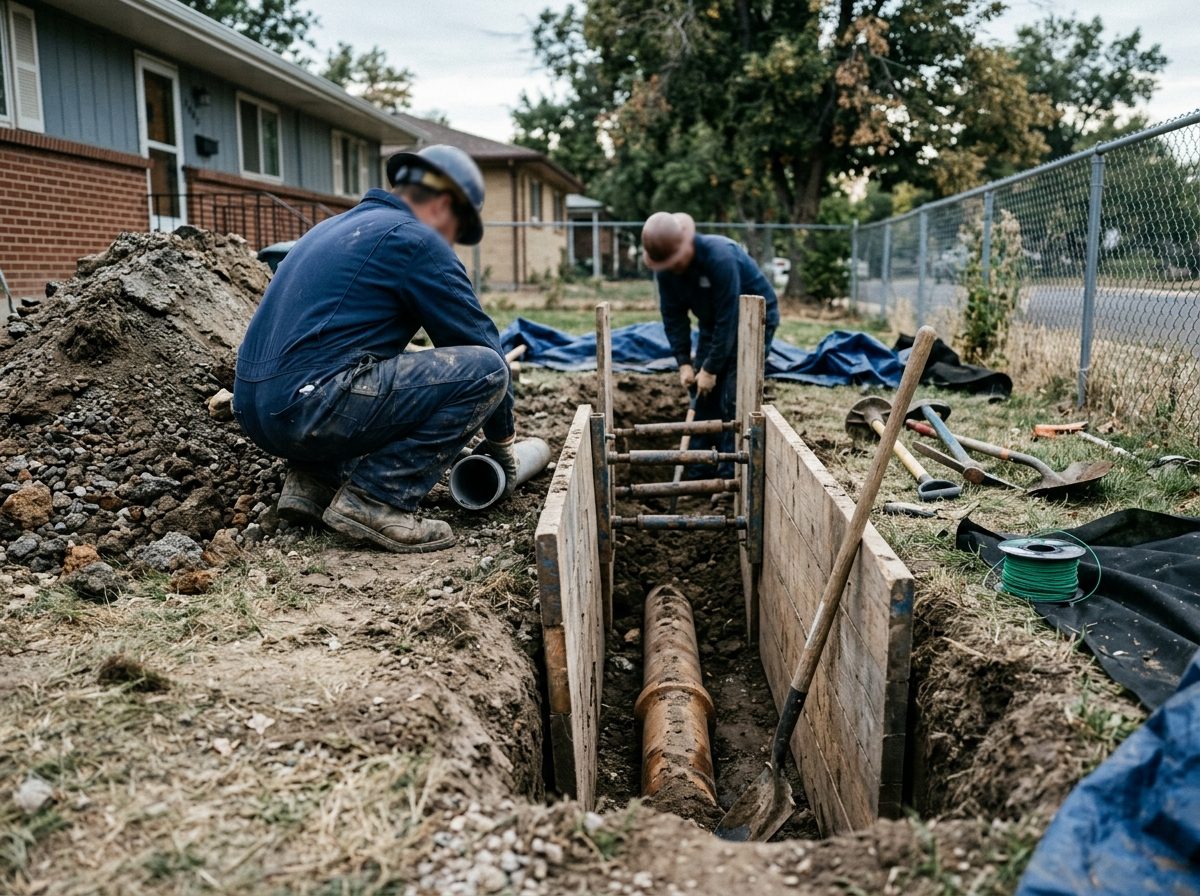
Owning the whole water cycle
On a well, failures cluster in three places: a pressure tank that has lost its air charge and is cycling the pump every few seconds, a pressure switch that has stopped making contact, or a pump at the end of its working life. Short-cycling in particular destroys pumps quickly.
Because all three look identical from inside the house, three answers narrow it before anyone drives out: what the gauge reads, whether the pump can be heard running, and whether the breaker has tripped. A tripped breaker and a failed switch are both cheap and both present exactly like a dead pump.
Nothing at the tap? Gauge reading, pump noise, breaker — those three narrow it fast.
Ask about a well systemBuried runs are worth understanding too. On a holding with several hundred feet of line, a leak can continue for weeks with nothing visible to show it. The signs are a pump running more often than it used to, pressure that has slowly fallen, or ground that stays damp — and where isolation valves exist between structures, closing them one at a time narrows which run is at fault before anyone digs.
Septic is a maintenance item
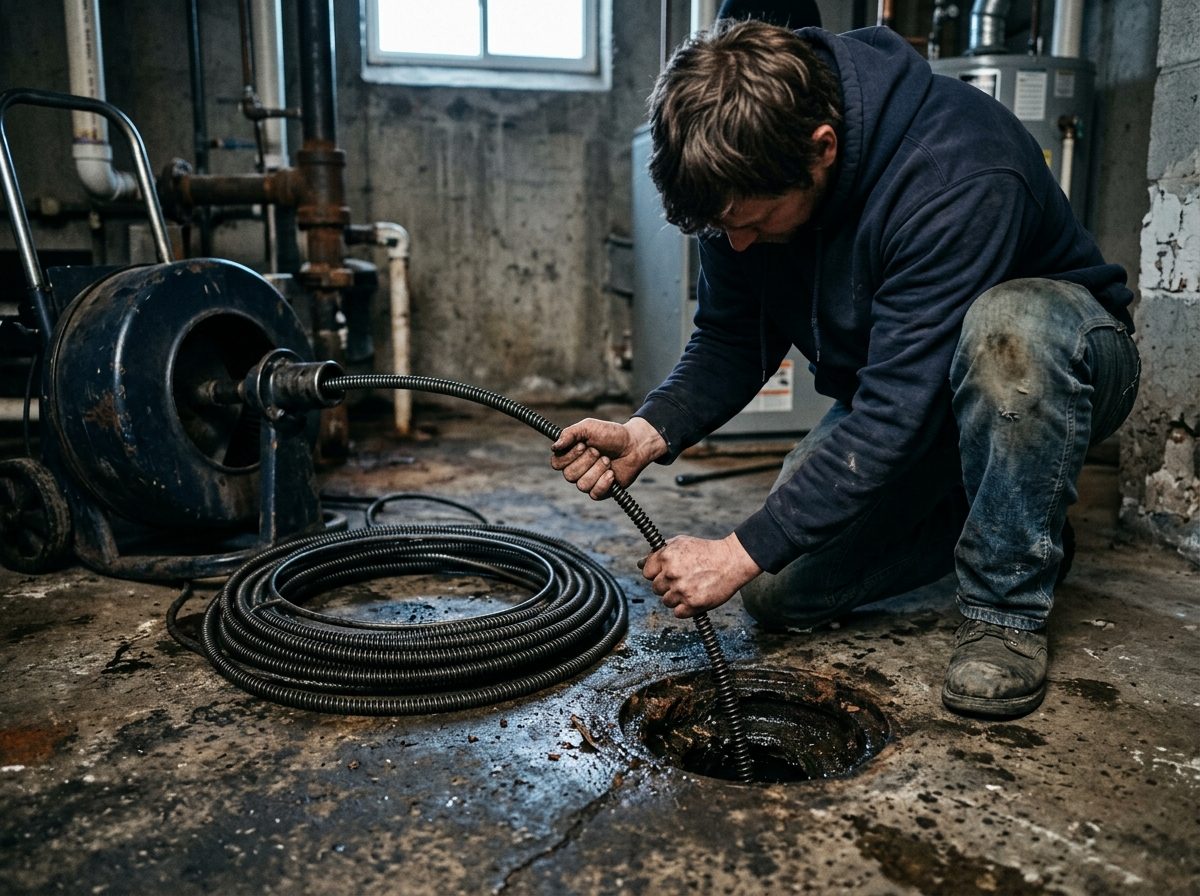
A septic tank needs pumping every few years — three to five suits most households, sooner where the tank is small or the household large. It is maintenance rather than repair, and skipping it is precisely what turns a scheduled job into an emergency backup.
What goes down the drain matters far more here than on a municipal system, because the tank has to process it. Grease, wipes of any kind, coffee grounds and large volumes of harsh cleaning product all either fail to break down or interfere with the biological action that does the work.
Hard water and appliances
Mineral content is significant, and the water heater absorbs most of it. Sediment settles across the tank floor so the burner heats through scale rather than steel, run times lengthen and recovery slows. On electric units the elements scale directly and fail early.
Draining the tank annually is the cheapest life extension available. On a well, test the water too, because composition varies property to property and hardness, iron and other results call for different equipment — buying before testing is how households end up with the wrong system.
Fixtures scaling up fast? Test the water before buying any treatment.
Ask about hard waterPressure tanks and sizing the system to the household
On a private well, the pressure tank is the component that determines how the whole system behaves, and it is the one most often misunderstood. It is not a water store in any useful sense; it is a cushion of compressed air behind a bladder that lets the pump run in reasonable bursts rather than switching on and off with every demand. The volume of water it delivers between the pump starting and stopping is its drawdown, and drawdown is what a household actually experiences as good or bad water service.
When the air charge is lost, drawdown collapses. The pump then starts and stops every few seconds during any sustained use, which is audible, and it destroys the pump far faster than continuous running would. Rapid cycling is therefore not a nuisance to live with — it is a component failure with a deadline attached, and the tank is much cheaper than the pump it is currently wearing out.
Sizing matters when the household changes. Adding a bathroom, an irrigation zone or a second dwelling on the property increases peak demand, and a tank and pump sized for the original house will cycle harder and deliver worse pressure than before. It is worth raising the whole system at the point of an extension rather than a year later, when the symptom has been mistaken for a failing pump.
Two things worth knowing
When the septic tank was last pumped, and where the well breaker is. Between them they cover the two most common reasons a property out here loses the use of its plumbing.
Nearby communities
Franktown sits in eastern Douglas County, with Castle Rock, Parker, Elizabeth and Larkspur nearby.
Franktown, Colorado
Douglas County acreage questions answered
It depends where the fault is. Everything from the pressure tank into the house is ordinary plumbing. The pump, drop pipe and wiring down the casing are well-system work needing specific equipment. Saying what the gauge reads and whether the pump runs settles which trade should come.
That is short-cycling, and the usual cause is a pressure tank that has lost its air charge. The tank holds a cushion behind a bladder so the pump runs once every few minutes rather than constantly. Left alone it destroys pumps quickly, so it is worth fixing promptly.
When every drain slows together rather than one fixture, the tank or field rather than the plumbing is usually the problem. Check when the tank was last pumped. Other signals are unusually lush green growth over the field and backups after a weekend with a full house.
Three to five years for most households, sooner where the tank is small or the household is large. It is maintenance rather than repair, and skipping it is exactly what converts a scheduled job into an emergency. Keeping a note of the last date is genuinely useful.
Grease, wipes of any kind including those sold as flushable, coffee grounds and large volumes of harsh cleaning product. The tank relies on biological action to break down waste, and those either will not break down or interfere with what does. All shorten the interval between pump-outs.
For most households the return shows up as longer heater and appliance life rather than anything obvious at the tap. Test first — on a well, iron may be present and needs different equipment — then size to the household and confirm there is a drain for regeneration.
Same-day is realistic for urgent problems, since Castle Rock and Parker are both within reach. Properties further out toward Elizabeth and Kiowa add drive time. You will get an honest window plus instructions on what to shut off while you wait.
Yes, and out here nobody else is doing it for you. Composition varies property to property, so hardness, iron and other results differ from a neighbour’s. Test before buying treatment equipment so the equipment addresses the problem you actually have.
The clearest sign is rapid cycling: with a tap running steadily, the pump switches on and off every few seconds rather than every few minutes. A tank that feels full of water when tapped near the top, rather than hollow, is another indication. Either way it is worth dealing with quickly, because the cycling is what wears the pump out.
That depends on the yield of the well and on the tank and pump sizing rather than on the plumbing in the new room. Peak demand is what matters, not total use. It is much cheaper to assess the whole system while the work is being planned than to discover afterwards that the pressure everywhere in the house has got worse.
Eastern Douglas County
Franktown, Castle Rock, Parker, Elizabeth and Larkspur.
(833) 621-2904 — answered 24/7, statewide.