Plumber in Elizabeth, CO — one call, any hour
Home / Areas / Eastern Plains / Elizabeth
Elizabeth has grown into a place people commute from while keeping the shape of the country around it: large lots, private wells, septic systems and outbuildings. Almost everything distinctive about plumbing here follows from the fact that most properties are not connected to anything.
Acreage rather than subdivision
On a property measured in acres, plumbing extends well beyond the walls of the house. There may be several hundred feet of buried line, a barn or shop with its own supply, a stock tank, and a hydrant or two. That changes both what fails and how a visit should be organised.
The single most useful thing to establish when you call is the scope: how many structures have water, whether the supply is a well, and how far the furthest fixture sits from the house. Those answers determine what parts come on the truck.
Water reaching more than one building? Say how many structures are involved.
Ask about a property visit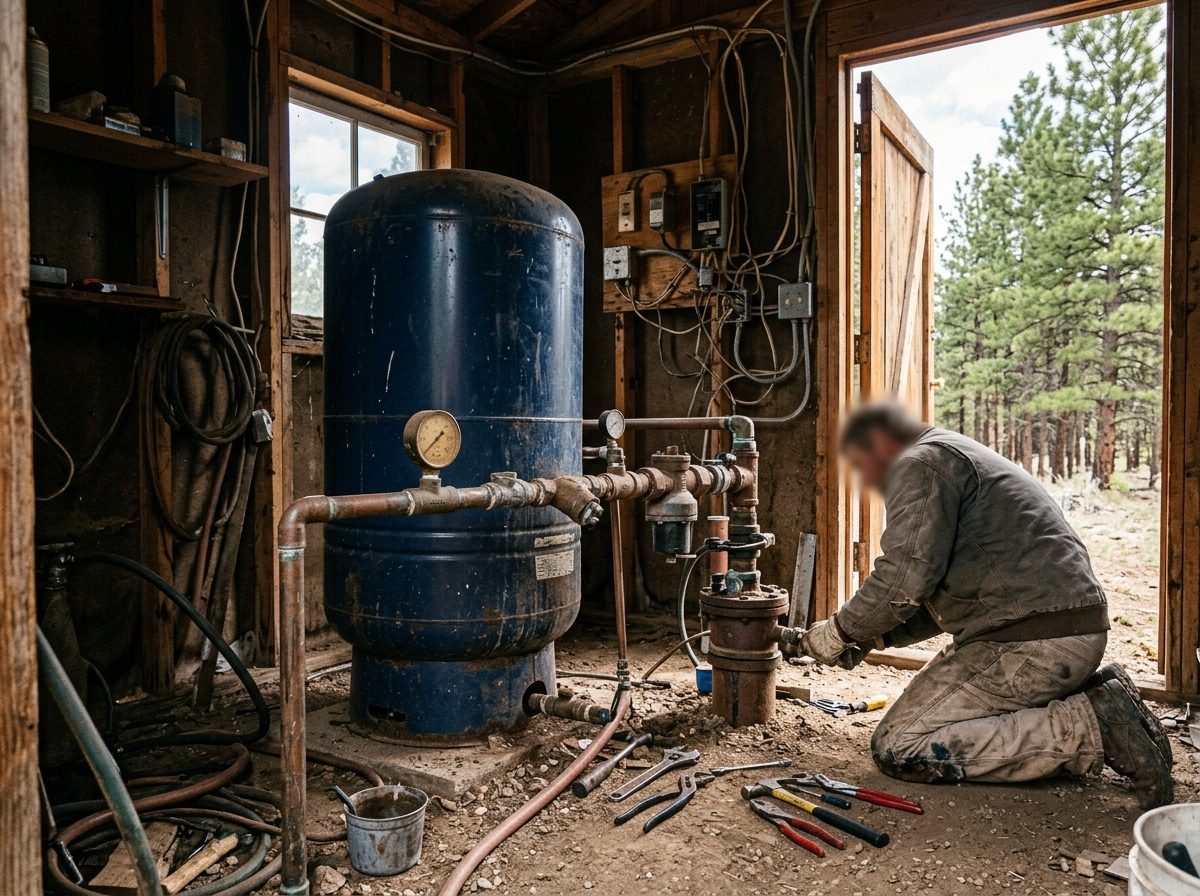
You own the whole water cycle
On a well, failures cluster in three places. The pressure tank loses its air charge, so the pump starts and stops every few seconds instead of running properly — and short-cycling wears a pump out fast. The pressure switch stops making contact. Or the pump itself reaches the end of its working life.
All three look identical from inside the house, which is why three answers narrow it before anyone drives out: what the gauge reads, whether the pump can be heard running, and whether the breaker has tripped. A tripped breaker and a failed switch are both cheap, and both present exactly like a dead pump.
Septic is a maintenance item
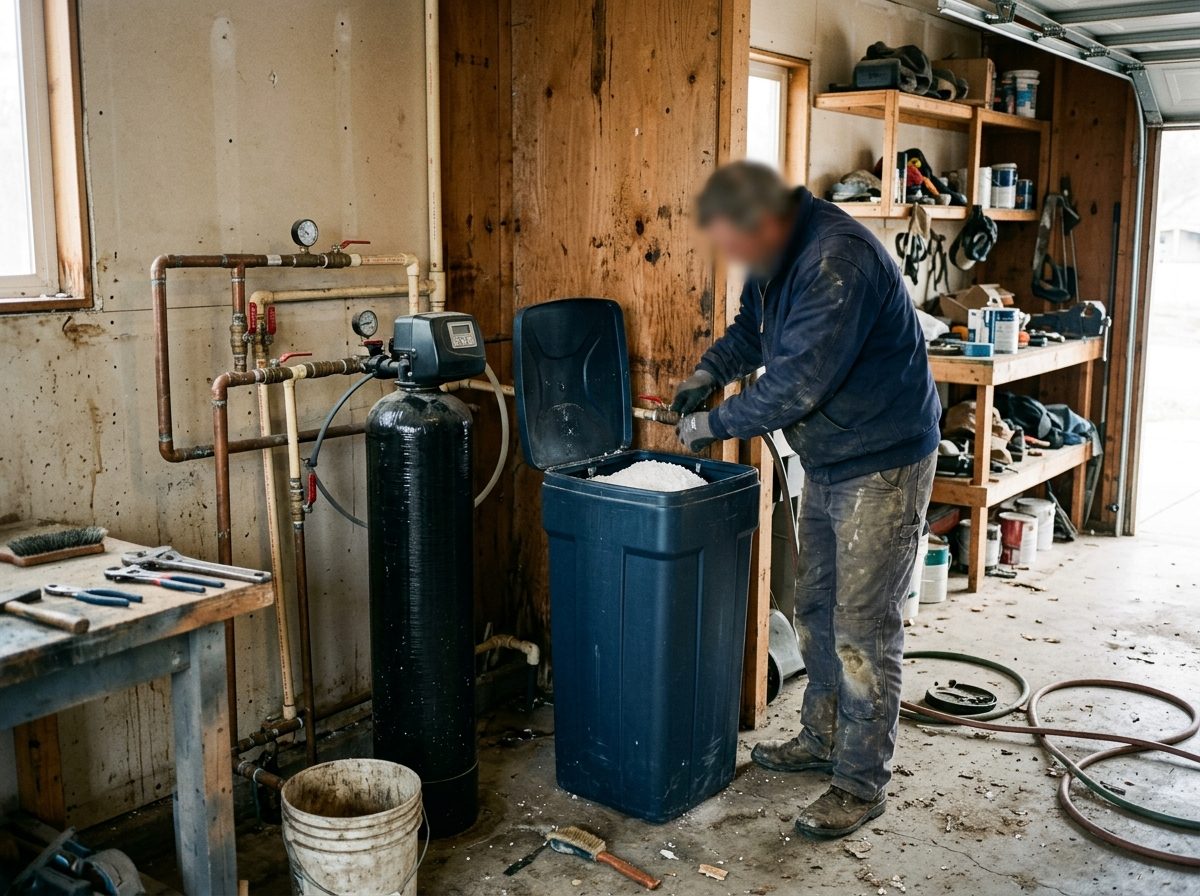
A septic system needs pumping every few years — three to five suits most households, sooner where the tank is small or the household large. It is maintenance rather than repair, and skipping it is what turns a scheduled job into an emergency.
The symptom that matters is every drain in the building slowing at once rather than one fixture, along with unusually green growth over the field or a backup after a weekend with a full house. What goes down the drain matters more here than on a municipal system, because the tank has to process it: grease, wipes and excessive cleaning products all shorten the interval between pump-outs.
Every drain slow at once? That is the tank talking, not the plumbing.
Ask about a septic problemExposure on high open ground
This is high, open, windy country, and wind removes heat from exposed pipe far faster than the air temperature suggests. Well houses, crawlspaces, outbuildings and hydrants are where trouble starts.
Frost-free yard hydrants deserve particular attention: they are designed to drain their standpipe below the frost line each time they close, and one that weeps often no longer drains. Water standing in that pipe through a hard freeze splits it underground, which turns a modest repair into excavation in frozen ground. Test them in autumn.
Hydrant weeping or stiff? Deal with it before the freeze, not after it splits.
Ask about a yard hydrantAdding a second building on one well
A shop, a barn, a guest house or a second dwelling on an existing well is one of the most common projects on acreage here, and the plumbing question it raises is not how to run the pipe. It is whether the well, the pump and the pressure tank can serve the additional demand, and whether the existing permit for that well allows the intended use at all — which is a genuinely separate question from the plumbing and worth confirming before any work is designed.
On the mechanical side, the number that matters is peak demand rather than total use. A well that supplies a household comfortably can struggle when a second building draws at the same time, and the symptom is not a dry tap but pressure that collapses in both buildings whenever either is in use. That is a sizing problem, and it is far cheaper to address while the trench is open than a year later.
Three details make these installations work. An isolation valve for each building, inside heated space, so a fault in the barn does not mean shutting the house down while it is repaired. A drain point on any branch that will not be used through winter, so it can be emptied rather than protected. And a record of where the line actually runs, taken from two fixed points on a building rather than from a fence, because on a large property an unrecorded buried line becomes genuinely hard to find within a few years.
Autumn walk-round
Every hydrant, hose bib, stock tank and the pump house, once, before the first hard freeze. Anything that drips or sticks now becomes digging later, and it all fits into one visit.
Nearby communities
Elizabeth sits in northern Elbert County, with Kiowa, Franktown, Parker and Castle Rock within reach.
Elizabeth, Colorado
Elizabeth plumbing questions answered
It depends where the fault is. Everything from the pressure tank into the house is ordinary plumbing work. The pump, the drop pipe and the wiring down the casing are well-system work and need specific equipment. Saying what the gauge reads and whether the pump runs usually settles which trade should come.
That is short-cycling, and the usual cause is a pressure tank that has lost its air charge. The tank holds a cushion behind a bladder so the pump runs once every few minutes rather than constantly. Left alone it destroys pumps quickly, so it is worth fixing promptly.
Three to five years suits most households, sooner where the tank is small or the property is heavily used. Every drain slowing at once rather than one fixture is the classic signal, along with unusually lush growth over the field or a backup after a busy weekend.
Yes, and more so out here because nobody else is doing it for you. Hardness and iron affect appliances and fixtures; other results affect people. Annual testing is a sensible habit and it is the only way to know whether treatment equipment would solve a problem you actually have.
It is a poor candidate for waiting. The hydrant drains its standpipe below the frost line whenever it closes, and one that leaks often no longer drains. Water sitting in that pipe through a hard freeze splits it underground, converting a modest repair into digging in frozen ground.
It depends who is already working in your direction, and you will get a straight answer rather than a hopeful one. For emergencies, what you do in the first five minutes matters as much as arrival time. For everything else, a booked visit usually happens sooner than waiting for an emergency gap.
That is the sensible way to work out here, and it is how most acreage plumbing gets scheduled. Give a full list when you call — house, shop, barn, hydrants, tanks — so the right parts arrive with the truck. A second trip for one fitting is the expensive part of rural work.
Grease, wipes of any kind including those sold as flushable, coffee grounds and large volumes of harsh cleaning product. The tank relies on biological action to break down waste, and all of those either will not break down or interfere with what does. It directly shortens the interval between pump-outs.
Mechanically, often yes — but check two things first. Whether the well permit covers the intended use, which is a separate question from the plumbing; and whether the pump and pressure tank can handle both buildings drawing at once, since peak demand rather than total use is what causes pressure to collapse. Both are much cheaper to establish before the trench is dug.
Longer than a pump if it is looked after, and far less if it is not. What kills them is running with a lost air charge, which makes the pump cycle every few seconds and wears both components. The useful habit is noticing the cycling rather than living with it, since the tank is much cheaper than the pump it is currently destroying.
Elbert County, any hour
Elizabeth, Kiowa, Elbert, Franktown and the surrounding acreage.
(833) 621-2904 — answered 24/7, statewide.