Plumber in Elbert, CO — one call, any hour
Home / Areas / Eastern Plains / Elbert
Elbert sits in wooded, rolling country, and a good share of its houses are old rural buildings that have been altered by successive owners over generations. That produces a plumbing situation where the main task is often working out what is actually installed before anything can be sensibly priced.
Old rural houses, altered over generations
A house that started small and grew by addition tends to have plumbing that grew the same way. Runs go around obstacles that no longer exist. Diameters change at old junctions for reasons nobody remembers. Fittings sit inside walls that no drawing records. And sections have occasionally been capped off and abandoned rather than removed, which matters because a capped line can still hold water that freezes.
The most useful thing an owner can offer is history — what was added when, what has been worked on before, and where anyone has previously opened a wall. Failing that, small clues carry weight: which fixtures are affected and which are not, and whether anything changed after previous work.
Damp with no obvious source? Note which fixtures are affected and which are not.
Ask about tracing a system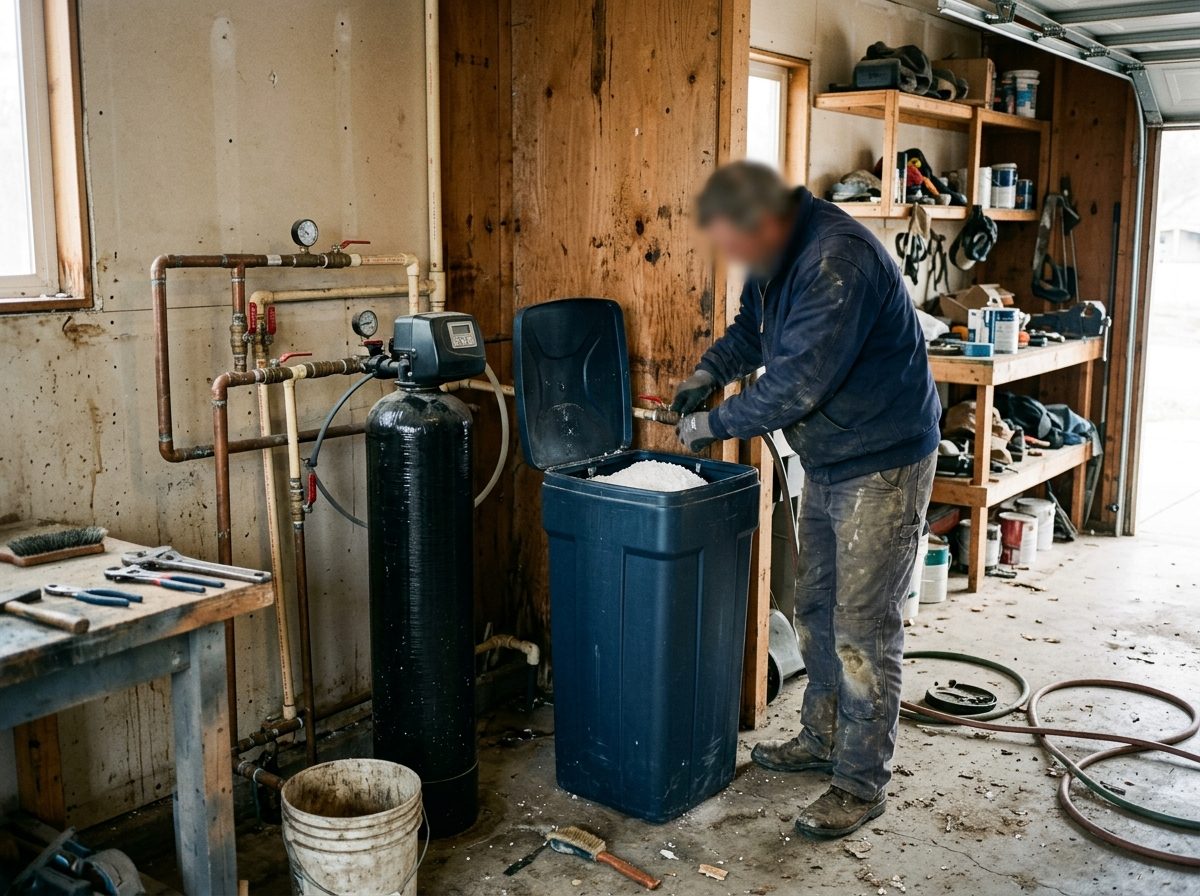
Mixed pipe and where it fails
The distinguishing feature of plumbing in a much-altered rural house is not the original material but the number of times someone interrupted it. A single run may begin in galvanised steel, change to copper at a union added decades ago, and finish in plastic fitted more recently.
Trouble concentrates at those transitions. Dissimilar metals joined without the correct fitting corrode at the junction, sometimes surprisingly fast. Undersized replacement sections throttle flow through an otherwise sound line. And fittings buried during a remodel stay invisible until they weep.
That is why symptoms at specific fixtures are informative. Discoloured water at one tap and not another, or flow that changed after a bathroom was redone, points at a particular junction rather than at the house in general — and often means replacing one section rather than repiping.
Propane appliances and what changes
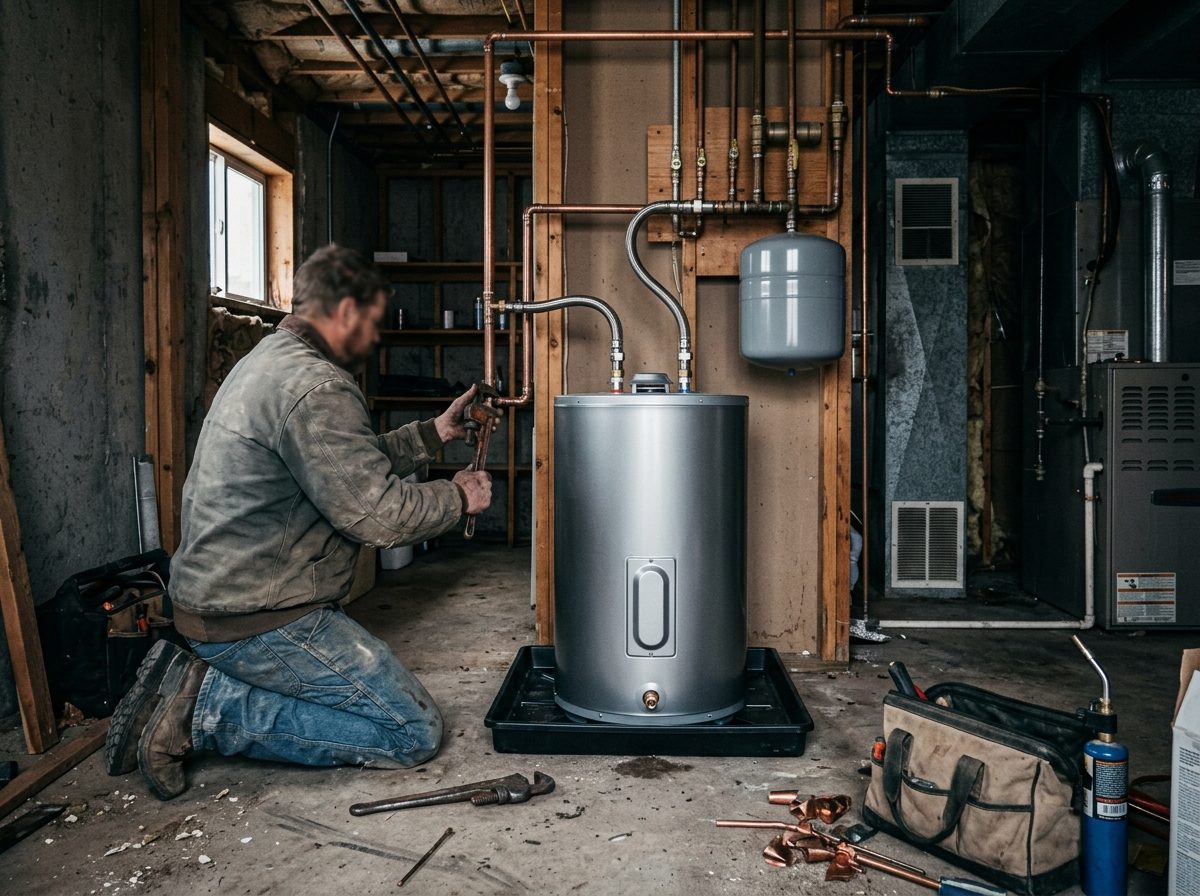
Away from natural gas service, water heaters and other appliances typically run on propane, and that changes several things worth knowing.
Propane appliances are not interchangeable with natural gas ones — the orifices and pressure regulation differ, and an appliance set up for the wrong fuel is genuinely dangerous rather than merely inefficient. So when a heater is replaced, the fuel has to be part of the specification rather than an afterthought. Combustion air and venting matter for the same reasons they matter at altitude, and rolling elevation here means derating deserves a look too.
The other practical point is supply. A heater is only as reliable as the tank feeding it, and running a tank low in winter is a common cause of what gets reported as a heater fault. Checking the tank level before calling about no hot water saves a wasted visit surprisingly often.
No hot water on propane? Check the tank level first — it is a common false alarm.
Ask about a propane water heaterWooded lots and root intrusion
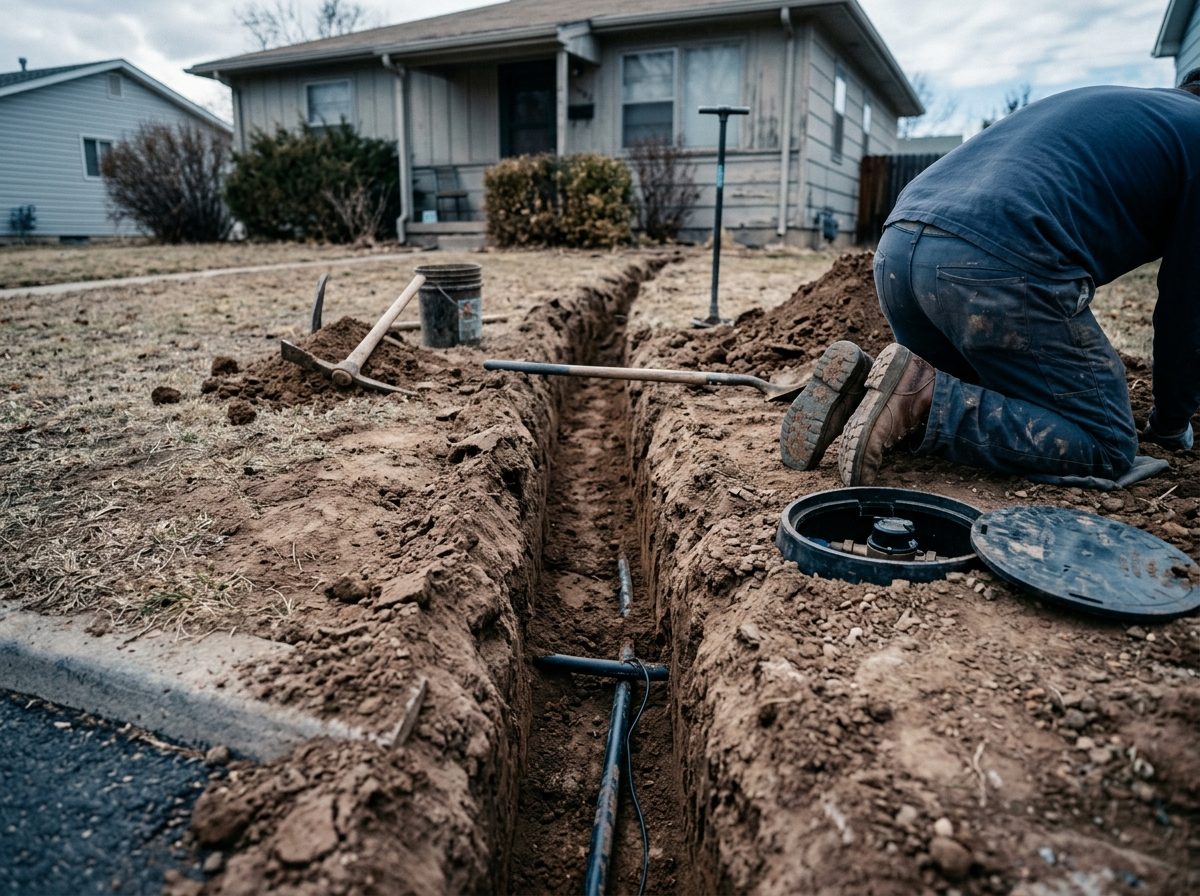
Mature trees and a buried waste line are a reliable combination for root intrusion, and on a wooded lot the line out to a septic tank frequently runs through exactly the ground roots prefer — moist, and fed by whatever the pipe leaks.
The pattern is recognisable: drains that slow gradually over months, then a backup, then months of normal service after clearing, then the same thing again. Clearing removes the roots that are there; it does not close the crack they came through. A camera run shows whether the intrusion is at a single joint, which may be manageable with periodic maintenance, or whether the line has been displaced and needs repair.
Same slow drain every year? A camera shows whether it is roots or a displaced pipe.
Ask about a repeat backupVenting in a house that has been added to
Every drain in a building needs air behind it. Without a vent, water leaving a fixture has to pull air from somewhere, and the only place available is through another fixture’s trap — which is why a badly vented system announces itself as a gurgle rather than as a blockage. In a house that has been extended two or three times over a century, venting is the part of the drainage system most likely to have been improvised.
The symptoms are consistent and easy to misread. A fixture that drains slowly but clears completely, with a gurgle from a nearby drain as it does. A toilet whose water level rises and falls when a bath empties. An intermittent sewer smell in a room that is otherwise fine, which happens when a trap has been siphoned dry by exactly this effect. None of those are blockages, and rodding them produces a temporary improvement at best.
The reason it is worth identifying properly is that the remedy is structural rather than cosmetic. Sometimes a vent exists but is blocked at the roof, which is a small job. Sometimes a fixture added during a remodel was simply never vented, and putting that right means opening up a wall — worth doing while a room is already being worked on and expensive as a standalone exercise. If a drain in an older house has always behaved oddly rather than starting recently, mention that: a fault that has been there since the work was done points at design rather than at deterioration.
Worth doing once
Have the plumbing traced and noted — supply routes, shutoffs, capped sections, and the waste line's path to the tank. On a much-altered house it makes every future repair quicker and cheaper.
Nearby communities
Elbert sits in the wooded hills of Elbert County, with Kiowa, Elizabeth, Simla and Franktown nearby.
Elbert, Colorado
Older rural house questions answered
It depends how the joins were made. Dissimilar metals connected without the correct fitting corrode where they meet, sometimes quickly, and undersized replacement sections throttle flow through the rest of the run. Mixed material is normal in an altered house; badly made transitions are what leak.
That usually means the problem is a specific section rather than the whole system — most often an old galvanised run feeding that fixture, or a corroding junction where two metals meet. Tracing which run serves that tap is the diagnosis, and replacing that section alone is frequently enough.
Not interchangeably. Orifices and pressure regulation differ between the fuels, and an appliance set up for the wrong fuel is dangerous rather than merely inefficient. The fuel has to be part of the specification when a heater is replaced, alongside venting and combustion air.
The tank level, before anything else. Running a tank low in winter is a common cause of what gets reported as a heater fault, and checking takes a moment. If the tank has gas and the heater still will not fire, then it is worth a call.
On a wooded lot that pattern usually means root intrusion into the waste line. Clearing removes the roots present at the time but does not close the crack they entered through, so they grow back. A camera run shows whether it is a single joint or a displaced section.
Sometimes, and the camera is what tells you. Where intrusion is at one joint in an otherwise sound line, maintenance clearing on a schedule can be a reasonable and much cheaper strategy than repair. Where the line has been displaced or is broken, clearing only postpones the inevitable.
Have the plumbing traced and written down once — supply routes, shutoff locations, any capped-off sections, and the path of the waste line to the tank. On a house altered over generations it makes every subsequent repair faster and cheaper, and it survives you selling.
They can. A capped line that still holds water is a freeze risk, and one that is not properly isolated can weep into a wall for a long time before anyone notices. When plumbing is being traced, identifying and dealing with abandoned sections is worth including.
Probably not. Gurgling means the drain is pulling air through another trap because it cannot get it from a vent, which is a venting problem rather than an obstruction. Rodding it will not change that. Worth noting whether it has always done it — a long-standing gurgle usually traces back to how a previous extension was plumbed.
Elbert County, any hour
Elbert, Kiowa, Elizabeth, Simla and Franktown.
(833) 621-2904 — answered 24/7, statewide.