Plumber in Ramah, CO — one call, any hour
Home / Areas / Colorado Springs & Pikes Peak / Ramah
When the nearest plumber may be an hour or more away, the most valuable part of the service is not the visit — it is the first two minutes on the phone. Out here, what an owner does before anyone arrives determines the size of the problem, and everything else is cleanup.
Triage happens on the phone here
A useful emergency call has a shape. What is happening, where the water is coming from, whether it is clean or waste, whether anyone has closed a valve, and whether power to the affected area is a concern. Those answers determine the advice, and the advice matters more than the arrival estimate.
For a burst supply line the sequence is fixed: close the main shutoff, then open the lowest tap in the building to drain the system and take pressure off the break. For a waste backup it is the opposite instinct — stop putting water in, because every fixture you run has to go somewhere and that somewhere is the floor. For anything involving fittings or sockets in the water path, switch off power to that area at the breaker before wading in.
Water coming in right now? Call — the first thing you will get is which valve to close.
Ask what to shut off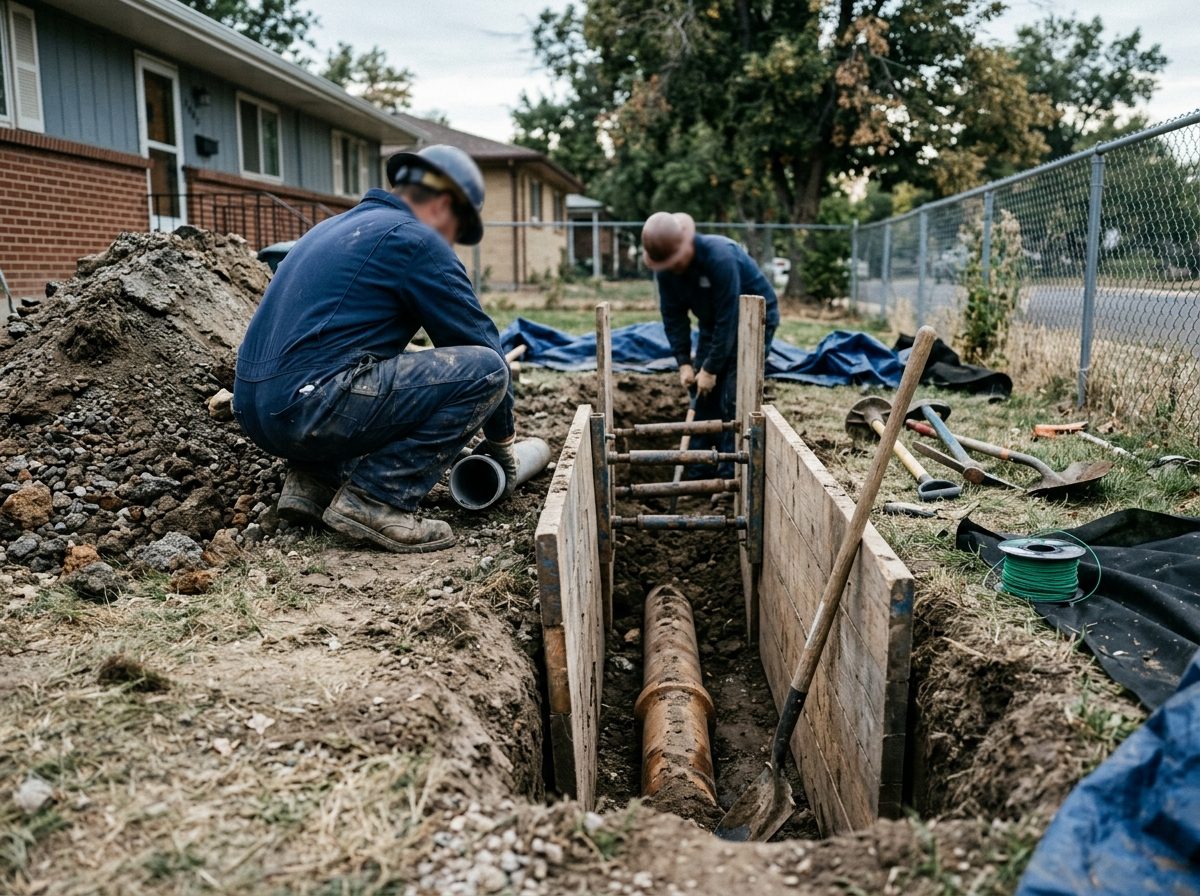
Knowing your shutoffs
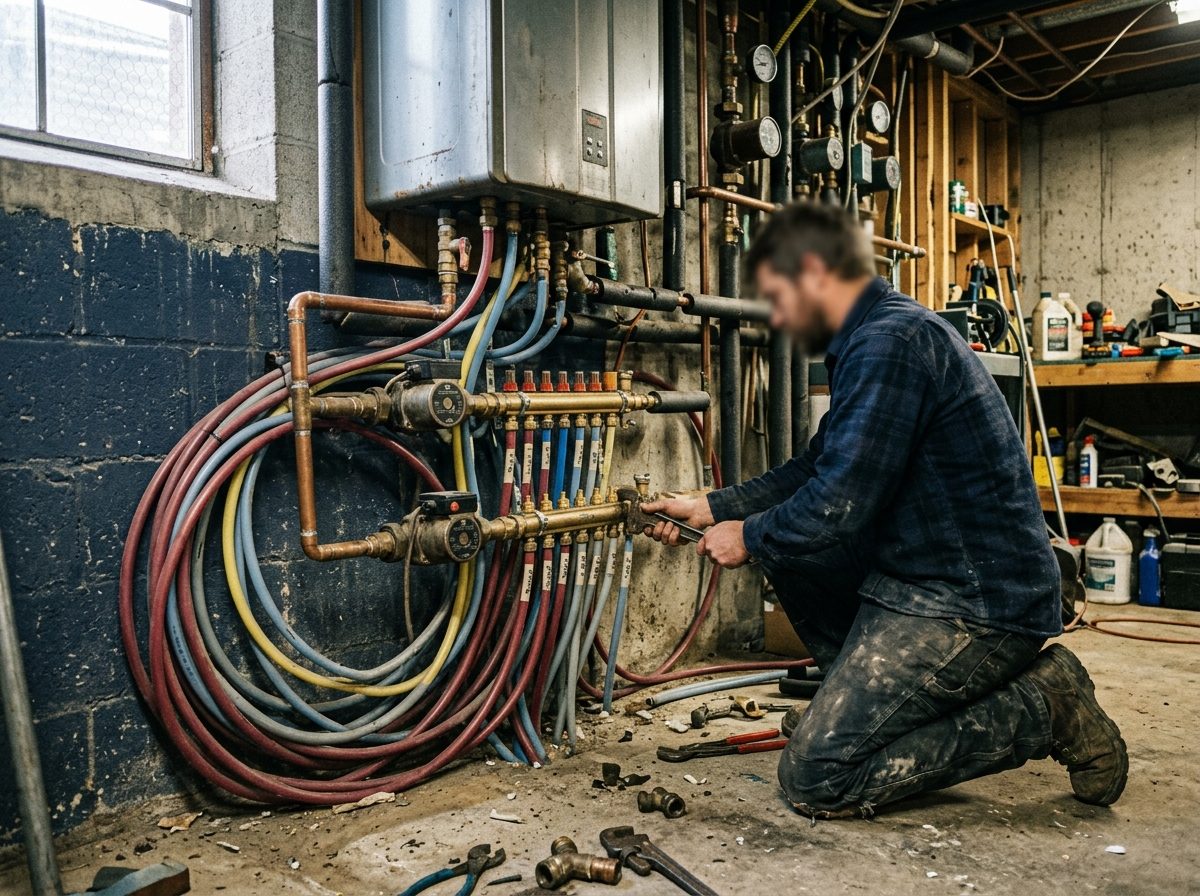
The single highest-value five minutes available to a remote property owner is finding the shutoffs on a calm afternoon and confirming they work. Not just the main: the well pump breaker, the water heater isolation valve, individual fixture stops, and any isolation valves between the house and outbuildings.
The reason to test rather than merely locate them is that valves seize. One that has not been turned in twenty years may refuse to close, and finding that out during a burst is the worst possible timing. A seized shutoff is a small scheduled job to replace; a seized shutoff discovered mid-emergency is a flood.
It is worth labelling them too, and telling everyone in the household. An emergency handled by whoever happens to be home is only as good as that person's knowledge.
What is worth having on the property
Where a supplier is an hour away, a small stock of the right parts changes what is possible. The list worth keeping is short and specific: a spare frost-free hydrant plunger assembly, a float valve of each type in use, pipe repair couplings sized to your runs, and a roll of self-fusing repair tape for a temporary hold.
Alongside that, the tools that make a difference are the ones for isolating rather than fixing — a valve key for the meter or curb stop if you have one, and a working torch where you will actually need it. None of this replaces a plumber; it buys the hours until one arrives, and out here those hours are the whole difference.
Not sure what spares to keep? Ask which parts fail most on a property like yours.
Ask about useful sparesPreventable versus unpreventable
It is worth being honest about which emergencies are avoidable. Frozen and split lines almost always are: the exposure was known, the insulation was inadequate, or heat tape had quietly failed. Hydrants that split underground almost always are, because they had been weeping for months. Water heaters that let go often are, because age and rust at the fittings had been visible for a year.
What is genuinely unpredictable is a smaller list — a fitting that fails without warning, a pump that dies without symptoms, a power cut at the wrong moment. Which means the autumn walk-round and the planned replacement do more for a remote property than any emergency arrangement can, because they shrink the category of events that need one.
Something clearly near the end of its life? Replacing it on a schedule costs far less out here.
Ask about planned workThe sequence, for the fridge door
Clean water: close the main, open the lowest tap. Waste backup: stop all water use. Either: power off at the breaker if fittings are involved, photograph before cleanup, then call.
When waste has to be pumped rather than flow
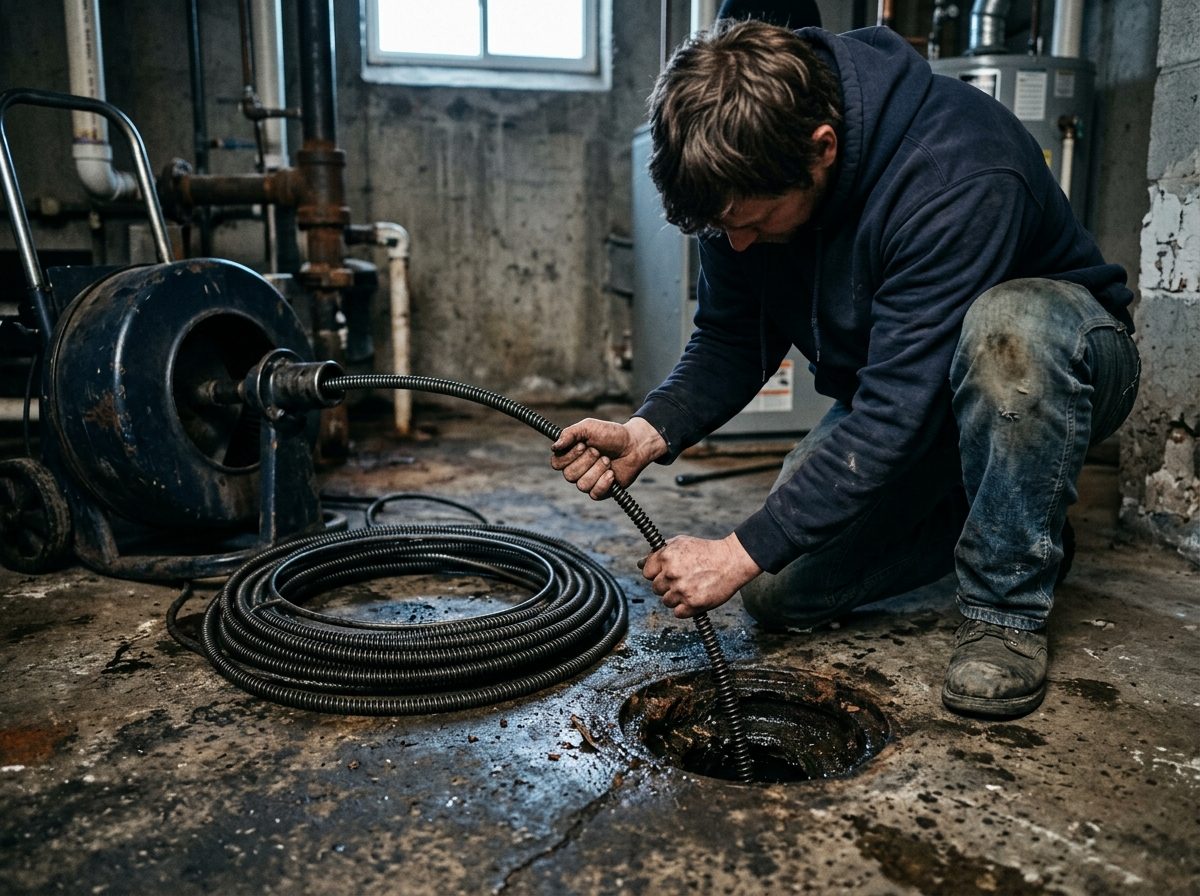
On a rural property the building is not always uphill of where its waste needs to go, and where gravity will not do the job the waste has to be pumped. Two devices do this and they are not interchangeable. An effluent or sewage ejector moves waste from a sealed pit up to a gravity line or a tank, handling solids as they are. A grinder pump macerates first and then pushes the result through a much smaller pipe, which is what makes long or uphill runs practical.
Both share the characteristics that matter to an owner. They sit in a sealed pit, they need a vent, they need a check valve so what has been pumped does not come back, and they fail in ways that read as something else entirely: a fixture that drains slowly, a smell in a room, or a pump that runs without the level dropping. None of those look like pump problems from inside the house, which is why knowing the system exists is the most valuable thing an owner can contribute.
The maintenance is mostly about what goes in. These pumps are the least tolerant part of any drainage system — wipes, hygiene products, fats and anything fibrous cause the majority of failures, and a grinder pump dealing with them repeatedly wears out early. An alarm on the pit is worth having and is often omitted, because the alternative to being alerted is discovering the failure at the lowest fixture in the building. And on a property where the pump is the only route out, knowing whether it has a backup arrangement and how long the pit holds without it is worth establishing before the first power cut rather than during it.
Nearby communities
Ramah sits on the far eastern edge of El Paso County, with Calhan, Simla, Matheson and Yoder nearby.
Ramah, Colorado
Remote property questions answered
Close the main shutoff, then open the lowest tap in the building to drain the system and take pressure off the break. Move what matters out of the water path, switch off power to the affected area at the breaker if fittings or sockets are involved, photograph before cleanup, and then call.
No, it is almost the opposite. Stop putting water into the building — no laundry, no showers, no dishwasher — because everything you run has to go somewhere and that somewhere is your floor. Then call. Chemical drain products make the eventual work hazardous and rarely help.
Because the time between something failing and help arriving can be an hour or more, and what happens in that window is entirely down to you. A main shutoff closed in the first minute turns a flood into a repair. One that nobody can find, or that will not turn, does the opposite.
Yes, and that is the part people skip. Valves seize, and one that has not been turned in twenty years may refuse to close. Finding that out during a burst is the worst possible timing, whereas replacing a seized valve is a small scheduled job.
A short specific list: a frost-free hydrant plunger assembly, a float valve of each type in use, pipe repair couplings sized to your runs, and self-fusing repair tape for a temporary hold. Where the supplier is an hour away, the part on the shelf is worth more than the catalogue.
Most of them. Frozen and split lines usually follow known exposure, inadequate insulation, or heat tape that had quietly failed. Hydrants that split underground had generally been weeping for months. Heaters that let go usually showed age and rust first. The autumn walk-round addresses nearly all of it.
It depends entirely on who is already working out this way, and you will be told plainly rather than optimistically. That is exactly why the phone advice comes first — the honest answer about arrival is less useful than the honest answer about what to close.
Less than preparedness is. Knowing your shutoffs, keeping the right spares, and replacing things that are visibly near the end of their life shrinks the category of events that need an emergency response at all. That is a better investment out here than any arrangement.
Say so when you call — it changes the diagnosis entirely. A struggling ejector or grinder pump looks exactly like a blockage from the fixture end. Listen for whether the pump runs, and whether the level in the pit drops when it does. Also worth knowing whether the pit has an alarm, since without one the failure is found at the lowest drain.
Wipes and hygiene products of any kind regardless of packaging claims, fats and oils, and anything fibrous or stringy. These pumps are the least tolerant part of a drainage system and those items cause most failures — a grinder pump dealing with them repeatedly wears out well before its time. On a property where the pump is the only route out, that matters more than usual.
The far eastern edge
Ramah, Calhan, Simla, Matheson and Yoder.
(833) 621-2904 — answered 24/7, statewide.