Plumber in Agate, CO — one call, any hour
Home / Areas / Eastern Plains / Agate
A good share of property out on this stretch of the plains is not occupied full time — land held with a building on it, houses between tenants, and places used seasonally. Plumbing that nobody is watching behaves differently from plumbing in a lived-in house, and it needs a different approach.
Plumbing nobody is watching
An occupied building is a monitored one. Taps run, warm air circulates, and somebody notices when the heat goes off or a stain appears. An unoccupied building has none of that, so the same fault produces a completely different outcome: a fitting that would have been caught in an hour runs for a fortnight.
Vacancy also creates faults of its own, beyond freezing. Traps dry out and let sewer gas into the building. Seals in fixtures perish from disuse. Rodents damage exposed pipe, insulation and heat tape. And water standing unused in a system stagnates, which matters when somebody eventually drinks it.
Property standing empty? The pre-winter conversation prevents the expensive one.
Ask about an empty property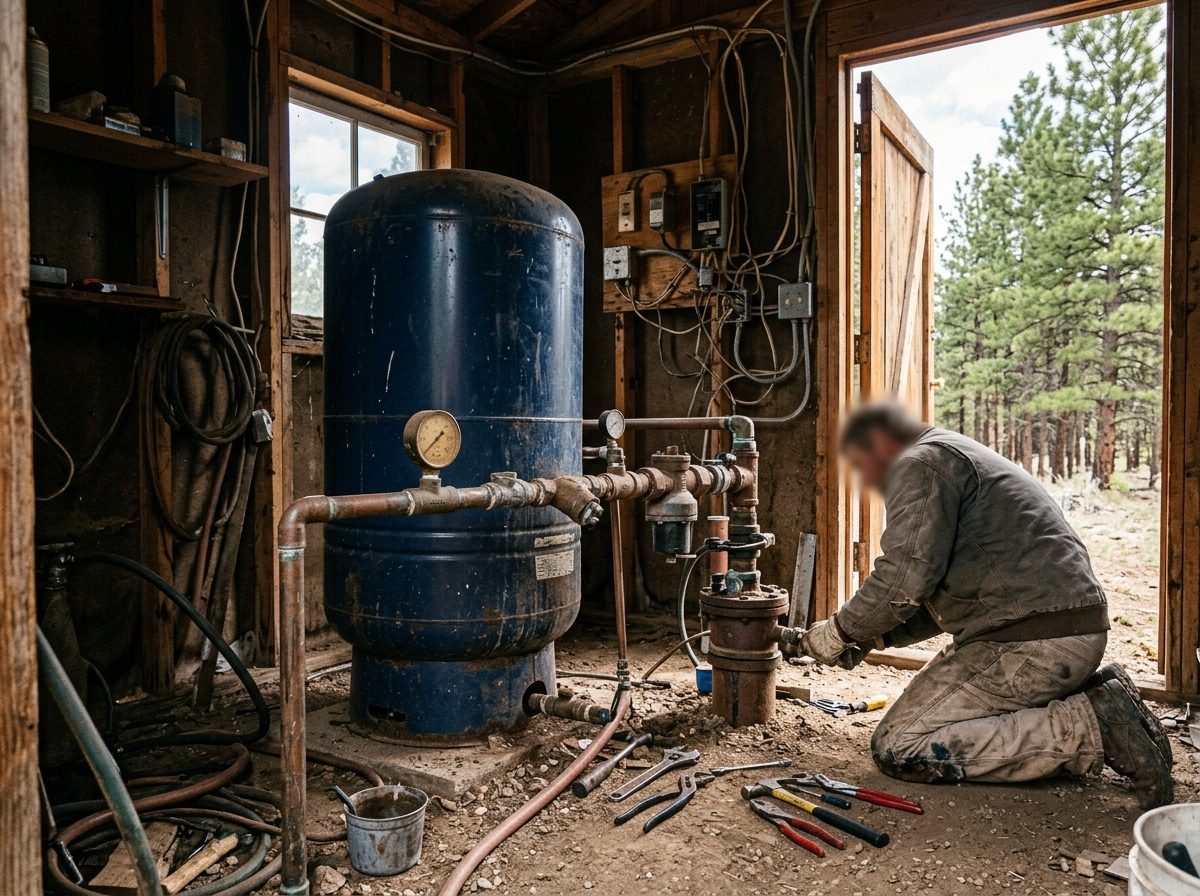
Draining down properly
For a building that will stand unoccupied through a plains winter, draining is the only genuinely dependable strategy — trusting a heat source in a place nobody visits is a gamble with an expensive downside.
Done properly it means: water off at the source, the system drained from its lowest point, taps opened so air can replace water, the water heater dealt with, appliances that hold water drained, and antifreeze rated for plumbing in traps and toilet bowls. Never automotive antifreeze. On a well system it also means addressing the pressure tank and any exposed run between well and house.
Done partially it is worse than it looks. Water left sitting in low points is exactly what splits, and a half-drained system gives false reassurance — which is why this is a job worth having done properly once rather than approximated every autumn.
Bringing a system back into use
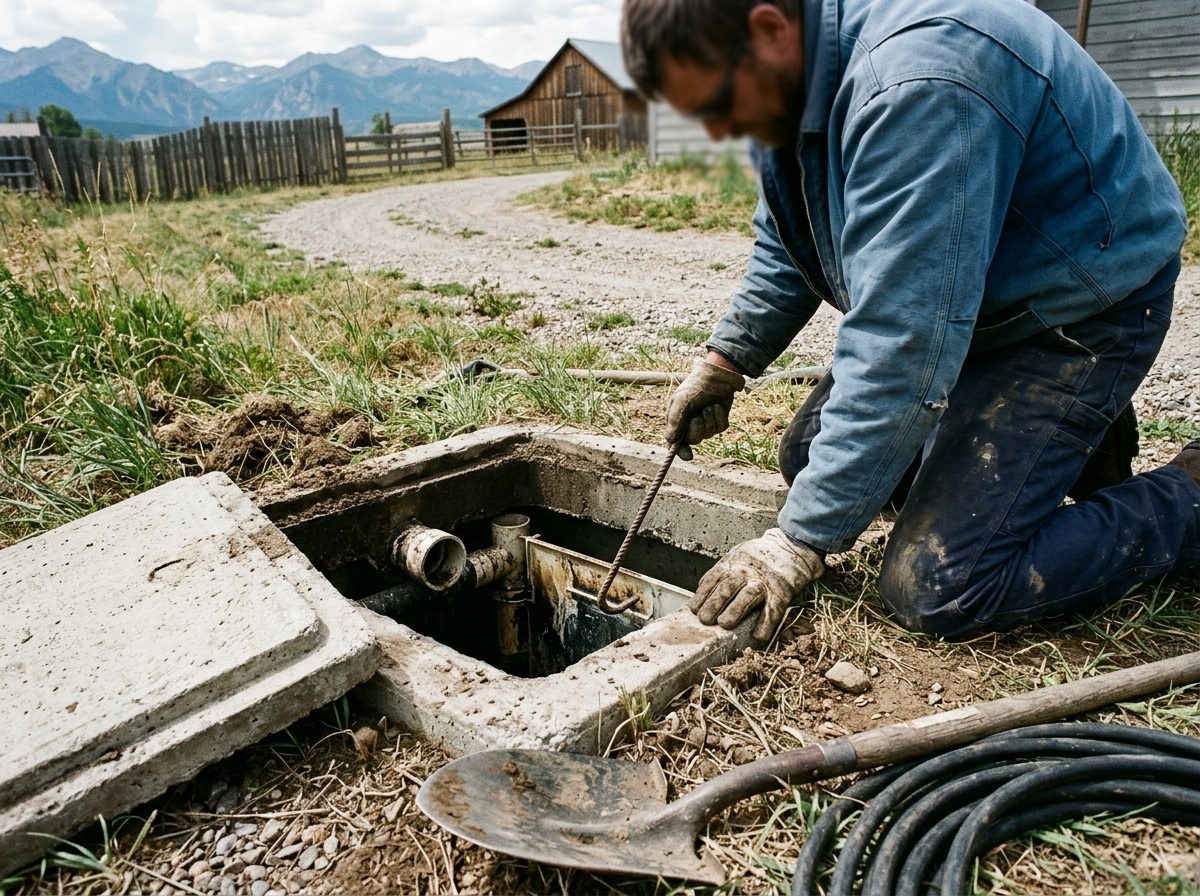
Recommissioning gets less attention than draining down and deserves as much. A system that has sat unused for months or years may have developed faults nobody discovered, because nothing was ever run through it to reveal them.
The sensible sequence is to pressure-test before trusting it, rather than opening the main and hoping. Then refill traps, run every fixture including the ones nobody uses, check under every sink and around the heater while water is moving, and inspect anything exposed for rodent damage. On a well, the pump and pressure tank deserve attention before the system is put back into service rather than after.
Discovering these things deliberately, with the water controlled, is considerably cheaper than discovering them gradually.
Bringing a building back into use? Pressure-test before trusting the system.
Ask about recommissioningMonitoring from a distance
Where a building must stay in service while unoccupied, monitoring is what converts a catastrophe into an incident. The two things that earn their cost are a remote temperature alarm you actually receive, and somebody local who can physically reach the property when it alerts.
Automatic leak-detection shutoff devices are worth considering too. They monitor flow and close the water when they see a pattern that looks like a leak, which is precisely the failure mode of an unoccupied building. For a property that is hours from its owner, that is a different value proposition than it would be in a suburb.
The honest limitation is that no monitoring helps if nobody can act on it. The alarm and the local contact are one arrangement, not two.
Property hours from where you live? Monitoring only helps if someone can reach it.
Ask about remote monitoringArriving at an empty building
Look and listen before opening the main. Damp, staining, a smell, or the sound of water when you crack the valve are all worth stopping for — it is far easier to investigate a dry system than a flooded one.
The building does more than the heat tape
Freeze protection gets discussed as though it were a product — tape, insulation, a thermostat — when in most failures the decisive factor was the building itself. A pipe in a well-sealed wall with insulation on the cold side of it survives conditions that destroy the same pipe two feet away in a wall the wind blows through. Out here the wind is the variable that separates those two cases, and it is the one least often accounted for.
The specific failure pattern is worth recognising. Pipes rarely freeze in the middle of a heated room; they freeze where they pass through an unheated void, run along an exterior wall behind a cabinet, or cross a crawlspace with a vent open to the prevailing wind. In each case the pipe is not cold because the building is cold — it is cold because outside air is reaching it directly. Insulating the pipe alone in that situation slows the loss without stopping it.
So the order of work is sealing first, insulation second, heat last. Close the gaps where outside air enters the void the pipe runs through, then insulate between the pipe and the outside rather than wrapping it in isolation, and only then consider heat tape as a backstop for the section that cannot be dealt with any other way. Tape installed on an unsealed run is being asked to heat the outdoors, which it will do until the power fails or it quietly stops working.
Nearby communities
Agate sits on the far eastern plains, with Simla, Matheson, Byers and Kiowa the nearest places of any size.
Agate, Colorado
Unoccupied property questions answered
Water off at the source, the system drained from its lowest point, taps opened so air can replace water, the heater dealt with, appliances that hold water drained, and antifreeze rated for plumbing in traps and toilet bowls. Never automotive antifreeze. On a well, the pressure tank and exposed runs too.
Not much, and it can be worse. Water left sitting in low points is exactly what splits when it freezes, and partial draining gives false reassurance. It is worth having the job done properly once rather than approximated each autumn.
Traps dry out and let sewer gas in. Seals in fixtures perish from disuse. Rodents damage exposed pipe, insulation and heat tape. And water standing unused stagnates, which matters when somebody eventually drinks it. Vacancy creates faults as well as amplifying them.
Pressure-test it before trusting it, rather than opening the main and hoping. Then refill traps, run every fixture including unused ones, check under sinks and around the heater while water is moving, and inspect exposed pipe for rodent damage. On a well, check the pump and pressure tank first.
Almost certainly dry traps. Every drain holds a water seal that blocks sewer gas, and in an unoccupied building that water evaporates. Pouring water into every drain, including floor drains, usually resolves it within minutes. If it persists, that suggests venting or a break in the line.
For an unoccupied property, more than for an occupied one. They monitor flow and close the water when they see a pattern resembling a leak — which is precisely the failure mode of a building nobody is in. Where the owner is hours away, that changes the value considerably.
A remote temperature alarm you actually receive, and somebody local who can physically reach the building when it alerts. Those are one arrangement rather than two, because monitoring that nobody can act on does not prevent anything.
Look and listen first. Damp, staining, a smell, or the sound of water when you crack the valve are all worth stopping for. Investigating a dry system is far easier and cheaper than investigating a flooded one, and opening the main is not reversible once the water is out.
On its own, rarely. Tape needs power, it fails without any outward sign, and on an unsealed run it is fighting a draught rather than a temperature. Seal the air path first, insulate between the pipe and the outside, then use tape as a backstop — and test it every autumn rather than assuming last winter proves anything about this one.
The far eastern plains
Agate, Simla, Matheson, Byers and Kiowa.
(833) 621-2904 — answered 24/7, statewide.