Plumber in Matheson, CO — one call, any hour
Home / Areas / Eastern Plains / Matheson
Matheson is a very small place on the high plains of Elbert County, with a great deal of open country around it. Frost runs deep, the wind is constant, and help is far enough away that what an owner does in the first few minutes matters more than the arrival time.
A very small place on open plains
Properties here are working ones: a house, outbuildings with their own supply, stock water, hydrants, a well and a septic field, connected by a great deal of buried line. Nothing about the components is unusual; the scale and exposure are.
Few contractors cover this stretch, so response depends on who is already heading this way. For routine work, booking and bundling is often the only realistic route — a plumber driving out will want to justify the trip, so a list beats separate calls.
Several jobs waiting? List them and book one visit rather than four.
Ask about a single visit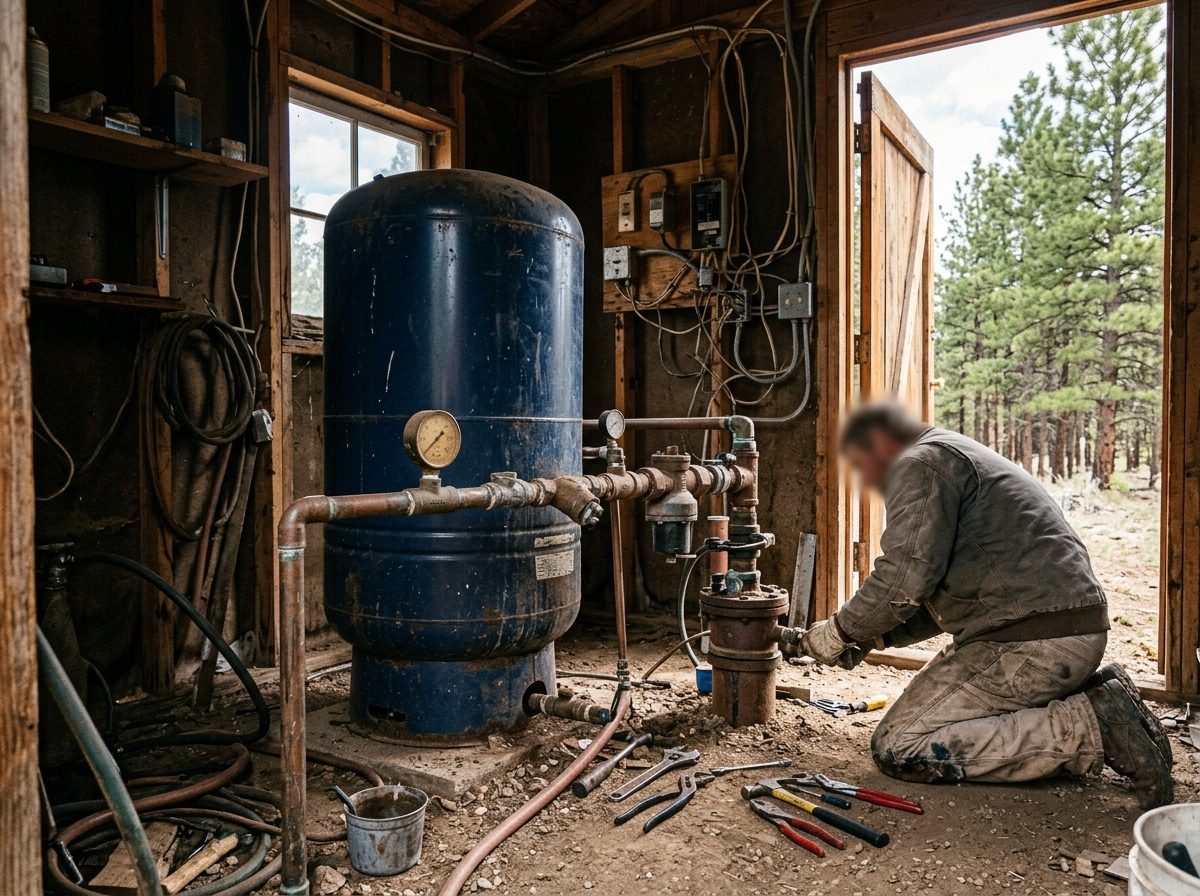
The first five minutes
If a line has split, close the main shutoff and then open the lowest tap in the building to drain the system and take pressure off the break. Move what matters out of the water path and photograph the damage before cleanup, in case a claim follows.
If a line has frozen but not yet split, still shut the water off before applying any heat — a pipe that has cracked releases water the moment it thaws. Knowing where the shutoff is, and that it turns, is therefore the highest-value five minutes available here. The same applies to the well breaker.
Wells and planned replacement
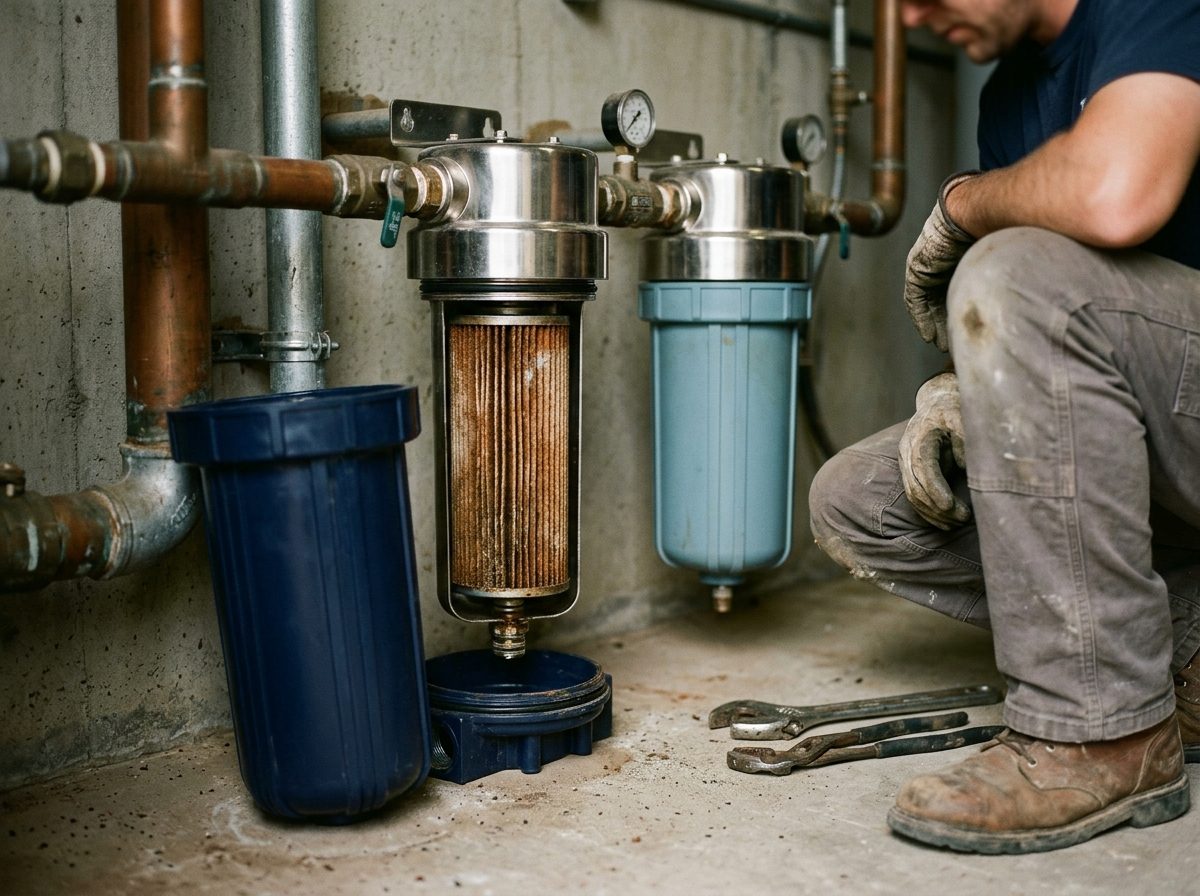
Three faults account for most well calls: a pressure tank that has lost its air charge and is cycling the pump, a pressure switch that has stopped making contact, and a pump at the end of its working life. What the gauge reads, whether the pump runs and whether the breaker has tripped are the answers that narrow it.
The cost of failure is what differs out here. Pulling a pump needs equipment and access, and a failure can mean days without any water. Replacing an ageing pump on a scheduled visit is therefore considerably more attractive than it would be near a city. Water quality is worth testing too, since composition varies property to property and nobody is checking it for you.
Pump old and short-cycling? Replacing it on a schedule beats losing water for days.
Ask about planned workFrost, hydrants and outbuildings
Frost runs deep and there is no shelter. Anything above ground loses heat continuously, and outbuildings freeze first because they are heated least. The pump house is the critical vulnerability, since a freeze there takes out water to the whole property at once.
Frost-free hydrants are the classic failure: they drain their standpipe below the frost line whenever they close, and one that weeps has usually stopped draining — so the standpipe holds water and splits underground in the first hard freeze. Test every one each autumn, and isolate and drain any branch feeding a building you are not using through winter.
Hydrant weeping or stiff? Deal with it before the freeze, not after it splits.
Ask about a yard hydrantIf a line has split
Main shutoff closed, lowest tap opened to drain the system, photographs before cleanup. Then call. That order limits the damage more than anything else available to you.
Keeping a record of a system nobody else knows
On a remote property the plumbing is frequently undocumented, built up over decades by a succession of owners, and understood only by whoever last worked on it. That matters more here than it would in town, because the person who arrives to fix something has no records to consult and no local convention to fall back on — the property is its own case.
The fix costs nothing and pays repeatedly. A single page kept with the property, listing the make, model and age of the water heater, the pump and the pressure tank; where the main shutoff is and which way it turns; where each isolation valve is and what it isolates; the depth and route of any buried line, measured from two fixed points on a building; and whether the septic tank has been pumped and when. Photographs of data plates are better than transcribed numbers, because part numbers matter and handwriting does not survive.
The reason this is worth doing deliberately is that it changes what can happen on a single visit. Given the model of a failed pressure switch or the capacity of a heater in advance, the right part travels out with the van. Without it, the first trip is a diagnosis and the second is the repair — and out here those are two different days. The same page is also the most useful thing to hand to a new owner, which is why properties that have one tend to keep having one.
Nearby communities
Matheson sits on the high plains of Elbert County, with Simla, Ramah, Agate and Calhan nearby.
Matheson, Colorado
High plains questions answered
Close the main shutoff, then open the lowest tap in the building to drain the system and take pressure off the break. Move what matters out of the water path and photograph everything before cleanup in case of a claim. That sequence limits the damage far more than waiting does.
The breaker for the pump, then the pressure switch, then what the gauge reads. A tripped breaker and a failed switch are both inexpensive and both look exactly like a dead pump from inside the house. If the pump runs but pressure cycles rapidly, suspect the pressure tank.
Out here the case is strong. Pulling a pump needs equipment and access, so a failure can mean days without any water. If the pump is old and the system has been short-cycling, pricing a planned replacement in autumn is sensible rather than cautious.
Insulation and air sealing first, because that reduces heat loss rather than fighting it with heat. Then a reliable heat source sized for the space, with heat tape on exposed pipe as backup. Test everything in autumn — a pump house freeze takes out water to the whole property at once.
Yes, and out here nobody else is doing it for you. Composition varies property to property, so hardness, iron and other results differ from a neighbour’s. Test before buying any treatment equipment so the equipment addresses the problem you actually have.
It is a poor candidate for waiting. The hydrant drains its standpipe below the frost line whenever it closes, and one that leaks often no longer drains. Water left in that pipe through a hard freeze splits it underground, and here that means digging in deeply frozen ground.
It depends entirely on who is already working out this way, and you will be told plainly. For emergencies the phone advice matters as much as arrival time. For routine work, a scheduled visit is often the only realistic way to get it done.
That is how work out here should be scheduled. Give a full list when you call so the right parts come on the truck. Two jobs on one road is far easier to justify than one, so it is worth asking a neighbour whether anything needs doing.
The make, model and age of whatever has failed, read from its data plate or photographed; what the pressure gauge shows if you are on a well; whether the pump can be heard running; where the shutoff is and whether it turns; and how many buildings take water. Those answers are what make it possible to arrive with the right part instead of returning with it.
Yes, and it is cheap work with a disproportionate payoff. A toilet, basin or washing machine that can be shut off on its own turns a household emergency into one fixture out of service, which out here can mean the difference between waiting comfortably for a scheduled visit and needing someone immediately. Worth doing in one pass rather than one room at a time.
The high plains
Matheson, Simla, Ramah, Agate and Calhan.
(833) 621-2904 — answered 24/7, statewide.