Plumber in Simla, CO — one call, any hour
Home / Areas / Eastern Plains / Simla
Simla grew as a railroad town and its older housing dates from that period — modest, compact houses whose plumbing has been maintained rather than renewed. On a house like that the useful conversation is about getting good value from a small number of visits, because the nearest plumber is not close.
A railroad town with railroad-era housing
The housing here is generally smaller than the farm houses outside town, and that has a practical upside: the plumbing is simpler, the runs are shorter, and a full picture of what is installed is achievable in one visit rather than being an ongoing archaeology project.
What these houses share is age. Supply pipe that has narrowed from internal corrosion, drain lines that have roughened, and waste connections of the same era as the street. The tells are consistent: flow that collapses when two fixtures run, water that runs discoloured after the house has stood empty, and drains that clear briefly then slow again over months.
Not sure which system is failing? Supply and drain symptoms are different — describe what you see.
Ask what to check first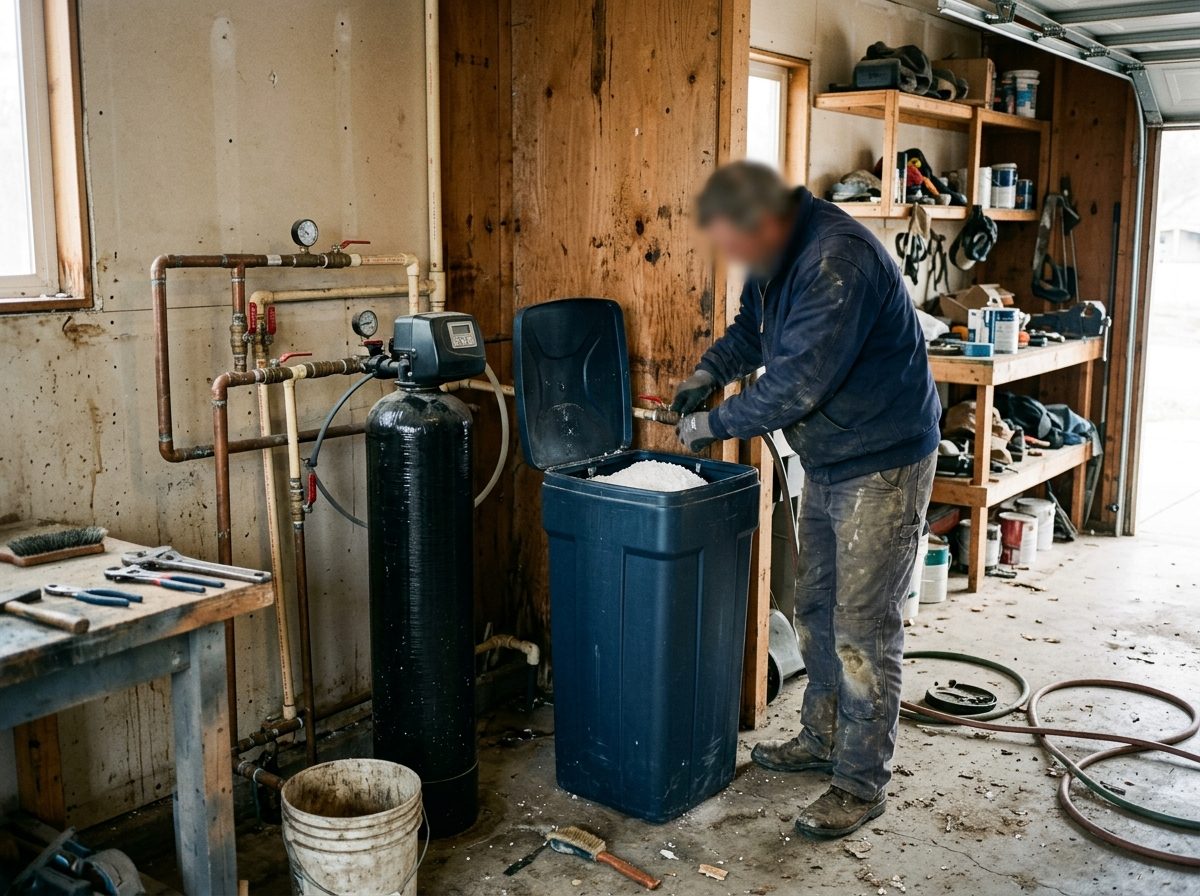
Drains in an old small town
Drain calls divide into three kinds, and telling them apart is worth doing before anyone drives out. One fixture slowing on its own is local — its trap or branch — and gurgling alongside it points at venting rather than blockage. Several fixtures slowing together, or the lowest drain taking water back, means the main line is involved.
The third kind is the recurring blockage in the same place, and it is the one most often mishandled. That pattern means grease and scale have built up on the pipe wall rather than a single object being in the way. Cabling punches a channel through the deposit and restores flow, which is why it comes back within months. Jetting scours the wall back toward its original bore and holds far longer — and on a property where a return visit means an hour of driving, that difference is worth more than it would be in a city.
Same drain blocking repeatedly? Jetting cleans the wall; cabling only makes a hole.
Ask about a recurring drain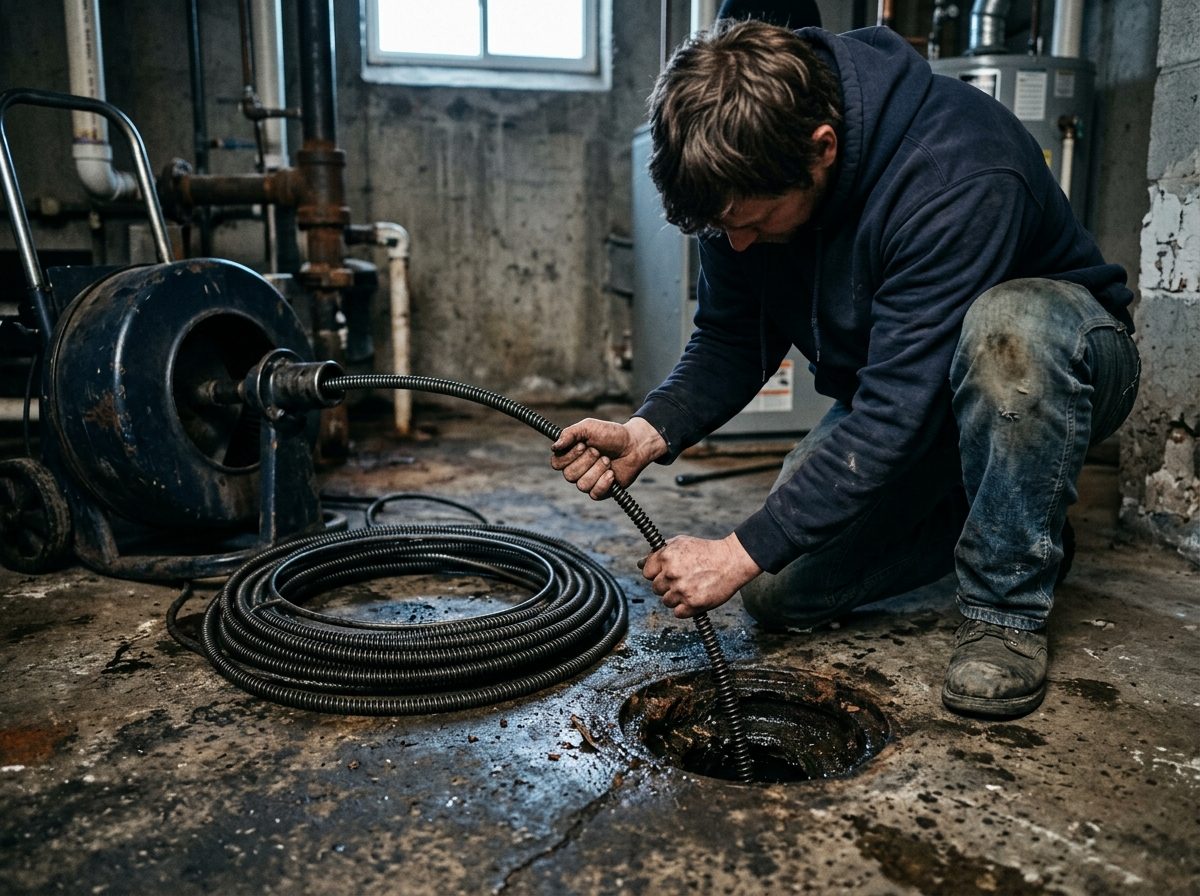
The heater is the appliance to plan for
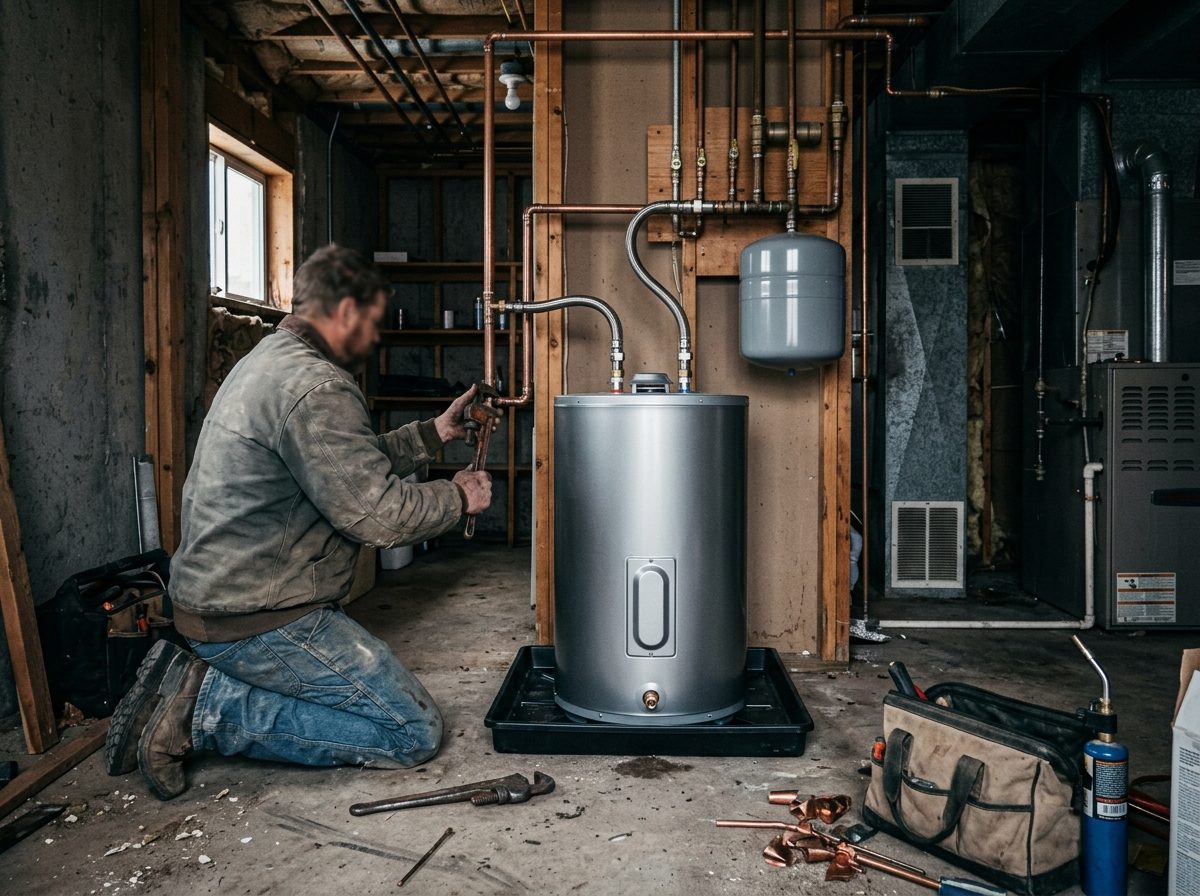
Of everything in a small older house, the water heater is the item most worth replacing on your own schedule rather than its own. It fails by leaking rather than by warning, and a tank that lets go releases its whole contents wherever it happens to stand.
The judgement factors are simple: age, rust at the fittings, damp underneath, and whether hot water runs out faster than it used to. Any two of those together mean it is time to plan. Out here that planning is worth more than in town, because an emergency replacement means both an urgent long-distance callout and possibly days without hot water while a unit is sourced.
Sediment is the reason many heaters fall short of their expected life in this water. Draining it annually is the cheapest life extension available, and the sacrificial anode rod — a consumable designed to corrode instead of the tank lining — is worth checking at the same time.
Getting value from one visit
The single most useful habit for a property out here is keeping a list. A plumber driving an hour will want to justify the trip, and four small items handled in one visit costs a fraction of four separate callouts across a year.
What belongs on the list is anything that is annoying rather than urgent: the tap that drips, the toilet that runs, the slow drain, the hose bib that weeps, the heater that is due. None of those warrant an emergency call, and all of them get more expensive if they eventually become one. Talking to a neighbour is worth doing too — two properties on one road is a far easier trip to schedule than one.
Several small jobs waiting? List them and book one visit rather than four.
Ask about a single visitVacant and inherited houses in a small town
A town this size always has a few houses standing empty — inherited, waiting to sell, or held by someone who lives elsewhere — and an empty house is not a house with nothing happening in it. The plumbing deteriorates in specific ways when it is not used, and most of the expensive discoveries in these buildings are made by someone turning the water on to see whether it works.
Three things happen in an unused building. Traps dry out, which lets sewer gas into rooms and is often the first thing noticed on arrival. Seals and washers that are kept pliable by use dry and shrink, so fixtures that were sound when the water was shut off weep when it comes back on. And anything that froze during an unheated winter has already failed — it simply has not leaked yet, because there is no pressure behind it.
Which is why the way a system is recommissioned matters more than its condition. Look before charging anything: walk the visible pipe, check ceilings and any crawlspace for staining, confirm fixtures are closed. Then open the main only partway and let pressure build while you listen, because a split line shows itself at low pressure with a fraction of the water it would release at full. Fill the water heater completely before restoring power or gas to it. An hour spent in that order is routinely the difference between a repair and a ruined floor.
Keep a running list
Every small annoyance, written down as it happens. When you eventually book a visit, that list is what turns one callout into four repairs.
Nearby communities
Simla sits on the high plains in Elbert County, with Matheson, Ramah, Calhan and Agate nearby.
Simla, Colorado
Small-town plumbing questions answered
That is local — the trap or branch serving that fixture — and it does not indicate a main-line problem. If there is gurgling alongside the slow drain, venting is the more likely cause than a blockage. Clearing the branch normally resolves it.
Because the cause is a layer of grease and scale on the pipe wall rather than one object. Cabling punches a channel through and restores flow but leaves the layer behind. Jetting cleans the wall back toward the original bore, which is why it holds far longer.
More so than in a city, because a return visit means an hour of driving each way. Paying once for a repair that holds for years is better value than paying repeatedly for one that holds for months, and the travel makes that gap wider than the invoice suggests.
Judge on age, rust at the fittings, damp underneath, and whether hot water runs out faster than it used to. Any two of those together mean plan a replacement. A thermocouple or an element is a repair; a tank weeping at the seam is not.
Sediment. Scale collects across the tank floor, insulates the burner from the water and forces longer run times, and on electric units it coats the elements directly. Draining it annually is the cheapest life extension available, and the anode rod is worth checking at the same time.
Almost always supply pipe that has narrowed from internal corrosion over decades. Testing pressure at an outdoor hose bib separates house from supply: if what arrives at the property is normal and interior flow is not, the pipe is the constraint rather than the town main.
Keep a running list of small annoyances — the dripping tap, the running toilet, the slow drain, the weeping hose bib, the heater that is due — and book them together. Four items in one visit costs a fraction of four separate callouts, and none of them get cheaper by waiting.
It depends who is already working out this way, and you will be told plainly. For urgent problems the phone advice matters as much as arrival time. For everything else, a booked visit gets done sooner in practice than waiting for a same-day opening.
Inspect first — visible pipe, ceilings, crawlspace, and confirm every fixture is closed. Then open the main only partway and listen while pressure builds; a winter split reveals itself at low pressure with far less damage. Fill the water heater before energising it. Expect dry traps and weeping seals as normal rather than as signs of a serious fault.
The high plains
Simla, Matheson, Ramah, Calhan and Agate.
(833) 621-2904 — answered 24/7, statewide.