Plumber in Kiowa, CO — one call, any hour
Home / Areas / Eastern Plains / Kiowa
Kiowa is a small county seat surrounded by large properties, and plumbing here is a property matter rather than a house matter. The distances involved inside a single holding are often greater than the distance between houses in a town, and that changes what goes wrong.
A small county seat with big properties
A working property here may have a house, a shop, a barn, a stock tank and two or three hydrants, all fed from one well through several hundred feet of buried line. Nothing about the individual components is unusual; the scale and the exposure are.
The most useful information on a call is therefore scope rather than symptom: how many buildings take water, what the source is, and how far the furthest fixture sits from the pump. Those three answers decide what equipment and parts are needed.
Several buildings on the property? Say how many take water when you call.
Ask about a property visit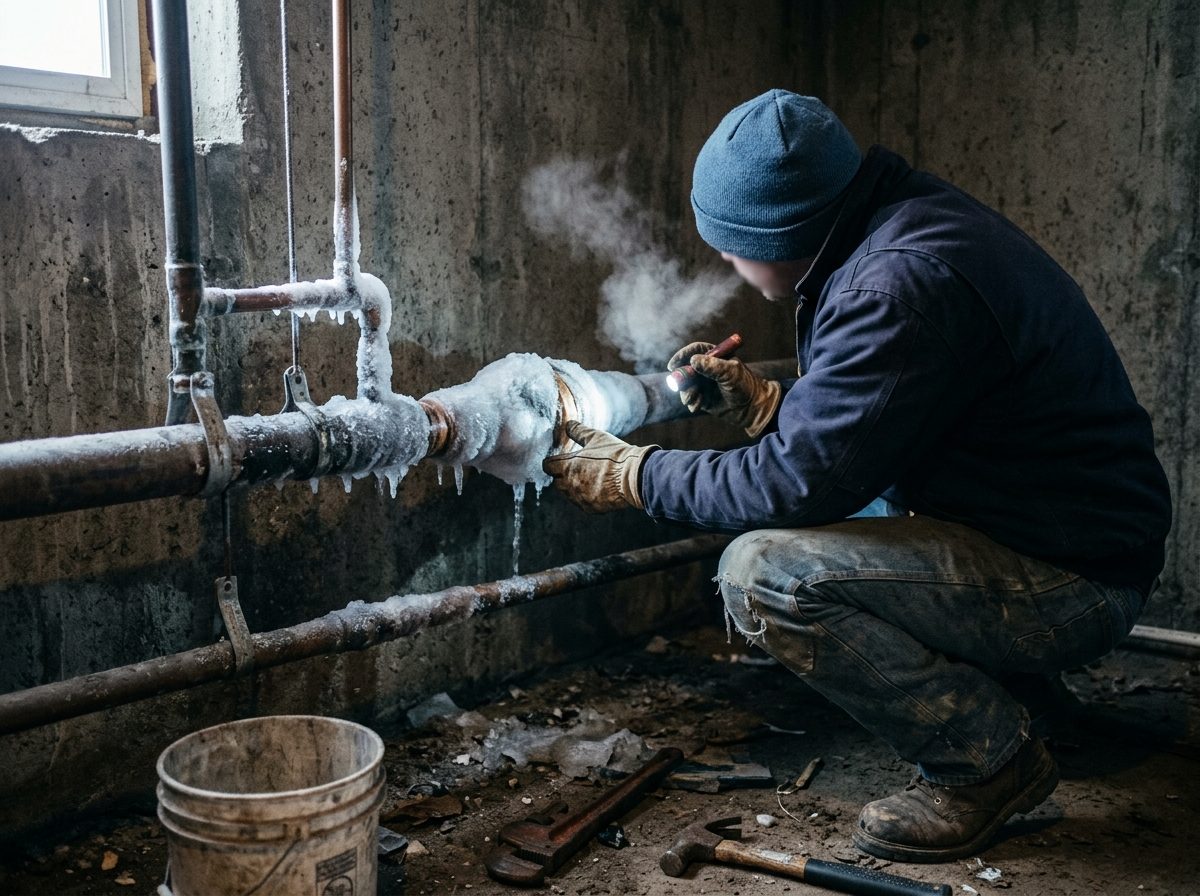
Long buried runs and hidden leaks
The characteristic problem of a large property is a leak in buried line that nobody notices. There is no ceiling to stain and no floor to soak, so the only signs are indirect: pressure that has slowly fallen, a patch of ground that stays damp or unusually green, a pump running more often than it used to, or water use that has climbed with no change in habits.
Confirming it is straightforward. With everything shut off, watch the pressure gauge or the meter over an hour; movement means water is leaving the system. If you have isolation valves between structures, closing them one at a time narrows which run is losing water before anyone starts digging — and that is worth real money on a property this size.
Well systems and the three usual faults
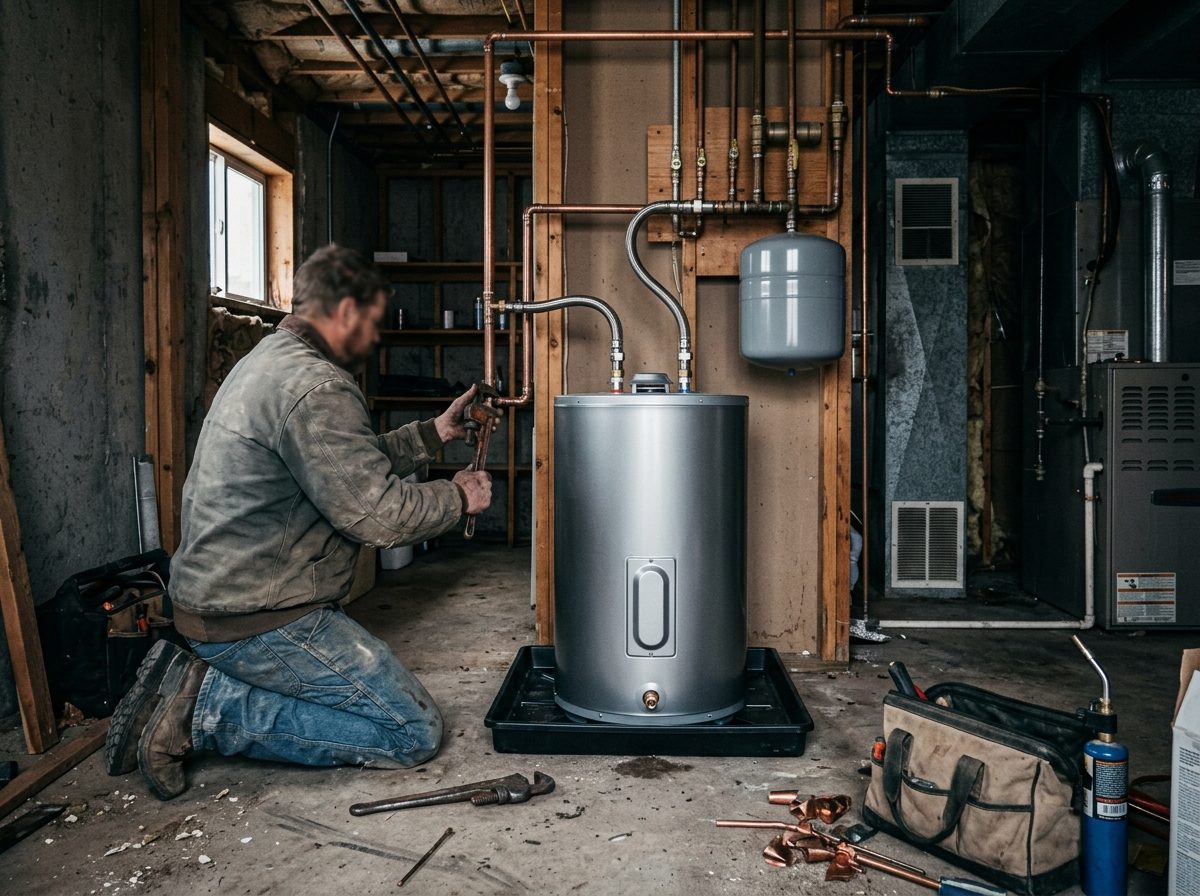
Three things account for most well calls. A pressure tank that has lost its air charge, so the pump starts and stops every few seconds and wears itself out. A pressure switch that has stopped making contact. And a pump at the end of its working life.
Because all three present as poor pressure or nothing at the tap, the diagnosis starts with three questions: what does the gauge read, can the pump be heard running, and has the breaker tripped. Answering those on the phone frequently determines both the fault and which trade should attend, since the pump and casing wiring are well-system work while everything past the tank is ordinary plumbing.
Pump cycling constantly? That is usually the pressure tank, and it kills pumps.
Ask about a well systemWind, frost and empty buildings
High open ground with no shelter means constant heat loss from anything exposed, and frost that runs deep. Hydrants, pump houses and outbuildings are where problems begin, and a building nobody heats is a building where a split can run for days unnoticed.
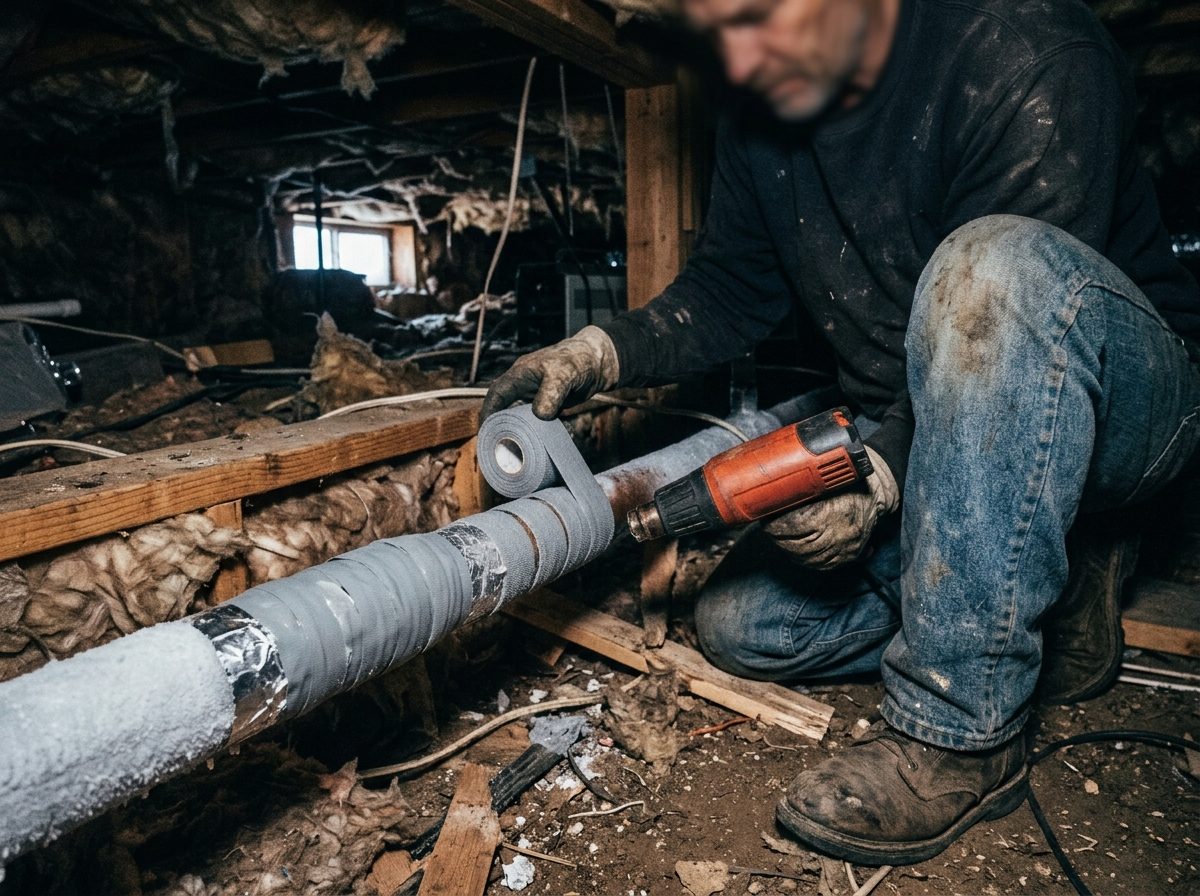
For anything not in use through winter, isolating the branch and draining it is the dependable answer. For lines that must stay live, insulation and air sealing come first and heat tape second — and tape should be tested each autumn, because it fails silently through age, rodent damage or simply having been unplugged during other work.
Building standing empty this winter? Draining its line removes the risk rather than managing it.
Ask about winterisingIf a line has split
Close the main shutoff, then open the lowest tap to drain the system and take pressure off the break. Photograph the damage before cleanup if a claim is possible, then call.
Stock water and horse properties
A great many properties around the county seat keep horses or a few head of livestock, and stock water is a plumbing system with requirements the house does not have. It has to run every day of the year including the coldest ones, it is usually the furthest point from the pump, and when it fails the consequence is immediate in a way that a failed shower is not.
Three components carry most of the trouble. The automatic waterer or float valve, which is exposed to weather and to animals and fails in both directions — stuck open and overflowing, or stuck closed and empty. The tank heater, which is an electrical item in a wet location and deserves to be checked before winter rather than during it. And the supply line itself, which on many properties was run shallow by a previous owner and is the most likely thing on the place to freeze.
The practical arrangements that make a difference are small. An isolation valve for the stock line inside heated space, so the branch can be shut off without taking the house with it. A frost-free hydrant nearby as a fallback, so water can be carried for a day if the automatic system fails. And knowing the route of the line, because a leak on a long shallow run to a distant tank is otherwise found by following a wet patch across a paddock in March.
Nearby communities
Kiowa is the Elbert County seat, with Elizabeth, Elbert, Simla and Agate spread around it.
Kiowa, Colorado
Elbert County questions answered
Start by confirming there is one: with everything shut off, watch the pressure gauge or meter for an hour. Movement means water is leaving the system. If there are isolation valves between buildings, closing them one at a time narrows down which run is losing water, which saves a great deal of excavation.
It can be. A pump cycling more frequently with no change in household use suggests either a leak somewhere on the system or a pressure tank losing its charge. Checking the tank is quick and cheap; if it is sound, the next step is isolating sections to find where water is going.
Everything from the pressure tank into the house is ordinary plumbing. The pump, drop pipe and wiring down the casing are well-system work and need specific equipment to pull. Saying what the gauge reads and whether the pump runs usually decides which trade is sent, and avoids a wasted visit.
It depends who is already working this direction. For urgent problems you will get an honest window plus instructions on what to shut off in the meantime, which is what actually limits damage. For routine work, booking a visit is usually faster in practice than waiting for an emergency opening.
Yes, before winter especially. The hydrant is designed to drain its standpipe below the frost line each time it closes, and one that weeps often no longer drains. Water left standing in that pipe through a hard freeze splits it below ground, and the repair becomes excavation in frozen soil.
Three to five years for most households, sooner where the tank is small or usage is heavy. Every drain in the building slowing at once rather than one fixture is the classic sign, along with unusually lush growth over the field or a backup after a weekend with visitors.
That is the sensible approach here, and it is how most work gets scheduled. Give a full list when you call so the right parts come out with the truck. Two jobs on one road is also easier to schedule than one, so it is worth asking a neighbour whether anything needs doing.
Yes. Out here nobody else is testing it for you, and results vary property to property in a way municipal supply does not. Hardness and iron affect appliances; other results affect the people drinking it. Test before buying any treatment equipment, so the equipment matches the actual problem.
Usually, and it is worth doing before the season rather than in January. The pieces are an insulated or heated waterer suited to the herd size, a tank heater checked each autumn rather than assumed, a supply line at proper depth, and an isolation valve indoors so the branch can be shut off on its own. A nearby frost-free hydrant is a sensible fallback.
If the building is left for weeks at a time, it is one of the few pieces of equipment that pays for itself outright. A flow-based device closes the supply when it sees continuous flow that does not look like normal use, which is exactly the pattern of a split line in an empty house. Paired with a temperature alarm, it covers the two failures that do the real damage.
Elbert County, any hour
Kiowa, Elizabeth, Elbert, Simla and Agate.
(833) 621-2904 — answered 24/7, statewide.