Plumber in Byers, CO — one call, any hour
Home / Areas / Denver Metro / Byers
Byers is a highway town as much as a farm town, and that gives it an unusual plumbing mix for its size: alongside houses and acreage there is genuine commercial work — food premises, fuel and service businesses, and buildings with plumbing of a different order from anything domestic.
A highway town, not just a farm town
The practical consequence is that the first useful question is what kind of building you are calling about. Commercial premises have larger waste lines, grease-bearing kitchen drains, floor drains, and equipment connections that no house has. A domestic van does not carry the equipment for a commercial main, and someone equipped for a restaurant line is an expensive way to fix a leaking tap.
Scheduling differs too. A business generally cannot stop trading for a repair, so out-of-hours work is frequently the cheaper option once lost trade is counted. It is worth raising when you book rather than assuming daytime is the only option.
Business that cannot stop trading? Ask about out-of-hours work when you book.
Ask about scheduling around trading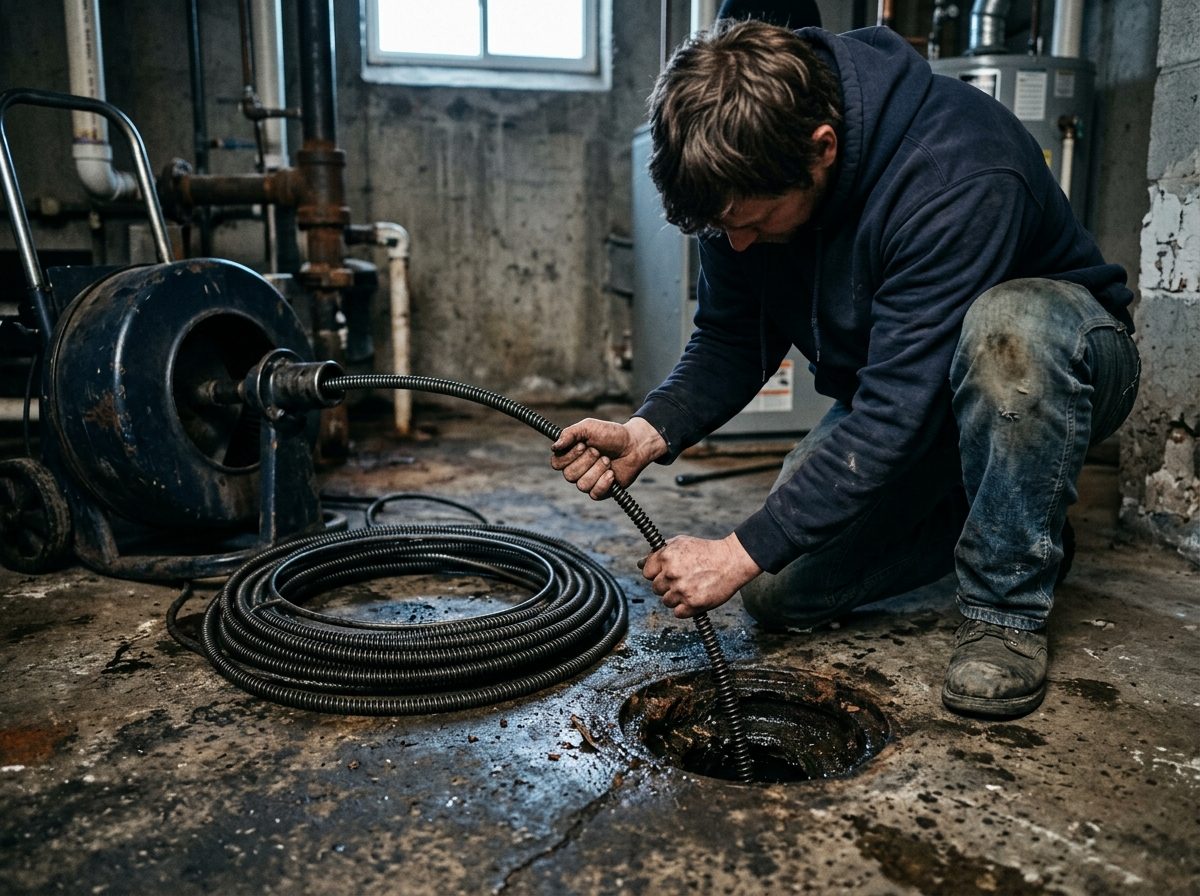
Grease is the commercial problem
In any premises serving food, grease is the dominant recurring failure. It leaves the kitchen as warm liquid and cools on the pipe wall, building a layer that narrows the line until flow stops. It is gradual, entirely predictable, and it comes back on a schedule.
Cabling a grease-blocked line punches a channel through the deposit and restores flow, which is why the same drain blocks again a few months later. Jetting scours the wall back toward its original bore, which is why it holds far longer. And a grease interceptor that is actually serviced on a schedule is what stops the cycle repeating — over a year, planned interceptor service costs less than repeated emergency clearing during service hours.
Floor drains and traps that dry out
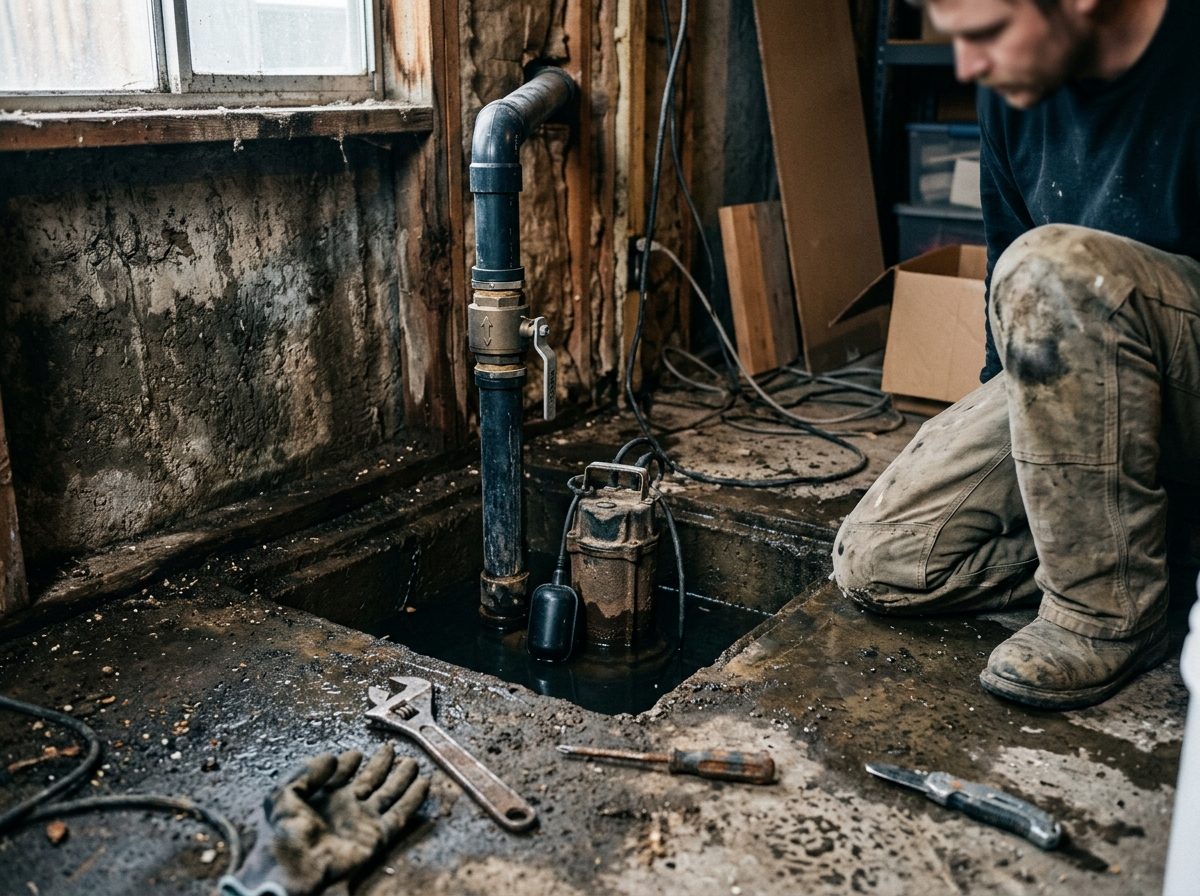
Floor drains are common in commercial buildings and rare in houses, and they bring a specific problem. Each one holds a water seal that blocks sewer gas from the building. In an area of a building that is not washed down regularly, that water evaporates, the seal is lost, and smell comes up through the drain.
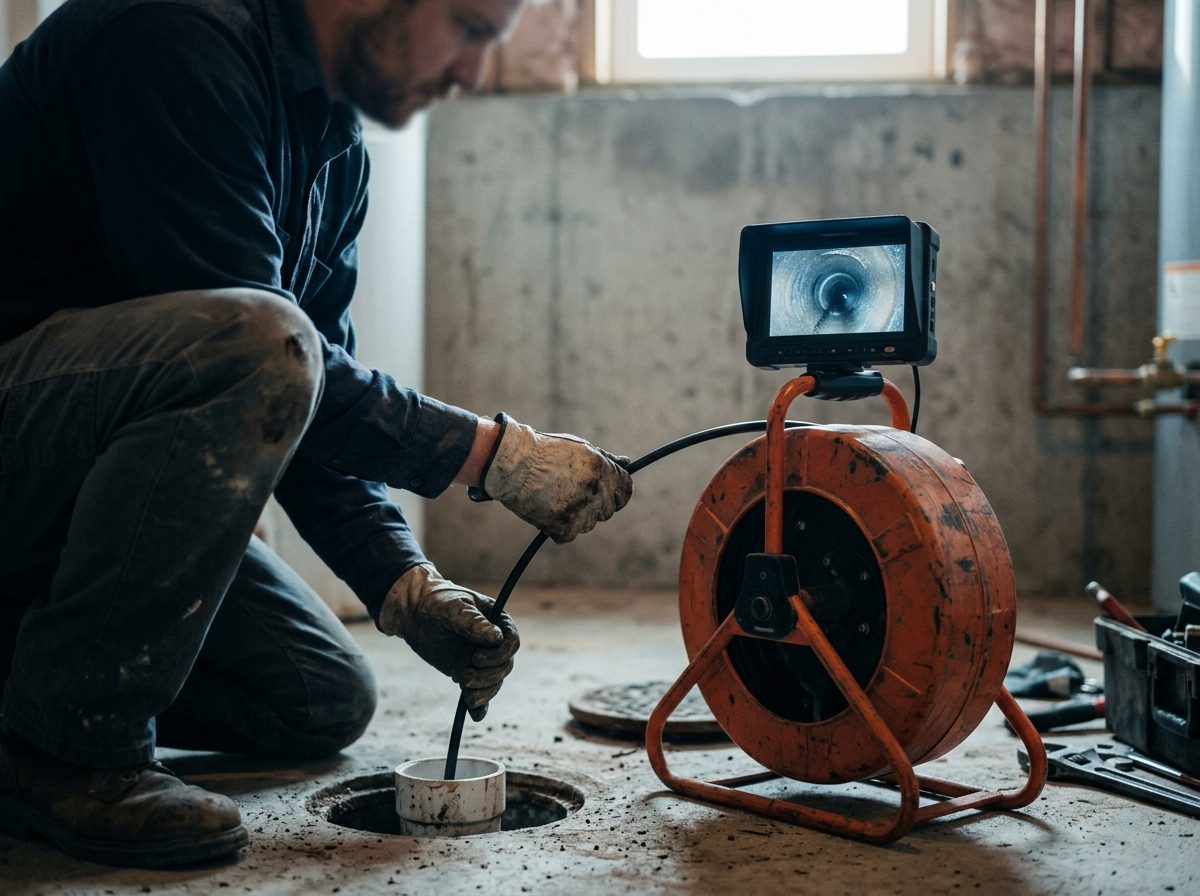
The remedy is usually a bucket of water and takes a minute, which is worth knowing before anyone calls it a drainage fault. Where a smell persists after refilling the trap, the causes are different — a venting problem, or a break in the line — and that is worth a camera rather than more water.
Floor drains also matter in a backup. Where a building has drains below the level of the street sewer, a backwater valve is the usual protection, and it needs to stay accessible for inspection. Before fitting one, the line itself should be inspected so an existing fault is not sealed in behind it.
Smell from a floor drain? Try a bucket of water first — dry traps are the usual cause.
Ask about a drain smellThe domestic side
Houses and acreage here have the ordinary rural profile: private wells with the familiar three faults — a pressure tank that has lost its air charge and is cycling the pump, a pressure switch that has stopped making contact, or a pump at the end of its life — and septic systems needing pumping every few years.
The exposure is open plains, so frost runs deeper than in the metro and anything above ground loses heat continuously. Hydrants that weep have usually stopped draining, and a branch feeding a building you are not using through winter is better isolated and drained than heated.
Nothing at the tap? Gauge reading, pump noise, breaker — those three narrow it fast.
Ask about a well systemIf sewage is coming up a floor drain
Stop all water use in the building and keep people away from the affected floor. Chemical drain products do not clear a grease mass or a blocked main, and they make the eventual work hazardous for whoever opens the line.
Water out in the yard
Outdoor water here serves working purposes rather than gardens, and the equipment reflects that. Yard hydrants, stock tanks, wash-down points and fill lines for vehicles or equipment all take water well away from any heated building, and they are the fittings most likely to be neglected until the season they fail in.
The yard hydrant is the piece worth understanding. A proper frost-free hydrant shuts off well below the frost line and drains its riser each time it closes, which is the whole reason it survives winter. When one starts weeping continuously it usually means the seal at the bottom has gone or the drain hole is blocked, and it is not a small thing to leave — a hydrant that no longer drains is holding a column of water below ground through every freeze, and that is how a working hydrant becomes an excavation.
Anywhere a hose or fill line can sit in a tank, a trough or a wash bay, backflow protection matters for the same reason it matters on irrigation: a drop in supply pressure can draw that water back the way it came. On premises with a commercial connection this is normally a tested and recorded requirement rather than a one-off fitting, and the sensible time to sort it out is before an inspection rather than after one.
Nearby communities
Byers sits on the I-70 corridor east of the metro, with Strasburg, Bennett, Watkins and Agate nearby.
Byers, Colorado
Byers plumbing questions answered
Often yes. Commercial work involves larger waste lines, grease-bearing kitchen drains, floor drains and equipment connections, and it needs equipment a domestic van may not carry. Saying up front whether the address is a house or a business means the right person and kit arrive first time.
Because grease leaves the kitchen warm and cools on the pipe wall, building a layer that narrows the line. Cabling punches a channel through the deposit and restores flow but leaves the layer behind. Jetting scours the wall back toward the original bore, which is why it holds far longer.
Over a year, almost always. Planned interceptor service is cheaper than repeated emergency clearing, and emergency clearing tends to happen during service hours when it costs trade as well as money. It is the difference between a maintenance line item and a recurring crisis.
Almost certainly a dry trap. Every floor drain holds a water seal that blocks sewer gas, and in an area not washed down regularly that water evaporates. A bucket of water usually resolves it within minutes. If the smell persists afterwards, that points at venting or a break in the line.
It is worth asking about if the building has drains below the level of the street sewer, and especially if the line has surcharged before. The valve is a one-way gate that stops the main pushing back into the building. It must stay accessible for inspection, and the line should be inspected first so an existing fault is not sealed in.
Usually, and it is worth asking when you book. For a business that cannot stop trading, out-of-hours work often works out cheaper once lost trade is counted. Say what your trading pattern is and the schedule can be built around it rather than against it.
No. Chemical cleaners do not clear a grease mass or a collapsed section, and they leave caustic liquid standing in the line that makes the work hazardous for whoever opens it. Mechanical clearing followed by a camera is the right sequence, and the camera tells you why it blocked.
The ordinary rural profile applies: three usual well faults — a pressure tank that has lost its charge, a failed pressure switch, or a pump at the end of its life — and septic tanks needing pumping every three to five years. What the gauge reads and whether the pump runs narrows the first quickly.
Better not. A continuous weep usually means the shutoff seal at the bottom has failed or the drain hole is blocked, and either way the riser is likely holding water below ground through every freeze. That is what turns a repairable hydrant into a dig. It is also wasting water continuously, which shows up on a meter long before anything breaks.
The I-70 corridor
Byers, Strasburg, Bennett, Watkins and Agate.
(833) 621-2904 — answered 24/7, statewide.