Plumber in Watkins, CO — one call, any hour
Home / Areas / Denver Metro / Watkins
On a large lot, the most consequential piece of plumbing is the one nobody thinks about: the buried line running from the meter or the well to the house, and onward to whatever outbuildings take water. It fails silently, it can run for months before anyone notices, and locating it well is the difference between a targeted repair and digging up a property.
The pipe you never think about
Indoor leaks announce themselves — a stain, a sound, a damp patch. A buried line has no ceiling to mark and no floor to soak, so it shows up only in second-order effects: pressure that has slowly dropped over a year, a well pump running more often than it used to, water use that climbed with no change in habits, a patch of ground that stays damp or unusually green through dry weather, or a meter that creeps with every fixture in the house shut.
Any one of those is worth taking seriously on a property with several hundred feet of line in the ground, because the cost of a slow leak is not just water — on a well it is pump wear, and on a septic property a saturated area near the drainfield is its own problem.
Ground damp or green in dry weather? On a large lot that is a classic buried-leak sign.
Ask about finding a buried leak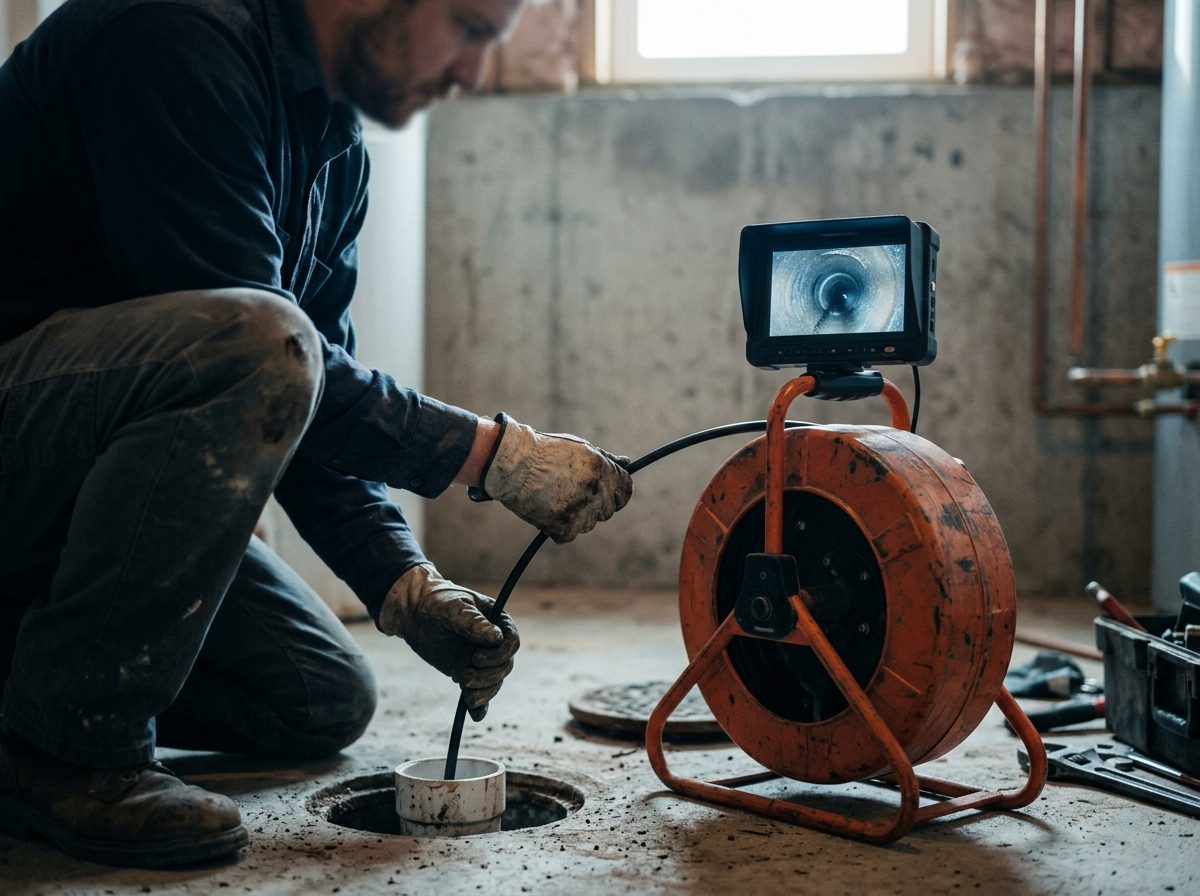
Finding it without digging the property up
The work happens in two stages, and an owner can do the first one. Confirm that water is actually leaving the system: shut every fixture, note the meter reading and the position of the low-flow indicator — or watch the pressure gauge on a well system — and check again an hour later with nothing touched. Movement means loss. Then close the shutoff at the house and repeat: if it still moves, the loss is outside the building.
The second stage narrows where. Isolation valves between structures are worth their cost several times over here, because closing them one at a time tells you which run is losing water before anyone brings a shovel. Where there are no isolation valves, acoustic equipment and pressure testing of sections do the same job more slowly. Either way, locating before excavating is what keeps the job proportionate.
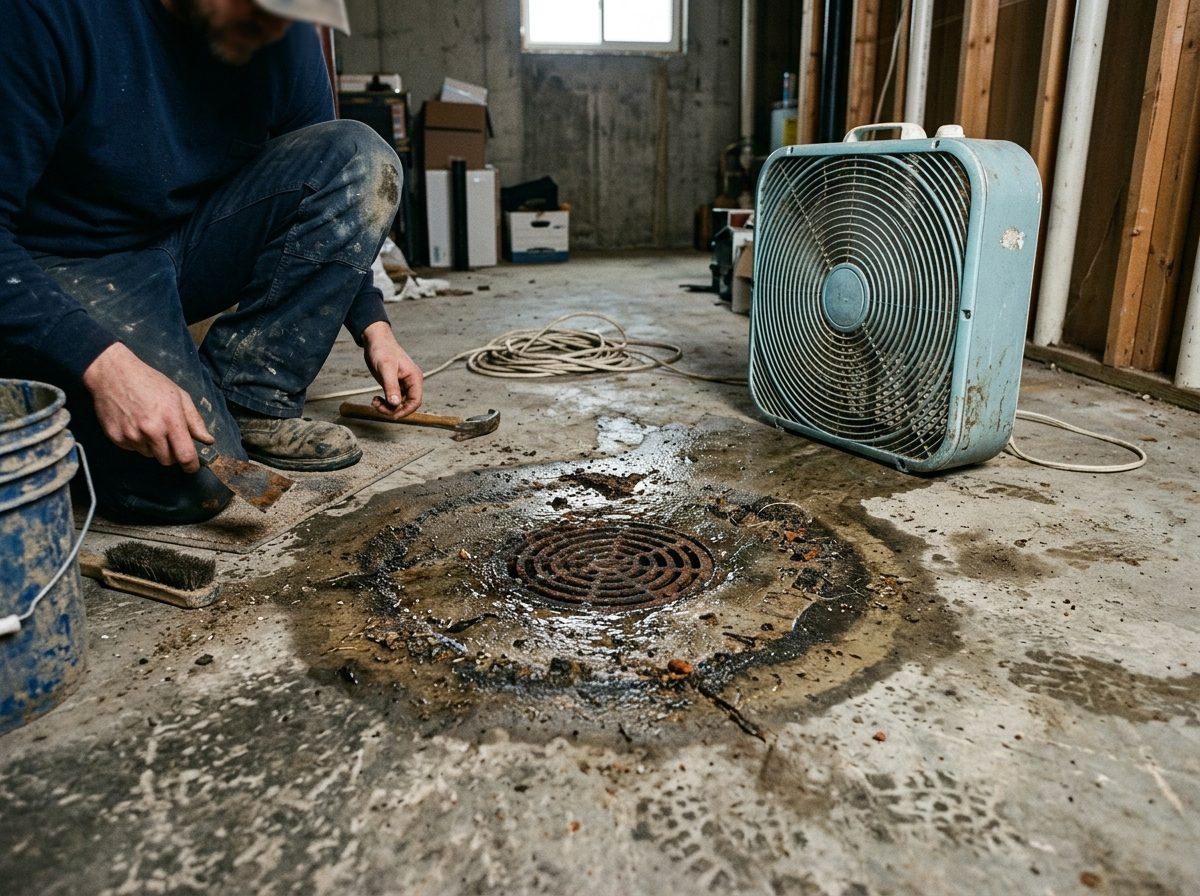
Repair, reroute or replace
Once a fault is located there are usually three options, and they are not interchangeable. A spot repair suits a single failure in an otherwise sound line — cheapest, and appropriate where the pipe has years left. Replacing the run makes sense where the line is old, has failed more than once, or is of a material that is reaching the end of its service life across its whole length.
Rerouting is the option people forget. Where an existing run passes under a drive, a slab or established planting, putting the new line on a different path can cost less than restoring what excavation would destroy. It also gives an opportunity to add the isolation valves and a sensible depth that the original installation may not have had.
Line under a drive or slab? Ask whether rerouting beats excavating.
Ask about repair optionsHard water and the heater
The other constant here is mineral content. Sediment settles across the water heater's tank floor so the burner heats through scale rather than steel, run times lengthen, and recovery slows until a household that never ran out of hot water starts running out. On electric units the elements scale directly and burn out early.
Draining the sediment annually is the cheapest life extension available, and the sacrificial anode rod deserves checking at the same time — a consumable designed to corrode instead of the tank lining, frequently spent long before anyone looks at it. On a well, test the water as well, since composition varies property to property and nobody else is checking it for you.
Heater slower than it was? Sediment and a spent anode rod are the usual pair.
Ask about heater maintenanceFrost depth and why winter repairs cost more
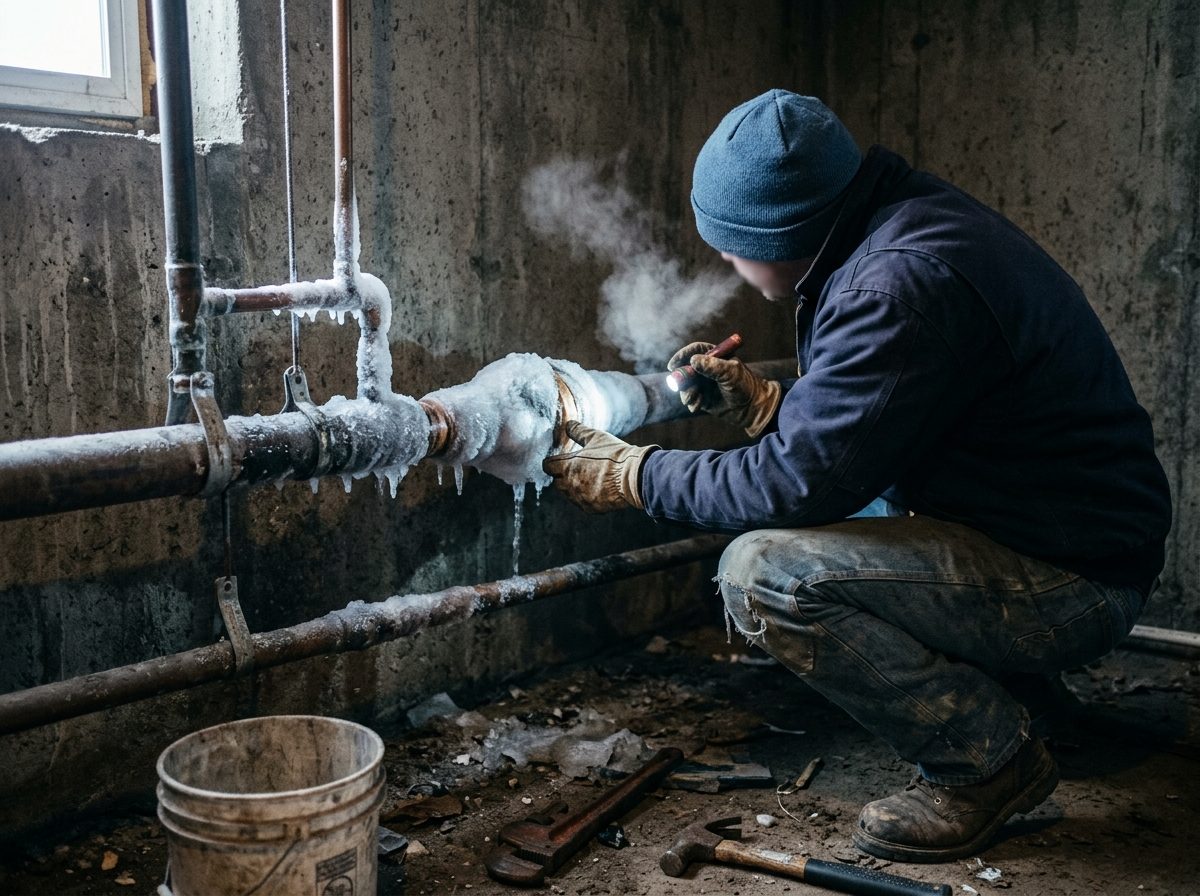
Buried pipe is protected by depth rather than by insulation, and out here on open ground frost drives deeper than it does on sheltered streets in an older town. Two things follow. A line installed shallower than it should have been — commonly a later addition running out to a building or a hydrant — is exposed to freezing in a way the original service is not. And once the ground is frozen, reaching any buried line becomes a substantially larger job than the same repair in September.
That changes the economics of maintenance in a way worth acting on. A hydrant that weeps, a valve that no longer closes fully, or a section of line that has been weeping quietly for a season are all small jobs in autumn and expensive ones in January, and the frozen-ground premium is not a markup — it is genuinely harder and slower work.
The practical response is an autumn walk-round of everything outdoors and everything buried that is accessible: hose bibs, hydrants, the valves feeding any outbuilding, and the meter pit if there is one. Anything that drips, sticks or feels wrong gets dealt with while the ground is still workable. It is also the right time to confirm that any isolation valve you would rely on in an emergency actually closes, since a valve discovered to be seized during a burst is effectively not there.
Worth fitting next time the ground is open
Isolation valves between the house and each outbuilding. They turn a whole-property leak hunt into a two-minute test, and the best time to add them is while something is already being dug.
Nearby communities
Watkins sits just past the airport corridor east of Aurora, with Bennett, Strasburg and Byers nearby.
Watkins, Colorado
Buried line questions answered
Shut every fixture, note the meter reading and the low-flow indicator — or the pressure gauge on a well system — and check again an hour later with nothing touched. Movement means water is leaving the system. Then close the shutoff at the house and repeat: continued movement puts the loss outside the building.
Pressure that has slowly dropped over a year, a well pump running more often than it used to, water use that climbed with no change in habits, and ground that stays damp or unusually green in dry weather. On a large lot those second-order signs are all you get.
On a property with several hundred feet of buried line, they pay for themselves the first time something leaks. Closing them one at a time tells you which run is losing water in minutes, instead of requiring acoustic work or exploratory digging across the whole property.
Often, yes. Trenchless methods pull a new line along the path of the old one from access pits at each end. Whether it suits depends on the route, the depth, the bends and the condition of the existing line, so the locate and assessment come before deciding.
It depends on the line. A spot repair suits a single failure in a pipe with years left. Replacing the run makes sense where the line is old, has failed more than once, or is of a material reaching the end of its life along its whole length. The repair history is what decides.
Rerouting is worth pricing alongside excavation. Putting the new line on a different path can cost less than restoring a drive, a slab or established planting that digging would destroy — and it gives you the chance to add isolation valves and a sensible depth at the same time.
It costs more than the water. On a well it means extra pump running and extra pump wear. Near a septic drainfield a permanently saturated area reduces the field’s capacity to disperse liquid. And a leak that has been running for months is usually getting worse rather than staying steady.
Scale is the usual explanation in water this hard. Sediment collects across the tank floor, insulates the burner from the water and forces longer run times; on electric units it coats the elements directly. An annual drain pushes the life back toward what the manufacturer expected.
East of Aurora
Watkins, Bennett, Strasburg, Byers and the airport corridor.
(833) 621-2904 — answered 24/7, statewide.