Plumber in Yoder, CO — one call, any hour
Home / Areas / Eastern Plains / Yoder
Out around Yoder the assumptions behind ordinary house plumbing start to come apart. Not every property has a productive well, some run on stored water rather than a continuous supply, and power is not always something you can rely on being there. The plumbing has to be designed around that rather than in spite of it.
Where the grid is thin
Two things vary out here that a suburb takes for granted. Groundwater is not uniformly available or uniformly good, so some properties have a well that yields plenty and a neighbour a mile away does not. And mains power can be intermittent enough that anything depending on it — a pump, a tank heater, heat tape — needs a fallback plan rather than an assumption.
What follows is that describing your setup properly is the single most useful thing you can do on the phone. Well, cistern, hauled water, solar, generator backup: those words change the diagnosis completely, and a plumber arriving expecting a conventional pressure system will not have the right parts.
Unusual water setup? Describe it when you call — it changes everything.
Ask what applies to your system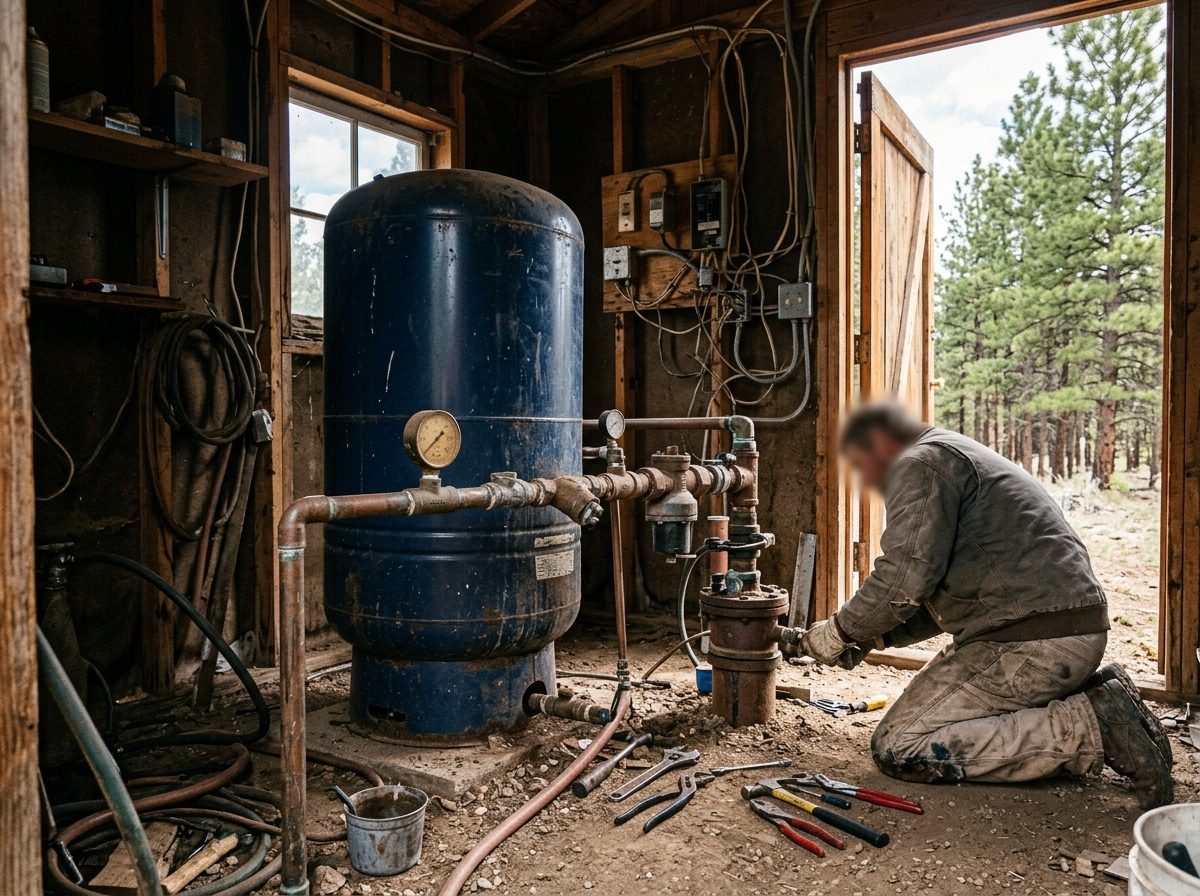
Cisterns and hauled water
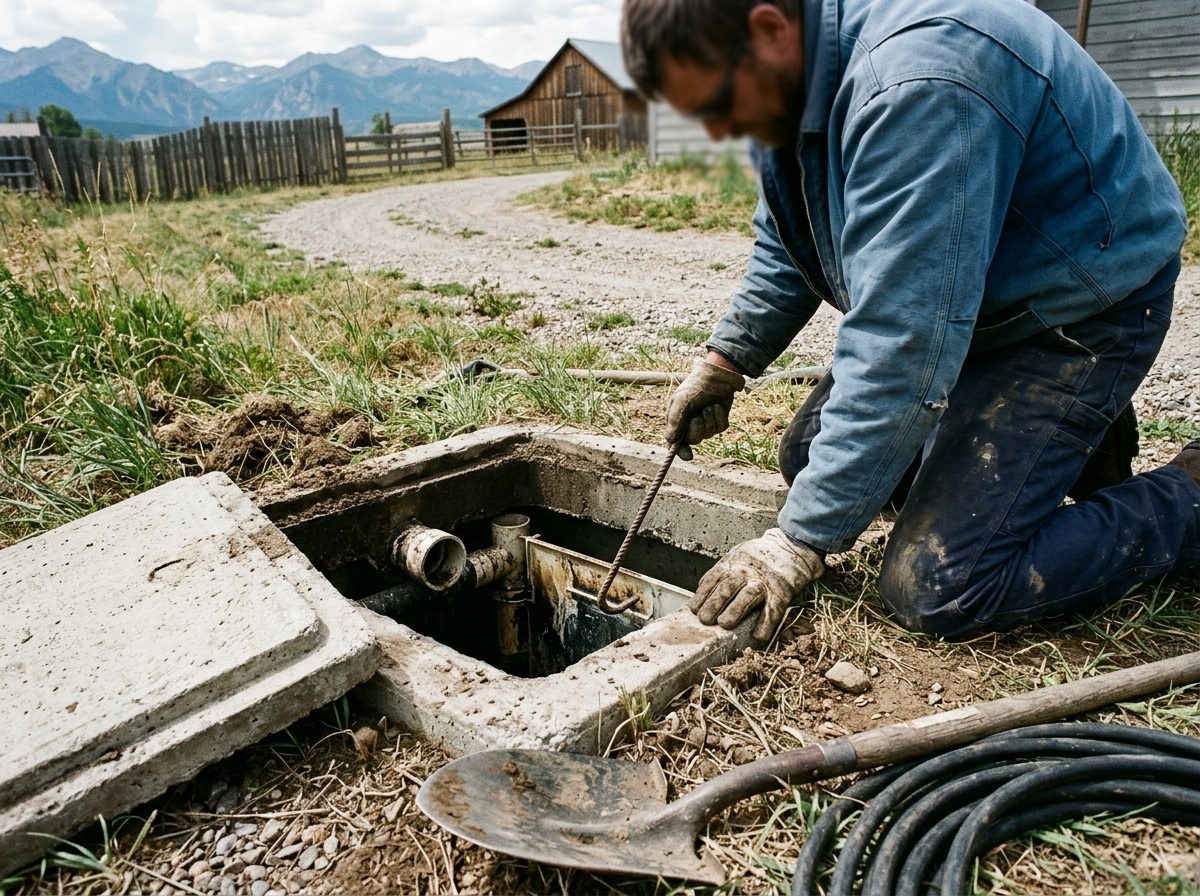
A cistern is storage rather than supply, and that changes the failure modes. Instead of a well running dry you have a tank running low, which is a scheduling problem rather than a mechanical one — but the plumbing around it has its own issues.
Fill points and inlet screens matter, because what goes into the tank determines what the household drinks. Tank vents need to keep insects and debris out while letting air in. Level indicators fail, and a household that has stopped trusting the gauge tends to discover the bottom of the tank at an inconvenient moment. And because stored water sits still, sediment settles — so a draw-off arranged above the tank floor and periodic tank cleaning both matter more than they would on a continuous supply.
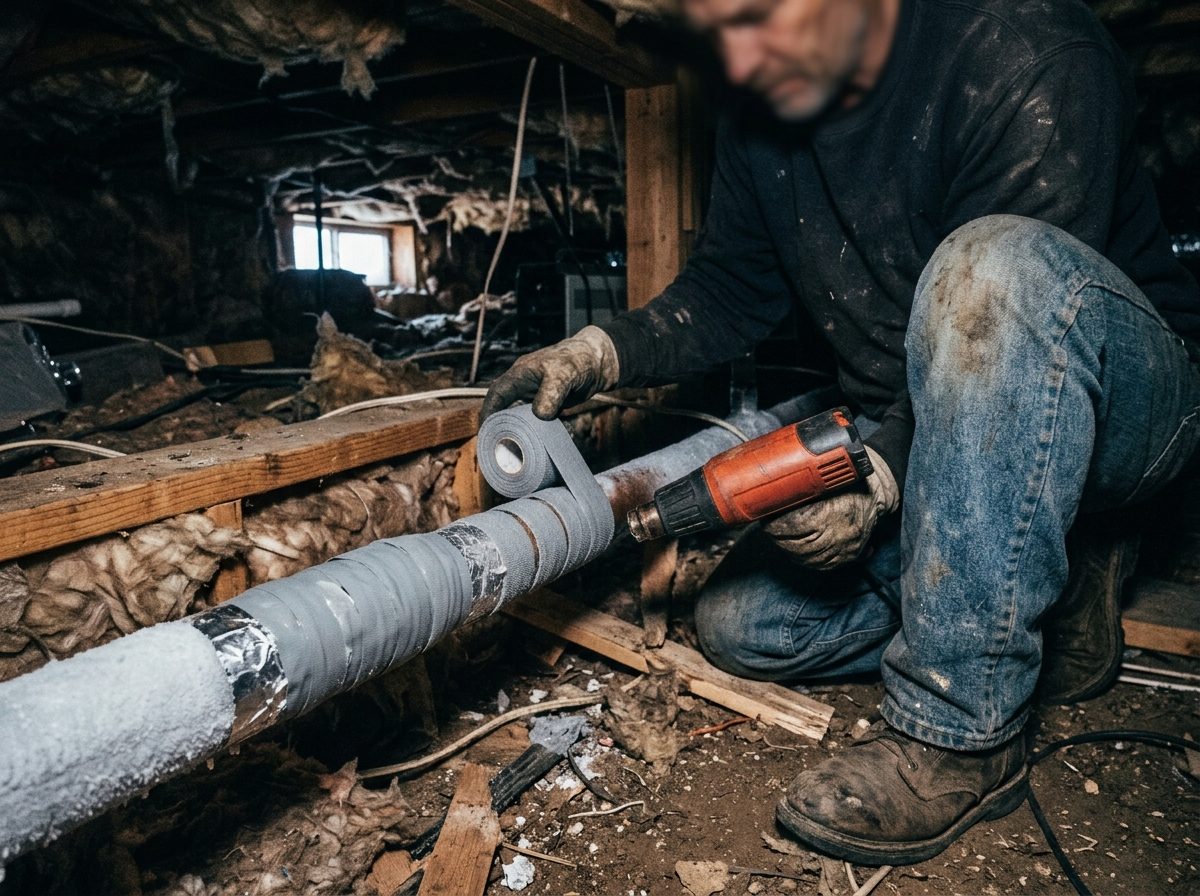
Freeze protection on a cistern is its own subject. A large volume of water has real thermal inertia and resists freezing, but the inlet, the outlet, the vent and any exposed pipework do not.
Making a cistern behave like a mains supply
A tank on the ground provides no useful pressure by itself, so a cistern system needs a booster pump and a pressure tank to give the household something that behaves like ordinary plumbing. That arrangement introduces its own faults.
The commonest is a pressure tank that has lost its air charge, which sends the pump cycling on and off every few seconds — and short-cycling wears out a booster pump just as fast as it wears out a well pump. Then there is dry-run risk: a booster pump that keeps running after the cistern empties can destroy itself in minutes, which is why a low-level cutout is worth having and worth testing. And sediment in stored water is hard on pump seals and on every fixture downstream, so filtration ahead of the pump earns its place.
Pump cycling every few seconds? That is usually the pressure tank, and it kills pumps.
Ask about a pressure systemSolar pumping and its quirks
Solar pumping suits remote water well, because the demand and the resource broadly coincide — the sun is strongest when stock drink most. But it behaves differently from a mains pump and it is worth understanding the differences.
Output varies with light rather than being constant, so a solar system is usually designed to fill storage during the day rather than to deliver pressure on demand. That means storage capacity, not pump size, is what determines whether the household or the herd runs short. Cloudy stretches are the constraint that catches people out, and a few days of storage is worth more than a bigger panel array. Controllers and low-water cutouts are the components that most often fail, and both are easier to diagnose if somebody knows what the system is supposed to do — which is a good argument for keeping the installation documents somewhere findable.
Solar system underperforming? Storage capacity is usually the constraint, not the pump.
Ask about a solar pumping systemWorth writing down
Your cistern capacity, your normal daily use, and where the low-level cutout is. Those three numbers turn a vague water worry into a scheduling decision.
Nearby communities
Yoder sits on the plains south-east of Colorado Springs, with Calhan, Ramah and the El Paso County farm country nearby.
Yoder, Colorado
Off-grid water questions answered
Different things from a well system. Fill points and inlet screens, tank vents, level indicators that stop being trusted, and sediment settling in stored water. The mechanical faults tend to be in the booster pump and pressure tank arrangement that gives the house usable pressure, rather than in the storage itself.
That is short-cycling, and the usual cause is a pressure tank that has lost its air charge. The tank holds a cushion so the pump runs once every few minutes rather than constantly. It wears out a booster pump just as quickly as it wears out a well pump, so it is worth fixing promptly.
A booster pump running dry can destroy itself in minutes, because it relies on the water it moves for cooling and lubrication. A low-level cutout prevents it, and it is worth testing rather than assuming — a cutout nobody has checked in five years is not a safeguard.
It generally benefits from it. Water sitting still lets sediment settle, and sediment is hard on pump seals and on every fixture downstream. Filtration ahead of the pump protects the mechanical parts; what you add after that depends on a water test rather than on guesswork.
A large volume of water has real thermal inertia and resists freezing, so the tank itself is usually not the problem. The inlet, the outlet, the vent and any exposed pipework are — they hold small volumes in thin pipe, and they are what actually freeze. That is where insulation and protection should go.
It suits remote water well, because output is strongest when demand is highest. What catches people out is cloudy stretches, since output varies with light rather than being constant. Solar systems are designed to fill storage during the day, so days of storage capacity matter more than panel size.
Usually not — storage is more often the constraint than pump capacity. If the system fills tanks adequately on a bright day but falls behind over a cloudy week, adding storage addresses the actual limit. Fitting a bigger pump to a system that already fills its tanks changes nothing.
It depends who is already working out this way, and you will be told plainly. Describing the system properly when you call matters more here than in most places — well, cistern, hauled water or solar are genuinely different jobs, and the right parts have to be on the truck.
Downstream of the tank and upstream of the house, somewhere that will not freeze and where the cartridges can actually be reached — which on many properties out here rules out the obvious spot. Sediment first, then anything finer, so the cheap filter protects the expensive one. And size it for the flow the house needs, since an undersized filter shows up as poor pressure everywhere.
With a level indicator you can read without opening or climbing into anything — which is worth fitting if the tank does not have one. Running a cistern dry is not merely inconvenient: the pump can be damaged in the process if it keeps trying to draw. A readable level and a low-level cutout between them prevent the most expensive failure on this kind of system.
South-east plains
Yoder, Calhan, Ramah, Peyton and the surrounding country.
(833) 621-2904 — answered 24/7, statewide.