Plumber in Wheat Ridge, CO — one call, any hour
Home / Areas / Denver Metro / Wheat Ridge
Wheat Ridge is largely a post-war city on generous lots, and its plumbing calls follow from that: sewer laterals of a consistent age under mature planting, basements that matter, extensive outdoor water, and enough remodelling over the decades to make what is behind the wall genuinely uncertain.
Post-war housing on big lots
Most of the housing here dates from the decades after the war, which means the original sewer lateral, the original drain lines and often the original supply routing are still in service. Galvanised steel appears in the oldest streets; elsewhere copper is common and holding up, with fittings rather than pipe being the failure point.
Large lots bring outdoor water into the picture more than in denser parts of the metro — multiple hose bibs, extensive irrigation, detached garages and workshops with their own supply runs. Those are the lines most likely to be forgotten before a freeze.
Outbuilding with its own water line? Mention it when you call — it is the line most often forgotten.
Ask about outdoor lines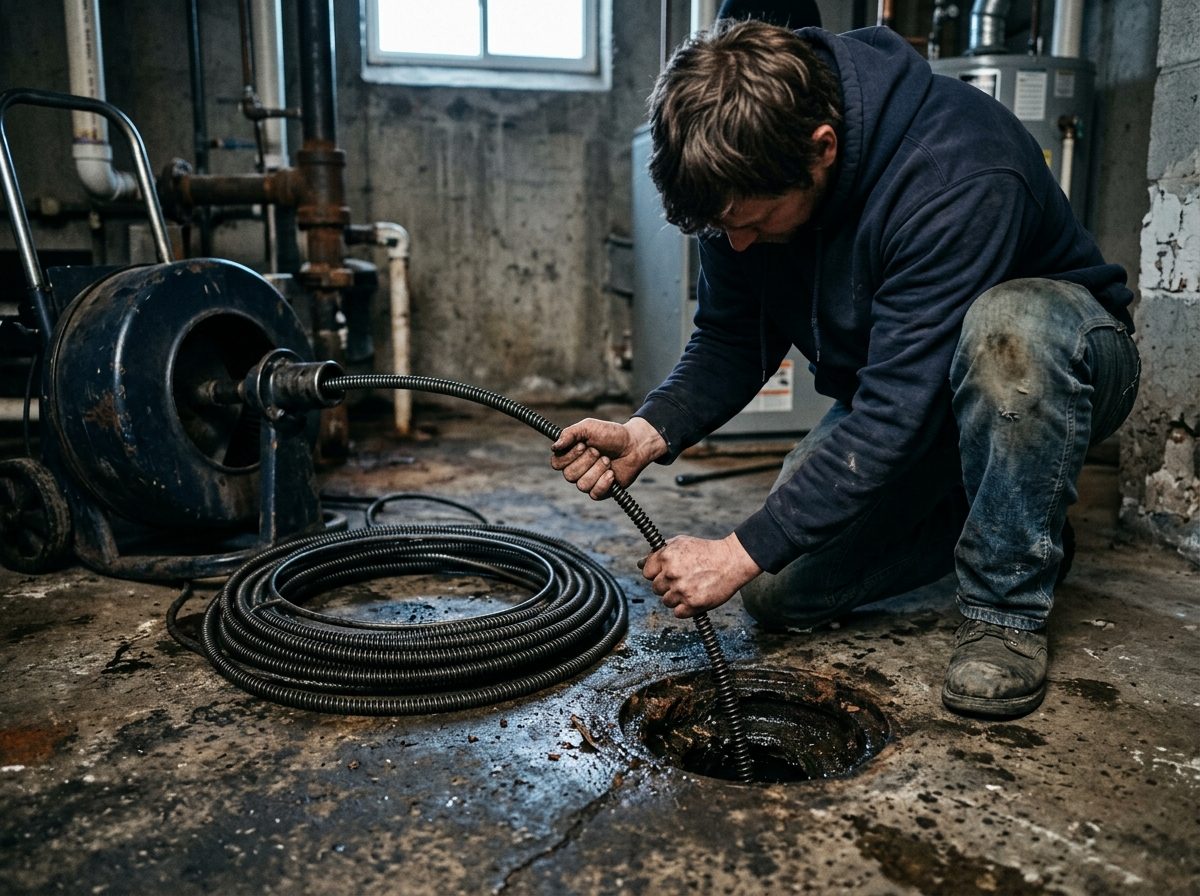
Roots, laterals and repeat backups
Mature trees and clay laterals are a reliable combination for root intrusion. The joint every few feet is the way in, and the first symptom is usually the basement floor drain or the lowest toilet rather than the fixture you were using, because a blocked main shows itself at the lowest opening.
Stop water use in the house, get the line cleared, then have it camera inspected. Clearing restores flow; the camera tells you whether it was roots at one joint, a section that has dropped out of alignment, or a pipe at the end of its life. Repeated blockages at the same distance are about the pipe, not about what went down it.
Basements and sump pumps
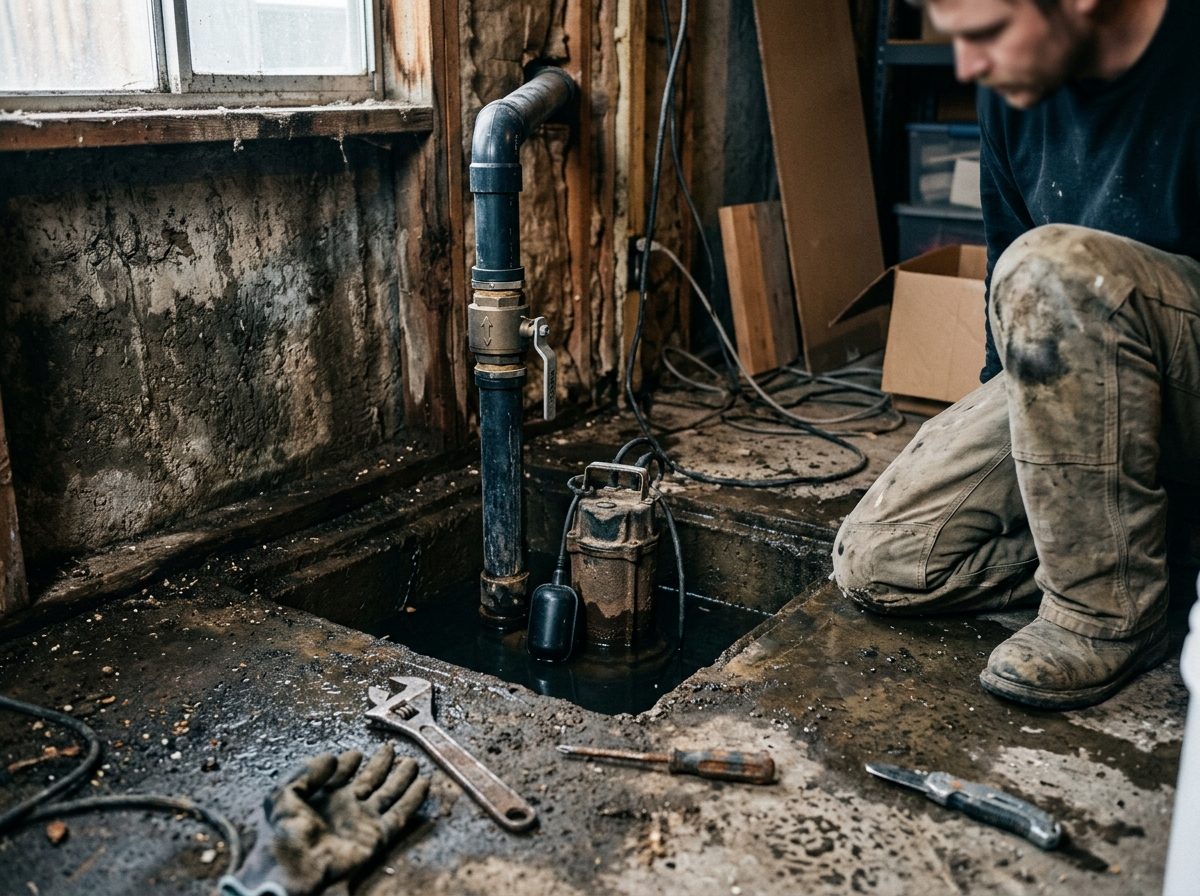
Full basements are the norm, and many have been finished at some point, which raises the cost of any water event. The sump pump is the appliance least likely to have been tested and most likely to be needed suddenly — during a fast melt or a summer downpour.
Testing takes five minutes: pour a couple of buckets into the pit and confirm the pump starts, clears the water and shuts off cleanly without cycling. If the basement is finished, a battery backup or second pump is inexpensive against the cost of replacing flooring and drywall.
Pump not run since last spring? Test it with a bucket before the melt, not during it.
Ask about sump pumpsWhere the cold gets in
Freezes here are short, sharp and often windy. The vulnerable places are consistent: hose bibs with hoses still attached, garage walls, crawlspaces with vents left open from summer, and pipe run through additions that were never insulated to the standard of the main house.
Disconnect hoses in October, get irrigation blown out with compressed air rather than merely drained, and open cabinet doors under sinks on exterior walls during the coldest nights. If a fixture stops flowing on a cold night, get the exposure addressed even after flow returns, because ice can crack a pipe without releasing water until the thaw.
Line stopped flowing? Close the main shutoff before anything gets thawed.
Ask about a frozen pipeBefore the first hard freeze
Walk the property: every hose bib, the irrigation manifold, and any line to a garage or workshop. Anything that drips or sticks now is a candidate to split in the first cold snap, and all of it can be handled in one scheduled visit.
The line out to the garage or workshop
The large lots here mean a great many properties have water running out to a detached garage, a workshop, a greenhouse or a stable, and those lines behave differently from anything inside the house. They were often added long after the house was built, sometimes by a previous owner, and they are frequently shallower than they should be, insulated less than they need to be, and heated not at all.
The consequence is predictable. The house comes through a cold snap without incident and the garage line splits, usually at the point where it leaves heated space or where it rises inside an unheated wall. The damage from that is often worse than an equivalent failure indoors, because nobody is standing next to it — a line that lets go in an unoccupied workshop in January can run for days.
The cleanest answer, where the water is not needed through winter, is to isolate the branch and drain it rather than trying to keep it warm. That requires an isolation valve on the branch inside heated space and a drain point at its low end, which is a small job to add and the thing most of these installations lack. Where the supply has to stay live, insulation and air sealing come before heat tape, and any existing tape needs testing each autumn, because it fails without showing anything at all.
Nearby communities
Wheat Ridge sits between Denver, Arvada and Golden, with Lakewood-adjacent streets to the south.
Wheat Ridge, Colorado
Wheat Ridge plumbing questions answered
Usually yes, once you know what is actually wrong. A camera run distinguishes roots at a single joint — which may be manageable with periodic cleaning — from a belly or an offset joint, which will keep blocking whatever you do. That distinction is what decides between maintenance, a spot repair, a liner and replacement.
Pour two or three buckets of water into the pit and watch. The float should lift, the pump should start, move the water out and shut off cleanly without short-cycling. If it hums without pumping, runs continuously, or does nothing, deal with it now rather than during a melt. Test in early spring and before storm season.
Freeze, if it was not drained or protected. Lines to outbuildings are heated least and remembered last, and a split underground or inside an unheated wall can run for a long time before anyone notices. Shutting that branch off and draining it before winter is the simplest answer where the building is not in use.
Grease and scale building on the pipe wall rather than one object in the way. Cabling makes a hole through the blockage and restores flow but leaves the layer behind, which is why it returns in months. Jetting scours the wall back toward the original bore and holds far longer on a line with a history.
Same-day is normal and a couple of hours is common for urgent problems, given how central the address is in the metro. During a metro-wide cold snap every plumber is busy at once, so expect an honest window and clear instructions on what to shut off while you wait.
Deal with the exposure rather than the pipe. Close the crawlspace vents that were opened in summer, insulate the run properly, and seal the air leaks letting cold air reach it. Where rerouting into heated space is impractical, correctly installed heat tape that is actually plugged in is the fallback.
Age and the nature of the fault decide it. A thermocouple, a thermostat or an element is a repair. A tank weeping at the seam or rusting at the fittings is not — that is a replacement, and doing it on your schedule costs far less than doing it after the tank opens up, especially in a finished basement.
Yes, particularly given the age of the housing and the mature trees. The lateral is the one major system a standard home inspection does not inspect internally, and it is among the most expensive to repair. Doing it before closing turns a potential surprise into a negotiating point.
If the water is not needed out there through winter, isolate the branch and drain it — that removes the risk instead of managing it, and adding a valve and a drain point is a small job. If it must stay in service, insulate the run and seal the air leaks around it first, then use heat tape as backup, and test the tape every autumn.
Wheat Ridge, day or night
Wheat Ridge, Arvada, Golden and the surrounding metro communities.
(833) 621-2904 — answered 24/7, statewide.