Plumber in Arvada, CO — one call, any hour
Home / Areas / Denver Metro / Arvada
Arvada grew steadily westward for most of a century, and you can read that in its plumbing. The blocks around the old centre are genuinely old. The middle of the city is post-war and 1970s. The western edge, up toward the foothills, is recent. Each band produces a different call, and the age of the house is the first useful thing to say on the phone.
A city that grew west
In the oldest neighbourhoods the original materials are still doing the work: clay sewer laterals, cast-iron drain stacks, galvanised supply lines. All three are past any reasonable service expectation, and they fail in recognisable ways rather than mysteriously — narrowing flow, discoloured water after a few days away, drains that slow and clear and slow again.
The mid-century and 1970s neighbourhoods behave as cohorts. Everything was installed in the same year by the same crews, so laterals, heaters and pressure regulators reach the end of their lives at roughly the same time across a whole street. Newer building on the west side has no age problem yet; what turns up there is installation detail — a regulator set high and forgotten, a tankless unit sized on a summer assumption, irrigation that was never properly winterised.
Neighbours replacing heaters? On streets built in one year, that is a useful early warning.
Ask about your heater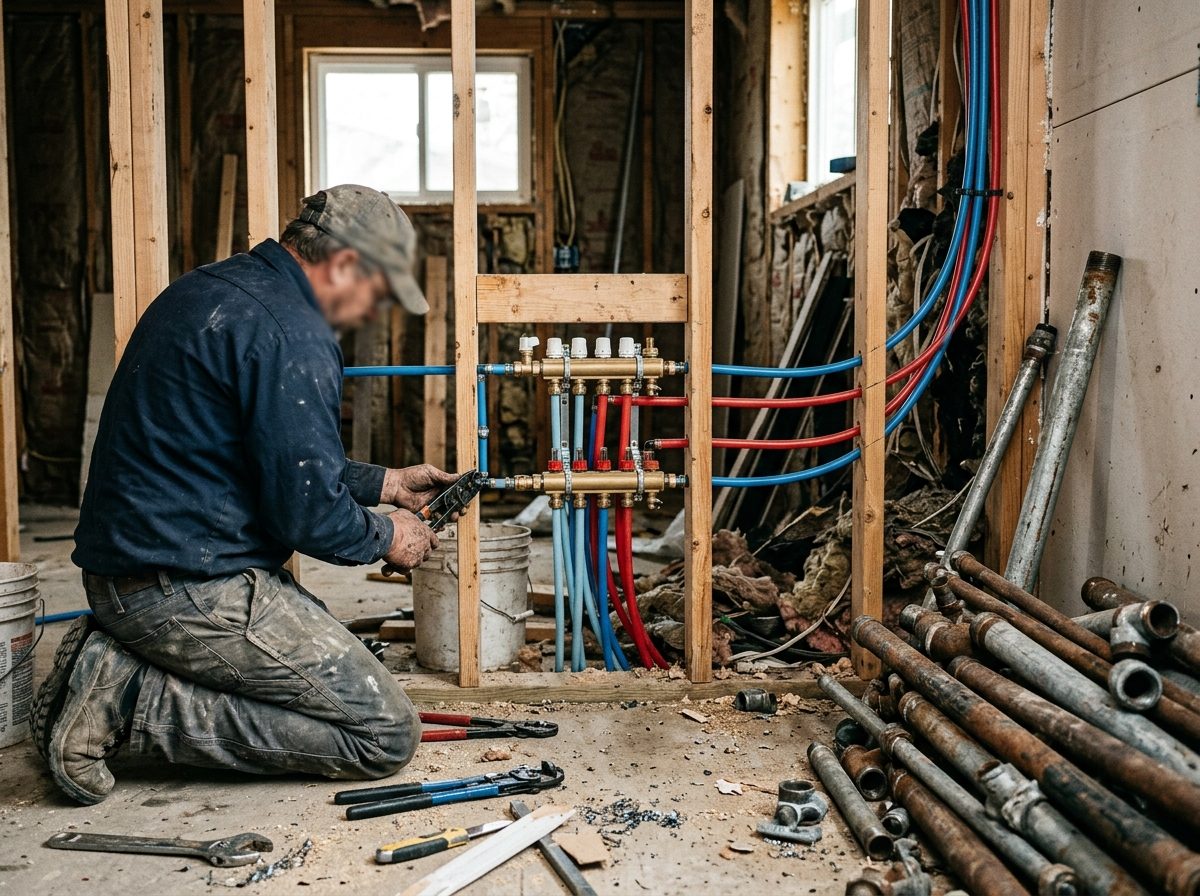
Drains, disposals and what goes down them
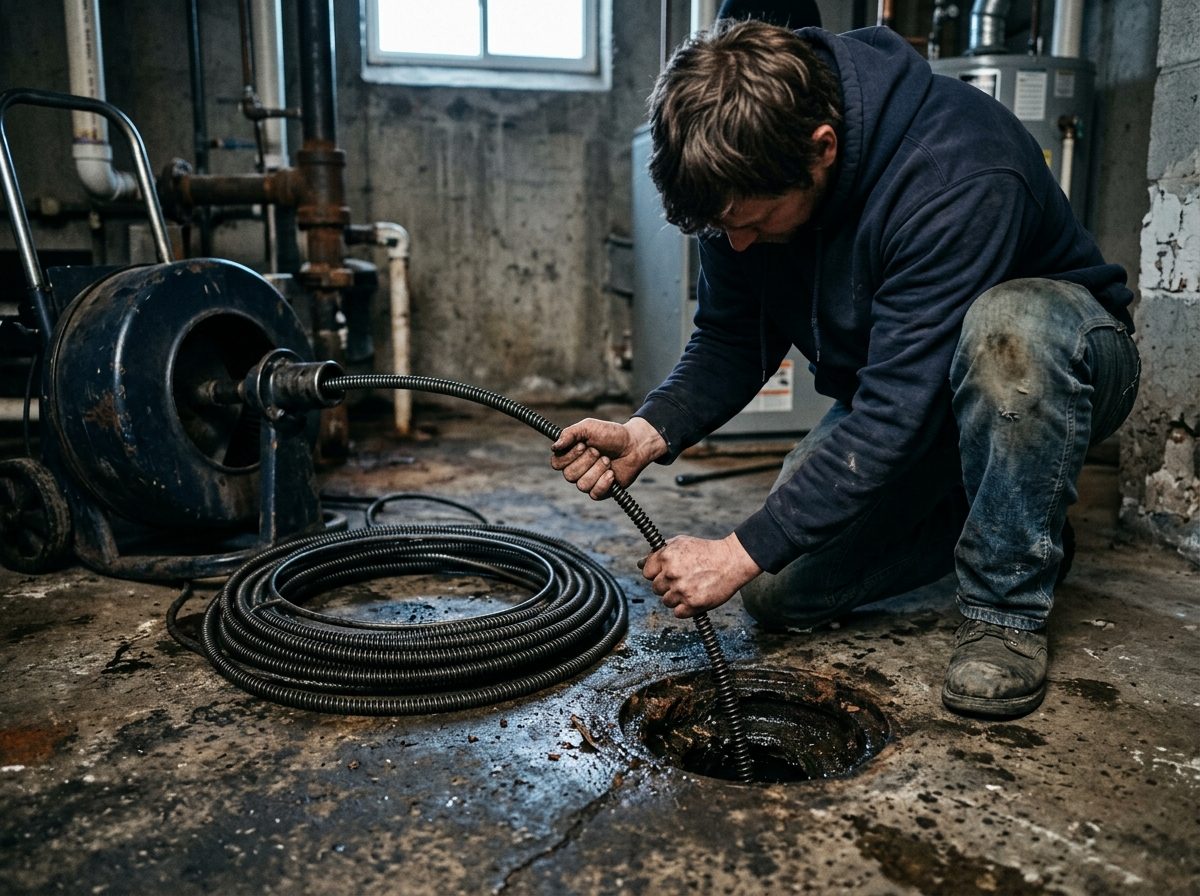
Kitchen drains are the most common single call in a city with this much mid-century housing. The pattern is grease and scale building on the pipe wall over years until the effective diameter shrinks to nothing. Cabling punches a hole through the blockage and restores flow, but it does not clean the pipe, which is why the same drain closes again a few months later.
Hydro jetting is the alternative: high-pressure water that scours the wall back toward the original bore. It costs more once and lasts considerably longer on a line that keeps closing up. Disposals are the other recurring item — a unit that hums without turning is almost always jammed rather than dead, and most have a hex socket underneath so the impeller can be freed by hand with the power off.
Irrigation and outdoor lines
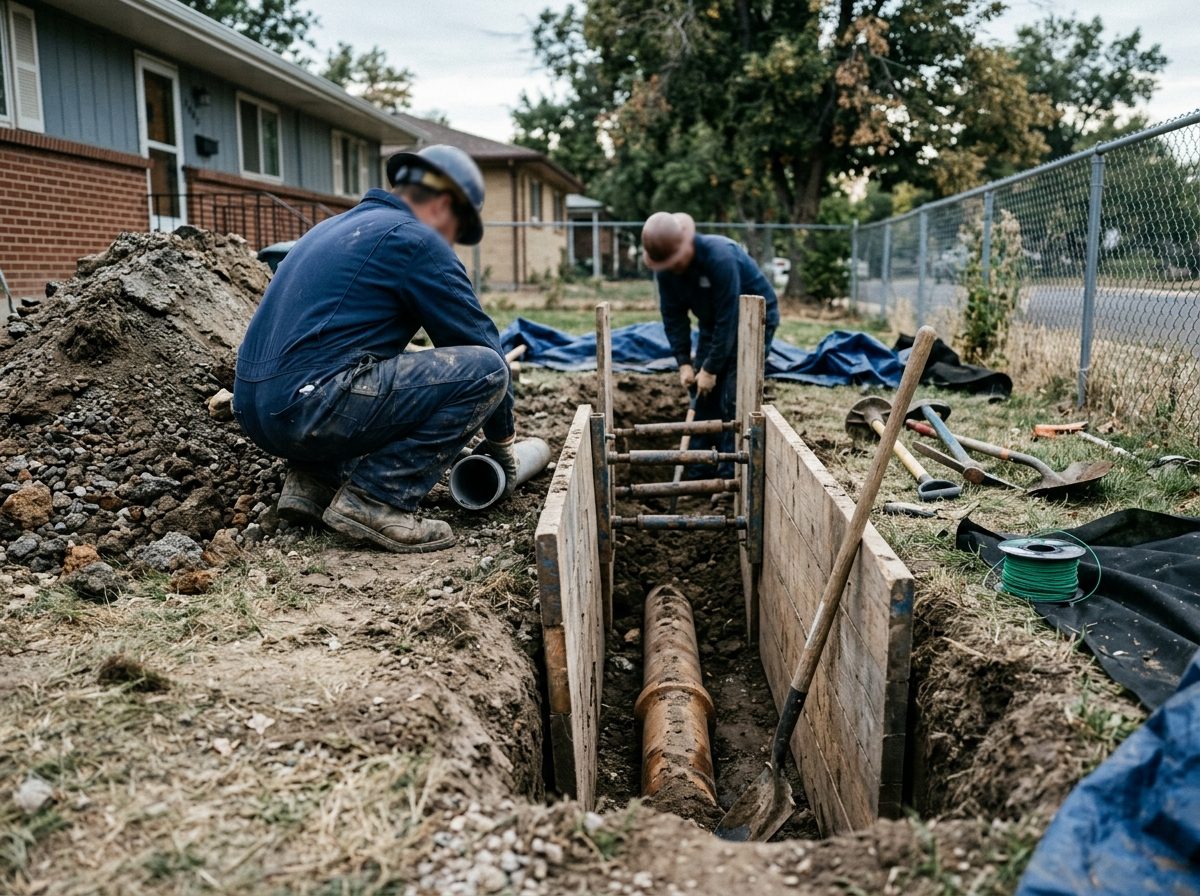
Lots here are generous, irrigation systems are extensive, and that makes autumn the busiest predictable season. A system that was not blown out with compressed air before the first hard freeze holds water at its low points and at the backflow device, and that is where the spring surprise usually appears.
Draining is not enough on most systems, because gravity cannot clear what sits below the drain point. Booking the blowout early in the season also costs less waiting time than calling in the week everyone else remembers at once. Hose bibs matter too: disconnect every hose before the freeze, because a connected hose holds water against the bib and defeats its frost protection.
Sprinklers still charged? Blowout season starts before the first hard freeze.
Ask about winterisingFixtures wearing out together? That pattern usually points at pressure, not luck.
Ask about high pressureHeaters, scale and pressure
Scale is a moderate but real factor here. It settles in the bottom of a water heater and insulates the burner from the water above it, so run times lengthen and the tank ages faster than the label promises. Flushing annually is the cheapest life extension available, and it is the job most often skipped because the heater sits behind the basement storage.
Pressure is the quieter variable. A regulator that has drifted lets street pressure through to fixtures that were never designed for it, and the symptoms look like bad luck rather than one cause: running toilets, dripping taps, a washer hose that lets go, a relief valve that discharges. A gauge on an outdoor spigot answers it in a minute.
Two autumn jobs
Get the irrigation blown out and disconnect every hose. Between them they prevent most of the calls that arrive during the first cold week of the season, and both can be done in an afternoon.
What earlier remodels left behind
Houses here have generally been through at least one significant round of work — a kitchen moved, a bathroom added, a basement finished — and each round leaves traces in the plumbing that only matter later. Pipe gets rerouted around obstacles, drains get extended further than the original design intended, and materials get joined to whatever was already there. None of it is necessarily wrong, but it means the plumbing in a forty-year-old house is rarely the plumbing that was drawn.
Two specific consequences come up repeatedly. The first is venting: a fixture relocated during a remodel sometimes ends up further from its vent than it should be, and the symptom is a slow drain that gurgles rather than one that blocks. The second is mixed materials, where copper, galvanised steel and plastic meet at transitions — dissimilar metals in direct contact corrode at the joint, and that joint is usually buried in a wall. Knowing which decade did what is genuinely useful information, so if you have paperwork or photographs from previous work, they are worth keeping with the property.
Nearby communities
Arvada runs along the north-west edge of the metro, with Westminster, Wheat Ridge, Golden and Broomfield all close by.
Arvada, Colorado
Arvada plumbing questions answered
Because the problem is build-up on the pipe wall rather than a single object in the way. Cabling clears a path through the blockage and restores flow, but the grease and scale layer stays. Hydro jetting scours the wall back toward its original diameter, which is why it lasts much longer on a line that keeps closing up.
Usually not. A hum with no rotation means something is jamming the impeller, and most units have a hex socket underneath that lets it be freed by hand with the power off at the switch. If it trips its reset repeatedly afterwards, or leaks from the body rather than a connection, replacement is the sensible answer. Never put a hand into the chamber.
Before the first hard freeze, which on the Front Range can arrive in October. Draining is not sufficient on most systems because low points and the backflow device hold water that gravity will not move — compressed air is what clears them. Booking early in the season is also easier to schedule than calling in the busiest week.
Same-day is normal across the city and a couple of hours is common for urgent problems. Addresses right up against the foothills add a little drive time, and during a metro-wide freeze every plumber is busy simultaneously. You will get a realistic window rather than a promise, plus what to shut off while you wait.
It is moderate by Front Range standards, so most households do fine without equipment. The maintenance that matters is flushing the water heater annually and cleaning aerators when flow drops at a single tap. If you want to decide on evidence rather than impression, a water test costs very little.
Because they were installed at once. Subdivisions built in a single year get the same appliances from the same supplier fitted by the same crews, so they age together and fail together. It is not a coincidence, and it is genuinely useful information — if two neighbours have replaced heaters, yours is worth checking rather than waiting on.
A cluster of small problems arriving together: toilets that run, taps that drip, a washing machine hose that fails, and a water heater relief valve that discharges periodically. Individually each looks like a worn fixture; together they point at pressure. Check it with a gauge on an outdoor spigot before replacing fixtures one at a time.
Yes, especially before buying one. Clay laterals under mature trees are the local norm, and the sewer is the one major system a standard home inspection does not inspect internally. The camera tells you whether you are looking at annual cleaning, a spot repair or a replacement, which is exactly the information a price should be based on.
Arvada, day or night
Every Arvada ZIP code, plus Westminster, Wheat Ridge, Golden and Broomfield nearby.
(833) 621-2904 — answered 24/7, statewide.