Plumber in Severance, CO — 24/7 help by phone
Home / Areas / Northern Colorado / Severance
Severance has gone from a hamlet to a town within roughly two decades, and its housing reflects that almost entirely. There is no old pipe here to speak of. What there is instead is a very uniform housing stock, hard water working on all of it, and no shelter at all from the wind.
A town built almost entirely recently
Modern supply pipe and modern drains mean decay is not the issue. What fails are the components fitted during construction: angle stops, flexible supply lines, toilet fill valves, washing machine hoses, expansion tanks and pressure regulators. Every one has a service life far shorter than the house, and every one lets go without warning.
Because whole streets were built in one season by the same crews, they also fail in step. That makes a neighbour's failure genuinely predictive, which is unusually useful information — and it makes a planned replacement much cheaper than an emergency one.
Neighbour had a fitting fail? On a street built in one year, that is worth acting on.
Ask what to check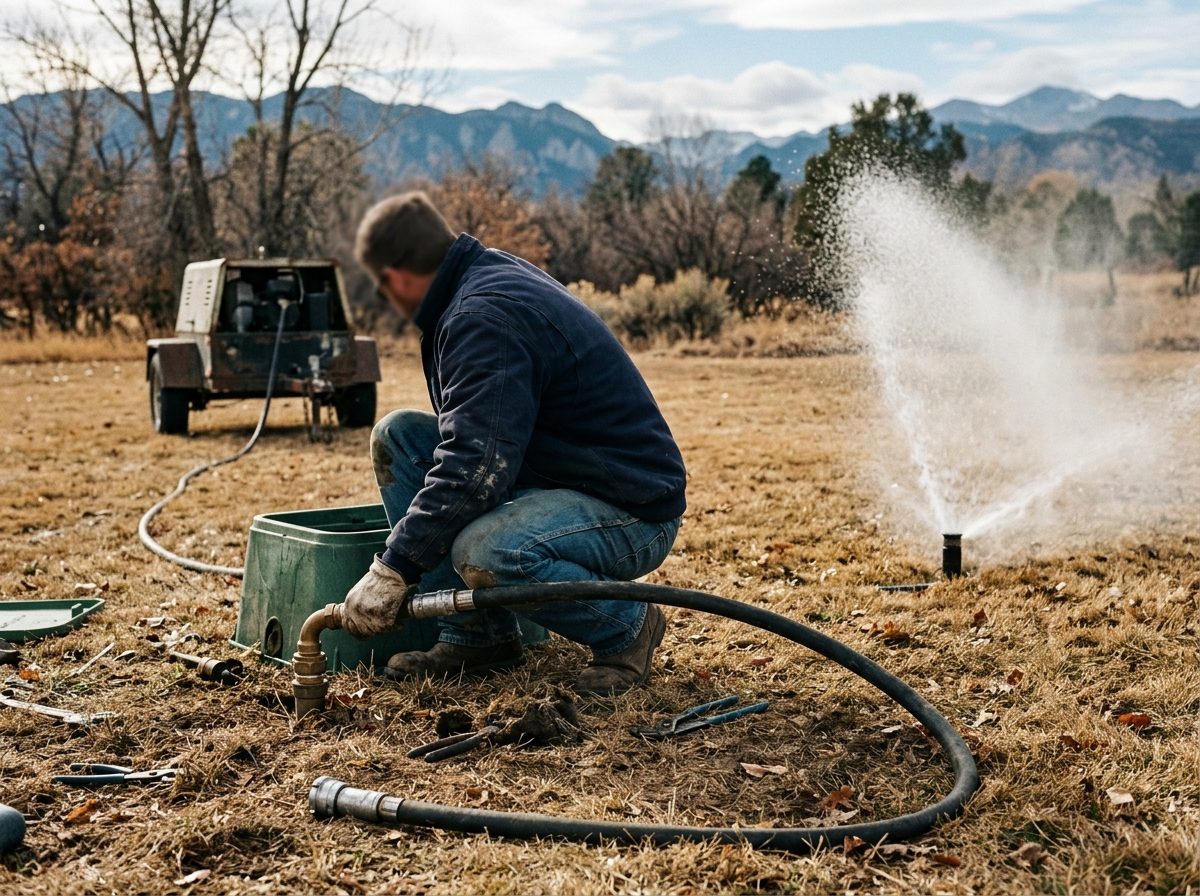
Pressure and the parts it kills
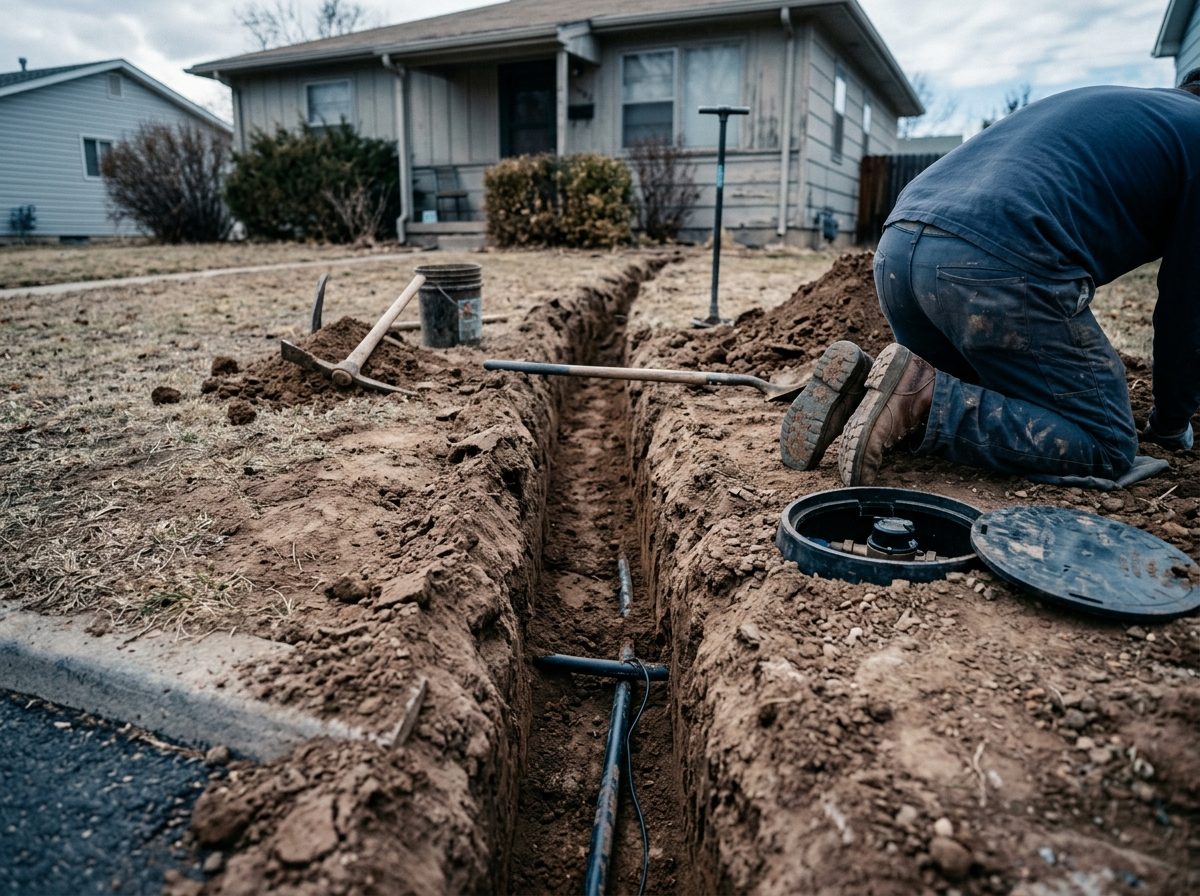
High static pressure is the most under-diagnosed problem in housing of this age. A regulator that has drifted, or was never set properly, passes street pressure through to fixtures that were not designed for it. The damage then arrives as a scatter of small failures: toilets running, taps dripping, a supply hose letting go, a heater relief valve discharging periodically.
Individually each looks like a worn part. Together they point at one cause, and an inexpensive gauge on an outdoor spigot answers it in a minute. Replacing a drifted regulator is far cheaper than replacing fixtures one at a time, and it protects the appliances behind it too.
Hard water on new fixtures
New pipe does not change the water. Northern Colorado supply carries a heavy mineral load, and scale collects in the water heater, coats electric elements, blocks aerators and stiffens fill valves regardless of how recently they were installed.
In a tankless unit the scale builds inside a compact heat exchanger, and the symptoms are gradual — longer waits for hot water, temperature drifting mid-shower, and eventually error codes. Descaling on a schedule is not optional maintenance here; it is what keeps the unit performing to specification. On a tank model, draining the sediment annually does the same job.
Tankless drifting hot and cold? Scale in the exchanger is the usual culprit.
Ask about descalingNothing between you and the wind
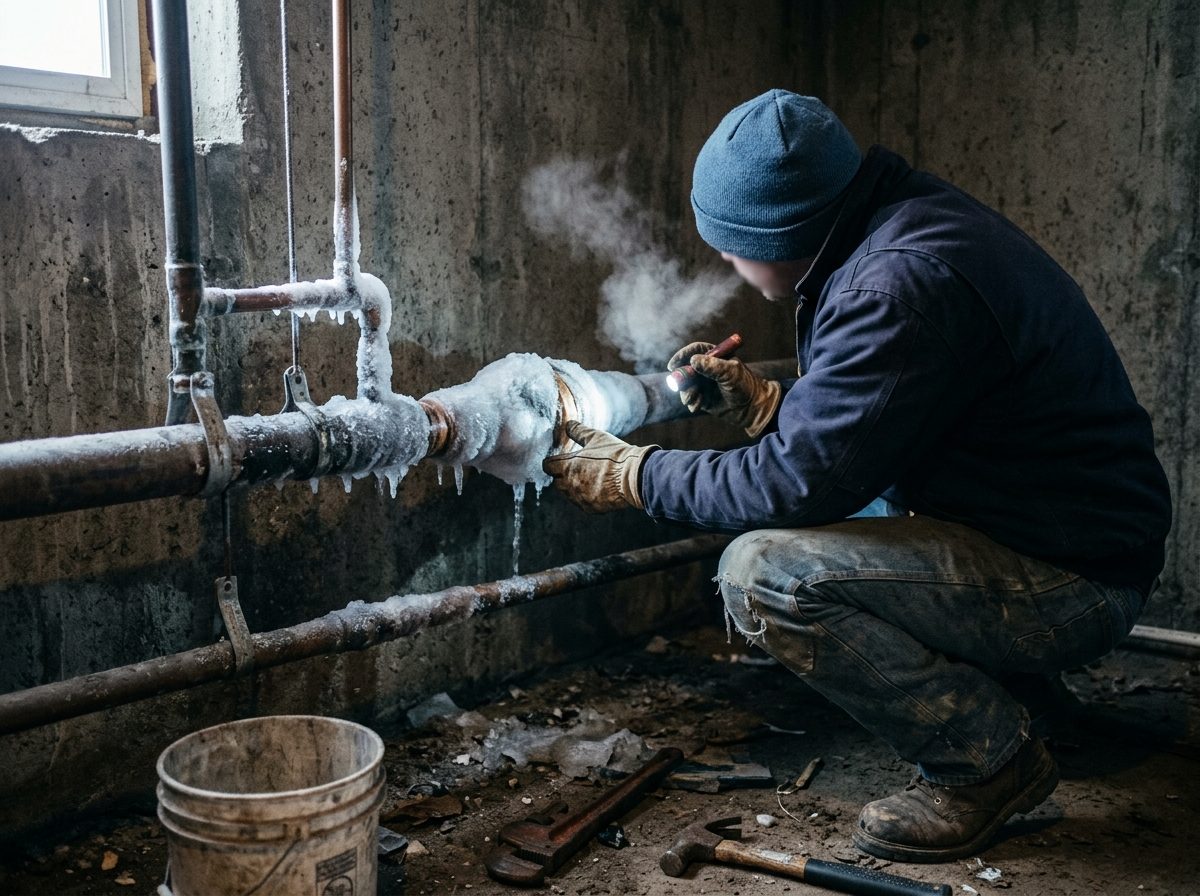
This is genuinely open ground. Wind removes heat from exposed pipe far faster than still air at the same temperature, and frost runs deeper than on sheltered streets in an older city. Hose bibs on the windward side of a house, garage walls and crawlspaces vented in summer are where trouble starts.
Irrigation is the seasonal certainty: extensive systems on generous lots hold water at low points and at the backflow device, and only compressed air clears them. Disconnect hoses too, and on the coldest nights open cabinet doors under sinks on exterior walls so household heat reaches the pipe.
Sprinklers still charged? Blowout season starts before the first hard freeze.
Ask about winterisingBefore the builder warranty expires
In a town built almost entirely within the last two decades, a large share of houses are inside or just past a builder warranty period, and that window is worth using deliberately. New construction does not fail less than older construction in its first years; it fails differently — from installation details and from the ground settling rather than from age — and most of what appears is covered while the warranty stands.
A short list covers most of what is worth looking for. Run every fixture, including the ones nobody uses, and watch for slow drains and gurgles, which point at venting done awkwardly rather than at blockages. Check under every sink and behind appliances for weeping connections and for stains that suggest a slow one. Watch for damp or staining on ceilings below upstairs bathrooms. Note any fixture where hot and cold seem reversed or where pressure is noticeably worse than elsewhere in the house. And look at the water heater’s relief valve discharge for signs it has been operating.
The outdoor items matter as much and are easier to forget. Hose bibs should be frost-free and should not weep. The irrigation backflow assembly should be where it can be reached and drained. Any sump discharge should fall away from the building rather than toward it. And the ground around the foundation should still slope away, which after a year or two of settling on new fill it frequently does not — which is a drainage matter with plumbing consequences, and exactly the kind of thing that is dealt with under warranty if it is raised in time.
Two checks for a newer house
Measure static pressure, and note the age of the water heater. Between them they cover most of the genuine financial risk in housing where nothing has aged out yet.
Nearby communities
Severance sits between Windsor, Eaton and Fort Collins in a fast-growing corner of Weld County.
Severance, Colorado
Severance plumbing questions answered
Because the small components fitted during construction have much shorter service lives than the building. Angle stops, flexible supply lines, fill valves, washer hoses and expansion tanks wear out on a scale of years rather than decades, and high static pressure shortens all of them further.
Screw an inexpensive gauge onto an outdoor spigot or a laundry connection with everything else off. Readings above the normal working range put every valve and seal in the building under continuous stress. If it reads high, the pressure regulator is the part to address rather than the fixtures.
Annually is a sensible default in mineral-heavy water, and heavier households benefit from more frequent service. The signs of leaving it too long are longer waits for hot water, temperature drifting during a shower, and error codes. It is routine maintenance rather than a repair.
The pipe being new does not change the water. For most households the return shows up in heater and appliance life rather than at the tap. Test first so hardness is a real number, then size to the household and confirm there is a drain available for the regeneration cycle.
Before the first hard freeze, which can arrive in October. Draining is not enough on most systems because low points and the backflow device hold water gravity cannot move. On exposed ground like this the wind makes an early blowout more important rather than less.
Because they were all installed at once. Houses built in one season get the same appliances fitted by the same crews, so they age and fail together. Treat it as a prompt to check yours: age, rust at the fittings, damp underneath and how quickly hot water runs out.
Check whether there is a pit. Many newer houses were built with a pit and no pump, reflecting a judgement about that lot in that year. In a finished basement, a pump and check valve are inexpensive against replacing flooring after a fast melt or a heavy storm.
Same-day is normal and a couple of hours is common for urgent problems, with Windsor, Fort Collins and Greeley all close. During a regional cold snap the whole corridor is busy at once, so expect an honest window plus advice for the wait.
Run every fixture and note slow drains or gurgling, which usually means venting rather than blockage. Look under sinks and behind appliances for weeping connections and old stains, check ceilings under upstairs bathrooms, and confirm hose bibs do not weep. Outside, check that the sump discharge and the ground both still fall away from the building after settling.
It has different ones. Age-related failure is not the issue; installation details and ground settlement are — awkward venting, connections not properly made, a lateral that has lost its fall as new fill consolidates, debris left in a line during the build. Those show up in the first few years, which is why the warranty window is worth using rather than assuming new means sound.
North Weld County, any hour
Severance, Windsor, Eaton, Fort Collins and Greeley.
(833) 621-2904 — answered 24/7, statewide.