Plumber in Fort Collins, CO — help on the phone
Home / Areas / Northern Colorado / Fort Collins
Fort Collins has a wider spread of housing ages than its reputation suggests. There is genuinely old building stock near the centre, decades of steady suburban growth around it, a large and heavily used rental sector near the university, and new subdivisions still going in at the edges. Each of those produces a different plumbing call, and the useful first question on the phone is simply how old the house is.
Old Town and everything after it
The oldest neighbourhoods carry the usual inheritance of pre-war construction: cast-iron drain stacks, clay sewer laterals and galvanised steel supply lines, much of it beyond any sensible service expectation. Cast iron corrodes from the inside, roughening until it holds waste at the low points and eventually perforating at the bottom of the pipe. Galvanised supply lines narrow until two fixtures cannot run at once and the water comes out discoloured after the house has sat. Clay laterals crack and take on roots at the joints, and there are plenty of mature trees here to supply them.
None of that is an emergency until it is, and the sensible approach on an older house is sequencing rather than doing everything at once. A camera inspection of the lateral, a pressure reading and the heater's age usually make the order obvious. Repiping can be staged by floor or by run; replacing a failing drain stack often jumps the queue because it is the failure that ruins finishes.
Post-war and later suburban housing has fewer material problems and more installation ones — regulators near the end of their life across a whole street, heaters installed in the same year failing in the same year, and additions where the venting arrangement was never quite right.
A rental city has rental plumbing
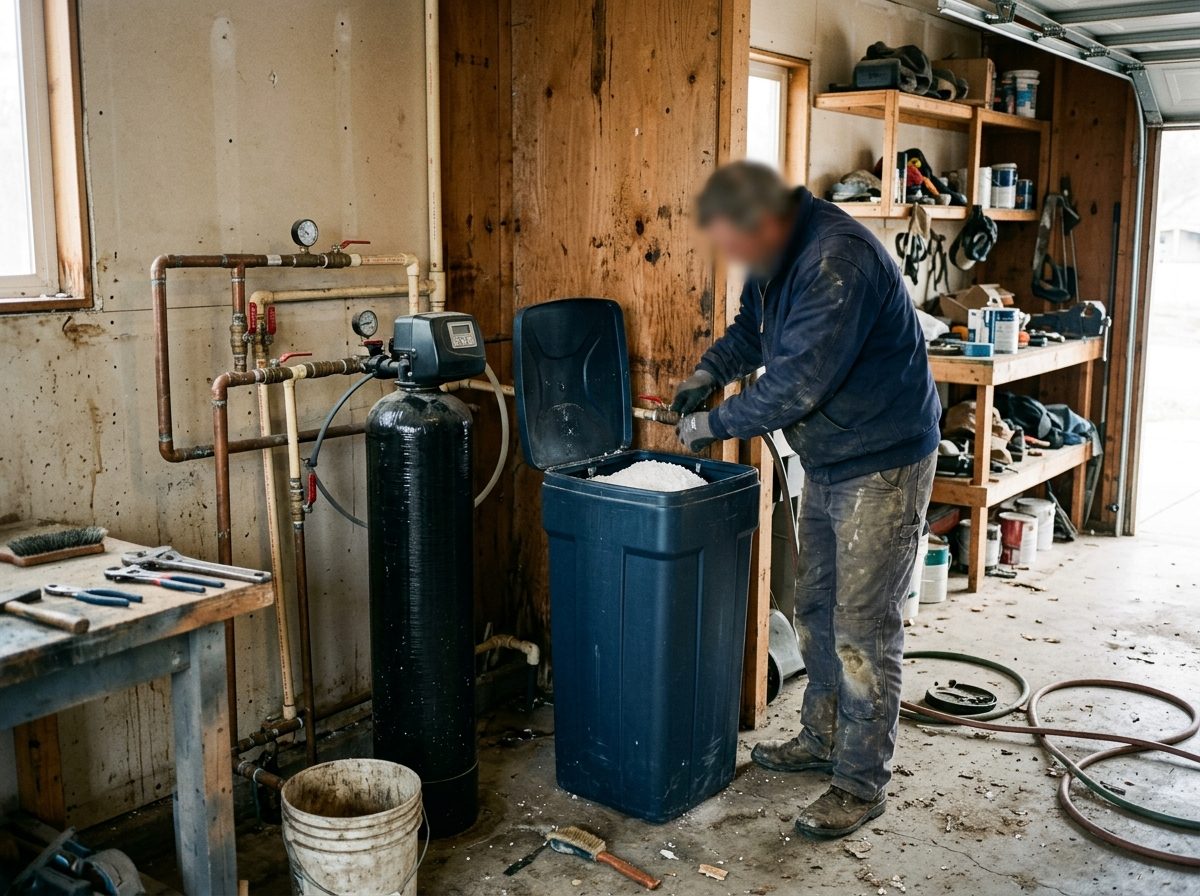
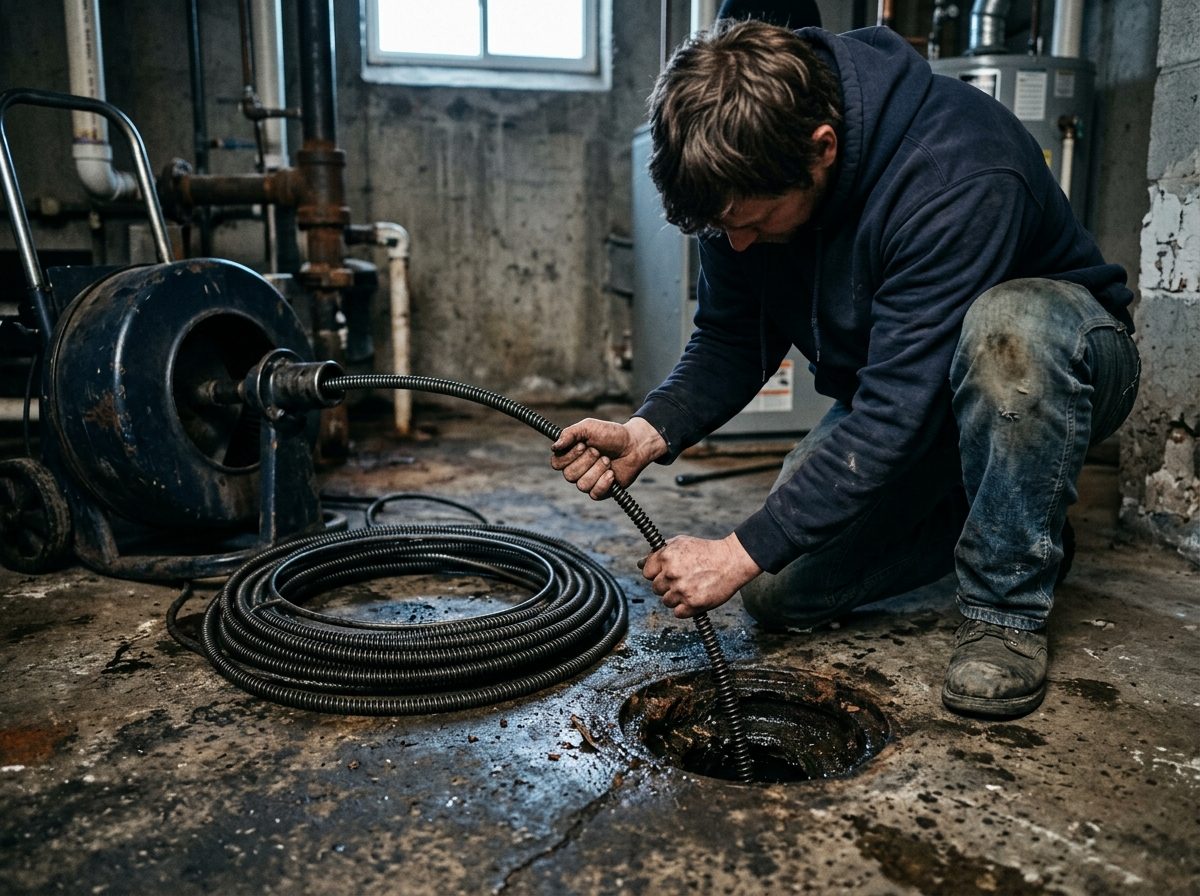
A large share of housing here is rented, much of it to students, and that produces a distinctive pattern of calls. Heavy fixture use. Drains that have never been properly cleared, only plunged. Repairs layered on repairs by successive owners and handymen. Garbage disposals fed things they cannot process. Toilets running for weeks because nobody living there pays the water bill.
For landlords the practical lesson is that scheduled maintenance is cheaper than emergency response, especially around turnover. Clearing main drains, checking supply hoses on washing machines, replacing tired toilet internals and confirming the water heater's condition between tenancies avoids the calls that arrive at midnight in January. For tenants, the important thing is knowing where the shutoff is and reporting a small leak early, because the same leak becomes a much bigger problem behind a wall.
Managing a rental turnover?One scheduled visit can cover drains, hoses, toilets and the heater check.
Book a turnover visitScale shortening everything? Testing first, equipment second — in that order.
Ask about hard water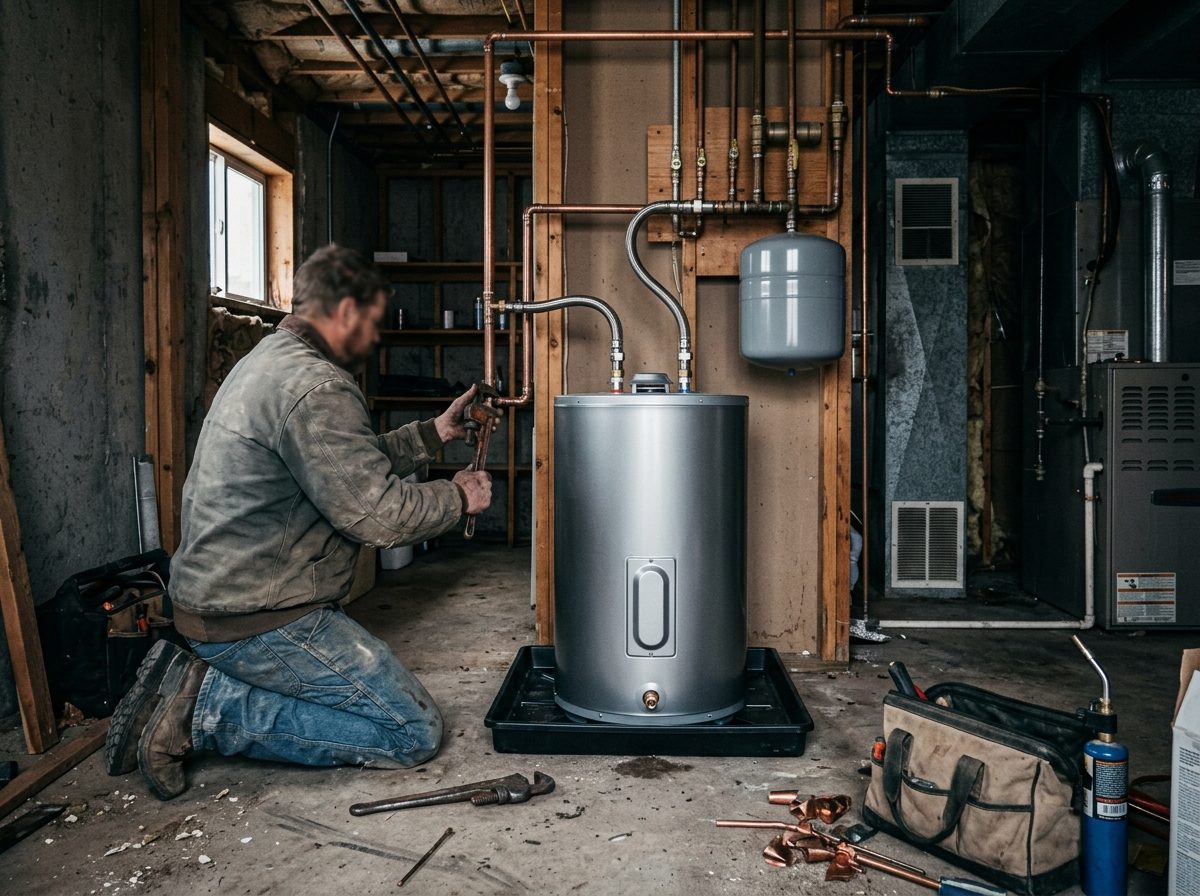
Hard water, heaters and fixtures
Northern Colorado water carries a substantial mineral load, and the cost of that is spread thin enough to be misattributed. Scale settles in the water heater and insulates the burner from the water, so run times lengthen and the unit ages faster. Electric elements coat and fail early. Aerators and shower heads clog. Toilet fill valves stiffen and start to weep.
The highest-return response is maintenance rather than equipment: flush the water heater annually, and clean aerators when flow drops at a single tap. If you are considering treatment, test the water first so hardness is a number rather than an impression, and size any softener to the household. An oversized unit costs more to buy and more to run for no additional benefit.
House empty over winter? There is a right way to leave it, and it is not the thermostat.
Ask about freeze protectionCold snaps and empty houses
Fort Collins freezes in sharp snaps, often with wind, and the pipes that split are the ones in spaces nobody heats — an exterior hose bib with a hose still attached, a garage wall, a crawlspace vent left open since summer, a kitchen line in an outside wall. Disconnecting hoses in October prevents a large share of it, because a connected hose holds water against the bib and defeats its frost protection.
The empty-house version of the problem matters here too. Student housing sits vacant over winter break, and second properties sit vacant longer. A house with nobody in it has no running taps and nobody to notice the furnace tripping, which is how a cold snap becomes a burst pipe with hours of unattended water behind it. If a property will be empty through a cold stretch, either winterise it properly or make sure someone local can check it and the heat is genuinely reliable.
If a line stops flowing
Close the main shutoff before thawing anything. Ice can split a pipe without releasing water while the blockage is still frozen, and the leak starts when it thaws — often inside a wall. With the water off you get a controlled repair instead of a flood.
Nearby communities
Fort Collins anchors the north end of the Front Range, with Loveland, Windsor, Wellington and the Larimer County foothills close by.
Fort Collins
Fort Collins plumbing questions answered
Almost always the house rather than the supply, and usually galvanised steel pipe that has narrowed internally over decades. Testing pressure at an outdoor hose bib separates the two: if what arrives at the house is normal and interior flow is not, the pipe is the constraint. Repiping the affected runs solves it, and it can be staged rather than done all at once.
Slow drains upstairs that clear briefly and return, a persistent smell near the stack, damp or staining on the wall around it, and flaking rust at its base in the basement. Failure is gradual until it is not. Because the stack usually runs inside a finished wall, much of the repair cost is access and finishes, which is why looking at it early is worth doing.
For many households the money comes back in water heater and appliance life rather than in anything obvious at the tap. Get a water test so you know hardness in real numbers and whether iron is present, since that changes the equipment. Then check there is a practical place to plumb the loop and a drain for regeneration before committing.
Clear the main drains rather than waiting for a blockage, replace washing machine supply hoses if they are more than a few years old, renew tired toilet internals, and check the water heater age and condition. That short list removes most of the midnight calls. It is also the cheapest time to do it, because the property is empty and nobody is inconvenienced.
Either winterise properly — water off, system drained, traps and appliances dealt with — or keep the heat genuinely reliable and have someone check the property. Leaving a thermostat at a low setting and hoping is how burst pipes happen, because a furnace fault or a power cut has hours to do damage with nobody there to notice.
Same-day is normal in town and a couple of hours is common for urgent problems. Addresses out toward Laporte, Bellvue and the foothills add drive time, and during a hard freeze the whole region is busy at once. You will get a realistic window rather than an optimistic promise.
Often not. A hum with no rotation usually means something is jamming the impeller, and most units have a hex socket underneath that lets it be freed by hand with the power off. If it trips the reset repeatedly after that, or leaks from the body rather than a connection, replacement is the sensible answer. Never put a hand inside the chamber, even with the switch off.
Gurgling points at venting rather than at a simple blockage. When a drain cannot draw air properly it pulls it through the trap instead, which makes noise and slows flow. Causes include a blocked vent stack, a partially blocked branch or a fixture added without adequate venting. It is worth diagnosing rather than repeatedly pouring products down the drain.
Northern Colorado, any hour
Fort Collins, Loveland, Windsor, Wellington and the Larimer County communities nearby.
(833) 621-2904 — answered 24/7, statewide.