Plumber in LaPorte, CO — one call, any hour
Home / Areas / Northern Colorado / LaPorte
LaPorte sits where Fort Collins stops and the country starts, at the mouth of the Poudre canyon. Some properties here are on town service and some on private wells, lots are generous, and cold air drains out of the canyon on winter nights in a way the city a few miles east does not experience.
Where Fort Collins stops
The housing is a mixture: older properties that predate the city's growth, newer custom houses on land, and everything in between. Lot sizes mean outdoor water is a bigger part of the picture than in a suburb, and several properties have outbuildings with their own supply.
The first useful thing to establish is therefore the source and the scope — town service or well, and how many structures take water. That decides both what is likely wrong and which trade should attend.
Town service or private well? Say which — it decides which trade is sent.
Ask what applies to you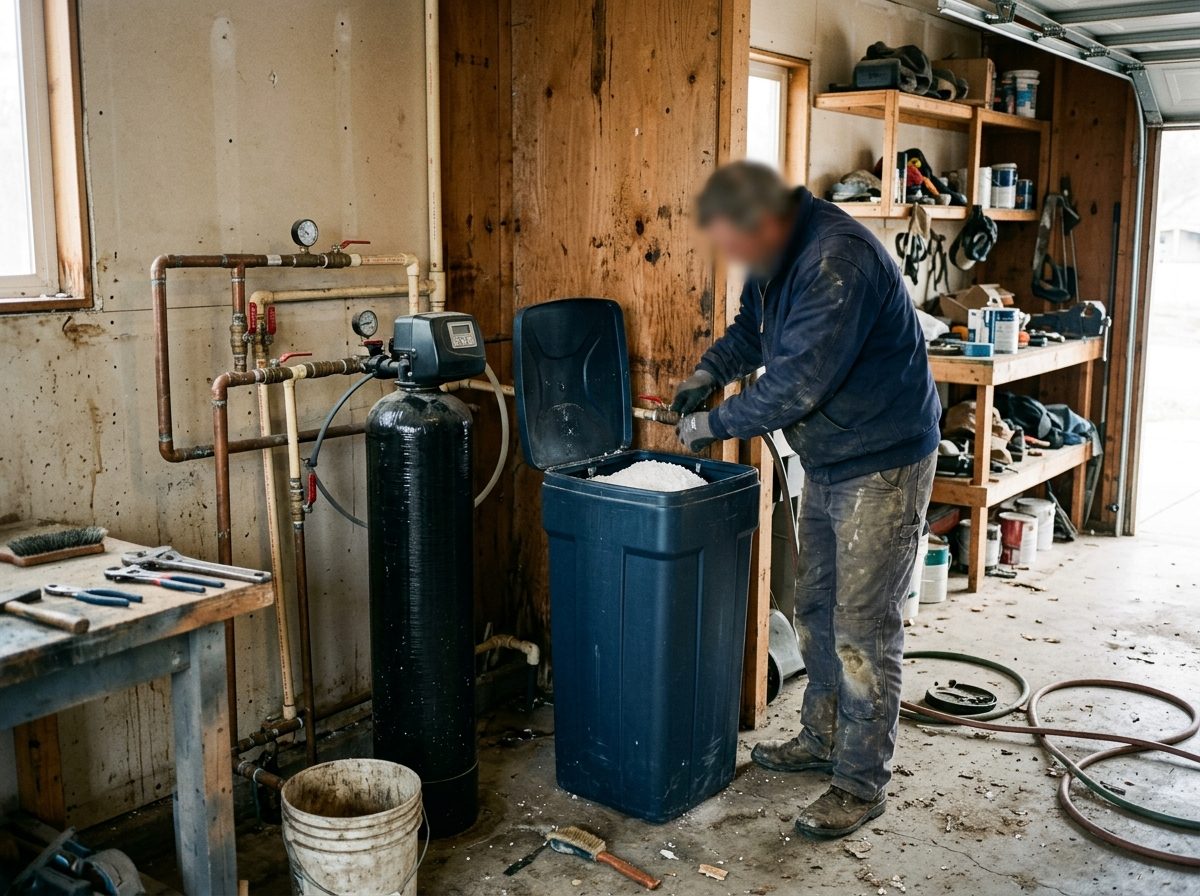
Wells, septic and mixed supply
On a well, failures cluster in three places: a pressure tank that has lost its air charge and is cycling the pump every few seconds, a pressure switch that has stopped making contact, or a pump at the end of its life. All three present as poor pressure or nothing at the tap, so what the gauge reads and whether the pump runs are the two most useful things to report.
Septic systems need pumping every few years — three to five suits most households — and they signal trouble by slowing every drain in the building at once rather than one fixture. What goes down the drain matters more here than on a municipal system, because the tank has to process it.
Leaks on a large lot
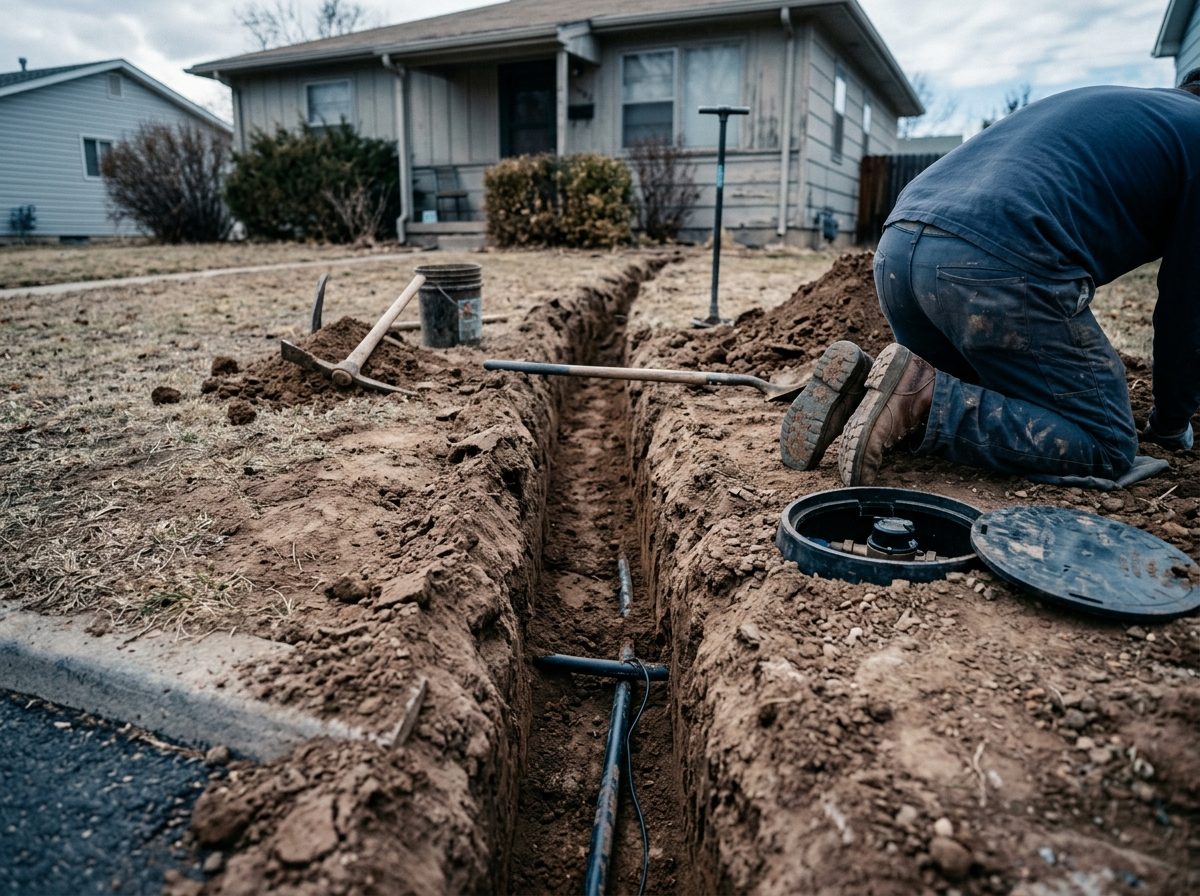
On a generous lot with buried runs to outbuildings, a leak can continue for weeks without anything visible changing. The signs are indirect: pressure that has slowly fallen, ground that stays damp or unusually green, a pump running more often than it used to, or water use that climbed with no change in habits.
Confirming it is straightforward and worth doing before the visit. With everything shut off, watch the gauge or the meter for an hour; movement means water is leaving the system. Where isolation valves exist between structures, closing them one at a time narrows which run is at fault before anyone digs.
Pump running more than it used to? That often means a leak somewhere on the system.
Ask about finding a leakCold air off the canyon mouth
Cold air drains downhill and pools at canyon mouths, so overnight temperatures here can sit well below what the regional forecast suggests. Crawlspaces, exposed runs and pipe in additions built to a lower insulation standard than the main house are where trouble starts.
Where a line must stay in service, insulation and air sealing come before heat tape, and any existing tape needs testing before the season because it fails silently. Where a building or a branch is not needed through winter, isolating and draining it removes the risk rather than managing it.
Line stopped flowing overnight? Close the main shutoff before anything gets thawed.
Ask about a frozen pipeAppliances that burn fuel need air
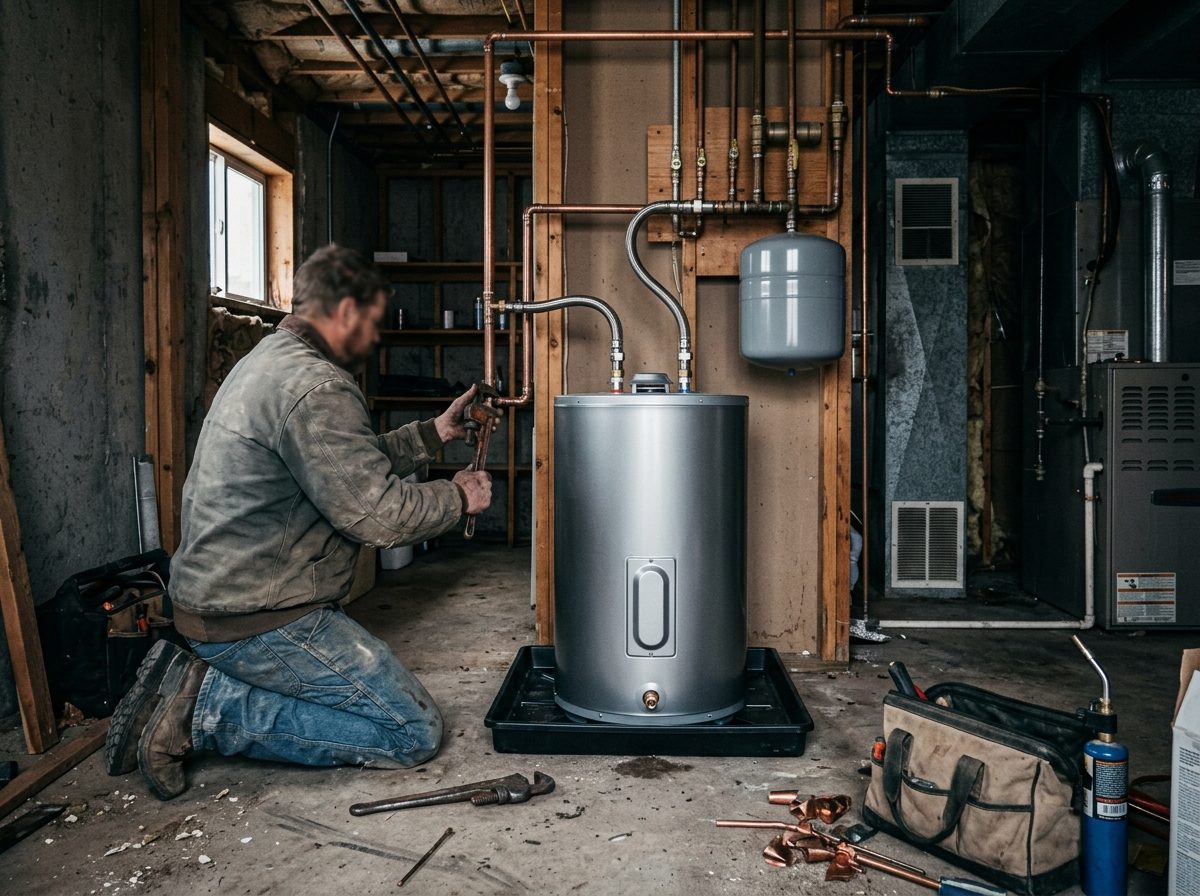
A gas or propane appliance with an open flame needs a supply of air to burn, and it needs a route for its exhaust to leave. Both of those were supplied incidentally by older houses, which leaked air everywhere. As houses get sealed up — new windows, insulation, air sealing done properly — that incidental supply disappears, and the appliance in the basement is left competing for air with everything else in the building.
The failure this produces is called backdrafting, and it is the one plumbing-adjacent fault with a genuinely serious outcome. Instead of exhaust rising up the flue, it spills back into the room, bringing combustion products including carbon monoxide with it. It is made more likely by anything that depressurises the building — a powerful kitchen extractor, a clothes dryer, a bathroom fan, or a furnace drawing on the same space.
The signs are worth knowing because they are subtle: soot or scorching around the draft hood of a water heater, a smell of exhaust near the appliance, condensation on windows when it runs, or a pilot that goes out when the extractor is switched on. Any of those warrants a proper look rather than watching. The remedy is usually providing combustion air deliberately — a duct, or a sealed-combustion appliance that takes its air from outside and does not depend on the room at all. A working carbon monoxide alarm near sleeping areas is not a substitute for that, but it is the thing that makes the difference if something is wrong.
Autumn short list
Hydrants and hose bibs tested, irrigation cleared with compressed air, heat tape checked, and any unused branch isolated and drained. One visit covers all of it.
Nearby communities
LaPorte sits just north-west of Fort Collins at the mouth of the Poudre canyon, with Bellvue and Wellington nearby.
LaPorte, Colorado
LaPorte plumbing questions answered
It depends where the fault is. Everything from the pressure tank into the house is ordinary plumbing. The pump, drop pipe and wiring down the casing are well-system work and need specific equipment. Saying what the gauge reads and whether the pump runs usually settles which trade should attend.
That is short-cycling, and the usual cause is a pressure tank that has lost its air charge. The tank holds a cushion behind a bladder so the pump runs once every few minutes rather than constantly. Left alone it wears the pump out quickly, so it is worth fixing promptly.
With everything shut off, watch the pressure gauge or the meter for an hour. Movement means water is leaving the system. If there are isolation valves between buildings, closing them one at a time narrows which run is losing water, which saves considerable excavation.
Three to five years for most households, sooner where the tank is small or the household large. Every drain slowing at once rather than one fixture is the classic signal, along with unusually lush growth over the field or a backup after a busy weekend.
Because cold air sinks and pools at the mouth of a canyon, so the temperature here can sit several degrees below the regional figure. It is why exposure matters more than the forecast implies, and why insulation and air sealing on vulnerable runs pay off here.
Tape can look intact and be dead. Age, rodent damage and being unplugged during unrelated work are the usual causes, none of them visible at a glance. Test it before the freeze season and check the full length of the run, because tape often covers less pipe than assumed.
Usually same-day for urgent problems, since Fort Collins is minutes away. Properties further up toward the canyon or out toward Livermore add drive time, and winter access can matter. You will get an honest window plus instructions on what to shut off while you wait.
Often, but test first. A well may carry iron or other results as well as hardness, and each needs different treatment. Sizing to the household matters more than the brand, and there needs to be somewhere sensible to fit the equipment along with a drain for the regeneration cycle.
It can. An open-flame appliance takes its combustion air from the room, and a tightened house plus a powerful extractor or dryer can pull exhaust back down the flue instead of letting it rise. Soot around the draft hood, an exhaust smell, or a pilot that dies when the extractor runs are the signs. Providing combustion air deliberately is the fix.
Near sleeping areas, and on every level that has fuel-burning appliances — which in most houses means one near the bedrooms and one in or near the mechanical space. Test them rather than assuming, and replace them at the interval on the unit, since the sensors expire whether or not the alarm still chirps. They are not a substitute for correct venting, but they are what catches it.
North-west of Fort Collins
LaPorte, Bellvue, Wellington and the Poudre canyon mouth.
(833) 621-2904 — answered 24/7, statewide.