Plumber in Red Feather Lakes, CO — 24/7 by phone
Home / Areas / Northern Colorado / Red Feather Lakes
Red Feather Lakes is a high, remote, largely seasonal community, and its plumbing profile is unlike anywhere on the Front Range. A great many properties stand empty for months, winters are long, and the defining event is a freeze in a building with nobody in it.
A seasonal community at altitude
Much of the housing here is cabins and second homes used in summer and at weekends. An occupied building is a monitored building — taps run, warm air moves, someone notices when the heat stops. An empty one has none of that, so a tripped furnace, a power cut, an empty propane tank or a dead heat tape becomes a burst pipe with days of unattended water behind it.
That is the pattern behind almost every expensive call up here, and it is why the valuable conversation happens in September rather than in January.
Closing up for the season? The pre-winter conversation prevents the expensive one.
Ask about winterising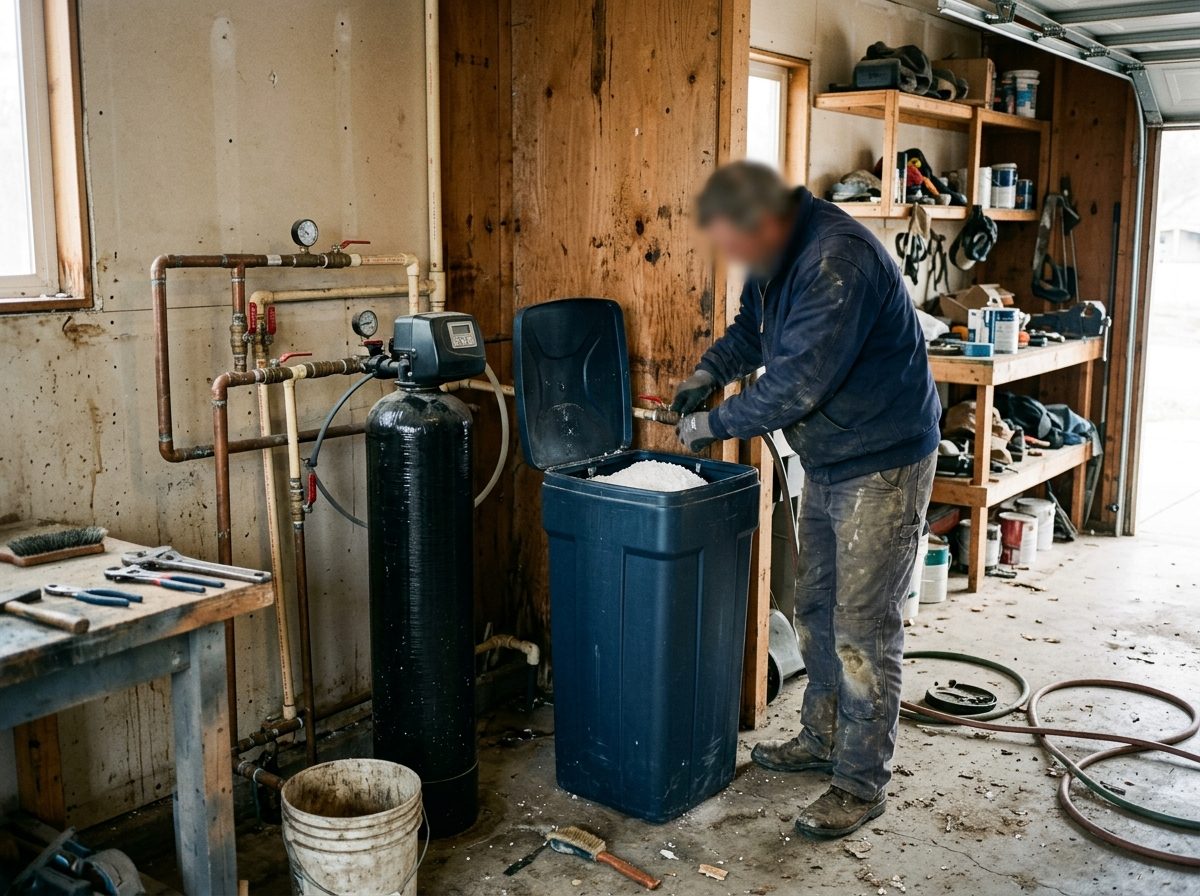
Draining is the reliable answer
For a building that will stand empty through winter at this elevation, draining is the only genuinely dependable strategy. That means water off at the source, the system drained from its lowest point, taps opened so air can replace water, the heater and anything else holding water dealt with, and antifreeze rated for plumbing in traps and toilet bowls. Never automotive antifreeze.
Done thoroughly, the building can then sit at any temperature without freeze risk, which is a far better position than depending on a heat source all winter in a place nobody visits. Done partially, it is a gamble with an expensive downside — a half-drained system holds water in exactly the low points that split.
Wells and long winters
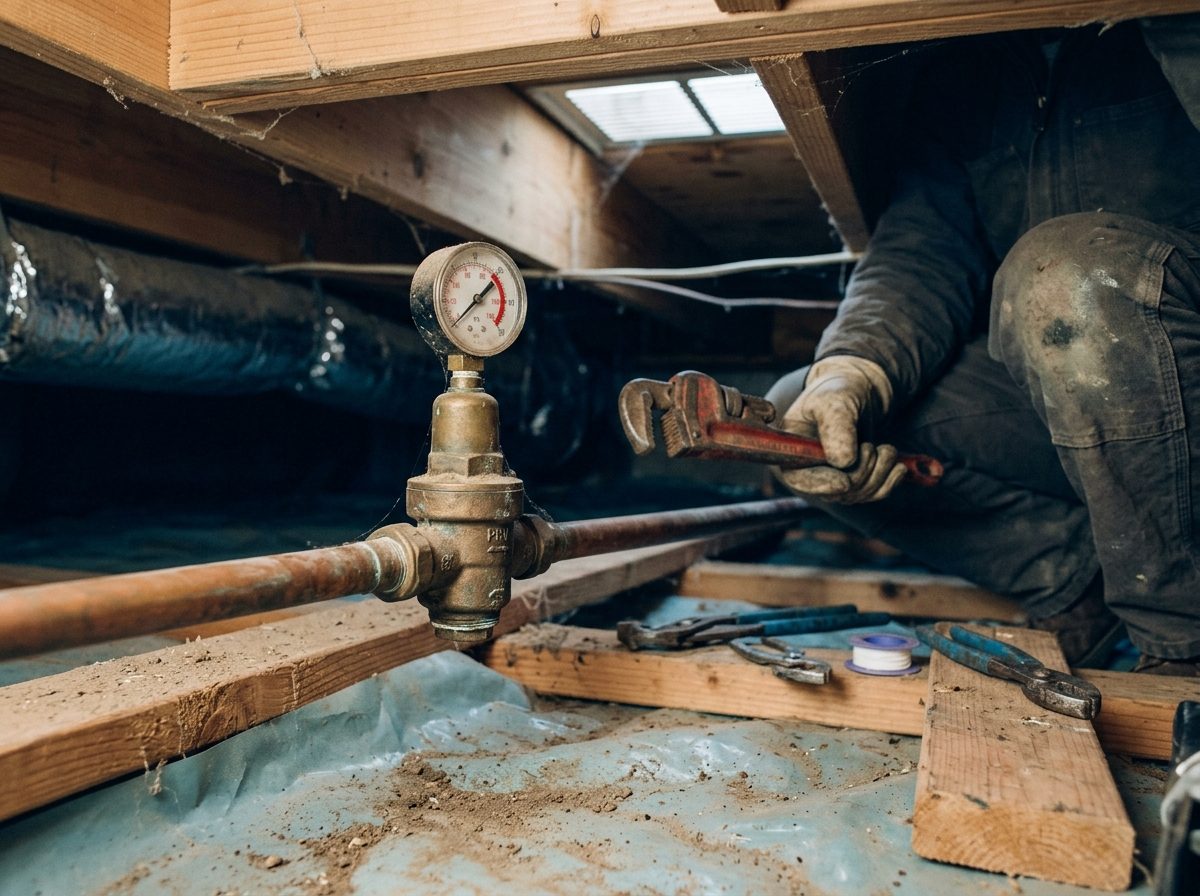
Most properties here are on private wells with septic. The equipment is the same as anywhere, but the conditions are harder: well houses freeze, snow limits access for pulling a pump, and depth to water varies more in fractured rock.
The practical consequence is that repairs are more weather-dependent to schedule, which makes replacing an ageing pump before it fails considerably more attractive here than it would be in town. Three faults account for most calls — a waterlogged pressure tank cycling the pump, a failed pressure switch, and a pump at the end of its life — and what the gauge reads is the most useful thing to report.
Pump showing its age? Up here, replacing it on a schedule beats a winter failure.
Ask about planned workAccess decides everything
Distance is long and the roads are not always open. Snow, ice, unplowed private drives and long approaches all determine whether anyone can reach a property, and in a storm the honest answer is sometimes several days rather than tomorrow.
That reality is worth planning around. If you own something here that you do not occupy, having someone local able to check it, and a remote temperature alarm you actually receive, is worth more than any repair arrangement. And when you do call, describe the road and the drive honestly — it is what determines who can come and when.
Snowed in with a burst line? Shut the water off and drain the lowest tap while you wait.
Ask what to do right nowArriving at a cold cabin
Close the main shutoff before applying heat anywhere, then check the lowest ceiling and the crawlspace for damp. A line that has already split starts leaking the moment it thaws.
Where the equipment lives
At this elevation the location of mechanical equipment matters as much as its specification, and it is the thing most often decided by convenience rather than by consequence. A pressure tank, a filter housing, a softener or a pump control mounted somewhere that drops below freezing is not a component with a problem — it is a component that will burst, and it will do so in the week nobody is at the property.
The requirements pull against each other, which is why it needs thinking about rather than defaulting. Equipment needs to be inside the heated envelope or in a space that is genuinely and reliably kept above freezing, not a garage or a crawlspace that is merely usually warm enough. It needs service access, because a filter that cannot be reached will not be changed and a tank that cannot be reached will not be checked. Regenerating equipment needs a drain. And the whole assembly wants to be somewhere a leak would be noticed and would not ruin anything — which argues against a finished room and in favour of a proper mechanical space with a floor drain.
Two additions make a real difference in a building that is left. A water alarm on the floor of the mechanical space costs very little and reports the failure that otherwise runs for a fortnight. And an isolation valve immediately upstream of the equipment means a failed filter housing or softener can be taken out of circuit without shutting the whole building down — which turns an emergency into an inconvenience while a visit is arranged.
Nearby communities
Red Feather Lakes sits high in north-west Larimer County, with Livermore, Bellvue and LaPorte on the way in.
Red Feather Lakes
Seasonal property questions answered
Water off at the source, the system drained from its lowest point, taps opened so air can replace water, the heater and any appliance holding water dealt with, and antifreeze rated for plumbing in traps and toilet bowls. Never automotive antifreeze. Done thoroughly, the building can sit unheated without freeze risk.
Not much, and sometimes worse than useless, because water left in low points is exactly what splits when it freezes. Partial draining also gives a false sense of security. If the building will be empty through winter, it is worth having the job done properly once rather than approximated annually.
Usually, with patience and gentle even heat applied from the open end of the line toward the blockage so meltwater can escape. Torches and rapid heat split pipe and start fires. Shut the water off first, because if the pipe has already cracked, thawing simply reveals it.
Longer than anywhere else in the region, and in a storm it can be several days rather than hours. That is why the phone advice comes first — shutting the water off and draining the lowest fixture is what limits the damage. Describe the road and drive honestly so you get a realistic answer.
Up here the case is strong. Pulling a pump requires equipment and access, both of which snow restricts, so a failure in January can mean a long wait without water. If the pump is old and the system has been short-cycling, pricing a planned replacement in autumn is sensible.
Someone local who can physically check it, plus a remote temperature alarm you actually receive. Repair arrangements matter less than early warning here, because the difference between a small problem and a catastrophic one is how many days water runs before anyone notices.
For gas units, yes. Thinner air reduces combustion output, so manufacturers derate above certain elevations and may specify different models. Combined with very cold inlet water, that is why a heater which coped in summer falls short in winter. Size for winter conditions and include venting and combustion air.
It depends on use rather than years, and seasonal properties are easy to misjudge — a cabin full of people for six summer weekends can load a tank more than a quiet household does in a year. Every drain slowing at once is the signal, and pumping on a set interval is safer than guessing.
Not safely at this elevation. They hold water, and a space that is usually warm enough is not the same as one that reliably is — a garage or vented crawlspace will eventually take them below freezing. Put them inside the heated envelope with service access and a drain, and fit an isolation valve upstream so a failure can be taken out of circuit.
A water alarm on the mechanical space floor and a remote temperature alarm, both of which are inexpensive and report the failure while there is still time to act. The expense in an empty building is almost never the failure itself — it is the fortnight before anybody notices. An automatic flow-based shutoff is the next step up.
North-west Larimer County
Red Feather Lakes, Livermore, Bellvue and the surrounding high country.
(833) 621-2904 — answered 24/7, statewide.