Plumber in Drake, CO — one call, any hour
Home / Areas / Northern Colorado / Drake
Drake sits in the Big Thompson canyon on the road between Loveland and Estes Park. Properties here are strung along the canyon floor and up the side draws, on private wells and septic, and the geography dictates almost everything about how a plumbing call goes.
In the Big Thompson canyon
Canyon ground is variable — sand, cobble and rock in unpredictable layers — which affects both how buried pipe behaves and how much work it is to reach. Excavation estimates carry more uncertainty here than on the plains, and that makes anything avoiding an open trench worth asking about early.
The canyon also has a flood history, and repair work done in emergency conditions was sometimes intended as temporary. What is in the ground now may not match what any drawing shows, so a locate before excavation is a practical necessity rather than a formality.
Facing a dig for a buried line? Ask whether it can be replaced without an open trench.
Ask about trenchless options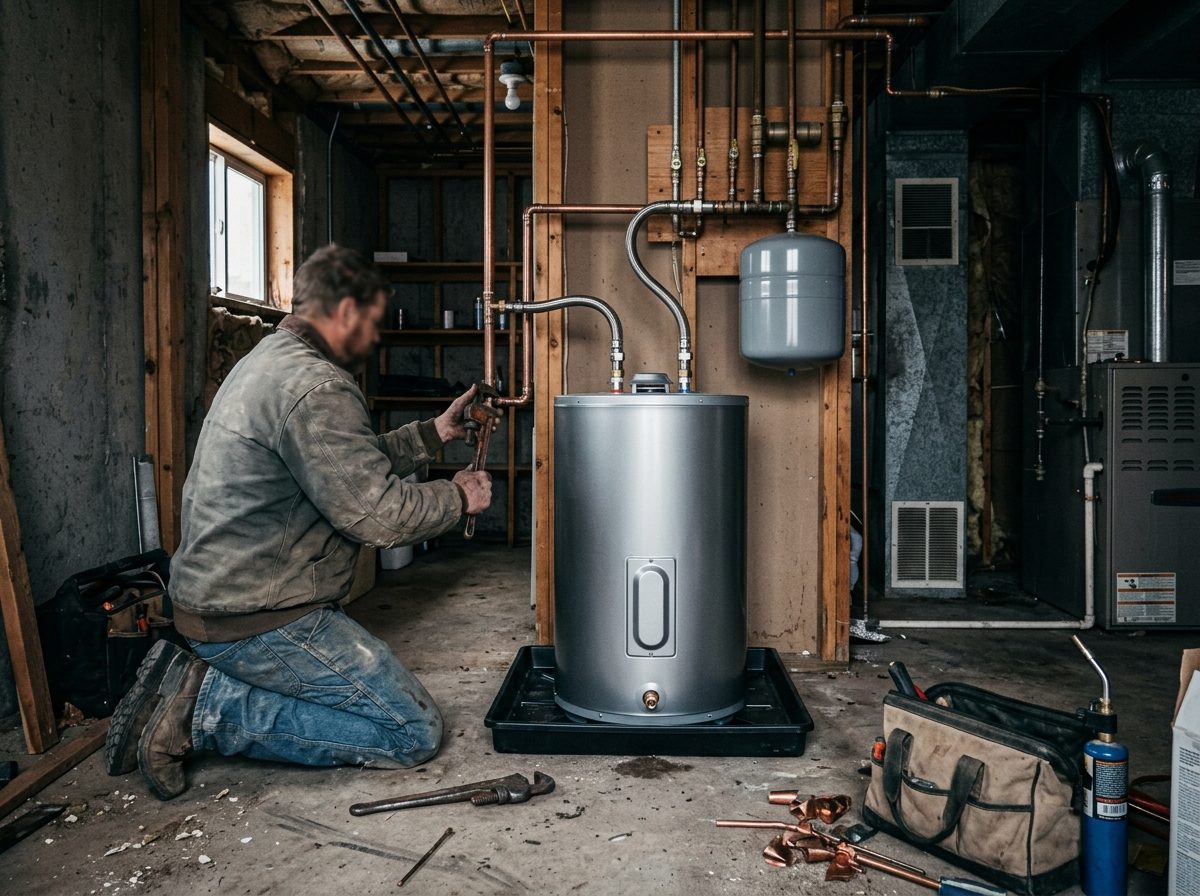
Canyon cold and shaded ground
Cold air drains downhill and pools on the canyon floor, so overnight temperatures here can sit well below the regional forecast. Add slopes that get little winter sun and the practical result is that pipe stays cold far longer than the daily high suggests.
Crawlspaces, exposed runs under decks, well houses and additions built to a lower insulation standard are where the trouble starts. Where a run must stay live, insulation and air sealing come before heat tape, and any existing tape needs testing each autumn because it fails silently — through age, rodent damage, or having been unplugged during other work.
Properties that stand empty
A meaningful share of property in the canyon is used seasonally or let to visitors, and vacancy is what turns a cold snap into a burst pipe. An empty building has no running taps, nobody to notice a heating fault, and hours or days of unattended water once a line lets go.
For anything standing empty through winter, draining is the dependable answer: water off at the source, the system drained from its lowest point, taps opened so air can replace water, the heater and appliances dealt with, and antifreeze rated for plumbing in traps. Done properly the building can sit at any temperature; done partially it holds water in exactly the low points that split.
Property empty or let seasonally? Draining it properly removes the risk rather than managing it.
Ask about winterisingThe road decides the answer
Canyon roads, ice, single-lane sections and steep private drives all determine whether anyone reaches a property, and in a storm the honest answer may be tomorrow rather than today.
Describe the access properly when you call — road conditions, whether the drive is plowed, how far the last stretch runs. It changes who takes the job and how long the window is, and it prevents the worst outcome, which is a plumber driving up the canyon and turning back.
Snowed in with a burst line? Shut the water off and drain the lowest tap while you wait.
Ask what to do right nowBefore any excavation
Have utilities located, and mention any flood-era repair work you know about. What is in the ground here frequently differs from what the original drawings show.
Where a pump sends its water in winter
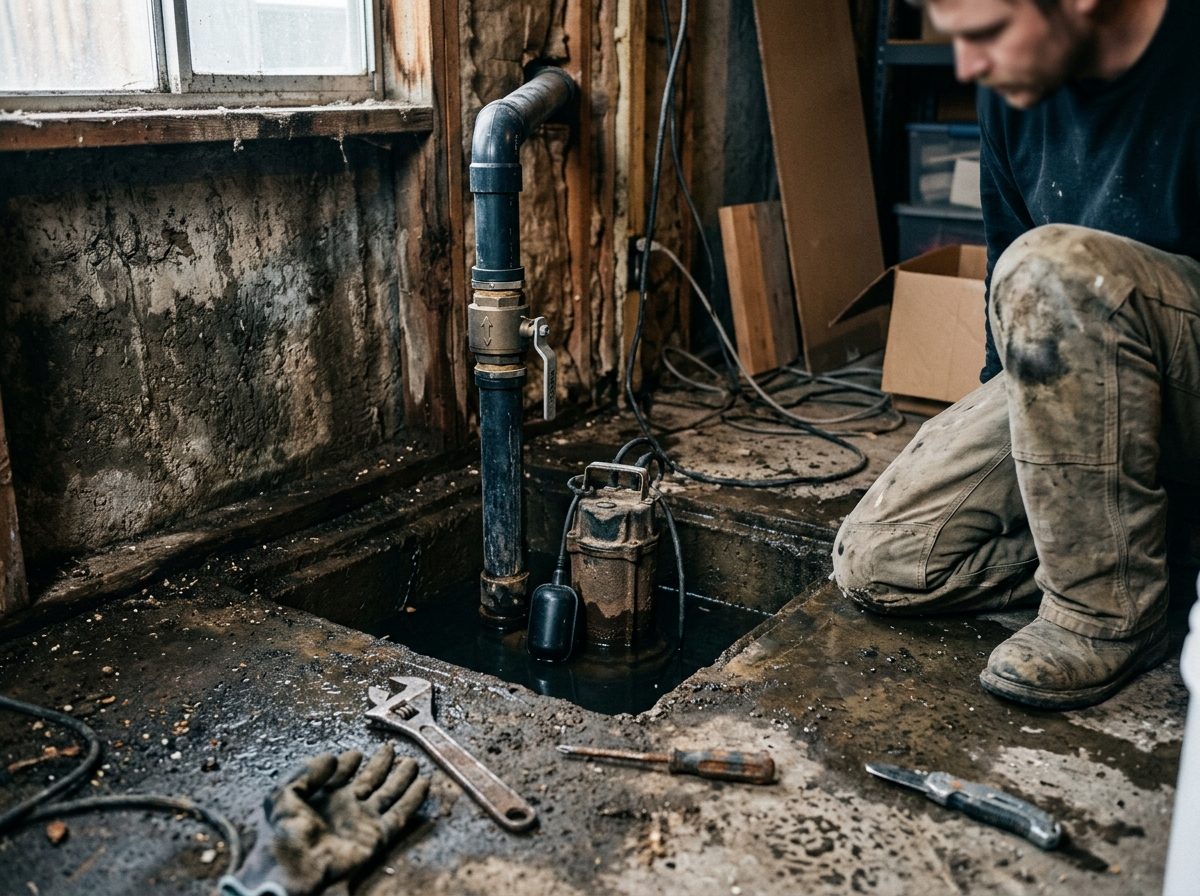
A sump pump that works perfectly in April can be useless in January for a reason that has nothing to do with the pump: the discharge line freezes. Water sitting in a pipe that runs outside and uphill has nowhere to drain, it freezes solid, and the next time the pump starts it is pumping against a plug. The pump then either runs continuously against a closed line or trips, and the pit fills behind it.
The details that prevent this are all about the discharge rather than the pump. The line should fall away from the building so it empties itself between cycles rather than holding a column of water. It should discharge somewhere that does not drain back toward the foundation, which in a canyon means thinking about where the ground actually slopes rather than where is convenient. And it should terminate in a way that cannot be blocked by ice, snow or debris — a discharge that ends buried in a snowbank is a discharge that will be closed for the winter.
It is also worth knowing what a pump sounds like when it is pumping against a blockage, because it is distinctive: it runs, the motor note stays loaded, and the water level in the pit does not drop. If that is what you are hearing, switching it off is better than letting it run, and the thing to investigate is the pipe outside rather than the pump inside.
Nearby communities
Drake sits in the Big Thompson canyon between Loveland and Estes Park, with Glen Haven and Masonville nearby.
Drake, Colorado
Big Thompson canyon questions answered
It is worth knowing about rather than worrying over. Work done under pressure in an emergency was sometimes intended as temporary, and lines were occasionally rerouted without records catching up. An inspection of the sewer or septic connection and a look at the water service tell you what is actually there.
Often, yes. Trenchless methods pull a new line along the path of the old one from access pits at each end, which matters where the ground is cobble and rock. Whether it suits depends on the route, depth and condition, so an assessment comes first.
Because cold air sinks and pools on a canyon floor, so temperatures here can sit several degrees below the regional figure. Shaded slopes make it worse by keeping ground and structures cold through the day. It is why exposure matters more here than the forecast implies.
Water off at the source, the system drained from its lowest point, taps opened so air can replace water, the heater and anything else holding water dealt with, and antifreeze rated for plumbing in traps and toilet bowls. Never automotive antifreeze. Done thoroughly, the building can sit unheated safely.
Sometimes, and access rather than distance decides it. Ice, snow and single-lane sections all matter, and some contractors will not attempt certain drives in winter. Describing the last stretch honestly means whoever takes the call arrives equipped, and in a storm you will get a realistic answer.
Tape can look intact and be dead. Age, rodent damage and being unplugged during unrelated work are the usual causes, none of them visible from a glance. Test it before the freeze season and check the full length of the run, since tape often covers less pipe than assumed.
It depends where the fault is. From the pressure tank into the house is ordinary plumbing. The pump, drop pipe and casing wiring are well-system work needing specific equipment. Saying what the gauge reads and whether the pump runs settles which trade should come.
Close the main shutoff and drain from the lowest fixture, then switch off power to affected areas at the breaker if fittings or sockets are involved. Photograph everything before cleanup for any claim, and note how long the building was empty, because that affects both repair and claim.
Usually the discharge rather than the pump — most often a frozen or blocked line outside. The pump is working against a closed pipe, which it cannot clear and which will damage it if it keeps trying. Switch it off and check where the line terminates. A discharge that falls away from the building and cannot be blocked by snow avoids the whole problem.
It depends what is below it. Where the pit protects finished space or mechanical equipment, a backup earns its cost the first time the power fails during a storm — which is exactly when the pump is needed. Where nothing of value sits on the floor, a single well-maintained pump and an annual test before runoff is a reasonable position to take.
The Big Thompson canyon
Drake, Glen Haven, Masonville, Estes Park and Loveland.
(833) 621-2904 — answered 24/7, statewide.