Plumber in Divide, CO — one call, any hour
Home / Areas / Colorado Springs & Pikes Peak / Divide
At nine thousand feet, the number on an appliance label stops being the number you get. Gas-fired water heaters and boilers depend on oxygen for combustion, and there is measurably less of it up here — which is why so many hot water complaints in this area are sizing problems rather than faults.
What thin air does to a burner
A burner mixes fuel with air. Where the air is thinner, the same burner delivers less heat, which is why manufacturers publish derating figures above certain elevations and sometimes specify different orifices or entirely different models for high-altitude installation.
The consequence is straightforward but frequently missed: a unit chosen from a sea-level specification, correctly installed and working perfectly, can still be genuinely undersized once it is running at this elevation. Nothing is broken. It was never going to be enough. That distinction matters, because replacing a functioning unit with the same model in a different box solves nothing.
Heater working but never enough? That is usually sizing rather than a fault.
Ask about altitude sizing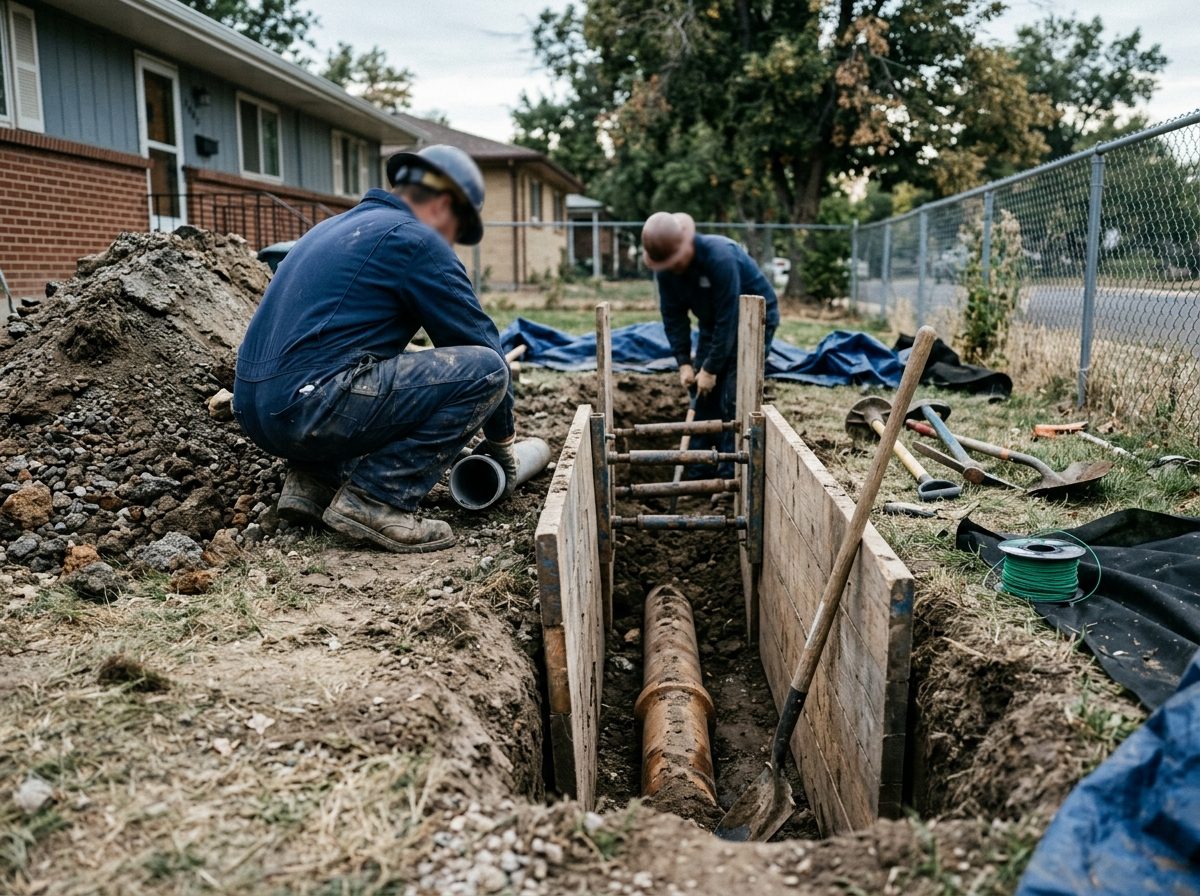
The other half: inlet water temperature
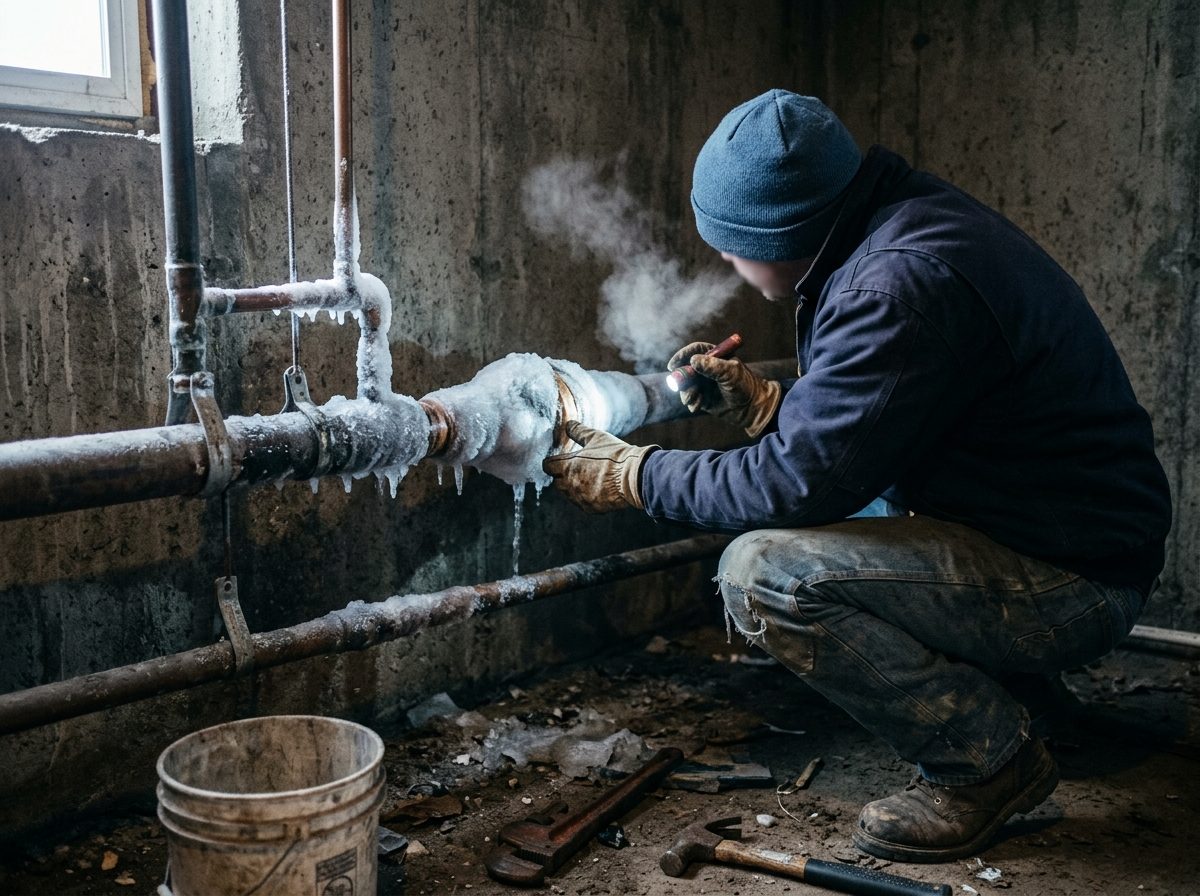
Altitude is only one half of the problem, and the other half arrives in January. A water heater's job is to raise incoming water to usable temperature, so the work it does depends on how cold that water starts. At this elevation in midwinter, incoming water is close to freezing — considerably colder than the same supply in August.
So the appliance is asked for substantially more heat at exactly the point when altitude has already reduced what it can deliver. That is why the classic complaint here is a heater that is entirely adequate for nine months and falls short for ten weeks. It is not intermittent and it is not deteriorating; it is two effects stacking seasonally.
Which means sizing has to be done for a January morning rather than an average day. A unit sized on annual averages will disappoint predictably, every year, at the same time.
Venting and combustion air
Thin air affects more than output. A burner needs a supply of combustion air and a vent that will carry exhaust away reliably, and both are harder to achieve at altitude — the same flue produces less draught in thinner air.
That makes venting and combustion air part of the specification rather than installation details to be worked out afterwards. Where an appliance sits in a confined space, the air supply to that space matters as much as the pipe sizes. And where a vent run was adequate for a previous unit, it is not automatically adequate for a replacement of different type or capacity.
This is also the safety half of the subject. Incomplete combustion is what produces carbon monoxide, and getting air and venting right is not an efficiency question. If you ever smell gas, leave the building and call the utility from outside before anything else.
Replacing a gas appliance? Venting and combustion air belong in the specification.
Ask about a replacementChoosing between tank and tankless
Both work up here, and the trade-offs shift with altitude. A tank stores hot water, so it can meet a short heavy demand from storage even if its recovery rate is modest — which makes it forgiving of derating. Its weaknesses are standing heat loss and the fact that once the tank is empty, you wait.
A tankless unit heats on demand, and its output is a temperature rise across a flow rate. Altitude reduces the heat available and winter inlet temperature increases the rise required, so both ends of that equation get harder simultaneously — which makes tankless the more sensitive choice here and makes correct sizing essential rather than desirable. Hard water adds a descaling routine to ownership, since scale in a compact heat exchanger degrades performance gradually.
Neither is the right answer universally. The decision should follow from your peak demand pattern, the space and venting available, and an honest winter sizing calculation.
Deciding between tank and tankless? The trade-offs shift at this elevation.
Ask which suits your houseIf you ever smell gas
Leave the building first, then call the utility from outside. Do not operate switches or use a phone indoors. Plumbing work on the appliance comes after the situation has been made safe.
Treating only the water you drink
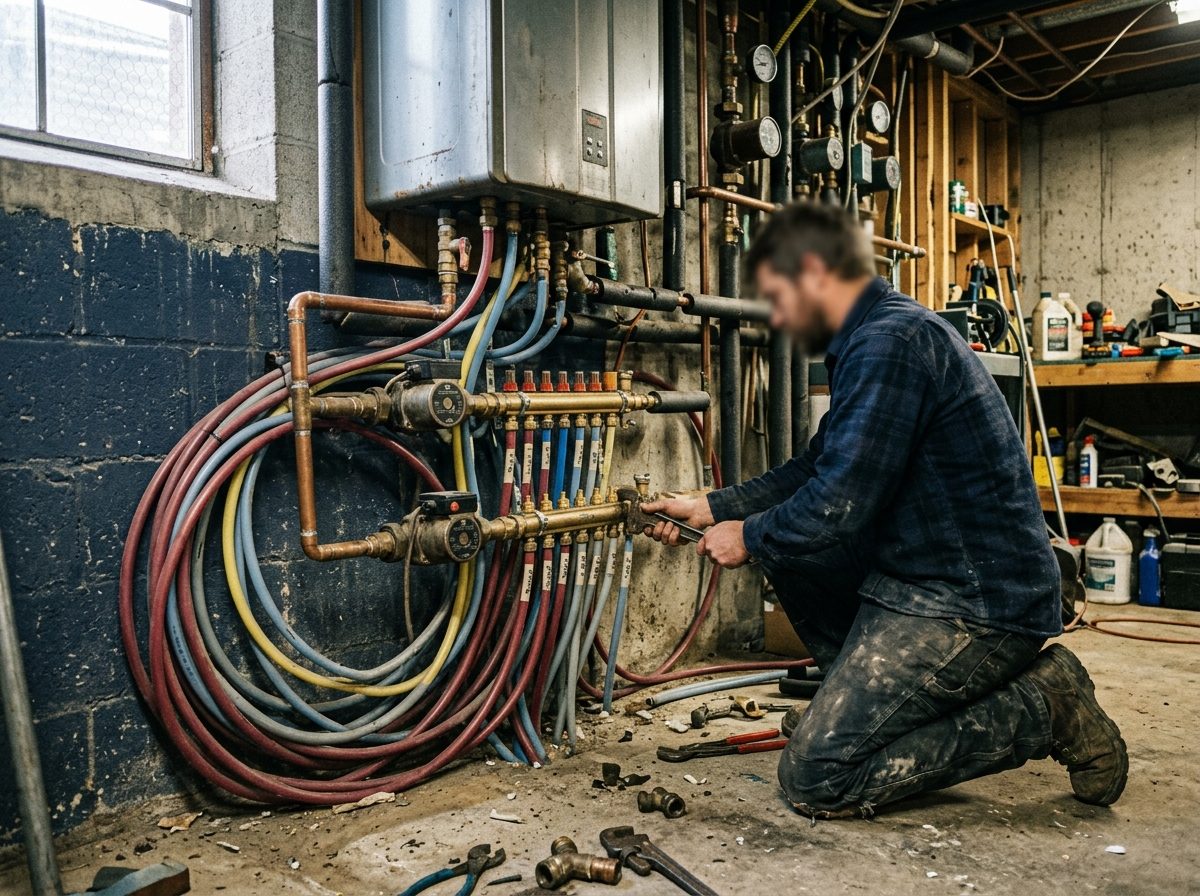
Whole-house treatment and drinking-water treatment are different problems, and conflating them is how people end up spending more than they need to while still not solving the thing that bothered them. Whole-house equipment exists to protect the plumbing and the appliances — softening to stop scale, sediment filtration to stop grit, iron removal to stop staining. None of that is aimed at the glass of water on the table.
For drinking water specifically, a point-of-use unit under the kitchen sink is usually the better answer. A reverse osmosis system treats the few gallons a household actually drinks and cooks with rather than the hundreds it flushes, showers and irrigates with, which makes it far cheaper to buy and to run for that purpose. It also addresses things whole-house softening does not touch at all — including dissolved contaminants that matter for health rather than for appearance.
Two caveats are worth knowing before buying one. Reverse osmosis is deliberately thorough, which means it also removes minerals some households would rather keep, and it produces a waste stream, so it needs a drain connection. And it does not replace testing: the unit you should buy depends on what is actually in the water, and a system chosen for the wrong contaminant is an expensive way to filter nothing in particular. The sensible sequence is test first, decide what belongs whole-house and what belongs at the tap, and then buy — in that order rather than the reverse.
Nearby communities
Divide sits above Woodland Park at the junction toward Cripple Creek, with Florissant and Victor beyond.
Divide, Colorado
High-altitude appliance questions answered
Substantially, at this elevation. A burner mixes fuel with air, and thinner air means less oxygen, so the same burner delivers less heat. Manufacturers publish derating figures and sometimes specify different orifices or models for high-altitude installation — which is why sea-level specifications mislead here.
Probably not. A unit chosen from a sea-level specification can be correctly installed, working perfectly, and still genuinely undersized once running at this elevation. Nothing is broken — it was never going to be enough. Replacing it with the same model will not change anything.
Because two effects stack. A heater raises incoming water to usable temperature, and at this elevation in midwinter that water is close to freezing — far colder than in August. So the appliance is asked for more heat exactly when altitude has reduced what it can deliver.
For a January morning rather than an average day. A unit sized on annual averages will disappoint predictably, every year, at the same time. The calculation needs your peak demand, the winter inlet temperature, and the derated output of the specific unit at this elevation.
Because thinner air produces less draught in the same flue, and a burner still needs a reliable air supply. Both become part of the specification rather than details settled afterwards. And a vent run that suited a previous unit is not automatically adequate for a replacement of different type or capacity.
Both. Incomplete combustion is what produces carbon monoxide, so getting air supply and venting right is a safety matter rather than an efficiency one. If you ever smell gas, leave the building and call the utility from outside before doing anything else.
It can be, but it is the more sensitive choice. Its output is a temperature rise across a flow rate, and altitude reduces available heat while winter inlet temperature increases the rise required — both ends get harder at once. Correct sizing becomes essential rather than desirable.
A tank is more forgiving of derating, because it can meet a short heavy demand from storage even with modest recovery. Its weaknesses are standing heat loss and waiting once it is empty. Neither type is universally right — the decision follows from your demand pattern, available space and venting, and an honest winter calculation.
They do different jobs. Whole-house equipment protects the plumbing and appliances from scale, sediment and iron. A point-of-use unit under the sink treats only what you drink and cook with, which is far cheaper for that purpose and handles things softening does not touch. Test first, then decide what belongs where — most households need some of each.
Above Woodland Park
Divide, Florissant, Cripple Creek, Victor and Woodland Park.
(833) 621-2904 — answered 24/7, statewide.