Plumber in Cripple Creek, CO — one call, any hour
Home / Areas / Colorado Springs & Pikes Peak / Cripple Creek
Cripple Creek is a Victorian mining town sitting above nine thousand feet on the back side of Pikes Peak. Old buildings, extreme altitude and a winter that runs most of the year make it one of the more demanding plumbing environments in Colorado.
Victorian housing at nine and a half thousand feet
Much of the housing dates from the mining era. Almost nothing original survives untouched, but what replaced it was installed piecemeal across a century: mixed materials in a single run, undersized replacement sections, and fittings inside walls that no drawing shows.
Where dissimilar metals were joined without the correct fitting, the junction corrodes. Where a section was replaced undersized, it throttles flow through the rest of the line. That makes small clues valuable — which fixtures are affected and which are not, and whether anything changed after previous work.
Old building, several issues? Ask for an order of work rather than one big number.
Ask for a plan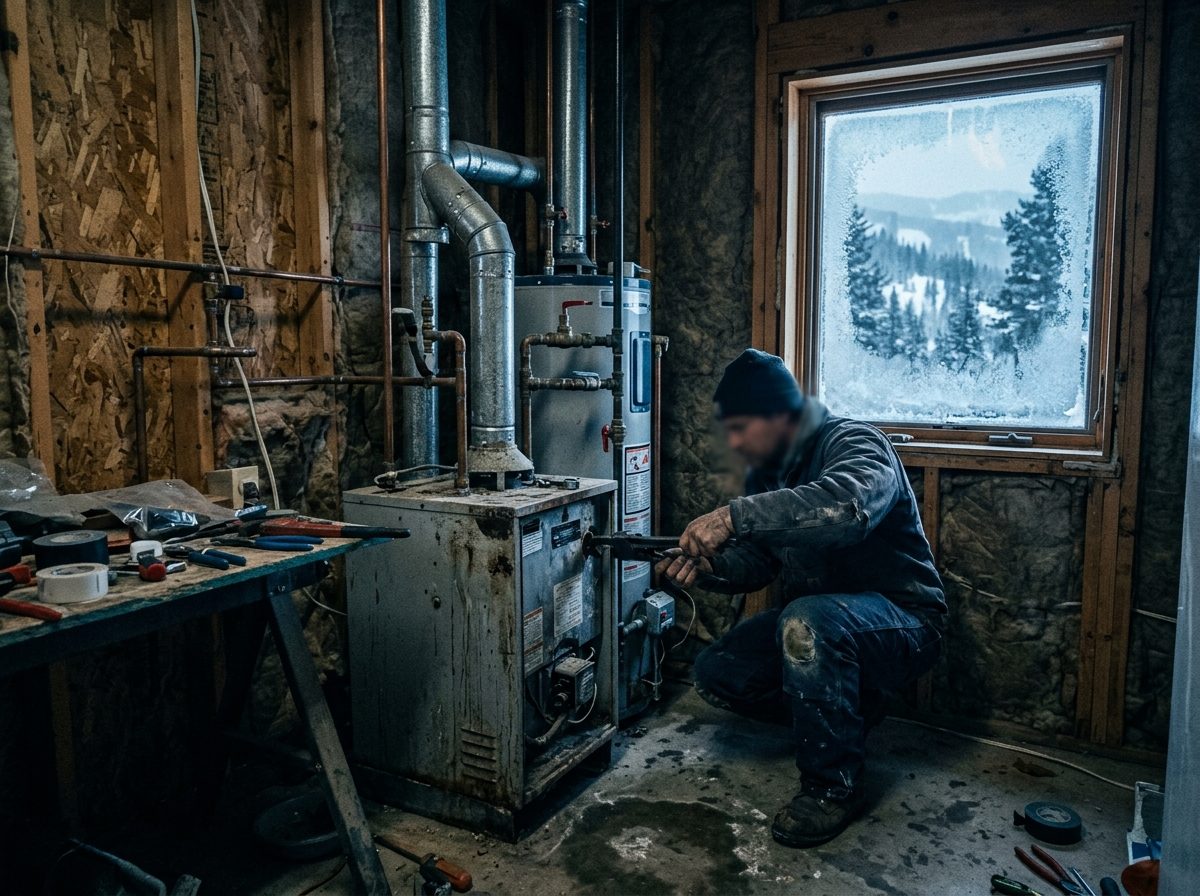
The highest appliance derating in the state
Combustion appliances lose output as air thins, and there are few inhabited places in Colorado higher than this. A water heater specified from a sea-level table will be materially undersized here, and the shortfall shows up in January when incoming water is close to freezing and demand is highest.
Derating, venting and combustion air are not installation details at this elevation — they are the specification. Tankless units are the most sensitive of all, because their output is a temperature rise across a flow rate and altitude squeezes both ends of that equation.
Replacing a water heater? At this elevation the sizing conversation comes before the purchase.
Ask about heater sizing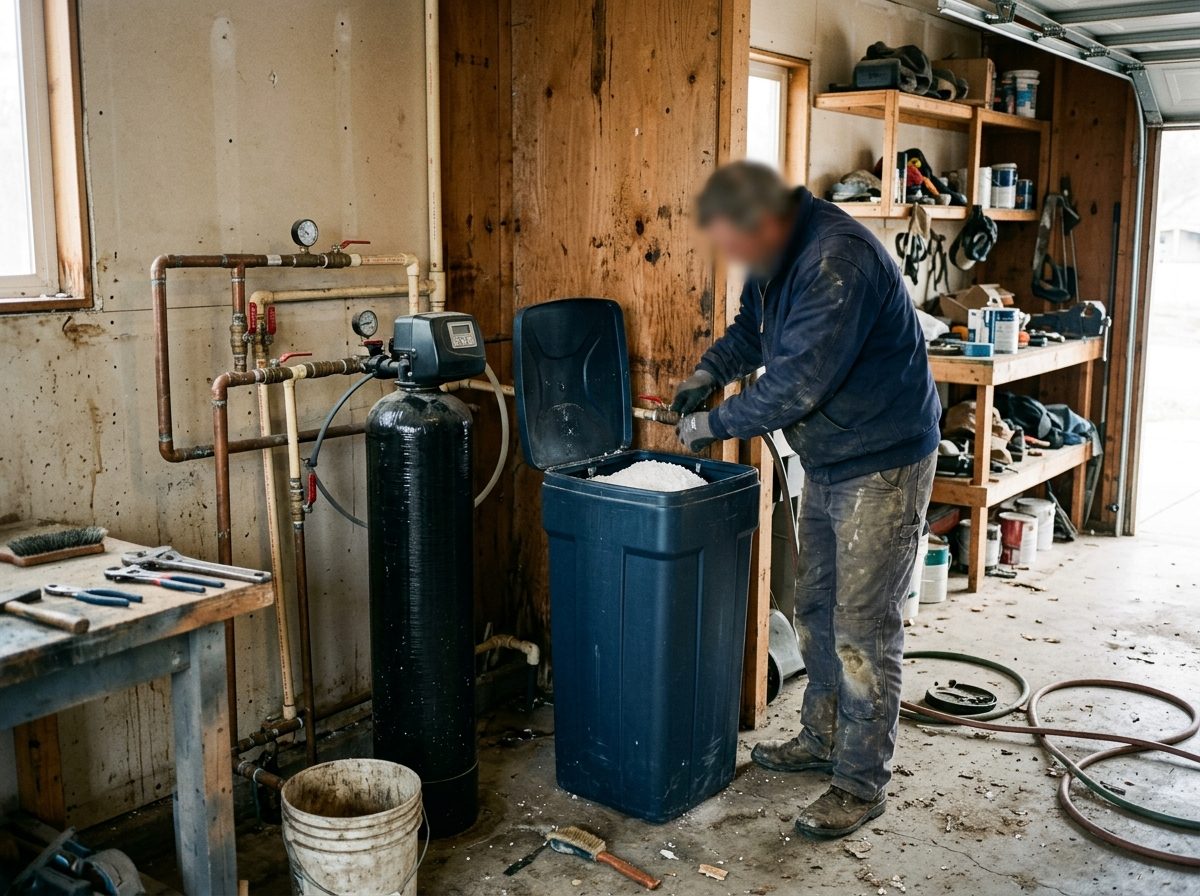
Steep streets, tight lots
The town is built into a hillside on streets laid out for a different century. Limited parking, steps instead of paths, crawlspaces entered from outside and equipment that has to be carried are all normal here.
Say what the access looks like when you call — how many steps, whether a van can stop near the door, whether the crawlspace hatch is inside or out. It determines who takes the job and whether the right tools arrive on the first visit.
Winter runs most of the year
At this elevation freezing is the ambient condition rather than an occasional event. Any pipe outside heated space needs active protection or to be out of service, and heat tape carries much of that load — a load it fails at silently, through age, rodent damage or having been unplugged during other work.
For any building standing empty, draining is the only dependable strategy: water off at the source, the system drained from its lowest point, taps opened so air can replace water, appliances dealt with, and plumbing-rated antifreeze in traps. Done partially it holds water in exactly the low points that split.
Building empty this winter? Draining it properly beats hoping the heat holds.
Ask about winterisingArriving at a cold building
Close the main shutoff before applying heat anywhere, then check the lowest ceiling and the crawlspace for damp. A split line starts leaking the moment it thaws.
Working in protected buildings
Much of the housing here is genuinely historic, and a good deal of it sits within districts where exterior alterations are reviewed. That does not make plumbing work difficult, but it does change the order things happen in, and it catches people who expected a repair to be a purely technical matter.
The practical points are mostly about what is visible from outside. A new flue terminal, a vent penetration through a roof, an exterior wall vent for a sealed-combustion appliance, or a meter or backflow assembly mounted on a street elevation are all things that may need to be discussed rather than simply installed where they are most convenient. That frequently means a slightly more expensive route — venting out the back, or up an existing chimney rather than through a facade — and it is much cheaper to plan for than to undo.
Inside, the constraint is different and it is about the building rather than the rules. Original lath and plaster, timber that has moved over a century, and floors that have been altered repeatedly mean access is harder to predict, so a repair that would be routine in a modern house needs more allowance for opening up and making good. The useful approach is to treat any wall or floor that has to be opened as an opportunity: replace the runs that are already reachable, take out the old dissimilar-metal transitions, and add isolation valves while access is free. Doing it that way means the disruption of getting in happens once rather than every time something fails.
Nearby communities
Cripple Creek sits high on the back side of Pikes Peak, with Victor next door and Divide and Florissant on the roads out.
Cripple Creek
Cripple Creek plumbing questions answered
At this elevation it changes it substantially. Thinner air means much less oxygen for combustion, so manufacturers derate output and often specify different orifices or models. A unit sized from a sea-level table will fall short here in midwinter. The sizing conversation has to happen before purchase.
It depends how the joins were made. Dissimilar metals connected without the correct fitting corrode where they meet, and undersized replacement sections throttle flow through the rest of the run. Mixed material is normal in mining-era housing; badly made transitions are what leak.
Because the town is built into a hillside on narrow streets. Limited parking, steps, and outside-entry crawlspaces determine what equipment can reach the work. A drain machine or camera reel that cannot get to the cleanout is no use, so describing the approach saves a wasted visit.
Water off at the source, the system drained from its lowest point, taps opened so air can replace water, the heater and any appliance holding water dealt with, and antifreeze rated for plumbing in traps and toilet bowls. Never automotive antifreeze. Done thoroughly it can sit unheated safely.
Usually, with gentle even heat applied from the open end of the line toward the blockage so meltwater can escape. Never a torch or rapid heat — that is how pipes split and buildings catch fire. Shut the water off first, because a cracked pipe starts leaking as it thaws.
Tape can look intact and be dead. Age, rodent damage and being unplugged during unrelated work are the usual causes, none visible at a glance. Test it before the freeze season and check the whole length of the run, since tape often covers less pipe than assumed.
Access and weather decide it rather than distance. In clear conditions same-day is realistic for urgent work. In a storm the roads over the pass can make it the following day or later, and you will be told that plainly along with what to shut off in the meantime.
Often, where the existing layout is a patchwork of eras and materials. Replacing the plumbing along a sensible route can cost less over a decade than repeated repairs to runs nobody fully understands. Start with an assessment and a staged plan rather than committing to everything at once.
The appliance itself, no — but anything of it that shows from outside might, including a new flue terminal or a wall vent for a sealed-combustion unit. That usually means routing to a less visible elevation, which is cheaper to plan than to redo. Worth raising at quoting stage rather than on installation day.
Mostly access and making good rather than the plumbing itself. Lath and plaster, century-old timber and floors that have been altered several times make opening up less predictable, and putting it back properly takes longer. The way to get value from it is to do everything reachable while the wall is open, so the disruption happens once.
The back side of the Peak
Cripple Creek, Victor, Divide, Florissant and Woodland Park.
(833) 621-2904 — answered 24/7, statewide.