Plumber in Fort Morgan, CO — 24/7 by phone
Home / Areas / Eastern Plains / Fort Morgan
Fort Morgan is the one place on this stretch of the plains with a full municipal system, a proper commercial centre and enough working trades to make same-day service normal. That makes it the exception out here rather than the rule, and it shapes what plumbing looks like in town versus five miles outside it.
The one town out here with a full grid
Inside town you are on city water and city sewer, and the housing runs from pre-war brick near the centre through post-war blocks to newer building on the edges. That means the whole familiar range of problems: supply pipe that has narrowed with age in the oldest streets, heaters and regulators failing in cohorts in the newer ones, and a substantial rental sector where heavy use runs ahead of building age.
Because there are working plumbers based here, the calculus is different from the surrounding country. Urgent work genuinely can happen the same day, and it is worth saying you are in town when you call, because it changes what is realistic.
In town or out on a county road? Say which — it changes the response completely.
Ask what to expect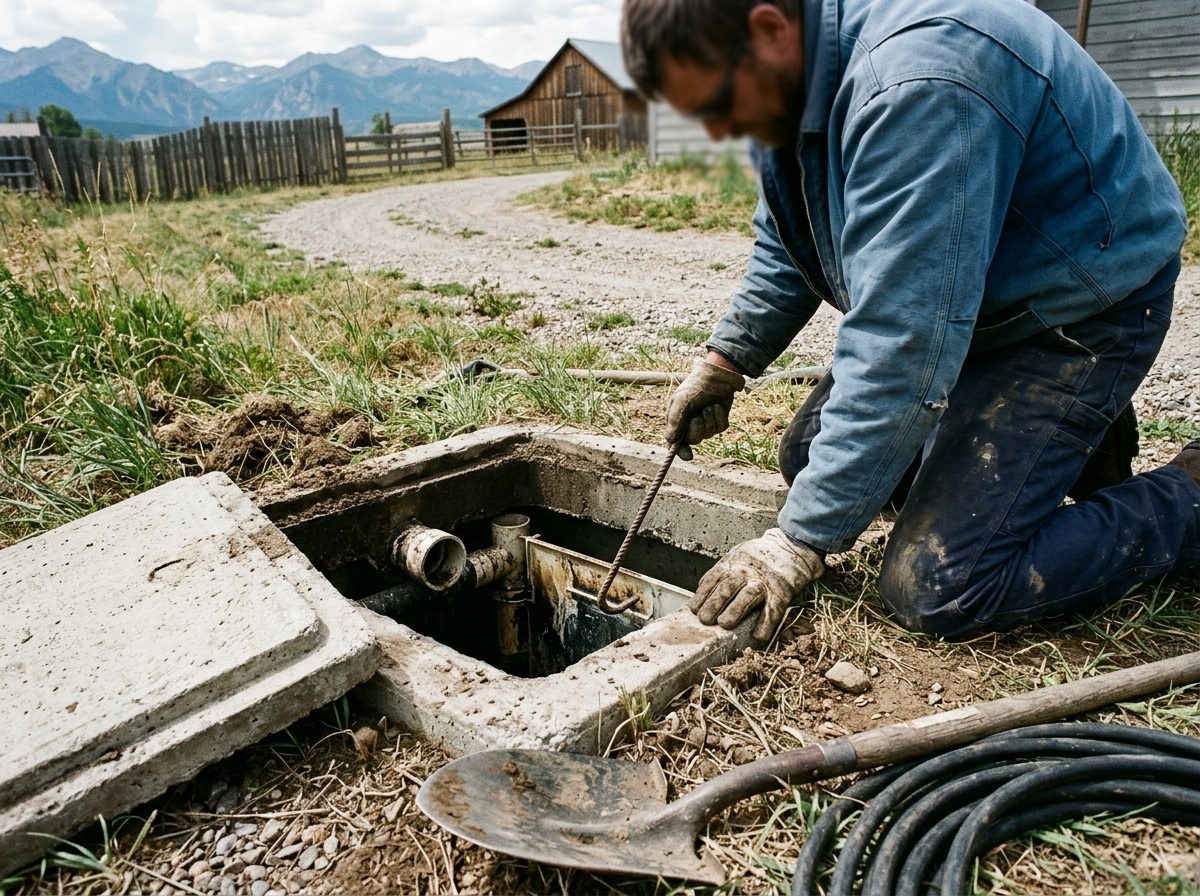
Hard water is the running cost
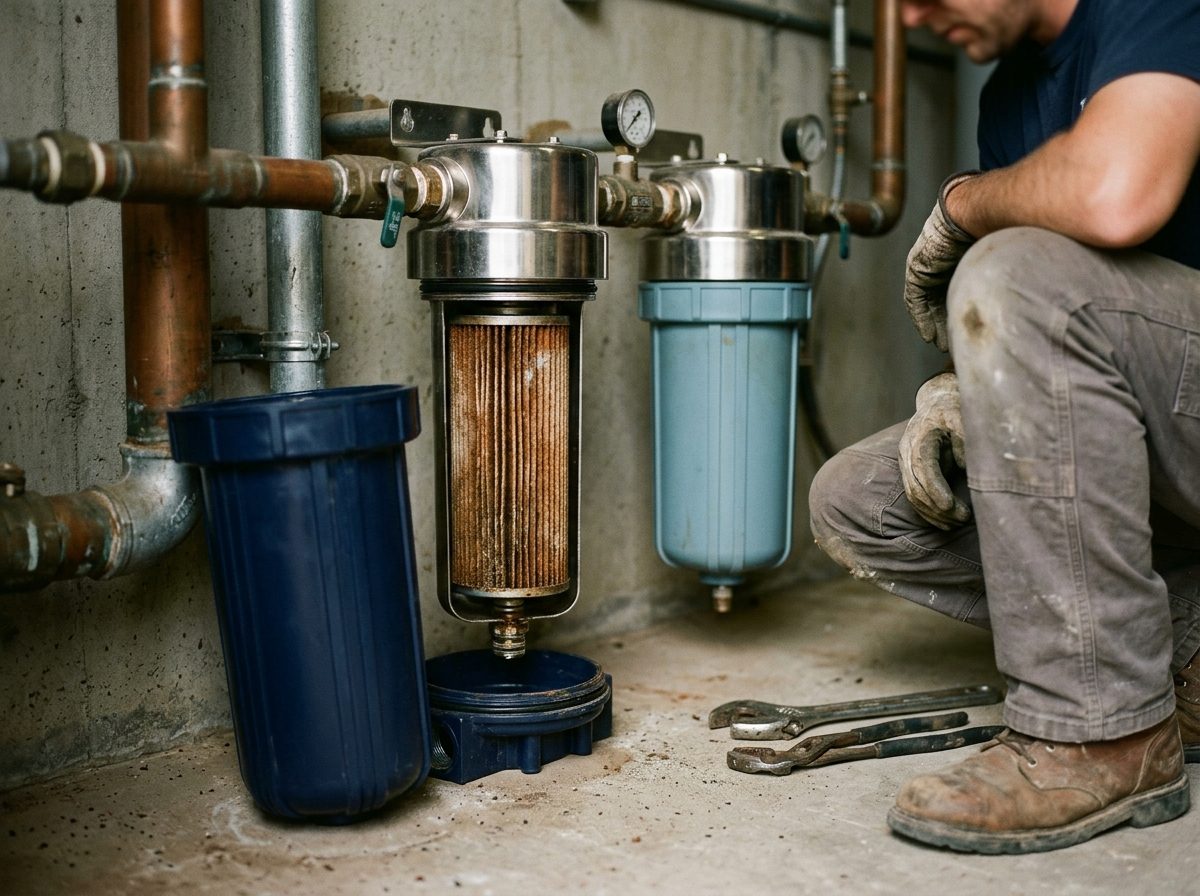
Water here carries a heavy mineral load, and the water heater takes most of the damage. Sediment settles across the tank floor so the burner heats through scale rather than steel, run times lengthen, and recovery slows until a household that never ran out of hot water starts running out.
Draining the sediment annually is the highest-return maintenance available. The sacrificial anode rod deserves a look at the same time — it is a consumable designed to corrode instead of the tank lining, and in water like this it is frequently spent long before anyone thinks to check.
Old laterals under old streets
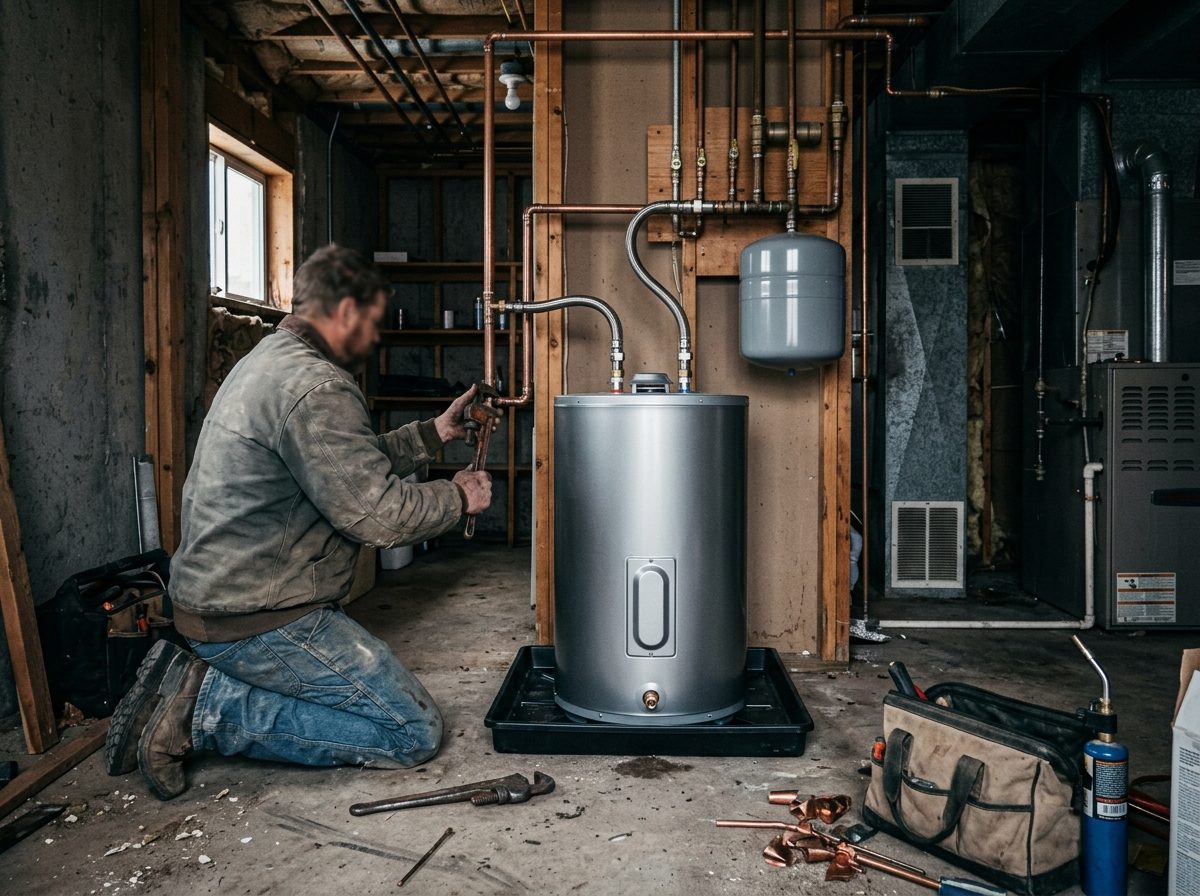
The established neighbourhoods have mature trees and sewer laterals of the same vintage as the houses, which is a reliable combination for root intrusion at pipe joints. The first symptom is normally the lowest opening in the building — a floor drain or the lowest toilet — rather than the fixture you were using.
If that happens, stop using water entirely, because everything you run has to go somewhere. Clearing restores flow; an inspection afterwards tells you whether the cause was a passing blockage or the pipe itself, and that distinction is what a sensible repair price depends on.
Lowest drain backing up? Stop all water use in the house, then call.
Ask about a backupWind off the plains
There is no shelter here. Constant wind strips heat from anything exposed, so a line in an unheated crawlspace or a garage wall freezes at temperatures a sheltered Front Range street shrugs off, and frost runs deeper than in the metro.
Disconnect hoses before the first freeze, get irrigation cleared with compressed air rather than merely drained, and close crawlspace vents that were opened in summer. Where a garage or outbuilding is not in use through winter, isolating its branch and draining it removes the risk rather than managing it.
Cold snap coming? Hoses off and vents closed prevent most of it.
Ask about freeze protectionGrease, and why commercial drains block
A town with food processing and a working main street has more commercial kitchens per head than the housing would suggest, and commercial drainage fails for a different reason than domestic drainage does. The problem is almost never an object in the pipe. It is fats, oils and grease going down warm as a liquid and cooling into a solid coating on the pipe wall, closing the bore from the inside over months.
Which is why the failure pattern is gradual and then sudden. Drains run acceptably for a long time, then slow noticeably over a few weeks, then block — usually at the worst possible moment, because the volume that finally overwhelms a restricted line is a busy service. Clearing it restores flow without removing the coating, so a kitchen that is rodded every few months is paying repeatedly for the same problem.
The two things that actually change the outcome are the interceptor and the cleaning method. A grease interceptor only works if it is sized for the kitchen and emptied on a schedule rather than when someone remembers; an overfull one passes grease straight through as though it were not there. And high-pressure jetting scours the pipe wall rather than punching a hole through the blockage, which is the difference between a line that is clear and a line that is merely passing water. For a kitchen, a planned jetting interval is almost always cheaper than unplanned closures.
Two things worth locating
The main shutoff and the drain cleanout. Knowing where both are turns an emergency into a manageable job, and in a rental it is worth telling the tenant too.
Nearby communities
Fort Morgan is the service hub for a large stretch of Morgan County, and the towns around it share the same line.
Fort Morgan, Colorado
Fort Morgan plumbing questions answered
In town, same-day is normal and a few hours is common for anything urgent, because there are working trades based here rather than driving out from the Front Range. That is genuinely different from the smaller towns nearby, where response depends on who is already heading your way that day.
Sediment is the usual answer in hard water. A layer builds across the tank floor, insulates the burner from the water and slows recovery, so the same tank delivers less usable hot water than it once did. An annual drain restores much of it, and checking the anode rod at the same time is worth doing.
A sacrificial metal rod inside the water heater that corrodes in place of the tank lining. In mineral-heavy water it can be consumed within a few years, and once it is gone the tank starts corroding instead. Replacing a spent rod is inexpensive; replacing a tank that rusted through because nobody checked is not.
That points at the main sewer lateral rather than a branch line, because the floor drain is the lowest opening in the system. Stop running water into the house, then get the line cleared and inspected. In older streets with mature trees, roots at a pipe joint are the most common cause.
For most households the return shows up as longer heater and appliance life rather than anything obvious at the tap. Test the water first so hardness is a real number, then size the equipment to the household and check there is a drain available for the regeneration cycle.
Clear the main drain rather than waiting for a blockage, replace washer hoses older than a few years, renew tired toilet internals, and check the heater. That short list removes most of the calls that arrive at awkward hours, and an empty property is the cheapest time to do it.
Change the exposure rather than just thawing it. Insulate the run, seal the air leaks that let wind reach it, and disconnect hoses from bibs on that wall. Where rerouting into heated space is impractical, heat tape correctly installed and actually plugged in is the fallback.
On anything built before the 1970s, yes. The lateral is the one major system a standard home inspection does not look inside, and it is among the most expensive to repair. Finding a problem before closing makes it a negotiating point instead of a bill.
Because rodding clears the obstruction without removing the grease coating that caused it, so the line narrows again from the same point. Jetting scours the pipe wall instead, and on a commercial kitchen a planned interval costs less than repeat emergencies. Worth checking the interceptor sizing and pump-out schedule at the same time — an overfull one passes grease straight through.
On a metered municipal supply with an in-ground irrigation system, almost always — it is standard requirement rather than an optional extra, because a drop in main pressure can draw irrigation water back into the drinking supply. On commercial premises it is usually subject to periodic testing rather than fitted once, so it is worth knowing when yours was last checked.
Morgan County, any hour
Fort Morgan and the surrounding plains towns, answered around the clock.
(833) 621-2904 — answered 24/7, statewide.