Plumber in Orchard, CO — one call, any hour
Home / Areas / Eastern Plains / Orchard
Orchard is farm country along the South Platte in Morgan County. Plumbing here is a property matter rather than a house matter, and the distances inside a single holding are often greater than the distance across a small town.
Farm country along the South Platte
A working property here typically has a house, a shop, a barn, stock water at several points and two or three frost-free hydrants, all fed through a great deal of buried line. The individual components are ordinary; the scale and the consequences of failure are not.
Fort Morgan is the nearest place with working trades, so response depends on who is already heading this way. For routine work, booking and bundling is what gets things done — presenting a list beats four separate calls across a year.
Several jobs waiting? List them and book one visit rather than four.
Ask about a single visit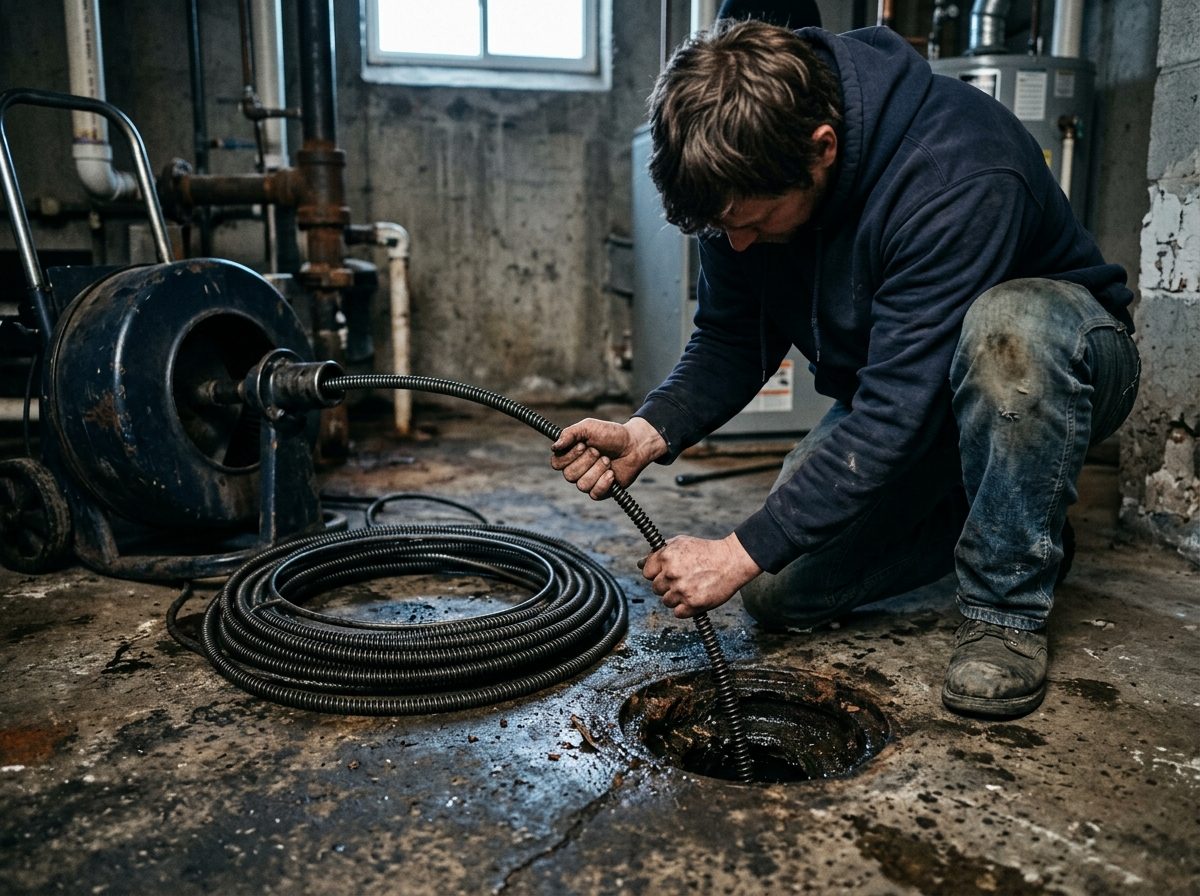
Buried runs and invisible leaks
The characteristic problem of a large property is a leak nobody sees. There is no ceiling to stain and no floor to soak, so the only signs are indirect: pressure that has slowly fallen, ground that stays damp or unusually green, a pump running more often than it used to, or water use that climbed with no change in habits.
Confirming it is straightforward. With everything shut off, watch the pressure gauge or the meter for an hour — movement means water is leaving the system. Where there are isolation valves between structures, closing them one at a time narrows which run is losing water before anyone starts digging.
Pump running more than it used to? That often means a leak on a buried run.
Ask about finding a leak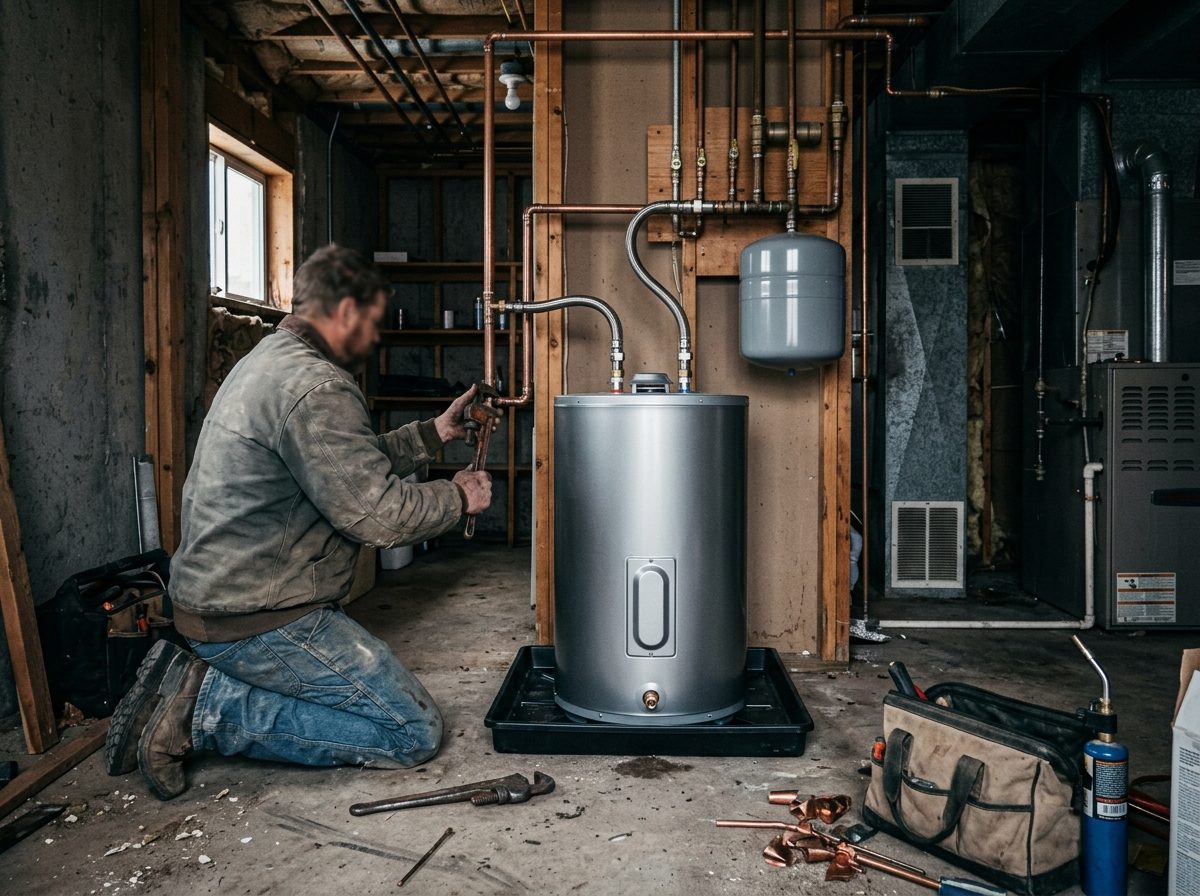
Wells and the usual faults
Three faults account for most well calls: a pressure tank that has lost its air charge and is cycling the pump every few seconds, a pressure switch that has stopped making contact, and a pump at the end of its working life. All three present as poor pressure or nothing at the tap.
What the gauge reads, whether the pump can be heard running, and whether the breaker has tripped are the three answers that narrow it — and they decide which trade attends, since the pump and casing wiring are well-system work while everything past the tank is ordinary plumbing. Water quality is worth testing too.
Winter on open ground
Frost runs deep here and there is no shelter from wind. Anything above ground loses heat continuously, and outbuildings freeze first because they are heated least. The pump house is the critical vulnerability, since a freeze there takes out water to the whole property at once.
Frost-free hydrants are the classic failure: they drain their standpipe below the frost line whenever they close, and one that weeps has usually stopped draining. Test every one each autumn, and isolate and drain any branch feeding a building you are not using through winter.
Building empty this winter? Draining its line beats trying to keep it warm.
Ask about winterisingIf a line has split
Main shutoff closed, lowest tap opened to drain the system, photographs before cleanup. Then call. That order limits the damage more than anything else available to you.
River-bottom ground and what it does to drains
Ground near the South Platte behaves differently from ground a few miles up on the dry benches, and the difference shows up below the floor rather than at the tap. A seasonal water table close to the surface, in soil that holds water rather than shedding it, produces two effects worth separating: water appearing in a low space that has nothing to do with the plumbing, and buried lines sitting in saturated ground for part of every year.
The first is a drainage question. Water that arrives with the spring rise, spreads across a broad area of floor rather than pooling under one point, and is clear, is ground water rather than a leak — and the remedy is a pit, a serviceable pump, a discharge that carries water far enough away not to return, and a check valve so the pit does not refill itself. A supply leak, by contrast, runs at the same rate all year and traces back to a fitting.
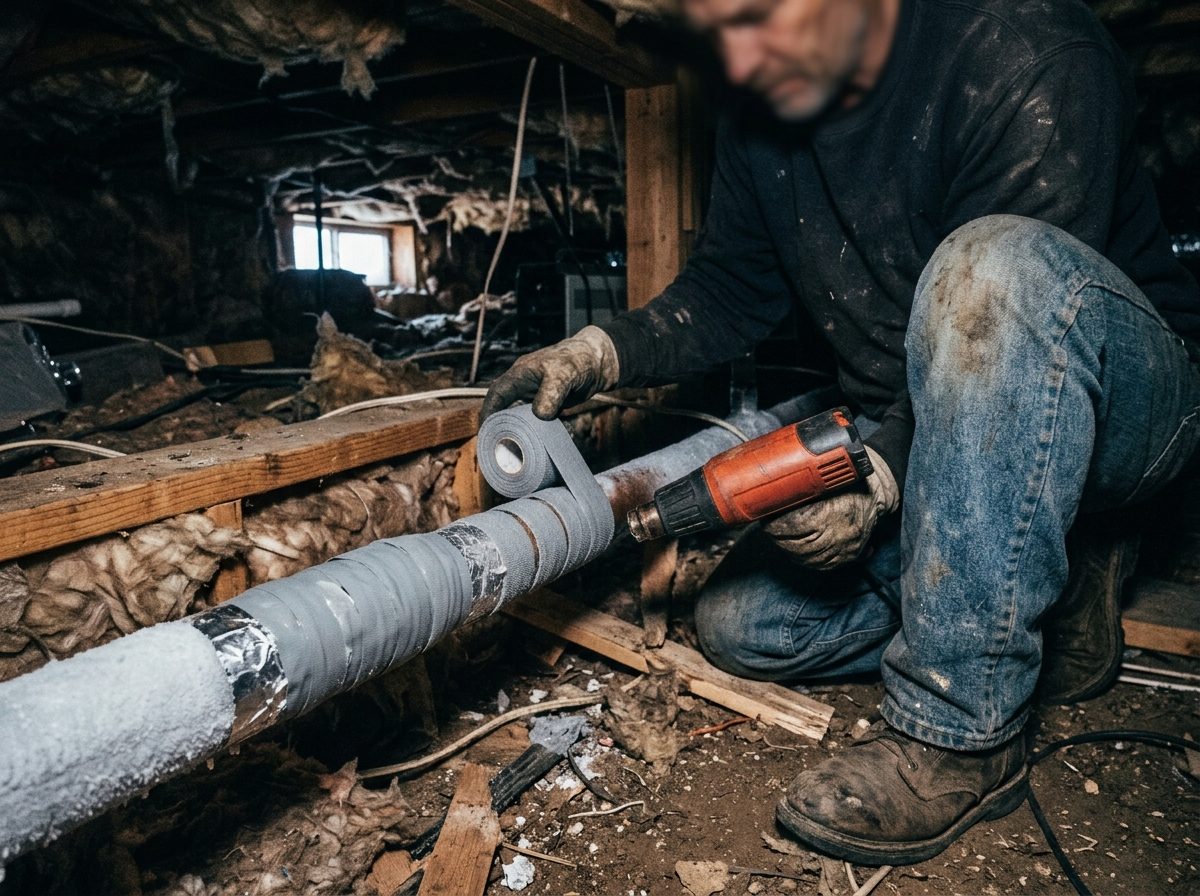
The second is slower and less obvious. A sewer line in ground that swells and settles seasonally tends to lose its consistent fall over the years, which produces a low section that collects waste. That failure has a signature: a line that clears easily, works for a few months, then slows in exactly the same way. Being rodded repeatedly is the symptom. A camera run after the next clearing is what distinguishes a line that needs maintaining from one that needs repairing, and it records depth and route while it is down there.
Nearby communities
Orchard sits along the South Platte in Morgan County, with Fort Morgan, Merino and Roggen nearby.
Orchard, Colorado
Morgan County questions answered
Confirm there is one first: with everything shut off, watch the pressure gauge or meter for an hour, and movement means water is leaving the system. If there are isolation valves between structures, closing them one at a time narrows which run is losing water and saves considerable excavation.
That suggests either a leak on the system or a pressure tank losing its air charge. Checking the tank is quick and inexpensive. If the tank is sound, the next step is isolating sections to find where water is going, because a buried leak can run for weeks with no visible sign.
Check the breaker for the pump first, then the pressure switch, then what the gauge reads. A tripped breaker and a failed switch are both inexpensive and both look exactly like a dead pump from inside the house. If the pump runs but pressure cycles rapidly, suspect the pressure tank.
Close the main shutoff, then open the lowest tap in the building to drain the system and take pressure off the break. Move what matters out of the water path and photograph everything before cleanup in case of a claim. That sequence limits the damage far more than waiting.
It is a poor candidate for waiting. The hydrant drains its standpipe below the frost line each time it closes, and one that weeps has usually stopped draining. Water standing in that pipe through a hard freeze splits it underground, turning a small repair into digging.
Yes, and out here nobody else is doing it for you. Composition varies property to property, so hardness, iron and other results differ from a neighbour’s. Test before buying any treatment equipment so the equipment addresses the problem you actually have.
Insulation and air sealing first, because that reduces heat loss rather than just adding heat. Then a reliable heat source sized for the space, and heat tape on exposed pipe as backup. Test everything in autumn — a pump house freeze takes out water to the whole property at once.
That is the sensible way to work out here. Give a full list when you call — house, shop, barn, hydrants, tanks — so the right parts come on the truck. A second trip for one fitting is the expensive part of rural plumbing.
Usually not. Seasonal water that arrives with the river rise, spreads across the floor rather than pooling at one spot, is clear, and dries up by summer is ground water. A plumbing leak is indifferent to the month. Note when it starts and whether running a tap changes anything — that normally settles which of the two you are dealing with.
It depends what is below it. Where the pit protects equipment or finished space, a battery backup earns its cost the first time the power goes out during a storm — which is precisely when the pump is needed. Where nothing of value sits on the floor, one well-maintained pump and an annual test before the spring rise is a reasonable position.
Along the South Platte
Orchard, Fort Morgan, Merino and Roggen.
(833) 621-2904 — answered 24/7, statewide.