Plumber in Roggen, CO — one call, any hour
Home / Areas / Eastern Plains / Roggen
On a grain operation, most of the plumbing is not in the house. Shops, machine sheds, grain buildings and wash-down areas all take water, and each of them has requirements that ordinary domestic plumbing does not — different volumes, different drainage, and long periods of the year when nobody is using them at all.
Plumbing in buildings that are not houses
A working shop is an unforgiving environment for plumbing. There is no finished ceiling to hide a run, so pipework is exposed to impact from equipment and machinery. Temperatures swing far more than in a house, because the building is heated only when someone is working in it. And a leak in a shop can do damage a leak in a kitchen cannot, if what is stored there matters.
That leads to different choices. Exposed runs benefit from routing along structure rather than across open spans, and from physical protection where vehicles pass. Isolation valves at each building are worth their cost several times over, because they let one building be shut down without stopping the whole property. And a shop that is heated intermittently is a candidate for being drained down between uses rather than protected continuously.
Water reaching several outbuildings? Isolation valves at each one change what is possible.
Ask about isolating buildings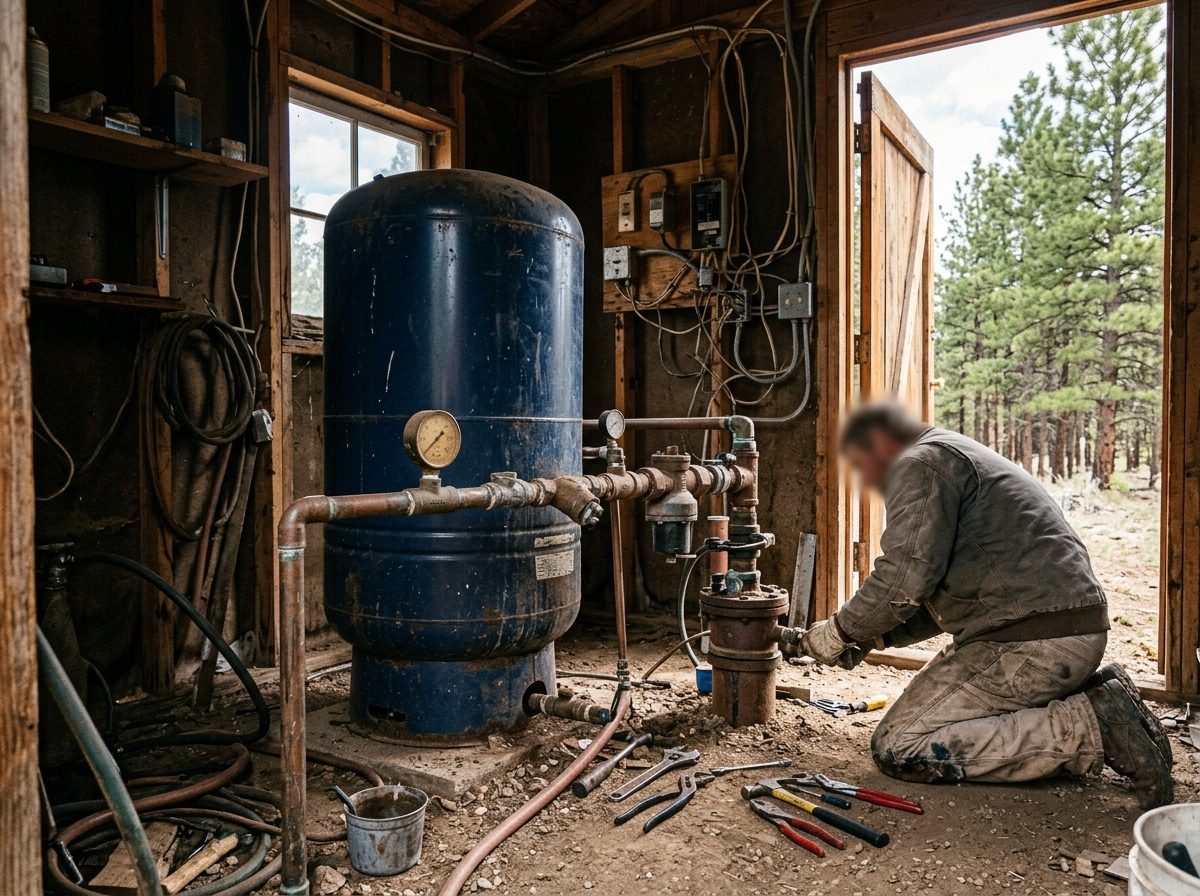
Fill points and high-volume draw
Filling a sprayer tank, a water trailer or a tank on a truck is a different demand from anything domestic, and a system designed only for household use often disappoints at it.
The constraint is usually pipe diameter over the run rather than pressure at the source. A three-quarter-inch line delivering fine pressure at a tap takes a long time to fill a large tank, and no amount of pressure fixes a diameter problem. Where filling happens regularly, a larger-diameter dedicated run to the fill point is what actually solves it.
Two other points matter at fill points. Anything filling a tank needs backflow protection, because a hose or fill pipe sitting in the tank is a direct path back to the supply if pressure drops. And on a well system, sustained high-volume draw is exactly the demand that reveals a yield limit — a well that supports a household comfortably may not support repeated tank filling, and storage rather than a bigger pump is the answer if it does not.
Wash-down areas and floor drainage
Anywhere equipment gets washed, drainage becomes as important as supply, and it is the half more often got wrong.
Wash-down water carries grit, mud, oil and plant material, and an ordinary domestic drain arrangement blocks quickly under that load. What works is a floor drain with a sediment trap or catch basin that can actually be cleaned out, sized so the material collects somewhere accessible rather than in the pipe. Skipping that means the pipe becomes the trap, which is a considerably more expensive place to keep mud.
Floor drains also hold a water seal that blocks sewer gas, and in a building used seasonally that water evaporates — so a smell in a shop nobody has used is usually a dry trap and a bucket of water rather than a fault. And where a building's drains sit below the level of the receiving line, a backwater valve is the usual protection.
Wash-down drain blocking repeatedly? A cleanable sediment trap is usually what is missing.
Ask about floor drainageBuildings used for part of the year
Grain operations have intense seasons and quiet ones, and buildings that are busy for six weeks and empty for six months need a deliberate approach rather than the same treatment as a house.
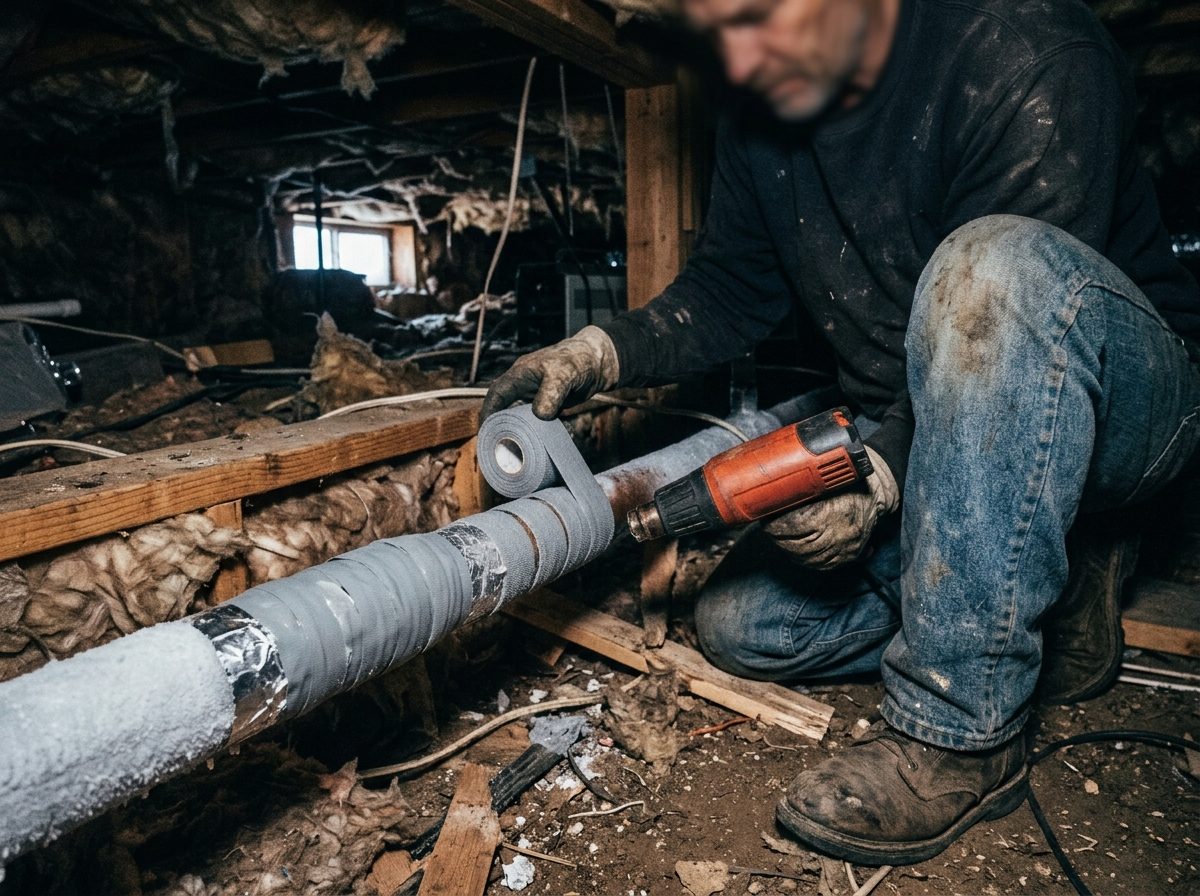
The dependable option for an unheated building is draining it between uses: water off at that building's isolation valve, the run drained from its lowest point, and taps left open. That removes freeze risk entirely rather than managing it, and it is why the isolation valves matter so much.
Where a building must stay in service, the priorities are the usual ones with more exposure — insulation and air sealing at the runs before heat tape, and heat tape tested each autumn because it fails silently. And recommissioning deserves attention: a system that has sat unused for months is worth pressure-testing before it is trusted, rather than opening the valve during the week everything is busy.
Building empty until next season? Draining it removes the risk rather than managing it.
Ask about draining a buildingWorth fitting while ground is open
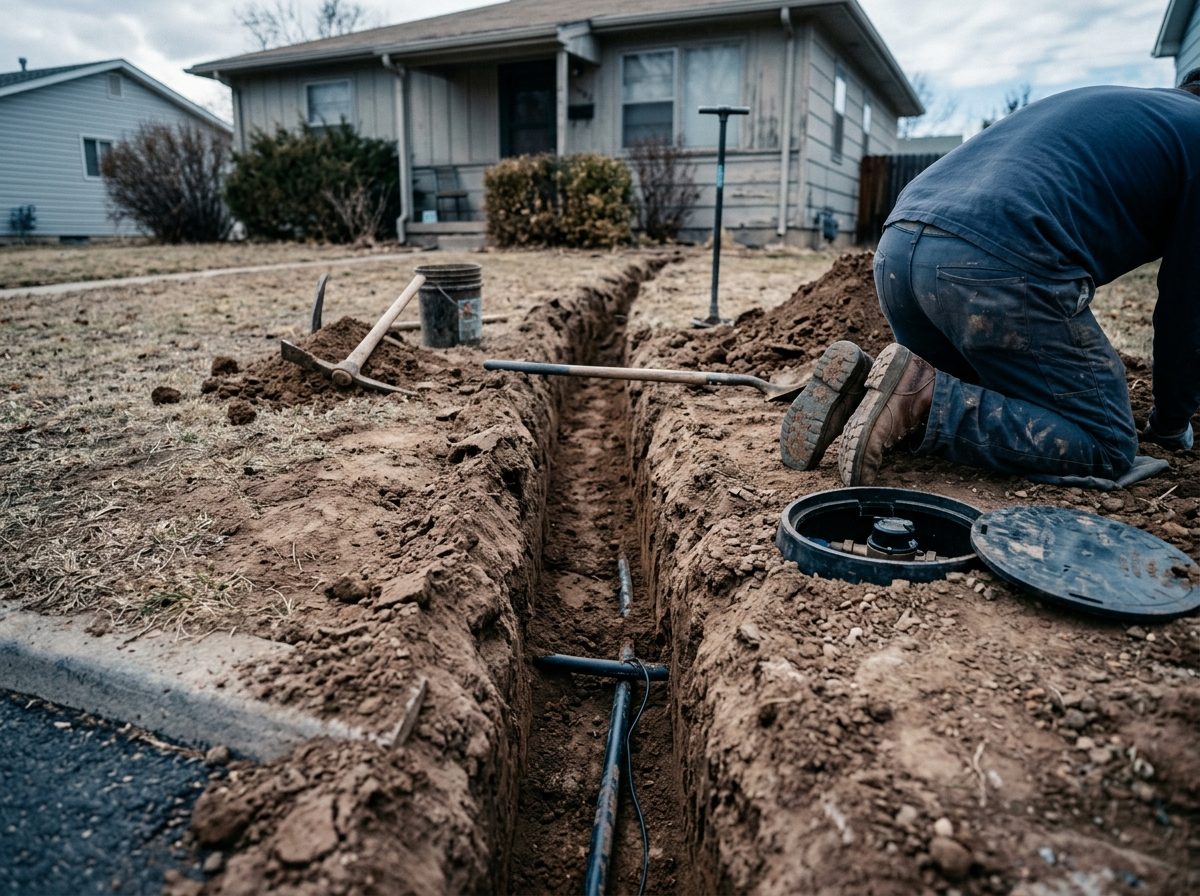
An isolation valve at every building. It turns freeze protection into a decision you make per building, and it means one failure does not shut down water to the whole operation.
Nearby communities
Roggen sits on the I-76 corridor in Weld County grain country, with Keenesburg, Hudson, Orchard and Fort Morgan nearby.
Roggen, Colorado
Farm building questions answered
Exposed runs face impact from equipment, temperatures swing far more because the building is heated only when in use, and a leak can damage whatever is stored there. That leads to different choices: routing along structure, physical protection where vehicles pass, and isolation valves per building.
Almost always pipe diameter over the run rather than pressure at the source. A three-quarter-inch line can deliver good pressure at a tap and still take a long time to fill a large tank, and no amount of pressure fixes a diameter constraint. A larger dedicated run to the fill point is the fix.
Yes. A hose or fill pipe sitting in a tank is a direct path back into the supply if pressure drops, and what is in a sprayer or trailer tank is not something you want in the drinking water. Proper isolation at fill points is a requirement rather than a refinement.
That is a yield limit rather than a fault. Sustained high-volume draw is exactly the demand that reveals what the ground can actually supply. The answer is storage — filling a tank slowly and drawing from it quickly — rather than a bigger pump, which cannot deliver more than the well yields.
Because wash-down water carries grit, mud, oil and plant material, and an ordinary domestic drain arrangement blocks under that load. What works is a floor drain with a cleanable sediment trap or catch basin, sized so material collects somewhere accessible rather than in the pipe itself.
Almost certainly a dry trap. Floor drains hold a water seal that blocks sewer gas, and in a seasonally used building that water evaporates. A bucket of water usually resolves it within minutes. If it persists afterwards, that points at venting or a break in the line.
Drain it between uses: water off at that building’s isolation valve, the run drained from its lowest point, taps left open. That removes freeze risk entirely rather than managing it — which is the main argument for having isolation valves at each building in the first place.
Pressure-test the system before trusting it, rather than opening the valve during the week everything is busy. A system that has sat unused for months may have faults nobody found because nothing was run through it, and discovering that mid-harvest is the expensive version.
Draining is more reliable, because it does not depend on anything continuing to work for months. Heating depends on a fuel supply, a heat source and mains power all holding while nobody is there, and any one of them failing produces exactly the outcome the heat was meant to prevent. Where a building must stay live, a remote temperature alarm is the minimum worth having.
Usually yes. A line sized for domestic fixtures will deliver perfectly good pressure and still take an unreasonable time to fill a tank, because fill time is about volume rather than pressure. If filling is a routine part of the operation, the line, the pump and the storage need sizing for that duty rather than for the building.
The I-76 corridor
Roggen, Keenesburg, Hudson, Orchard and Fort Morgan.
(833) 621-2904 — answered 24/7, statewide.