Plumber in Merino, CO — one call, any hour
Home / Areas / Eastern Plains / Merino
On irrigated ground in Logan County, there are effectively two water systems on a property: the domestic one serving the house, and the agricultural one serving the land. They are different in scale, in equipment and in who works on them, and the first useful thing to establish on a call is which one you are talking about.
Agricultural water is a different scale
A household pump moves a few gallons a minute. An irrigation pump can move hundreds, and everything about it is proportionally different: larger diameter pipe, higher-rated fittings, heavier valves, and pressures and volumes that make a failure a serious event rather than an inconvenience.
That difference matters when something goes wrong, because the equipment and expertise are not interchangeable. A domestic plumber is the right call for the house; an irrigation or pump specialist is the right call for a high-capacity system, and sending the wrong one wastes a trip that out here costs real time. Saying plainly whether the problem is the house supply, a yard hydrant, or the irrigation system gets the right person out first.
Not sure who you need? Describe the system and its scale — it decides who comes.
Ask what applies to you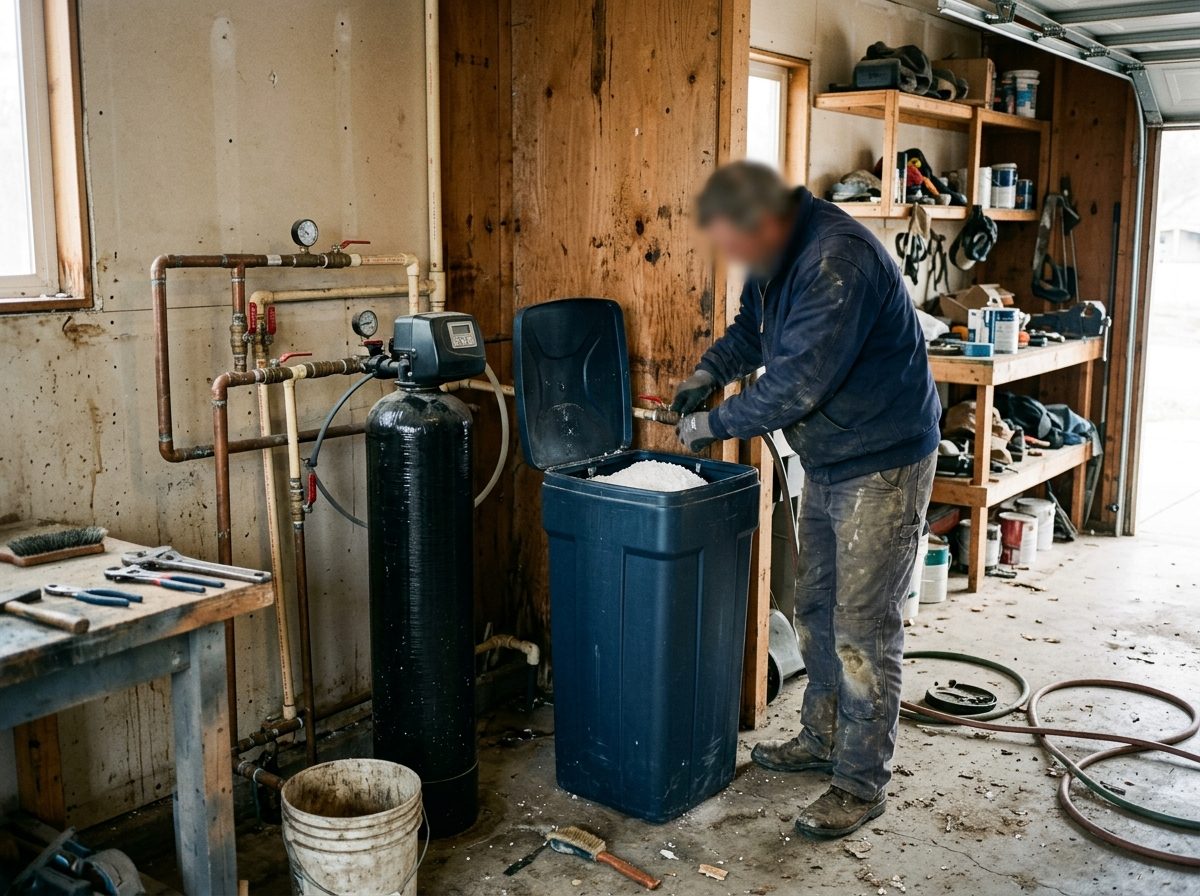
Power is half the system
Large pumps are as much an electrical proposition as a plumbing one, and a substantial share of what gets reported as pump failure turns out to be supply or control related.
Three-phase supply is common for larger installations, and it brings failure modes a household system never sees. A lost phase will let a motor try to run on the remaining two, which can destroy it quickly. Voltage drop over a long run to a distant pump reduces performance and increases heating. Contactors, overloads and control gear wear out and are frequently the actual fault rather than the motor.
What that means practically is that describing the electrical symptoms is as useful as describing the water ones. Does the motor hum, trip, or do nothing? Has an overload reset? Do the controls indicate anything? Those answers frequently identify the problem before anyone reaches the property — and they determine whether a plumber or an electrician should be first on site.
Where farm and house systems meet
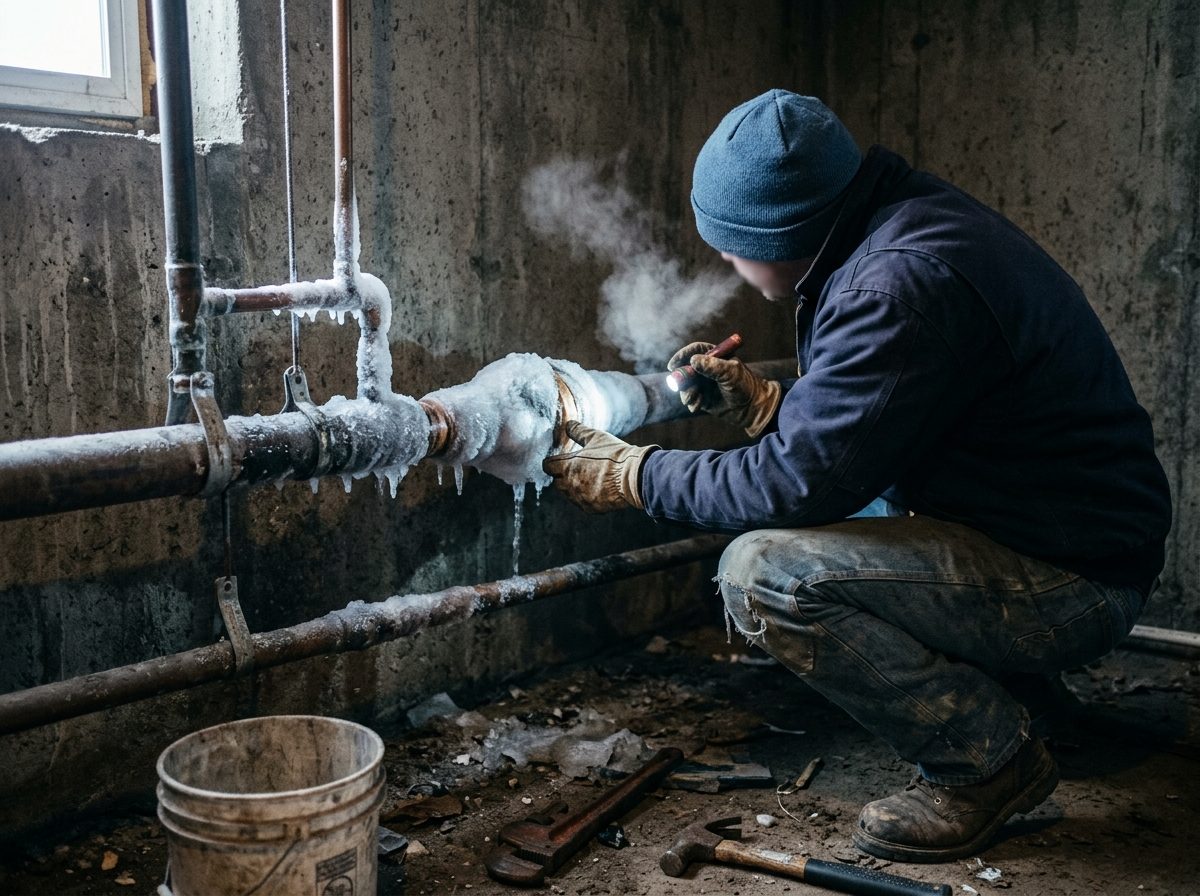
The point where the two systems touch is the one that matters most for safety. Backflow prevention exists to stop water flowing the wrong way — from an irrigation line, a chemical injection point, a submerged hose end or a piece of equipment back into the drinking supply.
On a farm the stakes are higher than in a suburb, because what could be drawn back is not just untreated water. Any point where irrigation, chemical handling or livestock water connects to potable supply needs proper isolation, and that is a requirement rather than a refinement. Hose bibs used to fill tanks and sprayers need vacuum breakers, because a submerged hose end is a direct path.
On a system that has been extended and modified across decades, it is genuinely worth having those connection points identified and confirmed rather than assumed. Nobody intends to create a cross-connection; they accumulate.
Irrigation and domestic water connected? Ask what protection those points should have.
Ask about backflow protectionWinterising an irrigation system
An agricultural irrigation system holds a great deal of water in a great deal of pipe, and getting it out before the first hard freeze is a larger job than blowing out a garden system.
The principles are the same and the scale is not. Low points hold water gravity will not clear. Valves and backflow devices trap volumes that split when they freeze. Pump housings and above-ground manifolds are the most exposed components and the most expensive to replace. And frost runs deep here, so buried mains are closer to the frost line than the same installation further south.
Because it is a bigger job, it benefits from being scheduled rather than remembered — and from being done in an order that does not leave a section charged behind a closed valve. It is also the right moment to deal with anything that has been weeping all season, since a fitting that leaks in September is a fitting that splits in November.
Irrigation not cleared yet? Scale makes this a scheduled job, not a weekend one.
Ask about winterising irrigationWhen one fault stops both systems
On a place where the house and the operation share a well, a pump or a power supply, a single fault has two consequences, and they are not equally urgent. Losing water to the house is inconvenient. Losing water to livestock is not, and when both go at once the order of work is decided by the animals rather than by the building.
That is worth arranging for in advance rather than in the moment. What makes it manageable is separation: an isolation valve that lets the house be taken out of service without the stock line, a fallback draw point such as a frost-free hydrant on the stock side, and enough stored volume that a few hours of downtime is a delay rather than an emergency. None of those are expensive next to the cost of hauling water in a hurry.
Worth knowing before you call
Whether the motor hums, trips, or does nothing — and whether anything has reset. On a large pump those answers often identify the fault before anyone leaves the yard.
Nearby communities
Merino sits in Logan County farmland north-east of Fort Morgan, with Orchard and Akron the nearest neighbours.
Merino, Colorado
Agricultural water questions answered
Usually not, and it is worth establishing before a visit. A household pump moves a few gallons a minute; an irrigation pump can move hundreds, with proportionally larger pipe, higher-rated fittings and different equipment. Saying which system has the problem gets the right person out first.
Often it is electrical rather than mechanical. On larger installations, lost phases, voltage drop over long runs, and worn contactors or overloads are all common and all present as a pump that will not run. Describing whether the motor hums, trips or does nothing narrows it considerably.
On a three-phase supply, losing one phase can leave the motor trying to run on the remaining two. It draws heavily and heats up, and it can destroy a motor quickly. It is one of the reasons electrical symptoms are worth reporting rather than just describing the water.
Because what could be drawn back into the drinking supply is not just untreated water — irrigation lines, chemical injection points and livestock water all present higher stakes. Any point where those connect to potable supply needs proper isolation, and that is a requirement rather than a refinement.
A vacuum breaker, yes. A hose whose end sits submerged in a tank, trough or sprayer creates a direct path for that water to be drawn back into the supply if pressure drops. It is an inexpensive fitting for the risk it removes.
On a system extended and modified over decades, it is worth having the connection points identified and confirmed rather than assumed. Nobody intends to create a cross-connection — they accumulate as things are added, and a survey of where the two systems touch is the way to find them.
Same principles, considerably larger scale. Low points hold water gravity will not clear, valves and backflow devices trap volumes that split when frozen, and pump housings and above-ground manifolds are the most exposed and most expensive components. It benefits from being scheduled rather than remembered.
Before winter, definitely. A fitting that leaks in September is a fitting that splits in November, and doing it while the system is being cleared costs a fraction of doing it as an emergency in frozen ground. The winterising visit is the natural moment.
It is workable, but worth arranging so one fault does not stop both. Isolation valves that let each side be shut independently, a frost-free hydrant as a fallback on the stock side, and some stored volume turn a pump failure from an emergency into a delay. Mention the shared arrangement when you call — it changes what gets prioritised.
Logan County farmland
Merino, Orchard, Fort Morgan and Akron.
(833) 621-2904 — answered 24/7, statewide.